


In space, no one can hear your scream.
In space, no one can hear you scream.
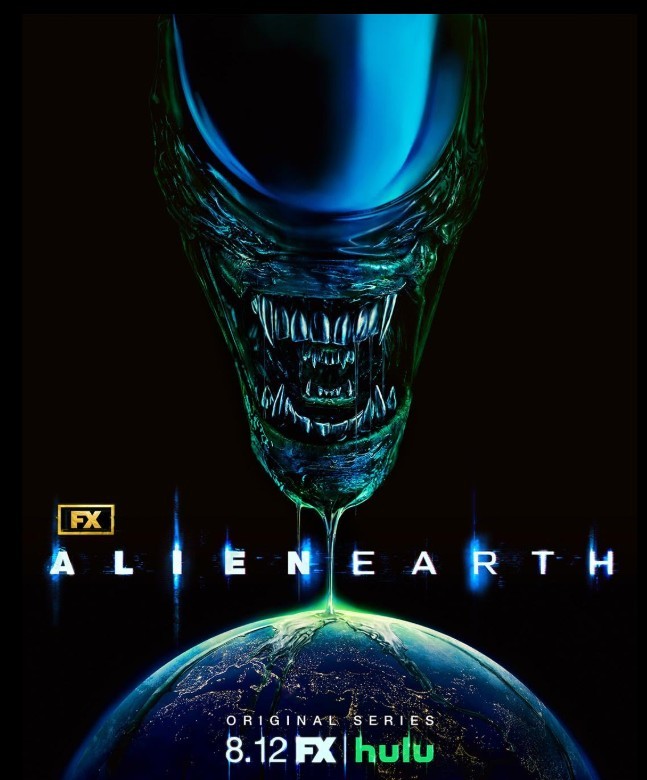
For many, 1979 is remembered as the year the original Gundam first stood tall. But in that same year, a terrifying classic of sci-fi cinema was born: "Alien." Over a span of more than 40 years, the franchise has spawned three sequels, two prequels, and even two crossover films with 20th Century Fox sibling "The Predator" (the less said about their plots, the better). Now, in the wake of the commercial and critical success of 2024's "Alien: Romulus," anticipation is building for "Alien: Earth," the franchise's first-ever television series. Fans are eager to see how the show will leverage the streaming platform to deliver a shocking and thrilling experience with a level of bloodshed that pushes beyond anything seen before.

1. Neverland
The series is set in 2120, two years before the events of the first "Alien" film. In this world, the Weyland-Yutani Corporation has not yet achieved its monopoly. Earth is divided and controlled by four other major conglomerates, among them the Prodigy Corporation, which has made groundbreaking advances in android development. Their technology is primarily categorized into three types: Cyborgs, humans with machine-enhanced body parts; Synths, androids with artificial intelligence; and Hybrids, synthetics implanted with human consciousness.
The show's protagonist, Wendy, is the first successful test subject of Prodigy CEO Boy Kavalier's experiments. The consciousness of a terminally ill young girl was transferred into a Hybrid body, granting her a form of immortality and superhuman speed and performance. However, as the show metaphorically alludes to with Disney's classic "Peter Pan," the minds of these consciousness-transferred androids are like the Lost Boys trapped in Neverland—they never grow up. This sets the stage for a deep dive into the ethical debates surrounding androids. The series premiere is packed with callbacks to the 1979 film, from the title sequence revealing itself piece by piece and the water lily-like opening of the hypersleep pods to the light-filled MU-TH-UR 6000 main computer room. It also pays homage to another Ridley Scott sci-fi masterpiece, "Blade Runner." Kirsh, the Synth chief scientist at Prodigy who trains Wendy, cuts a cold figure with his stark white hair, immediately bringing to mind Roy Batty's final, rain-soaked monologue.
2. Mr. October
Despite laying out a dense world and numerous plot elements, the premiere episode suffers from inconsistent pacing. Certain sequences, like the alien outbreak aboard the spaceship *Machino*, are presented as disjointed flashes of chestbursters and suffocating crew members without a clear explanation of how the situation spiraled out of control. The ship then crashes directly into Prodigy's urban sector in New Siam, a development that might leave newcomers to the "Alien" universe completely lost. Meanwhile, several dialogue-heavy scenes discussing human evolution feel overly long, dragging the pace down as if to pad the runtime. However, by the second episode, the story finds its rhythm and begins to build a palpable sense of tension, despite some jarring transitions to black.
The camera refocuses on a confined space. Wendy's brother, Hermit, a medical professional for Prodigy, witnesses the ship's crash and must join the subsequent search and rescue mission. With the Xenomorphs now on Earth, a bloodbath is about to begin. The highlight of the second episode—and arguably the most terrifying sequence in the series so far—is the Xenomorph's massacre at a high-rise European party. The brutality is arguably the most intense in the franchise's history: shadows flicker across the ceiling, followed by blood-curdling screams. When silence falls, the scene is a gruesome tableau of splattered blood and dismembered bodies, creating a work of violent Renaissance art. One particularly grotesque moment shows a victim crawling across the floor while dragging their own entrails, a sight that reawakens the deepest fears associated with this creature.

But what follows is perhaps the most illogical and criticized moment of the show. Hermit, having just survived the carnage, wanders over to a corner near the crime scene in an area where threats could still be lurking. He picks up a baseball signed by MLB player Reggie "Mr. October" Jackson and begins reminiscing about his past with his father and sister. While the director may have had a deeper meaning in mind, pausing to fondly remember old times with a baseball in the face of unknown, immediate danger is hardly a wise move. Sure enough, after reuniting with his sister Wendy and investigating an area with Xenomorph eggs, a lurking alien pounces, sending them both plummeting into the abyss of the ruins below. What happens next will have to wait until next week...
Image Source: Alien: Earth