

Kara Zor-El, better known as Supergirl, stands as one of DC Comics' most iconic female superheroes. For many, her most recognizable image is that of a long-haired blonde hero clad in a costume similar to her cousin, Clark Kent, aka Superman. The iconic "S" shield of the House of El adorns her chest, a red cape flows behind her, and her classic red skirt has become a visual staple in pop culture.
From Helen Slater's portrayal in the 1984 film "Supergirl" to The CW's "Supergirl" series within the Arrowverse, live-action adaptations have largely defined the first impression many audiences have of Kara Zor-El. She's often seen as an extension of the Superman family—a friendly, bright, and youthful hero.
Unfortunately, this framework has often led to the misconception that she is simply a "female Superman"—possessing the same powers and ideals, just with a different face and a lighter uniform.
However, the upcoming DCU is set to shatter that familiar image. With Milly Alcock cast in the role, a new version of the character is poised to hit the big screen—one described as more rebellious, messy, and shadowed, seemingly breaking the mold for audiences familiar only with her previous live-action portrayals.
In fact, a look back at the comics reveals that the core of Kara's character isn't defined by a "sweet" or "girlish" persona. Her stories are often woven with a much richer tapestry of emotions, including rebellion, anger, grief, and frustration.
Unlike Clark, who was raised by an Earth couple from infancy and grew up within a stable human ethical framework, Kara arrived with her memories of Krypton intact. She witnessed the destruction of her home world firsthand and carries a more tangible, piercing sense of loss. It is the weight of these emotions that often makes her a more human and compelling character, deserving of a deeper understanding.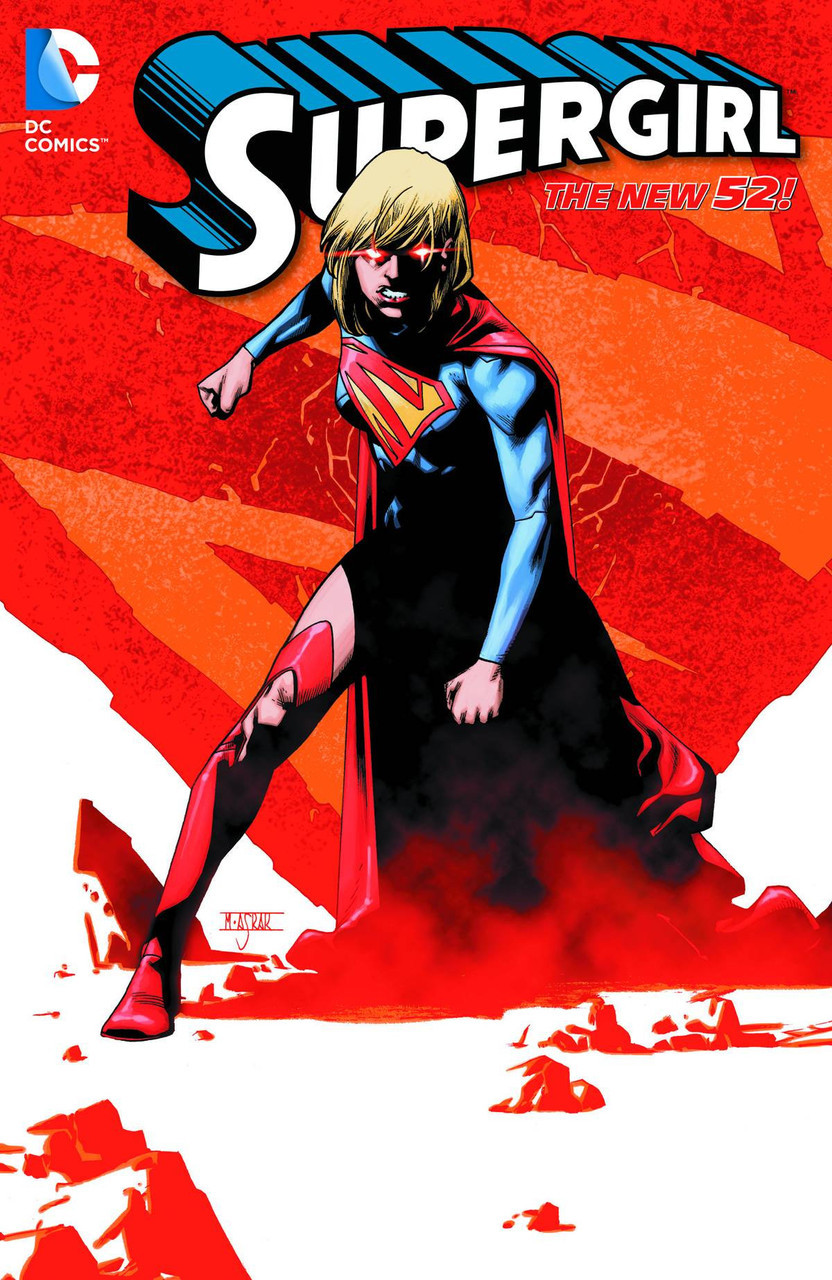
With that in mind, before diving into a full analysis, we'll first outline her origins and evolution. This will allow us to explore her diverse portrayals across comics, animation, film, and video games, and to understand her unique cultural position within the DC Universe.
▌Comic Book Origins and Evolution
● The Silver Age
Supergirl first appeared in "Action Comics" #252 in May 1959, created by writer Otto Binder and artist Al Plastino. This was the heart of the Silver Age of comics, a period defined by a heavy influx of science fiction and cosmic concepts. In this original version, Kara was established as the cousin of Superman, Clark Kent. Her father, Zor-El, was the brother of Superman's own father, Jor-El.
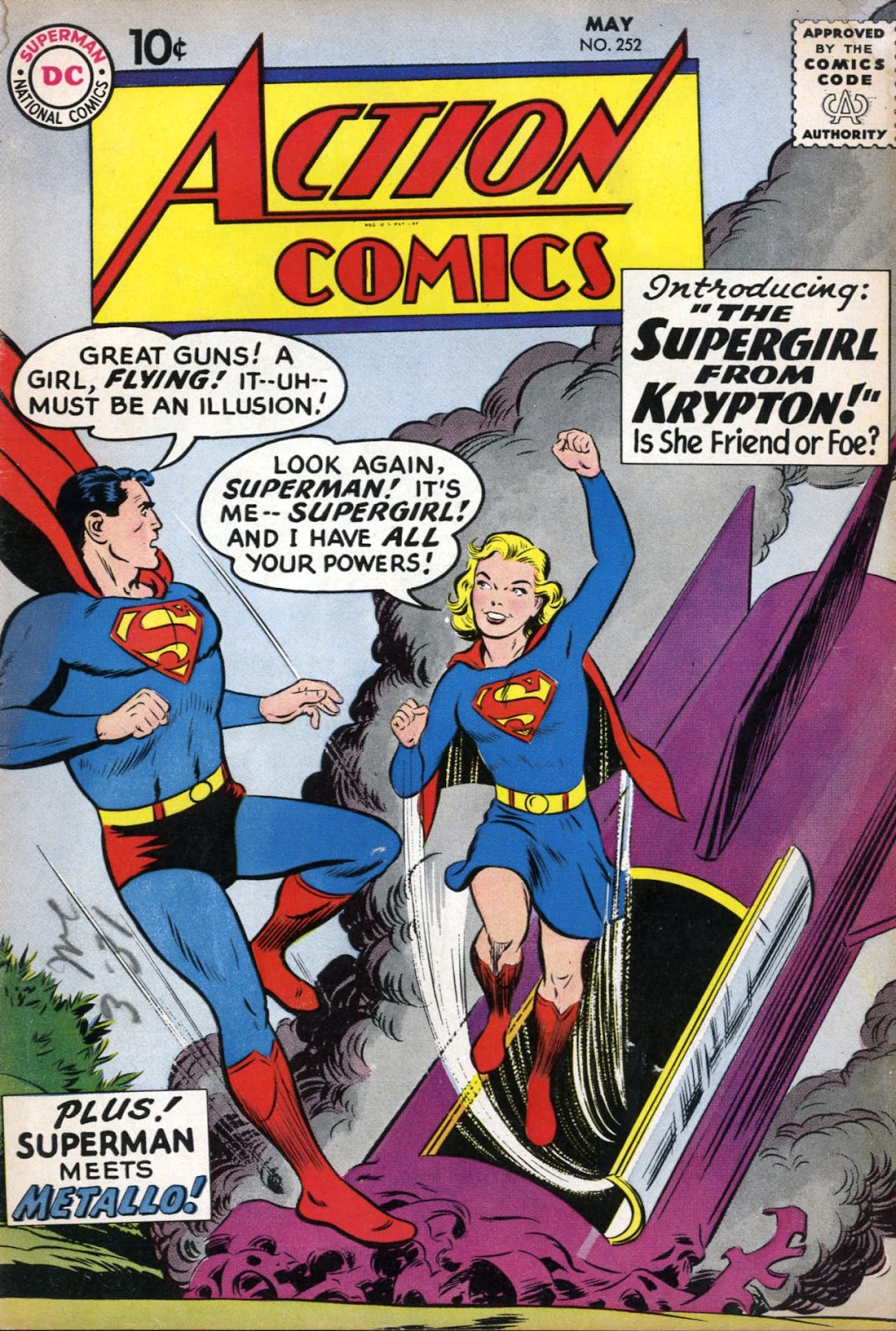
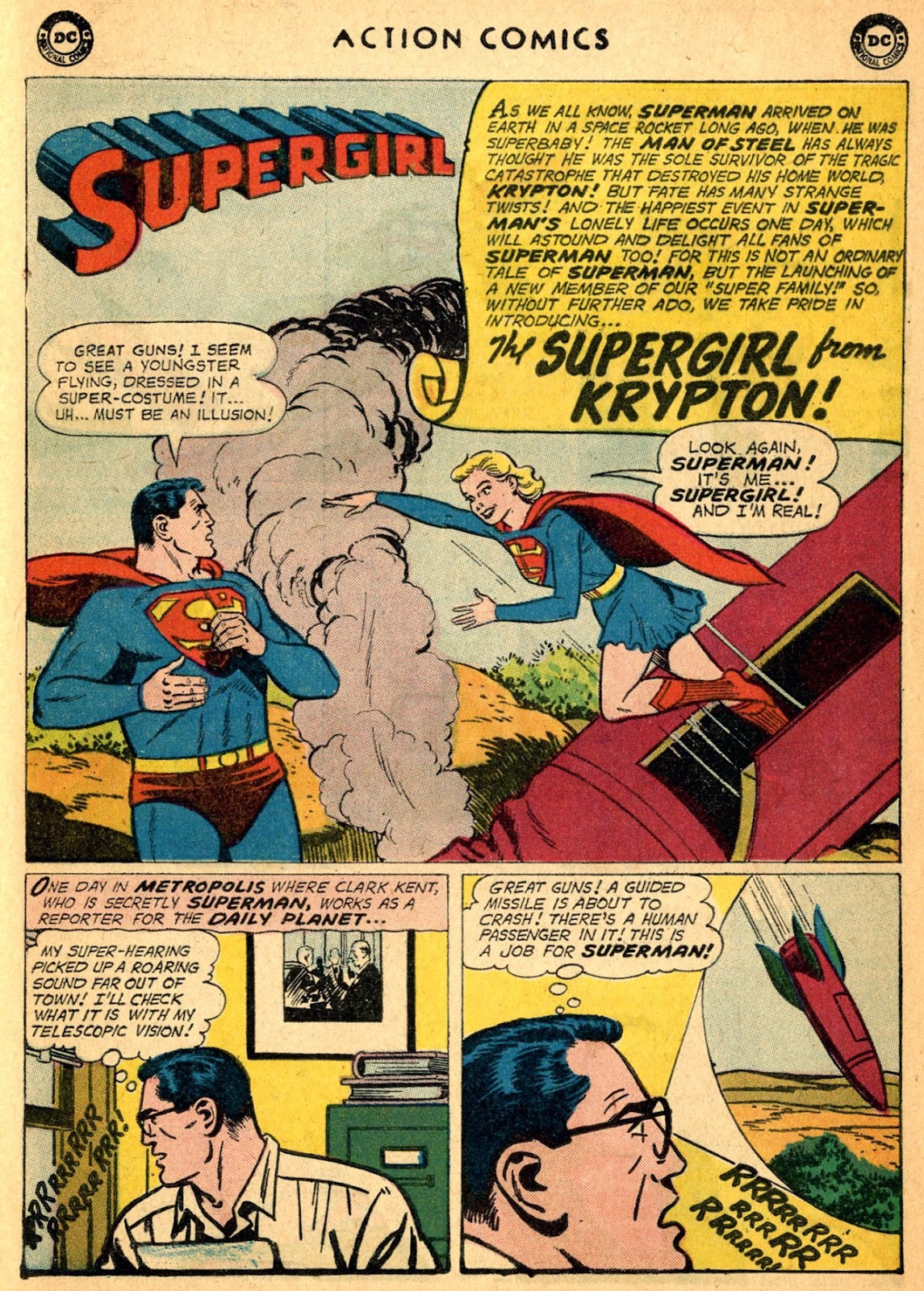
Her initial origin story was highly dramatic. When Krypton exploded, the city where Zor-El lived was hurled into space, surviving along with a chunk of the planet's surface protected by an atmospheric bubble. This city would later be officially named "Argo City" in "Action Comics" #285, where its backstory was further fleshed out.
In her debut issue, "Action Comics" #252, it was simply described as an unnamed refuge drifting through space. Over time, the ground beneath the city, composed of Kryptonian debris, began to transform into radioactive Kryptonite, releasing deadly radiation that threatened the lives of its inhabitants.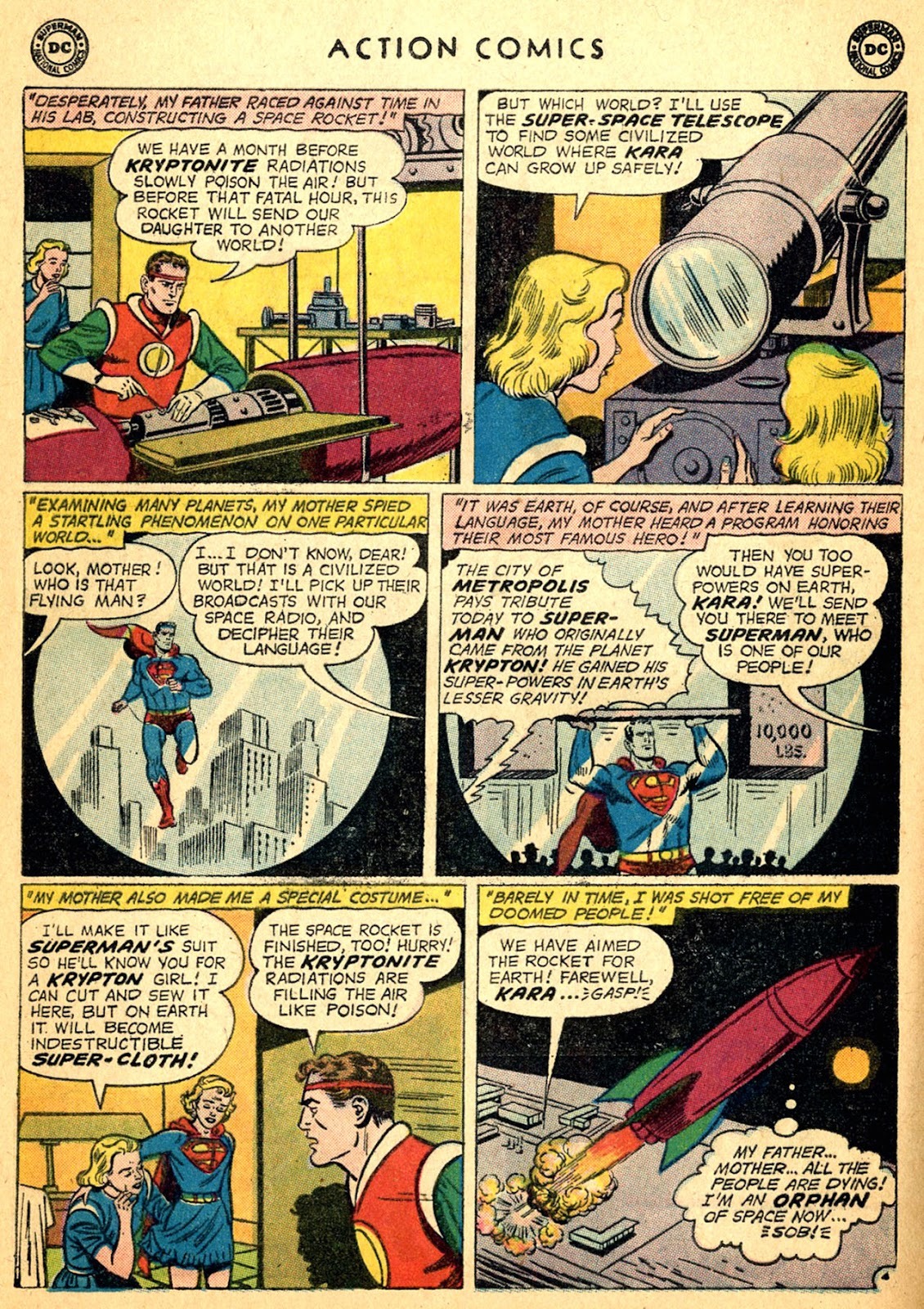
As the situation on Krypton deteriorated, Zor-El and his wife decided to send their teenage daughter, Kara, on a rocket bound for the only planet in the universe confirmed to have a Kryptonian survivor: Earth, the home of Superman. They hoped she would find her kinsman and be given sanctuary.
Upon arriving on Earth, Kara discovered that the surviving Kryptonian was indeed Superman, and the two were reunited as cousins. Under Superman's guidance, she had to temporarily hide her true identity, adopting the name "Linda Lee Danvers" and living in an orphanage in Midvale. She began to adapt to Earth society as an ordinary girl while secretly doing good deeds as "Supergirl."
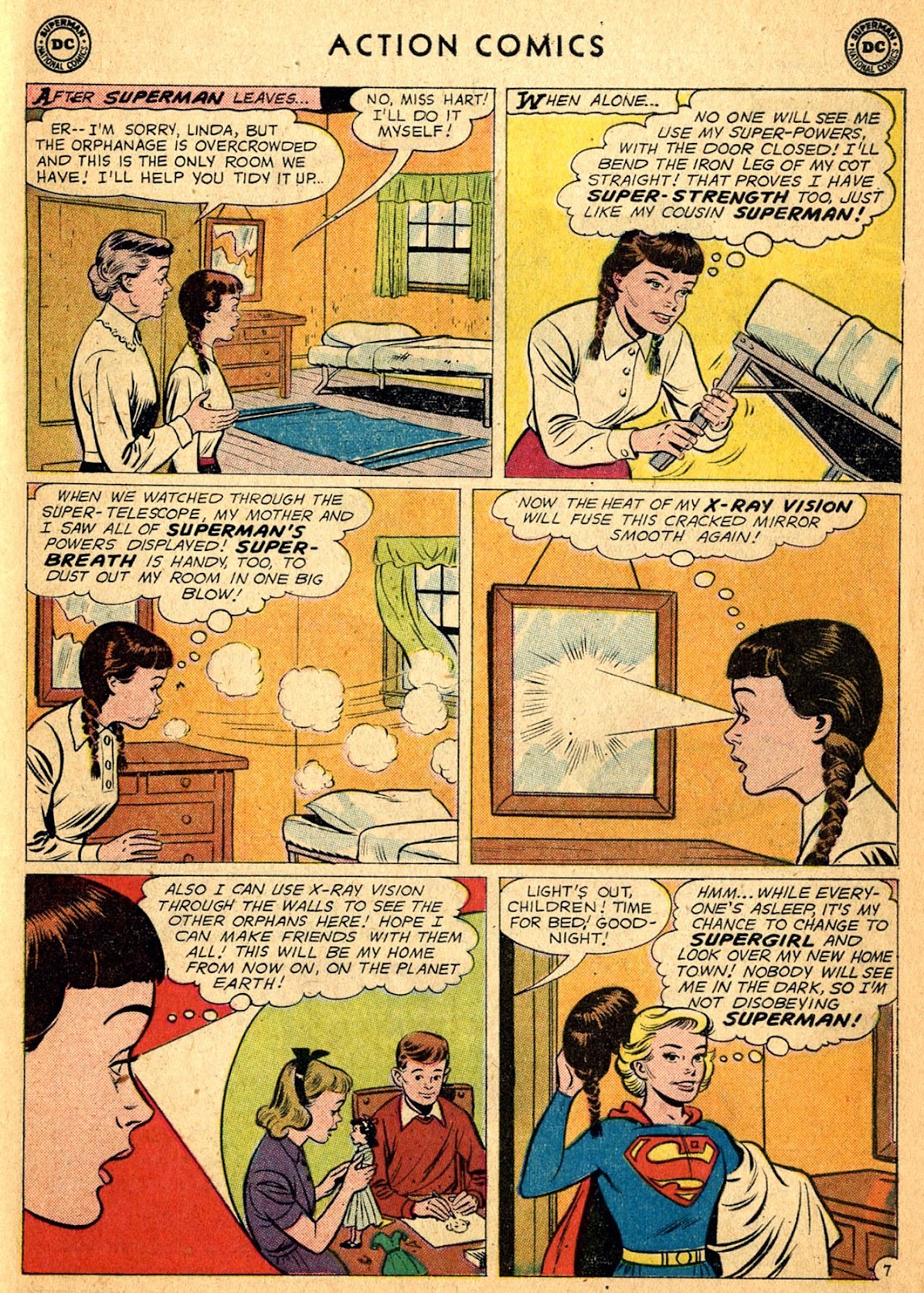
In her Silver Age depictions, Kara was portrayed as a lively and kind-hearted character, shouldering the symbolic responsibility of carrying on her family's memory as a Kryptonian survivor while also, like a typical teenager, yearning to fit into human society.
It wasn't until the release of "Action Comics" #285 in February 1962 that, after years of operating in complete secrecy, Supergirl was formally introduced to the world under Superman's guidance. Her debut stunned and captivated the public, and she quickly became one of the world's most popular female heroes.
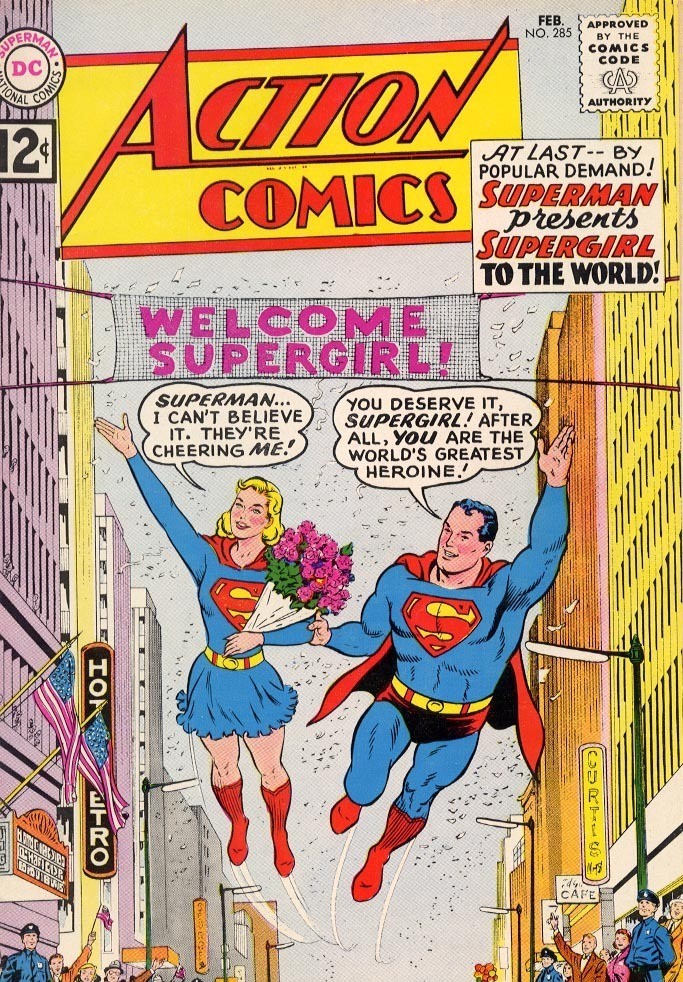
In reality, due to DC's editorial policy at the time, which aimed to preserve Superman's core identity as the "sole survivor of Krypton," Kara's existence was deliberately kept secret. She operated as Superman's "secret weapon," performing good deeds and undergoing tests in the shadows, all while being required to exercise restraint over her powers and identity.
Three years later, after completing numerous trials, Superman officially introduced her to the world. Her public debut as "Supergirl" quickly made her a global sensation.
It was during this long period of being hidden and having to prove her worth that later critics and scholars began to draw parallels between Supergirl's early adventures and the emerging feminist consciousness of the early 1960s. On one hand, she possessed powers equal to Superman's; on the other, she was told to be patient, follow instructions, and operate outside the public eye. This contradiction created a fascinating echo of the societal atmosphere described by Betty Friedan in "The Feminine Mystique."
● Crisis on Infinite Earths
In 1985, DC Comics launched its seminal crossover event, "Crisis on Infinite Earths." In this cataclysm that swept across the entire multiverse, Supergirl Kara Zor-El faced a turning point in her destiny.
In the seventh issue of the story, Kara confronted the powerful Anti-Monitor head-on to save Superman and the other heroes, ultimately sacrificing her life in the epic battle. Her final moments, spent protecting Superman, became one of the most impactful and iconic scenes in comic book history. The cover, featuring a grief-stricken Superman holding the fallen Supergirl, not only became a classic but also symbolized the end of an era.
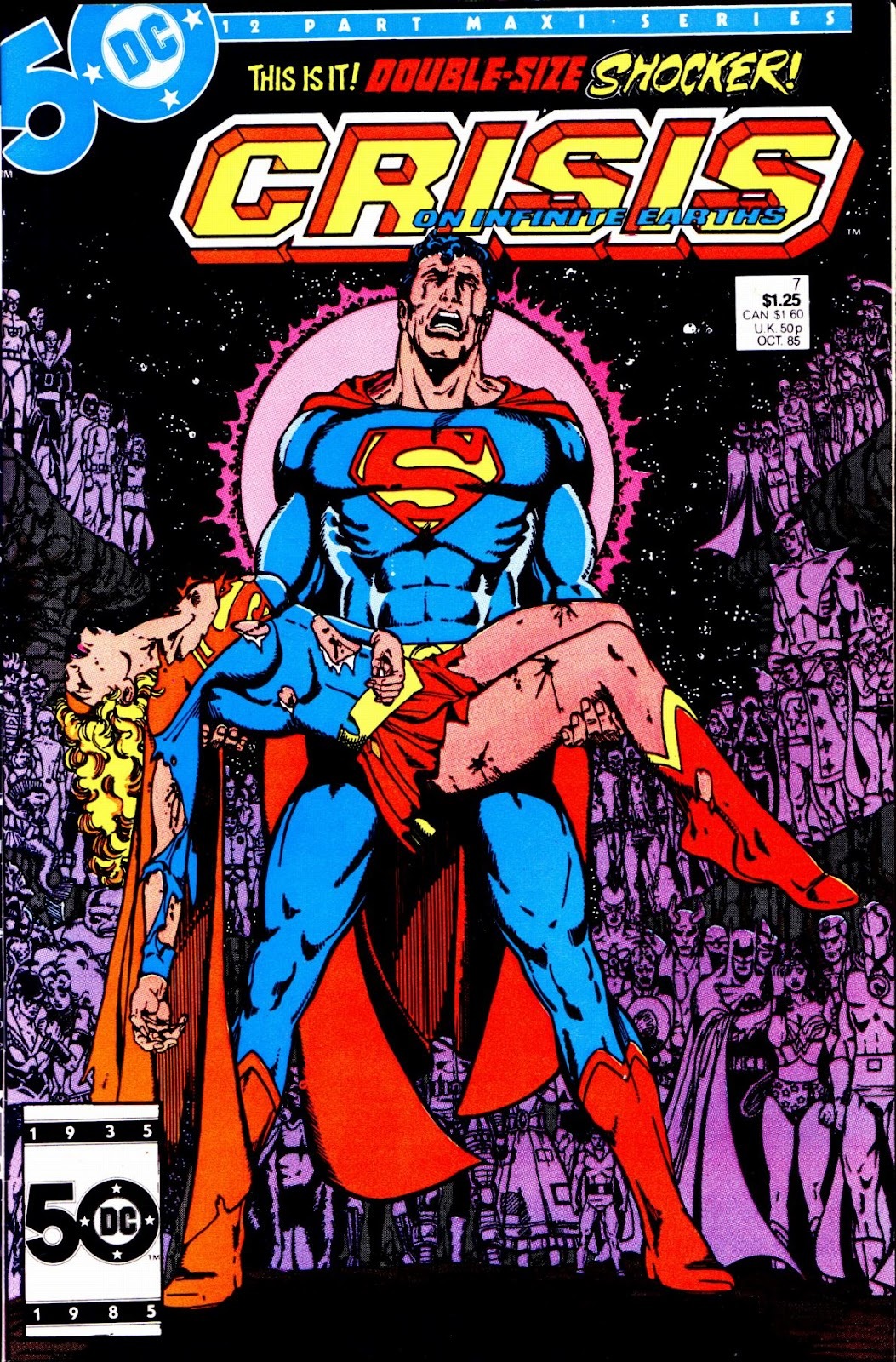
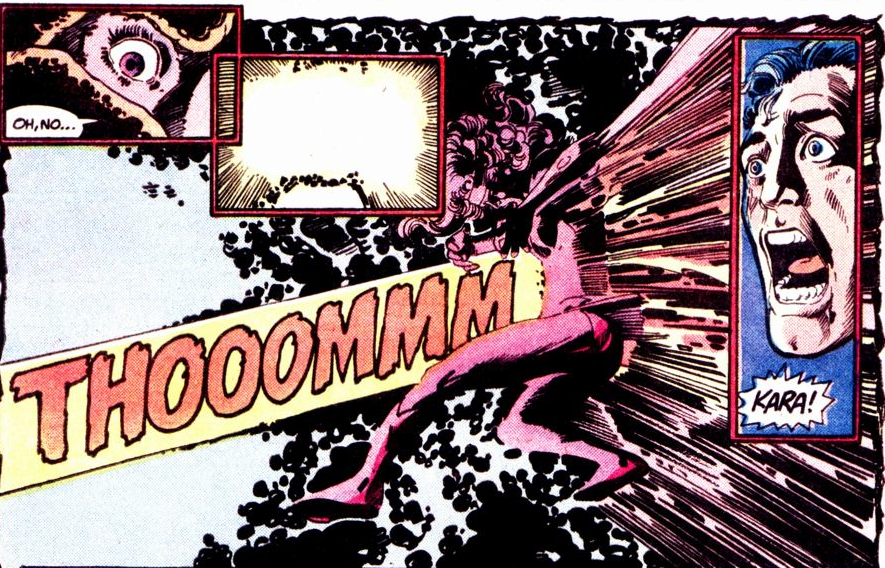
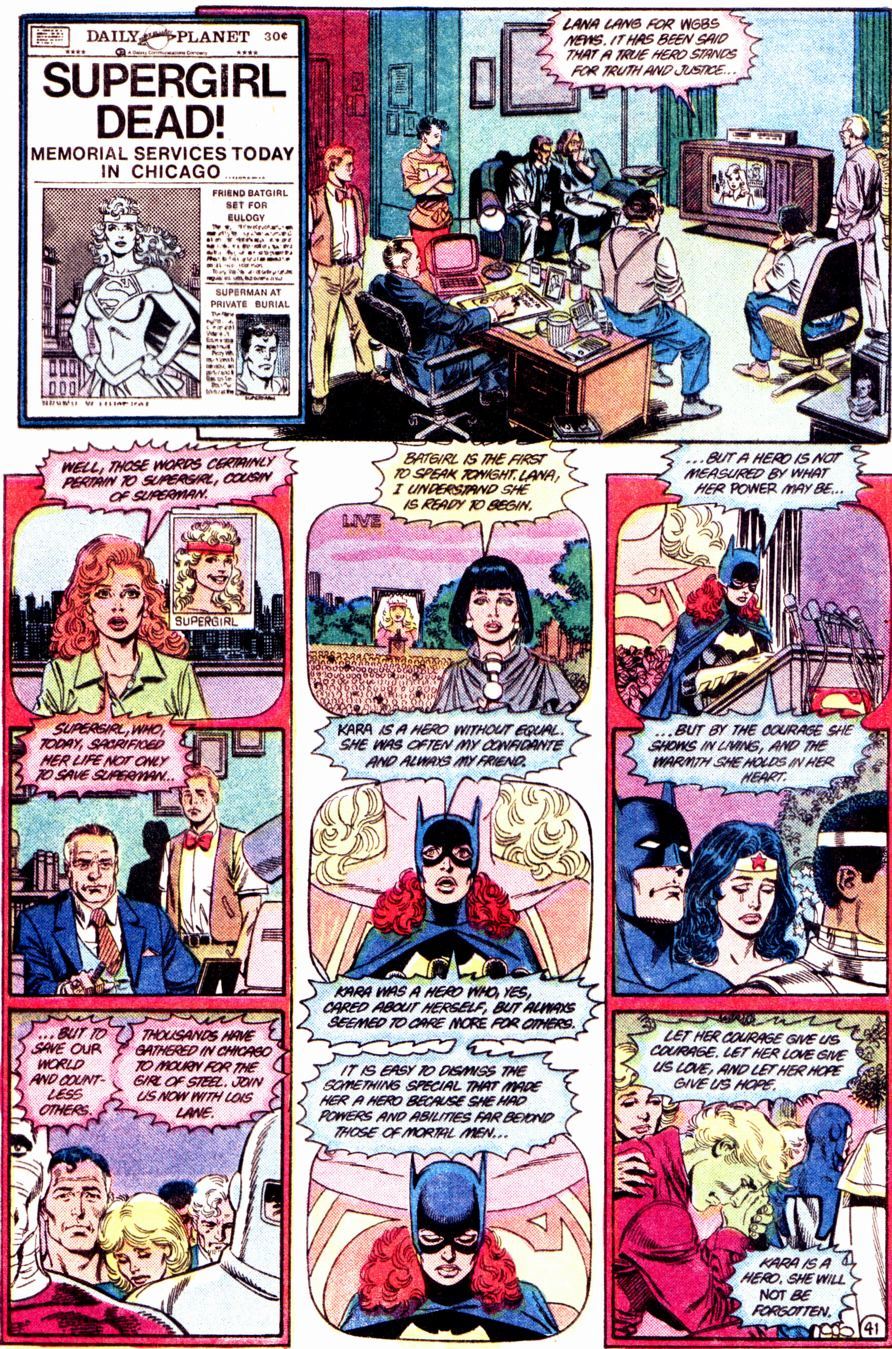
Beyond the narrative, Kara's death also reflected a major shift in DC's editorial direction. The primary goal of "Crisis on Infinite Earths" was not only to reset the increasingly complex multiverse continuity but also to re-emphasize Superman's core mythology as the "last son of Krypton."
Furthermore, to give the cosmic event sufficient weight and irreversibility, the editorial team believed a truly significant character had to die. Although company executives were initially hesitant to "kill off" a character who had appeared on the big screen, the box office failure of the 1984 live-action "Supergirl" movie ultimately weakened this concern, sealing Kara's fate.
Under this new editorial policy, the existence of Supergirl Kara Zor-El was seen as historical baggage that needed to be shed. She met a heroic end in the storyline and was subsequently removed from the main continuity.
As the Crisis ended and a new universe was officially rebooted in 1986, DC reimagined Superman as the sole survivor of Krypton's destruction. Consequently, Kara Zor-El was erased from the main continuity, as if she had "never existed" in the new timeline.
Interestingly, to fill this character void, DC spent the next two decades introducing several characters with no blood relation to Superman to take up the "Supergirl" mantle. This kicked off a unique and convoluted chapter in the character's history:
● The Matrix Era (Beginning in 1988)
After "Crisis on Infinite Earths," Kara Zor-El was removed from canon, and DC had an artificial lifeform known as "Matrix" take over the Supergirl name. She was not a Kryptonian but a protoplasmic shape-shifter from a pocket universe, created by a then-fully-haired Lex Luthor. While she could mimic Supergirl's appearance and some of her powers—and her costume retained the classic blue-and-red look—the character was fundamentally different from Kara.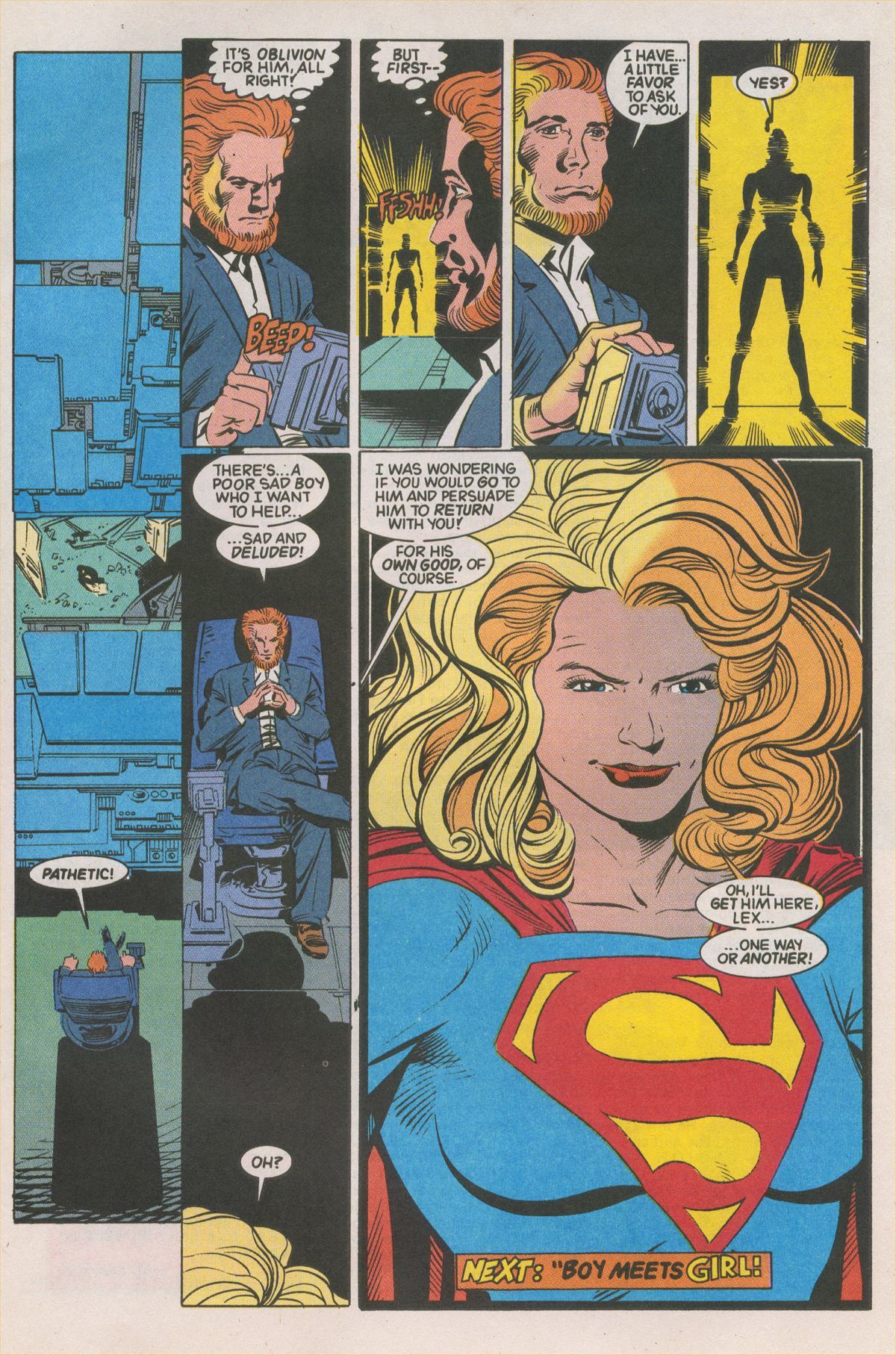
● The Linda Danvers Era (1996–2003)
In 1996, writer Peter David revamped the Supergirl concept by having Matrix merge with a human girl, Linda Danvers, to become an entirely new Supergirl. This version incorporated religious and redemptive themes, such as the "Earth-Born Angel" arc, resulting in darker, more mature stories that emphasized human weakness and self-salvation. Although it was critically acclaimed for a time, the series' overly complex lore led to its cancellation in 2003.
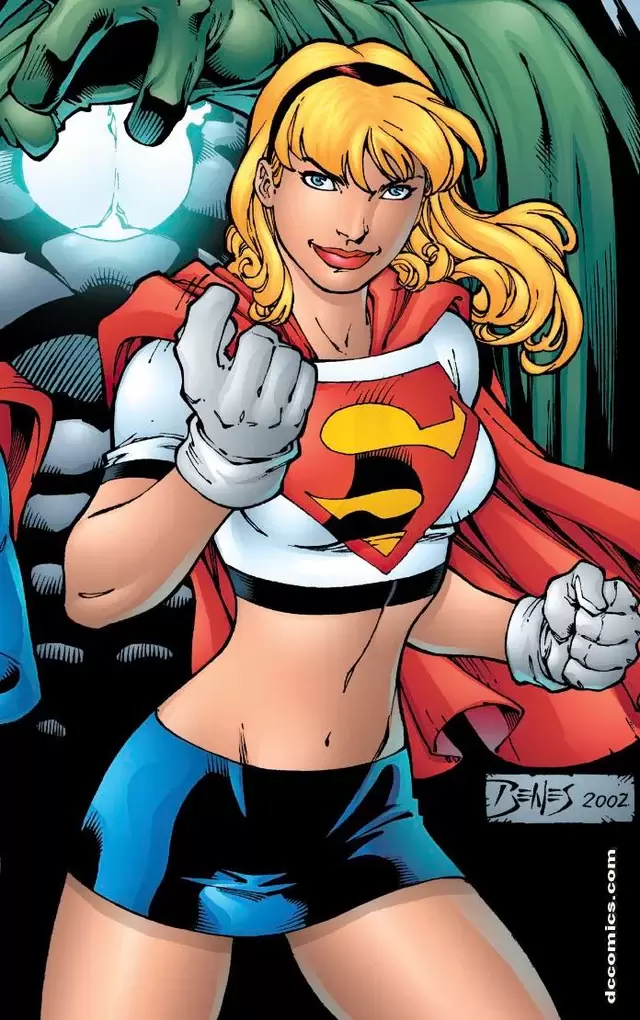
However, these versions were largely seen as transitional experiments driven by editorial mandates. Despite their unique premises and settings, none truly managed to replace Kara Zor-El in the hearts of readers or carry on the core theme of a "Kryptonian survivor."
It wasn't until years later that DC chose to go back to basics and welcome Kara Zor-El back, allowing the "Supergirl" identity to reconnect with its original Kryptonian roots.
● Kara Zor-El Returns for the Millennium
After DC's top brass began to relax the strict rule that Superman must be the sole survivor of Krypton, editor Dan DiDio opted for a more direct approach that hewed closer to the original concept to bring Supergirl back into the main universe. The decision signaled DC's official recommitment to Kara Zor-El's place in the canon.
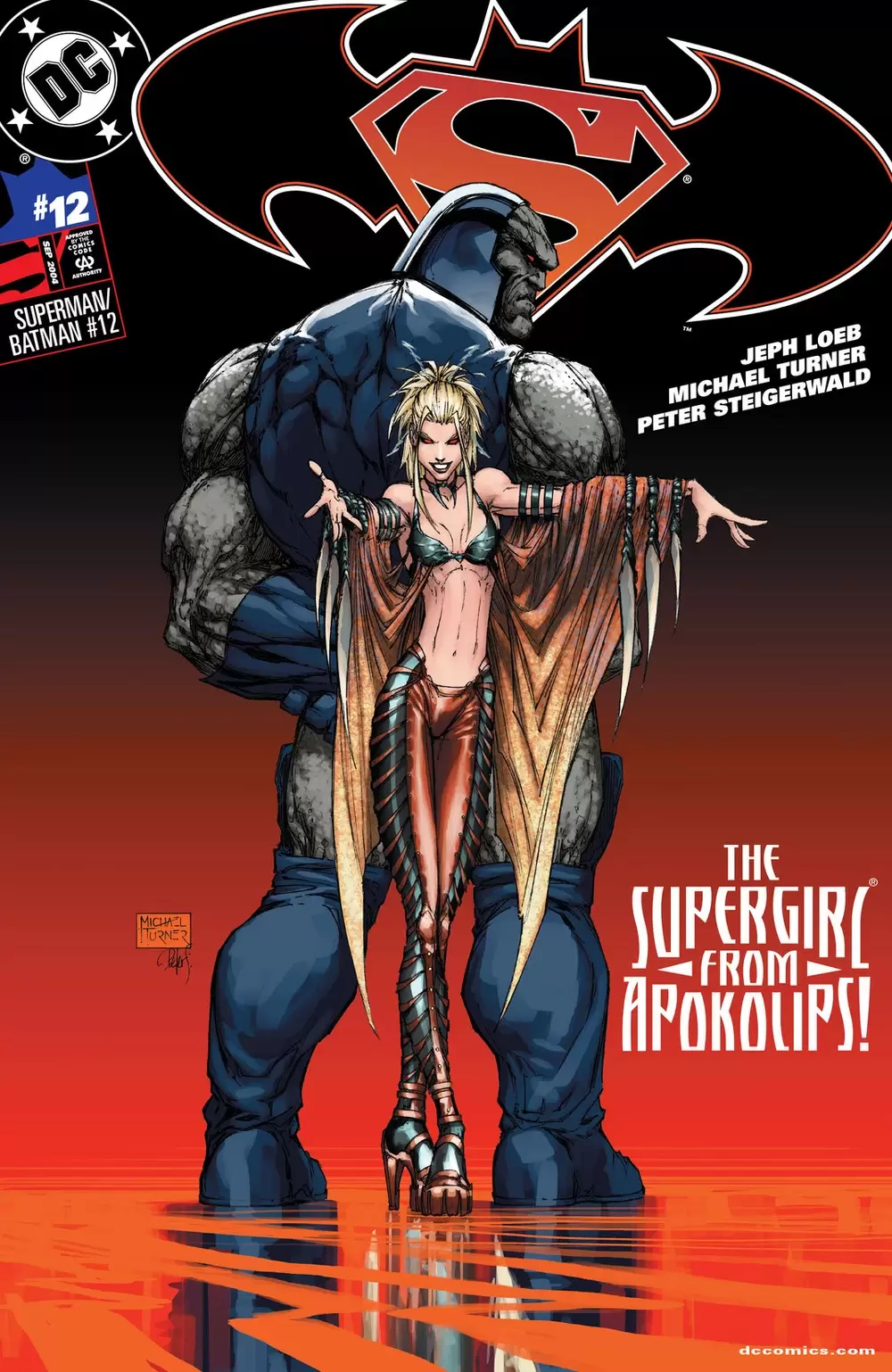
In 2004, the "Superman/Batman" story arc "The Supergirl from Krypton," created by writer Jeph Loeb and artist Michael Turner, officially reintroduced Kara Zor-El to the main DC Universe for the millennial generation.
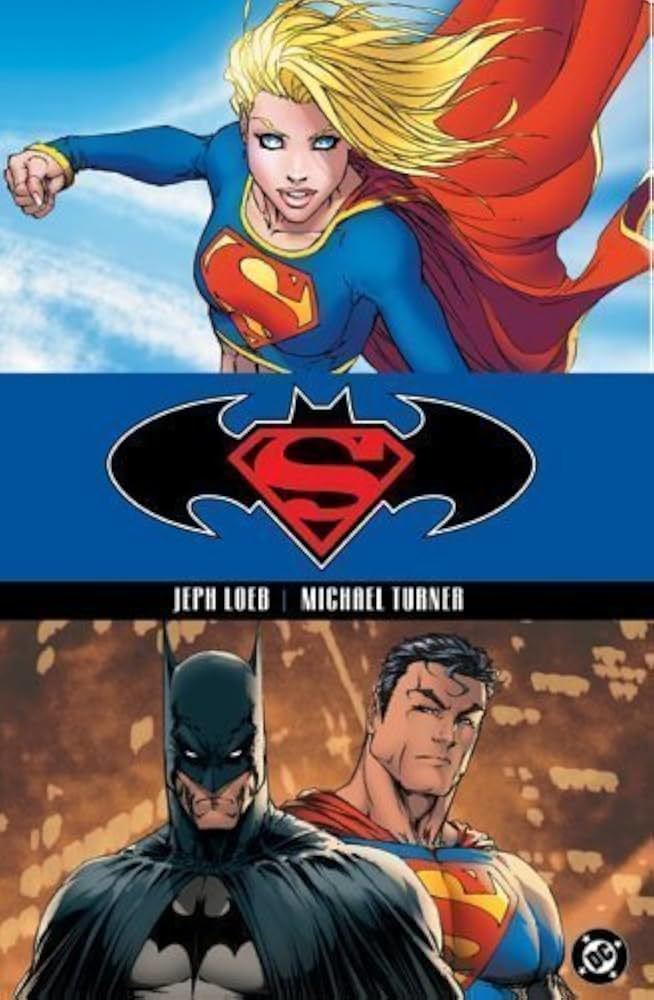
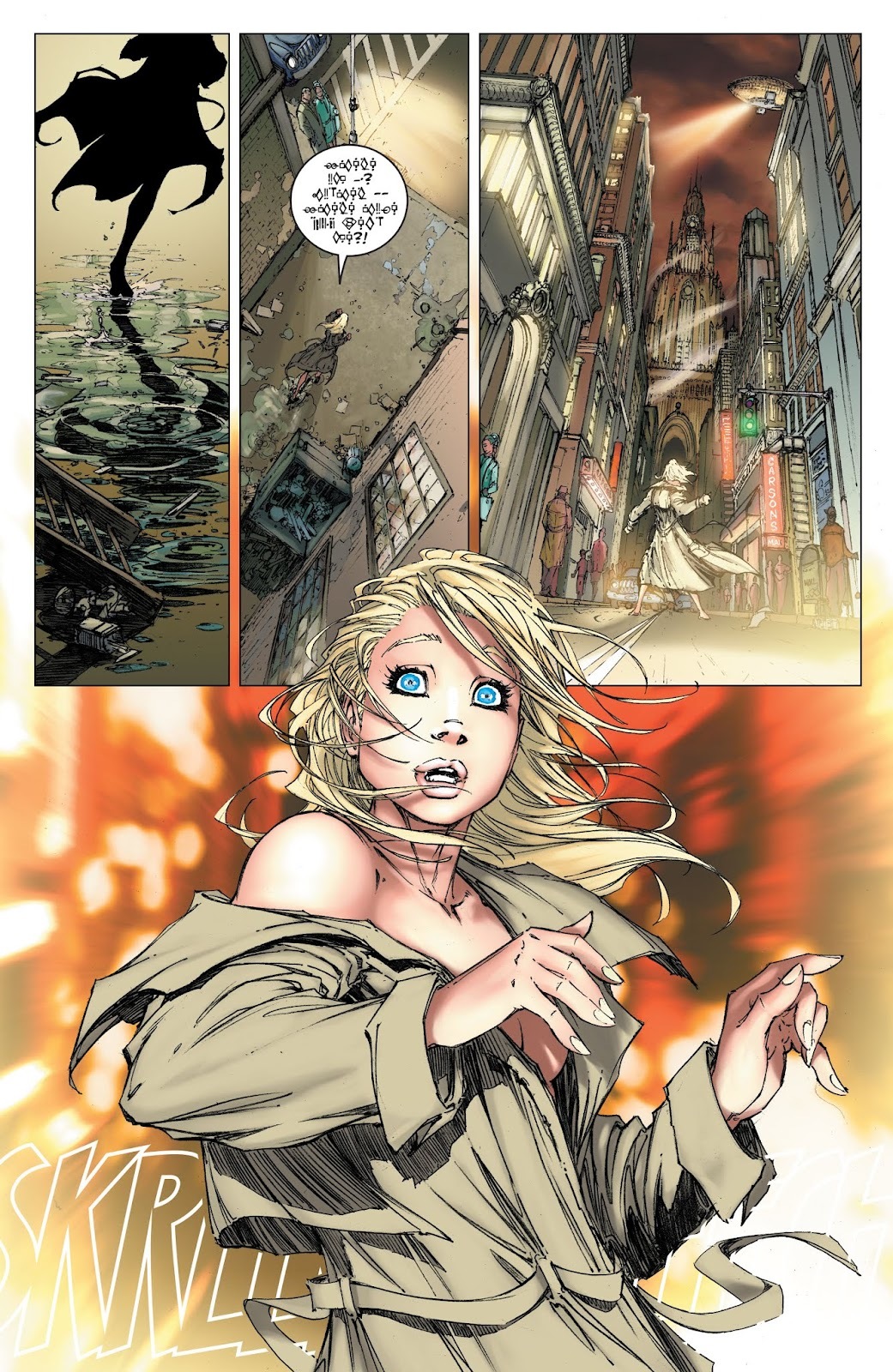
The story maintained her identity as Superman's Kryptonian cousin but with a few tweaks. In this version, Kara was already a teenager when Krypton was destroyed, making her older than the infant Kal-El/Clark Kent and technically his older cousin.
She was originally sent to Earth to look after her younger cousin, but her ship was delayed, and she arrived years later. By then, Kal-El had already grown up to become the world's greatest hero. A stranger on a new planet, Kara was unprepared for human society. The language and cultural barriers, combined with her own insecurities, led to misunderstandings and conflict with Superman.
The core of her millennial-era story focused on Kara's search for a sense of belonging and self-identity. This included a major storyline where she was kidnapped by the villain Darkseid and brainwashed into becoming a "Dark Supergirl." Although her narrative direction was somewhat chaotic initially, her character and story found a stable footing around 2008 after writers like Sterling Gates streamlined her continuity.
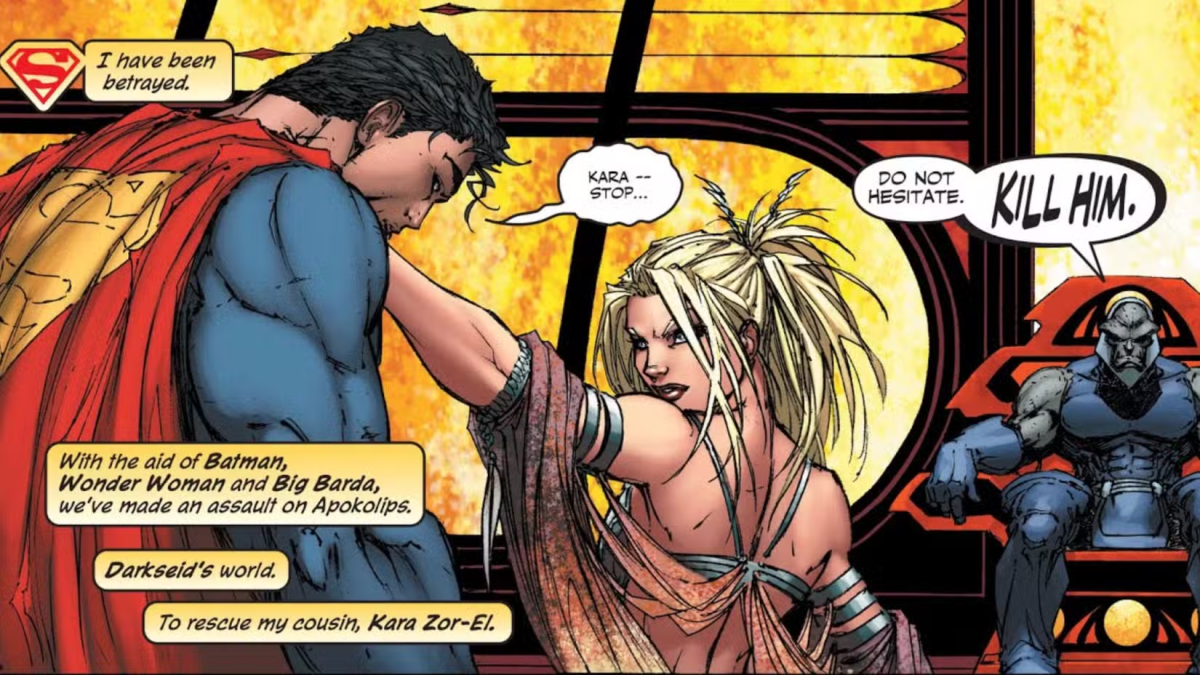
From that point on, she began joining teams like the Teen Titans and the Justice League, and also adopted the identity of "Kara Danvers" on Earth in an attempt to live a normal life. Crucially, Kara's status as a direct Kryptonian relative of Superman was finally and fully acknowledged in the main continuity. She was no longer a temporary replacement but had returned to her rightful place as one of Superman's most important allies.
Visually, artist Michael Turner designed a brand-new uniform for Kara's 2004 return. The overall silhouette paid homage to the original Supergirl's classic elements—a blue top, red cape, and skirt. However, it also incorporated popular aesthetic trends from the new millennium, such as a midriff-baring crop top and a low-rise miniskirt, projecting a strong sense of youth and sex appeal.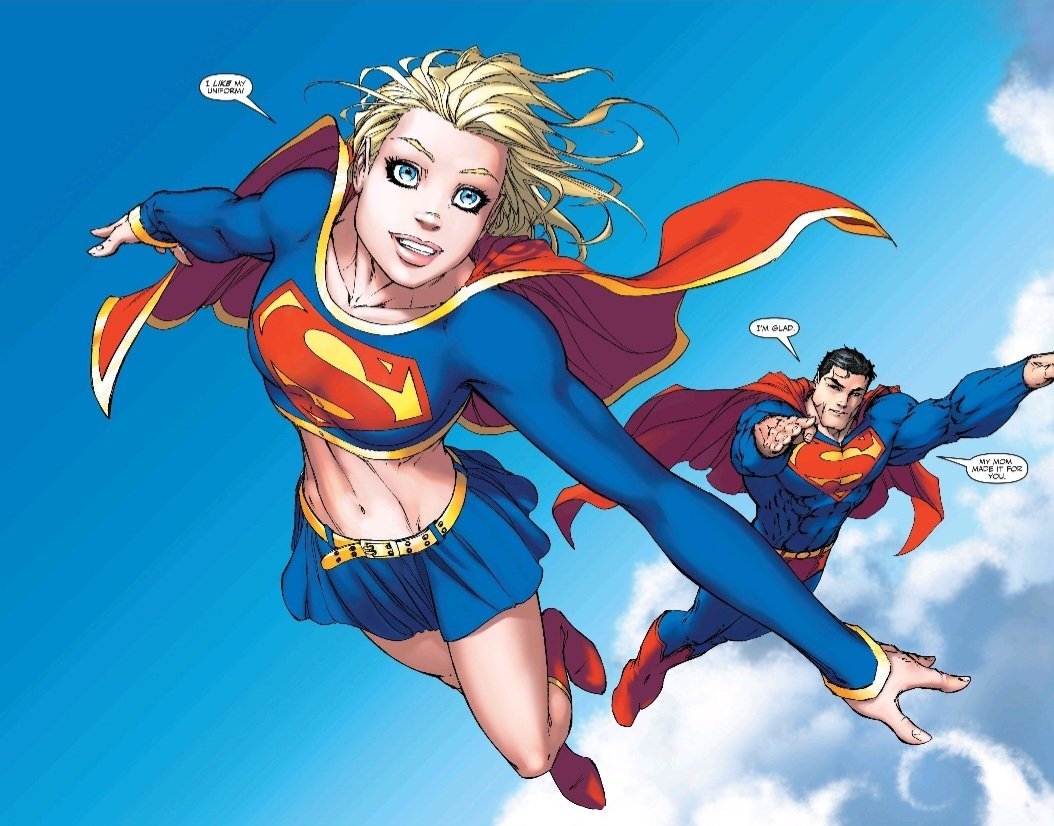
While this look sparked some controversy over whether it was too revealing, it successfully made the character instantly recognizable as "Supergirl" to a new generation of readers. It also created a clear visual distinction from Superman, cementing Kara's image in the mid-2000s and emphasizing her modern identity as an independent young heroine.
● Supergirl in the 2010s: Trauma, Rebirth, and Redefinition
Kara Zor-El's return didn't mean her character was set in stone. When DC Comics launched its line-wide "The New 52" reboot in 2011, Supergirl's story was once again reshuffled.
In this new continuity, Kara's story was reset. Her escape pod was delayed, arriving on Earth decades late and crashing in Russia. Upon waking, Kara couldn't understand the local language or this strange new world, even initially viewing the suddenly-appearing Superman as an enemy. From her perspective, she had just left Krypton, only to be forced to accept that her home was long gone and her baby cousin was now a grown man. This temporal displacement and cultural disconnect became the core source of trauma for the New 52 version of Kara.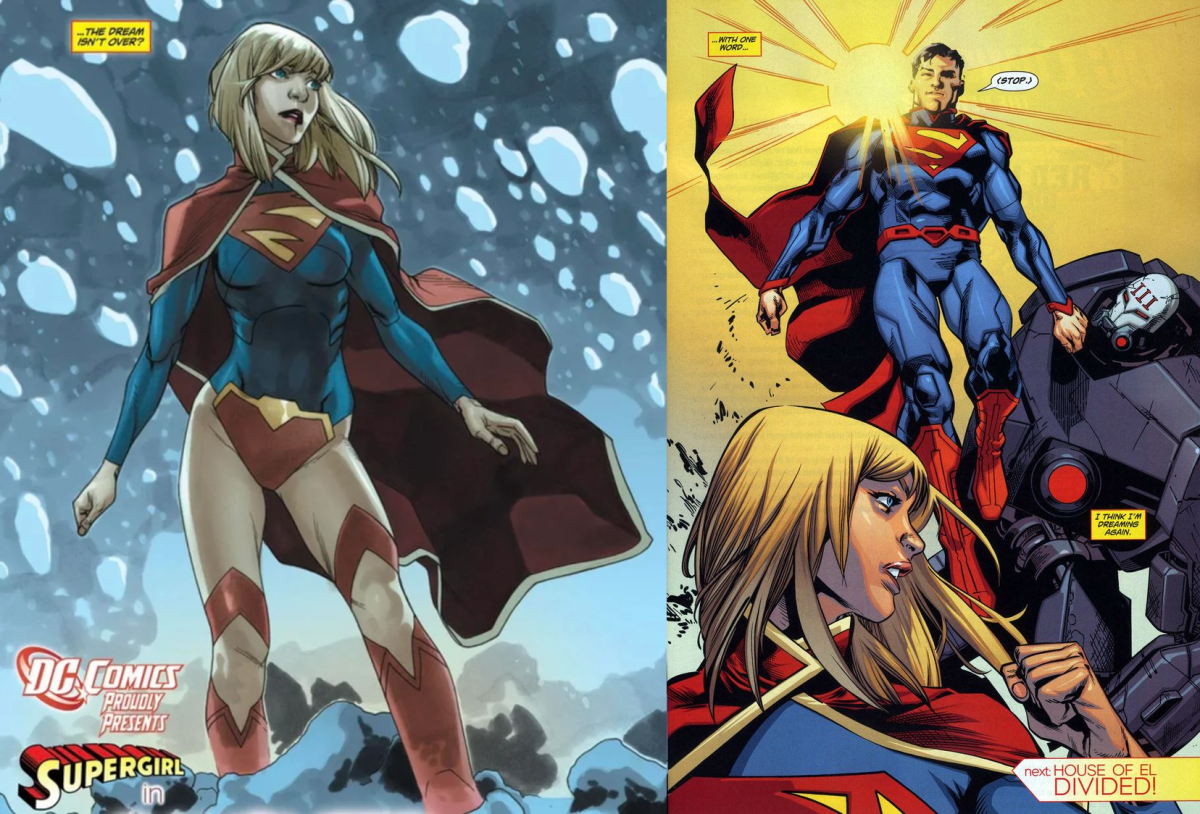
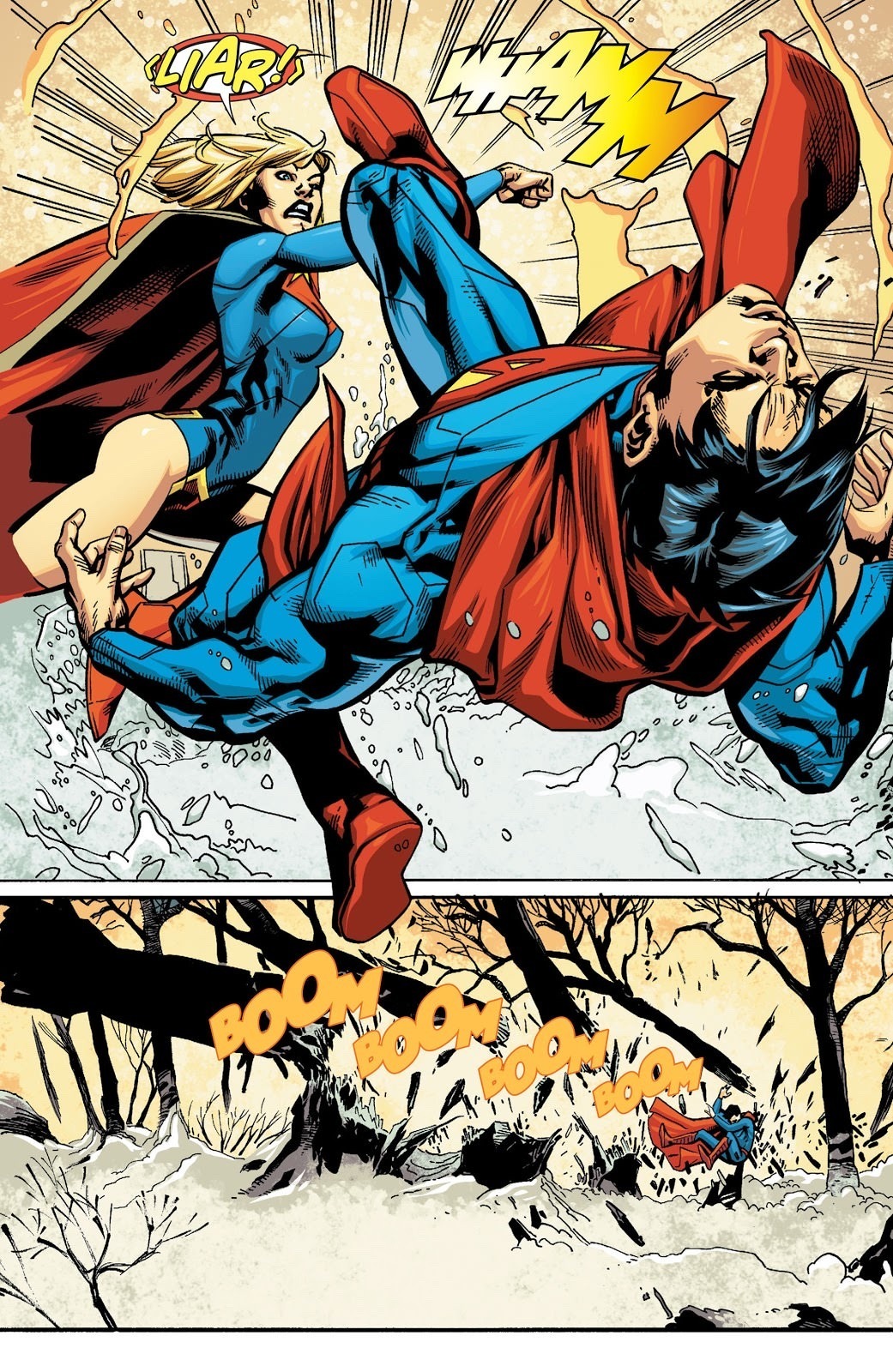
Compared to her previously brighter and more approachable portrayals, the New 52 Supergirl was more defiant and emotionally driven. She struggled to accept Krypton's destruction and lacked a sense of belonging on Earth, which led to her being manipulated by enemies and pushed to dangerous extremes in moments of anger and grief.
This storyline emphasized Kara's inner vulnerability, trauma, and loss of control. Unlike Clark, she wasn't a natural-born hero from the start. Instead, she was portrayed as an alien survivor who had lost her home, her family, and even her place in time.
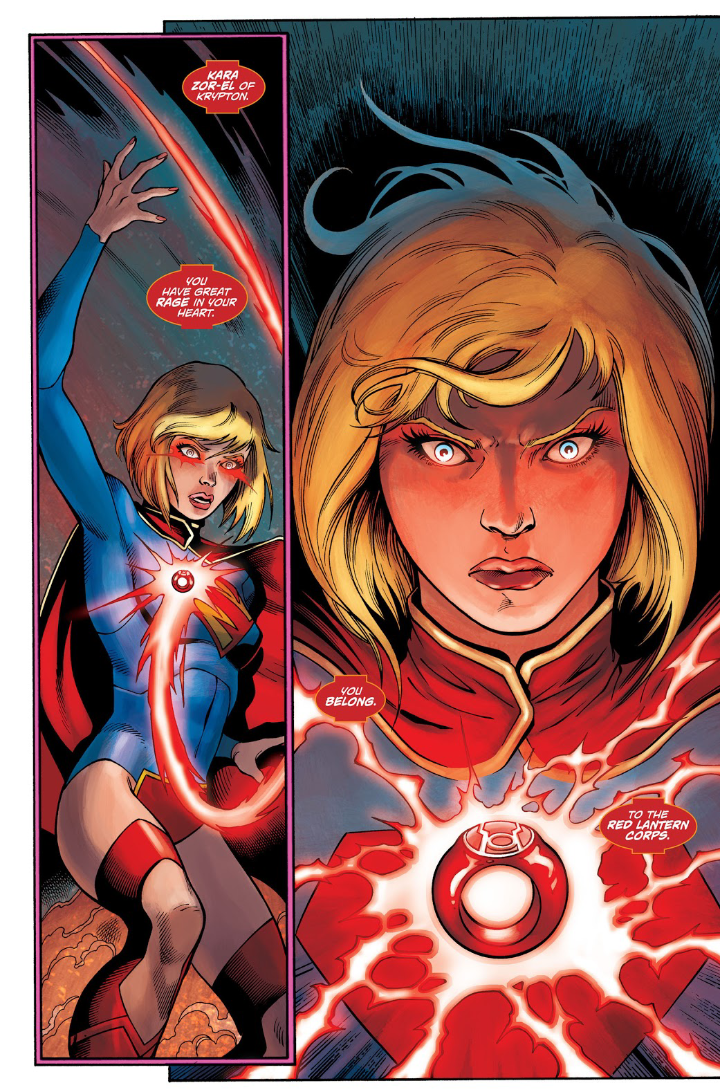
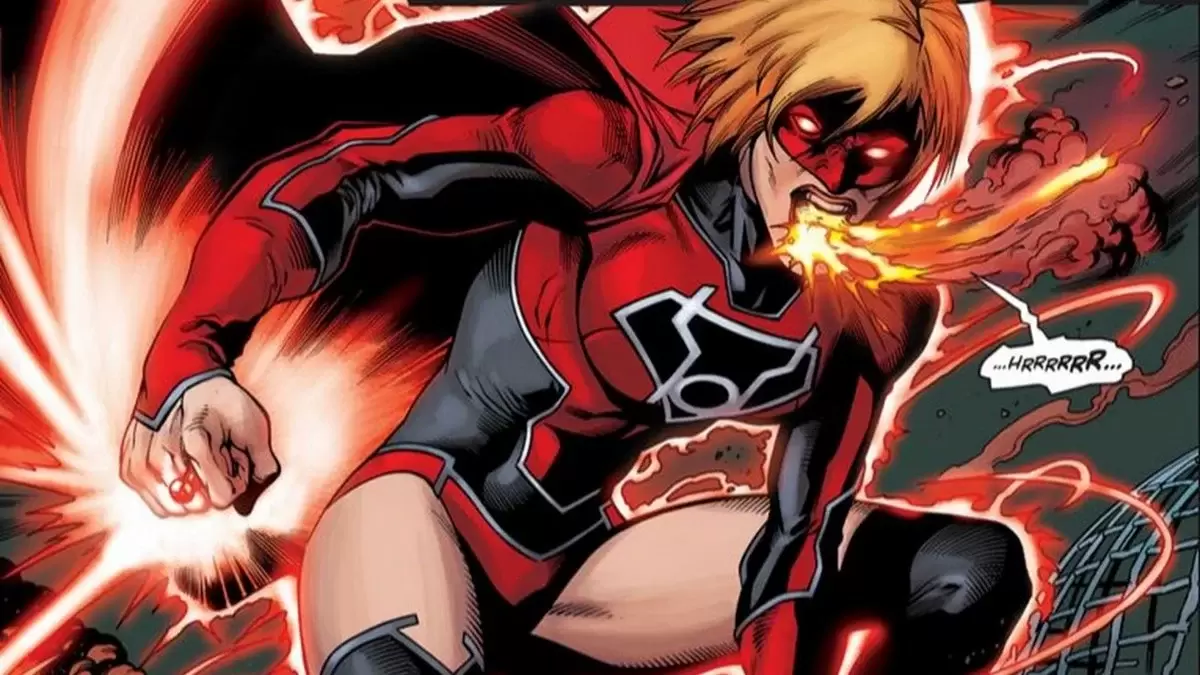
Driven by "extreme rage," she briefly became a member of the Red Lantern Corps, blinded by the influence of a Red Lantern ring. Although she eventually regained her senses and left the Corps, this experience highlighted the most significant difference between the New 52 Supergirl and Superman—she was more impulsive, more lost, and more directly grappling with unhealed trauma.
Later, when DC entered its "Rebirth" era in 2016, Supergirl's character was adjusted again, this time blending classic and contemporary elements. In this period, Kara was given adoptive parents on Earth, the Danvers, and began working with the D.E.O. (Department of Extranormal Operations) while navigating life as a high school student.
This change was a clear nod to the then-popular CW television series "Supergirl." It also placed the comic book version of Kara back into a more relatable framework, showing readers she was not just a Kryptonian survivor but also a young woman learning to live on Earth and build relationships.
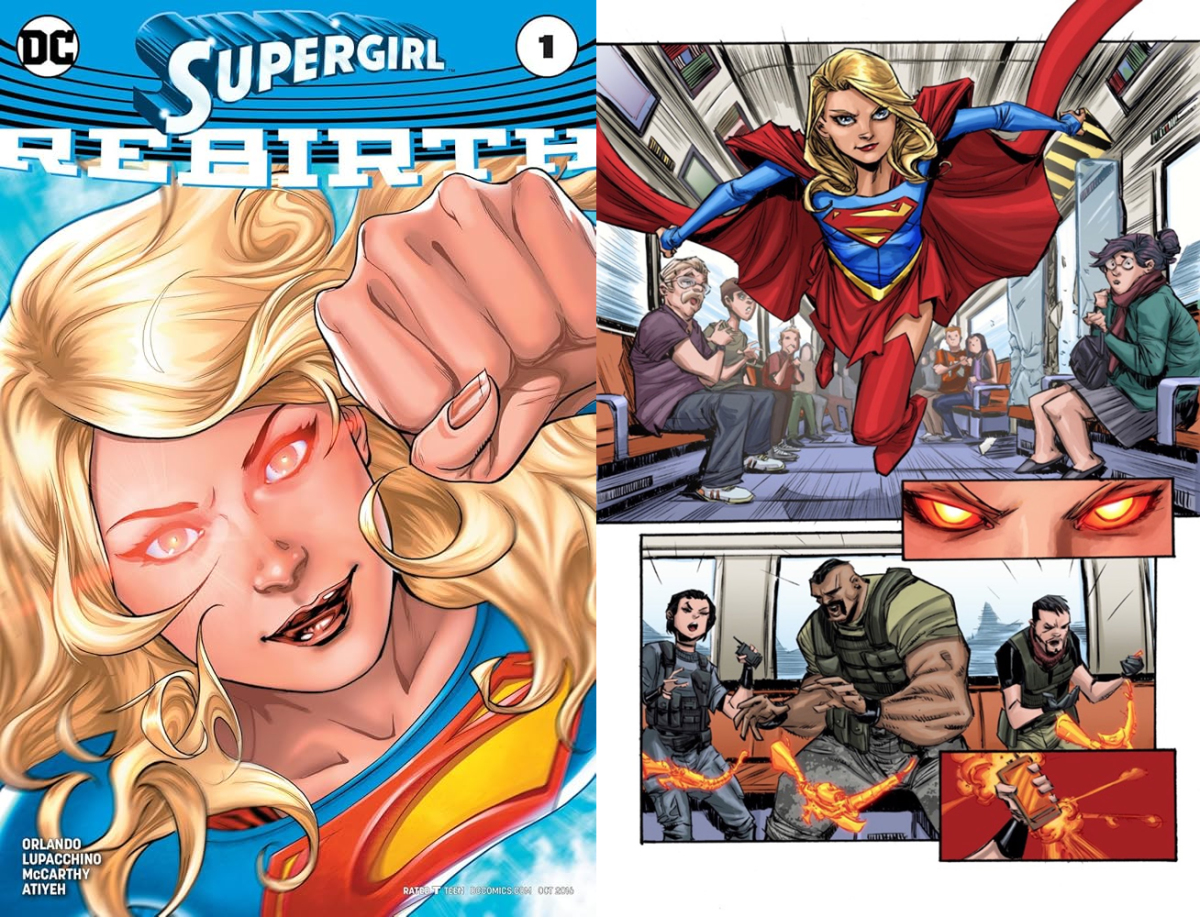
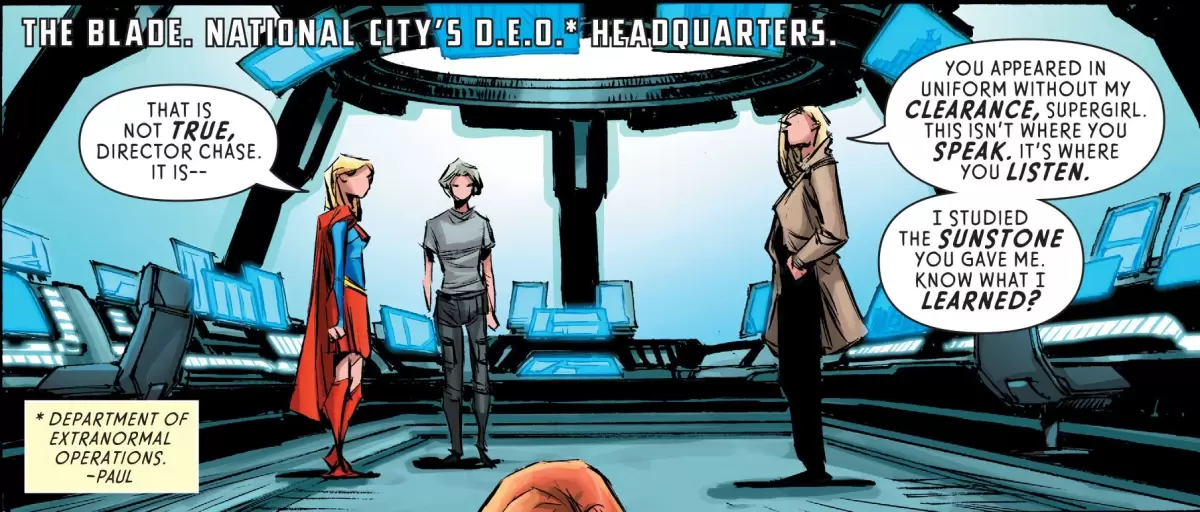
In contrast to the heavy tone of the New 52, the "Rebirth" era returned Supergirl to a brighter, more heroic path. The stories no longer focused solely on her anger and confusion but recentered on her sense of responsibility as a representative of Krypton and her growing sense of belonging on Earth.
Of course, she still carried the pain of her home's destruction, but this trauma no longer pushed her toward losing control. Instead, it became the reason she could understand and protect others. Her costume design also reverted to a more traditional skirted look with a brighter color palette, paying homage to the Arrowverse version and bringing her image closer to the "Supergirl" familiar to the general public.
Subsequent storylines, including 2018's "The Killers of Krypton," continued along this character trajectory, with Kara seeking the truth behind Krypton's demise while redefining her place in the universe after such a profound loss.
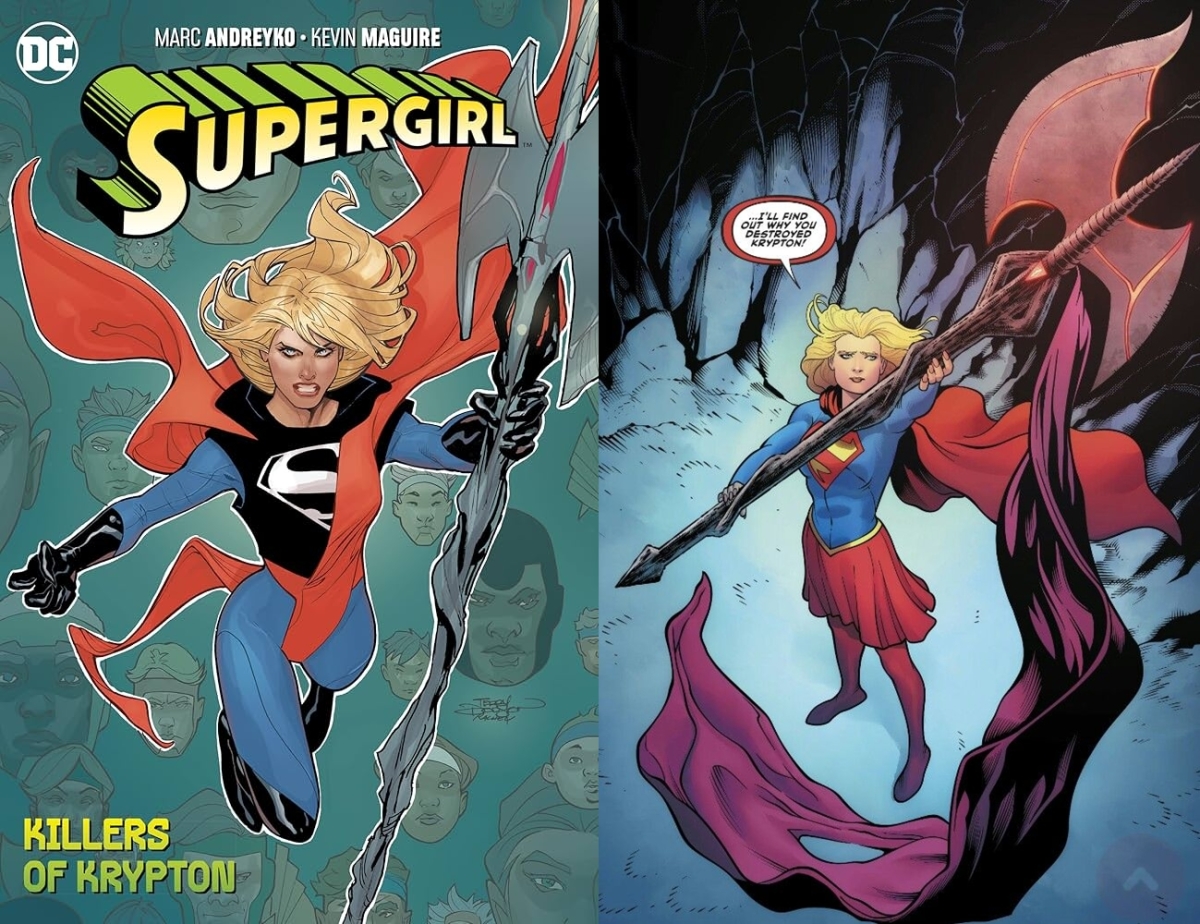
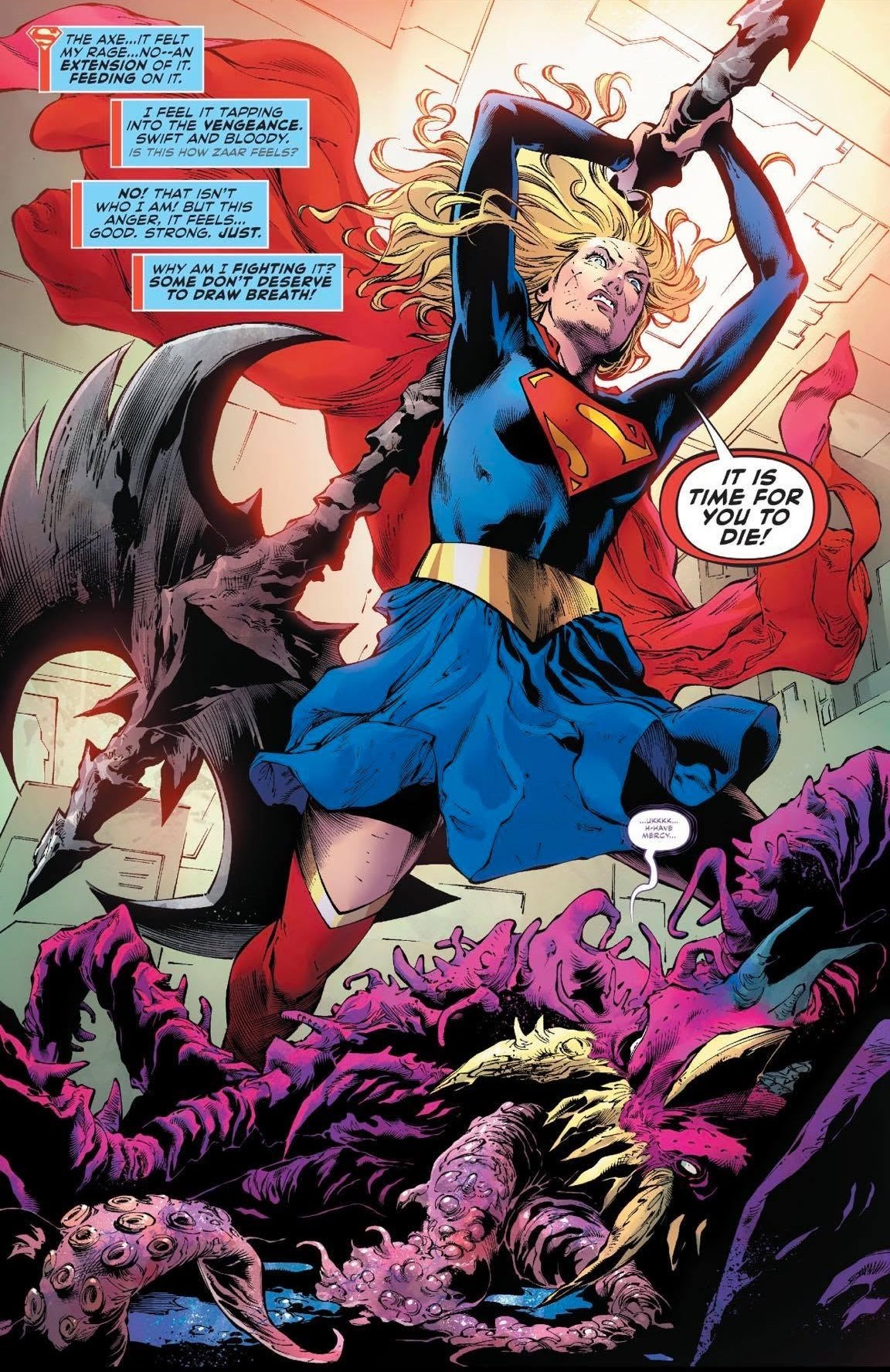
As emphasized earlier, Kara Zor-El's more human and emotionally authentic traits have been a consistent thread through all these eras. Unlike Clark, who was raised on Earth by human parents, Kara remembers Krypton. She experienced a home that was real, vibrant, and then suddenly stolen from her, making her sense of loss uniquely tangible.
As a result, Supergirl often displays far more intense emotional reactions than Superman in many storylines. She feels anger more fiercely, grapples with loneliness from her losses, and is tormented by a past she cannot change. She also struggles with a sense of confusion, torn between her Kryptonian heritage and her new life on Earth.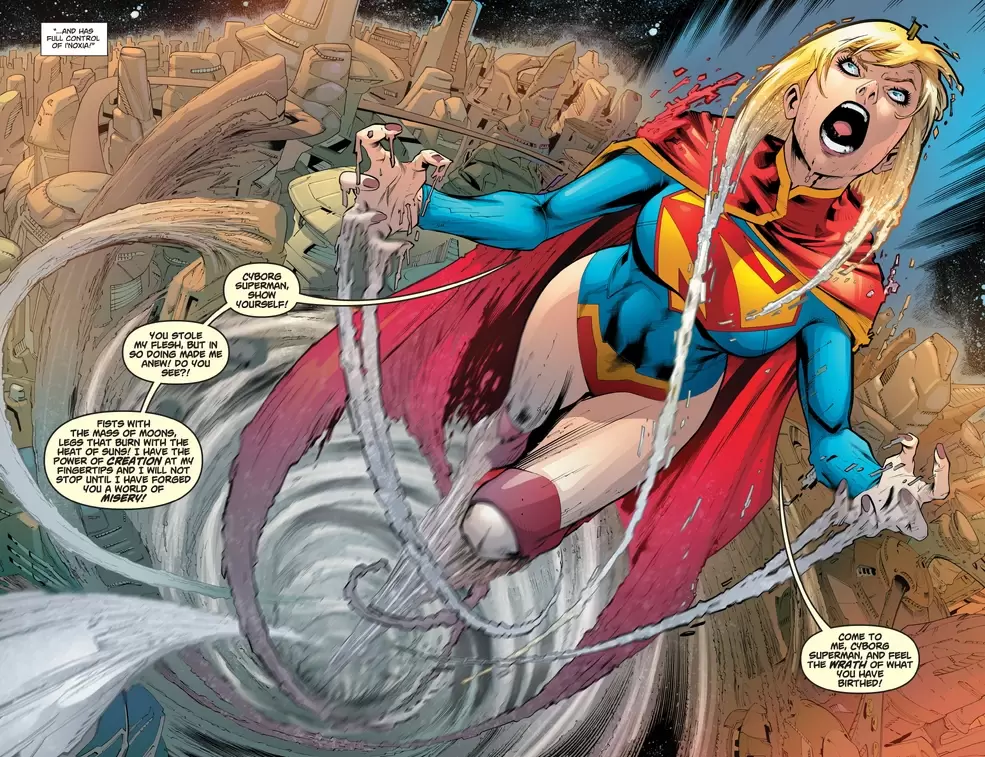
However, these emotions don't diminish her heroic stature. Instead, they give the character a richer psychological depth. What fans often see isn't a perfect, beautiful, or sexy blonde bombshell, but a young woman learning to become a true hero while navigating a complex mix of grief, anger, and hope.
This characterization is central to key works, including the recent comic series "Supergirl: Woman of Tomorrow," where this trauma and emotional turmoil become the very core of her motivations. Kara chooses to protect others not because she has never been hurt, but because she understands the weight of loss better than anyone. It is through this lens that Supergirl exhibits a different kind of humanity, distinct from Superman's.
▌Portrayals in Animation and Live-Action
● Kara Zor-El in the Animated Universe
Supergirl's evolution hasn't been confined to the pages of comic books. Through various animated series, live-action shows, and film adaptations over the years, her image has been repeatedly reinterpreted, transforming her from an extension of the Superman mythos into an independently recognizable female hero in popular culture.
While portrayals of Kara Zor-El across different media don't always strictly adhere to comic book canon, they consistently preserve her most essential traits: she is a survivor from another world and a young hero who must find her place in a strange new one.
In animation, Supergirl's earliest appearances can be traced back to the 1970s series "Super Friends," but it was the DC Animated Universe (DCAU) of the 1990s that truly established a distinct animated identity for her. In the later seasons of "Superman: The Animated Series," the creators introduced a teenage version of Supergirl. Because the main comic continuity at the time had not yet restored Kara Zor-El as Superman's Kryptonian cousin, the animated series adapted her origin: she was a survivor from Krypton's neighboring planet, Argo. Her name remained Kara, but her surname was changed to In-Ze, and she was not related to Superman by blood.

Despite this change, the DCAU's Supergirl still embodied the spirit of the character familiar to many viewers. She was taken in by the Kents, looked up to Superman as a brotherly mentor, and displayed an independent, impulsive personality befitting a teenager eager to prove herself. This version's costume, a white crop top paired with a blue skirt, had a distinct 1990s feel that set it apart from her traditional red-and-blue uniform.
Later, in "Justice League Unlimited," she not only fought alongside Superman but ultimately chose to join the Legion of Super-Heroes in the 31st century to find her own path. This ending clearly highlighted the core theme for the animated Kara: she wasn't just Superman's young sidekick but a hero seeking a space to grow on her own terms, outside of his immense shadow.

This theme carried over into later animated projects. The 2023 animated film "Legion of Super-Heroes," for instance, once again centered on Supergirl, depicting her difficulty adjusting to life on Earth. On Superman's advice, she travels to the 31st century to train at the Legion Academy, joining other young heroes to combat dark forces.
Kara has also appeared in various other animated features. "Superman/Batman: Apocalypse" adapted the 2004 storyline of her return to the main DC Universe, while "Superman: Unbound" revisited the trauma of Krypton's destruction through her confrontation with Brainiac.
Regardless of the specific adaptation, Supergirl in animation is often portrayed as a young, impulsive, yet brave and kind Kryptonian hero—another beloved red-and-blue figure who has captured the hearts of audiences alongside Superman.
● Supergirl in Live-Action: From a Big-Screen Classic to a TV Icon and Back Again
Supergirl's first leading role in live-action can be traced back to the 1984 film of the same name, "Supergirl." The movie starred Helen Slater as Kara, chronicling her journey from Argo City to Earth.
Although the film was not a critical or commercial success upon its release, it later found a dedicated audience through television broadcasts and the home video market. For many, it was their first time seeing a live-action Supergirl, and Slater's portrayal in the classic blue-and-red suit became an iconic version for a generation of fans.
After a long absence from the big screen, Supergirl found a new and prominent home on television. The DC series "Smallville," which premiered in 2001, introduced Kara in its seventh season, played by Laura Vandervoort.
This version maintained her origin as Superman's cousin from Krypton, whose spacecraft kept her in suspended animation for years, only to awaken after Clark had already grown up on Earth. The show's Kara was independent and impulsive, initially clashing with Clark, but remained fundamentally kind and righteous. Her arrival gave a young Clark his first real connection to a Kryptonian relative and allowed the series to further explore Krypton's history and mythology, including elements like the lost city of Kandor.
Notably, Helen Slater, the original 1984 Supergirl, also made a guest appearance in "Smallville" as Clark's biological mother, Lara-El, creating a touching cross-generational homage.
Of course, the role that truly cemented Kara Zor-El in the minds of modern television audiences was Melissa Benoist's portrayal in The CW's series "Supergirl." The show premiered in 2015, launching its first season on CBS before moving to The CW, where it ran for a total of six seasons, concluding in 2021.
In this series, Kara was also sent from a dying Krypton with the mission to protect her infant cousin, Kal-El. However, her pod was knocked off course, and she arrived on Earth years later, by which time Clark had already become Superman. Adopted by the Danvers family, Kara grew up and built a life for herself in National City, initially hiding her powers until circumstances forced her to step into the light and officially become Supergirl.
The series' most distinct feature was its optimistic tone and feminist perspective in reshaping Kara's character. The show not only tackled the classic "Why Supergirl, not Superwoman?" debate but also delved into themes of workplace gender bias, alien immigration metaphors, identity, and family dynamics. This approach transformed Supergirl from a simple superhero into a key figure in a modern female coming-of-age story.
The series portrayed Kara as sunny and kind, valuing friendship and family. She experienced tears and setbacks but always found the strength to rise again after every trial. Her deep sisterly bond with her adoptive sister, Alex Danvers, and her mentor-mentee relationship with Cat Grant gave this version of Supergirl a relatable emotional weight. Because of this, the CW's "Supergirl" became one of DC's most iconic female heroes in film and television, second only to Wonder Woman.
On the film side, Warner Bros.' early DC Extended Universe (DCEU) didn't officially bring Supergirl into the main storyline. It wasn't until the 2023 film "The Flash" that audiences saw Kara back on the big screen.
In the film, Sasha Calle played a version of Supergirl from an alternate timeline. She escaped Krypton alongside Kal-El but was captured by government forces upon arriving on Earth, where she was subjected to years of imprisonment and experimentation. By the time The Flash and Michael Keaton's Batman rescued her, this Kara was no longer the bright, cheerful girl of tradition but a grim, guarded, and formidable survivor hardened by her brutal circumstances.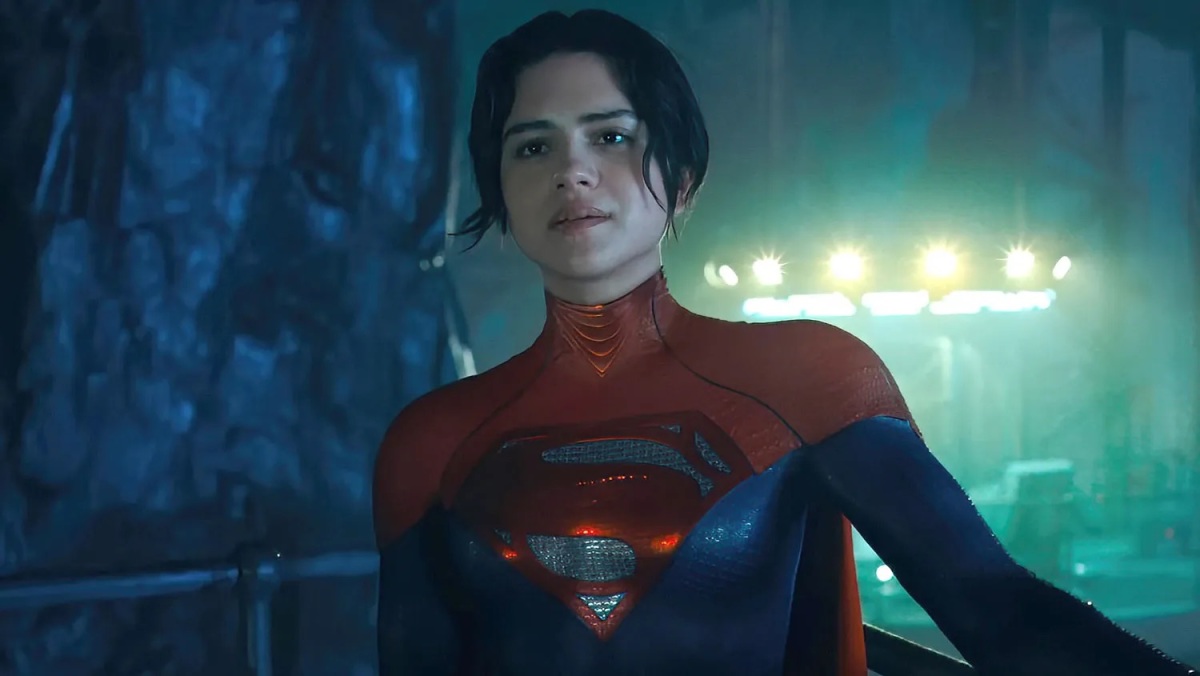
Calle's take on Supergirl was a stark departure from past portrayals. Her fighting style was decisive and fierce, and her emotions were restrained, masking deep-seated trauma. Her costume also ditched the traditional skirt for a blue-and-red bodysuit, aligning more closely with the visual aesthetic of the DCEU's Superman.
Although "The Flash" underperformed at the box office and with critics, this version of Kara left a lasting impression on many viewers. The strength, loneliness, and spirit of sacrifice she displayed in the film brought Supergirl back into the cinematic spotlight after a long absence.
▌Appearances in Video Games
Supergirl also has a powerful presence in the world of video games. Unlike comics, animation, or live-action, games allow players to do more than just watch Kara Zor-El become a hero—they get to experience firsthand what makes her uniquely compelling compared to Superman.
The most iconic example is undoubtedly NetherRealm Studios' "Injustice 2." In this alternate universe, a tragic event pushes Superman toward tyranny, making Supergirl his stark ideological opposite. When Kara first appears, she still holds a deep connection to her family and Kryptonian heritage. However, upon witnessing her cousin abandon his core beliefs, she is forced to choose between kinship and morality.
This positions Supergirl in "Injustice 2" as more than just the Kryptonian powerhouse for the anti-Superman insurgency; she becomes the story's moral compass. Possessing powers rivaling Superman's, she rejects his logic that might makes right. She understands the pain of loss but chooses compassion and protection over ruling through fear. Throughout the narrative, Kara's anger, disappointment, and unwavering resolve when confronting the fallen Superman underscore her heroic core—she refuses to bow to a corrupted vision of justice, even when it comes from her own family.
The game's branching endings amplify this conflict. If players side with Batman's Insurgency, Supergirl helps defeat the tyrannical Superman and becomes a beacon of hope for a new heroic age. If they choose Superman's Regime, she is imprisoned for her refusal to submit. This narrative design makes Kara a pivotal figure in the "Injustice" saga. She isn't Superman's sidekick or a simple female counterpart; she is another Kryptonian who can question him, challenge him, and ultimately carry the mantle of hope herself.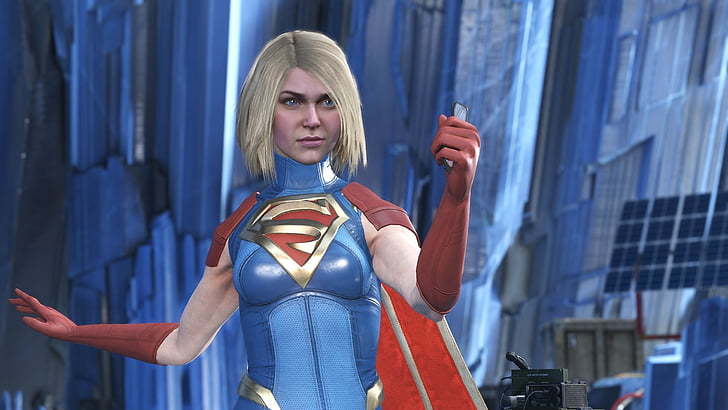
Beyond the gritty "Injustice" series, Supergirl is a frequent fixture in more lighthearted DC games. Titles like the "LEGO Batman" series and "LEGO DC Super-Villains" regularly feature her as a playable or unlockable character. Flying through LEGO cities, using heat vision, and smashing scenery with super-strength offers a fun and direct way to experience her powers. These games also often include various costumes from her history, introducing players to Kara's different looks throughout her comic book legacy.
▌The Symbol of Hope Doesn't Belong to Superman Alone
Across comics, live-action, animation, and video games, it's clear why Supergirl can be continually reinvented: she possesses a core set of distinct and stable traits. While her powers mirror Superman's, her youth, unique experiences, and trauma make her more expressive and emotional, allowing audiences and players to connect with her internal struggles.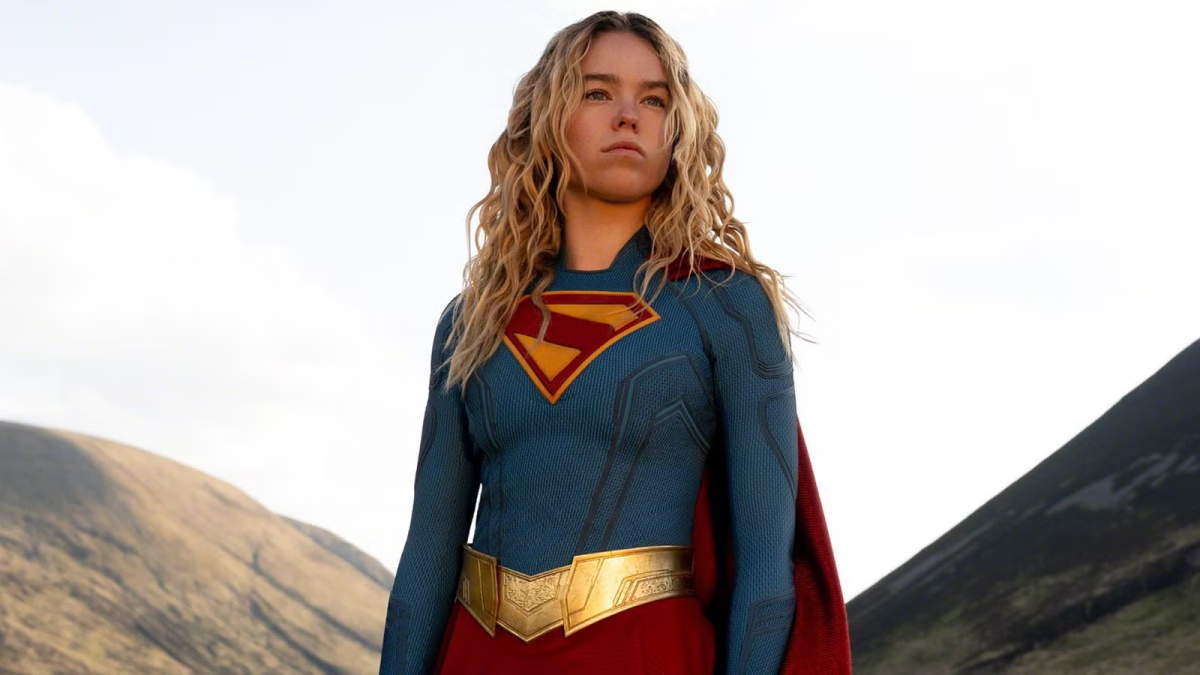
Whether she's confronting the memory of Krypton's destruction in the comics or trying to find her place in a strange new world on screen, Kara's compassion, anger, confusion, and sense of justice are often more central to her character than her powers. She grieves when a loved one loses their way and rages against a past she cannot change. It is these imperfect emotions that make her more than just another hero in a red and blue suit.
What makes Kara Zor-El so compelling is that she isn't a flawless, unshakable symbol of perfection. She is a survivor who lost her home and carries deep trauma, yet always finds the strength to get back up. Her existence is proof that hope isn't exclusive to Superman. Even though they both hail from the same doomed planet, the light Supergirl shines has a warmth and weight all its own.