

The Epic Games Store recently unveiled its annual operational data, highlighting not only growth in third-party game spending but also signaling a major overhaul for the platform itself. For the first time, the company directly addressed long-standing player complaints regarding the launcher's performance and feature shortcomings, promising significant improvements within the year.
In an interview with foreign media outlet "Eurogamer," Steven Allison, Vice President and General Manager of the Epic Games Store, candidly admitted that for years, the team's primary focus had been on developer tools and backend systems, inadvertently neglecting the player-facing experience.
"We have a lot to fix, and these issues have persisted for years," Allison stated bluntly. "The launcher is really bad. It's slow, and there's no denying it."
Allison explained that the Epic Games Store currently re-requests data from its backend with every user action, resulting in a user experience that significantly trails its competitors. He elaborated:
"That feeling of waiting is truly poor, especially when players are simultaneously using other platforms, making comparisons inevitable." To rectify this, Epic initiated a complete re-architecture of its underlying infrastructure in November 2025, with players expected to gradually experience speed improvements starting as early as this summer.

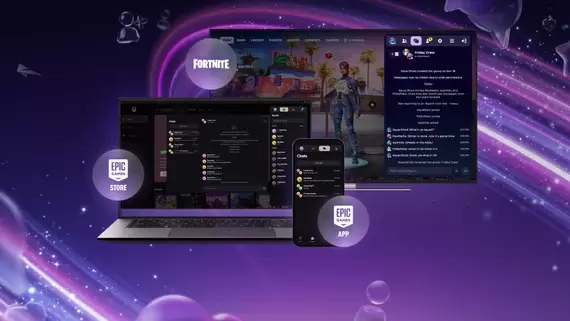
Beyond performance, the lack of robust social features has been another consistent point of criticism for Epic. Allison noted, "Our store has virtually no social framework; it was removed during the pandemic and never reinstated." Consequently, the company plans to introduce player avatars, profiles, private messaging, and cross-platform chat in Q2. By May 2026, voice chat and cross-game party features are slated for implementation, with forum-style community spaces also set for testing before year-end.
Addressing the slow pace of these improvements, Allison explained that in its nascent stages, the Epic Games Store had to prioritize the complexities of a "two-sided market," ensuring developers could seamlessly onboard. "It wasn't that we ignored players," he stressed, "but rather that we had to establish the foundational engineering first."
He concluded by acknowledging that all criticisms "are valid." The team has now redirected the majority of its engineering resources toward enhancing the player experience, aiming to ensure that foundational feature deficiencies no longer dominate future discussions.
via: Eurogamer