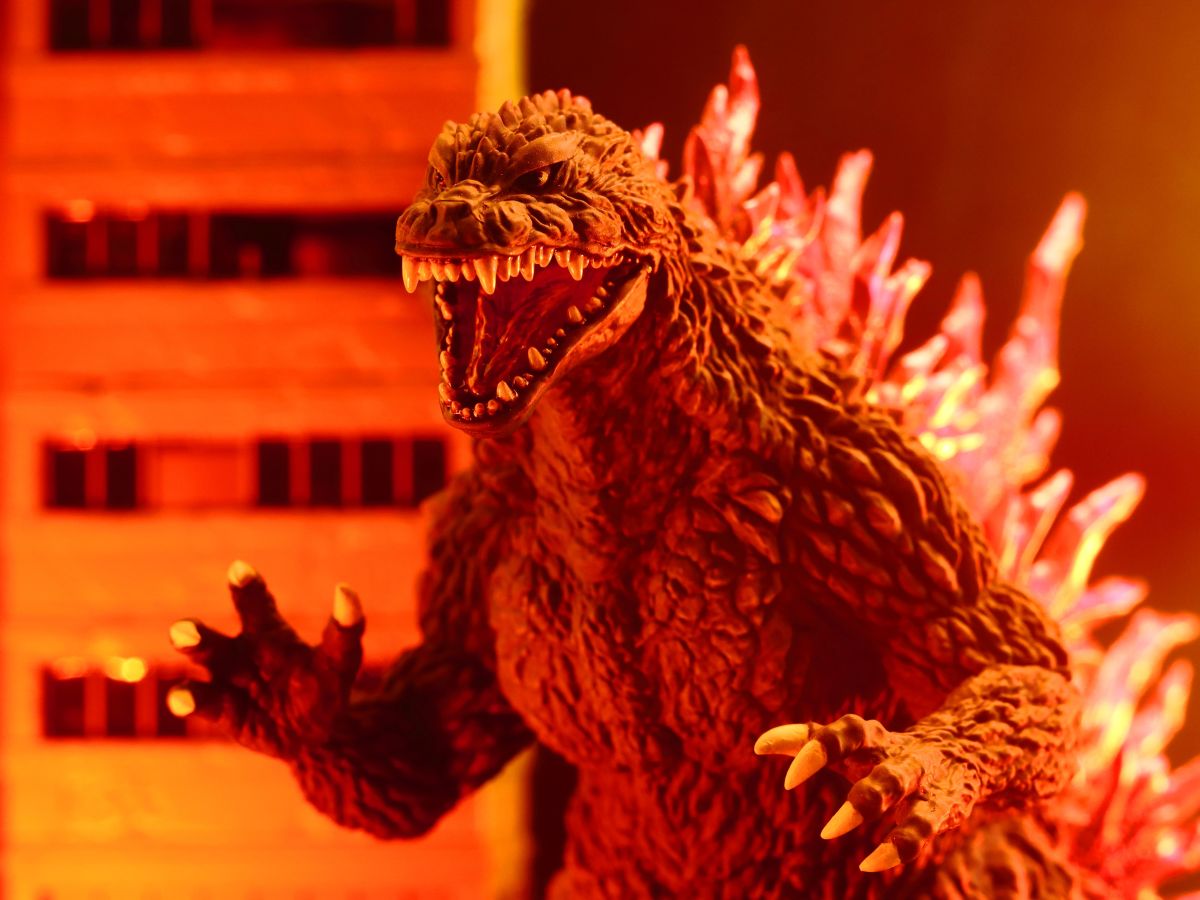

Earth. Destruction. Remodeling. Conquest. Annihilation. Domination.
Terror. Eternity. Glory. Revolution. Kingdom.

Looking back to the turn of the century, the 1999 film "Godzilla 2000: Millennium," starring Takehiro Murata of *Rebirth of Mothra* fame, left an indelible mark. My first time seeing this movie was as a kid, after digging a VCD out of a bargain bin at a local store. I remember watching on our old TV as the giant beast named Godzilla emerged from the pitch-black night, stomped into my small childhood world, and instantly engulfed the city in a sea of hellfire. Combined with Takayuki Hattori's overwhelmingly desperate musical score, the impression it left on me remains as scorching as a thermal blast, even decades later.

Following up on our previous look at the Godzilla -1.0 kit, my anticipation was just as high for the second release in Aoshima's monster model kit series, PLAfig.—the Millennium Godzilla. With a sculpt handled by Japanese modeling artist RYO (Nendoseijin), the realistic biological forms and clever parts engineering had me eager to crack open the box and start building!

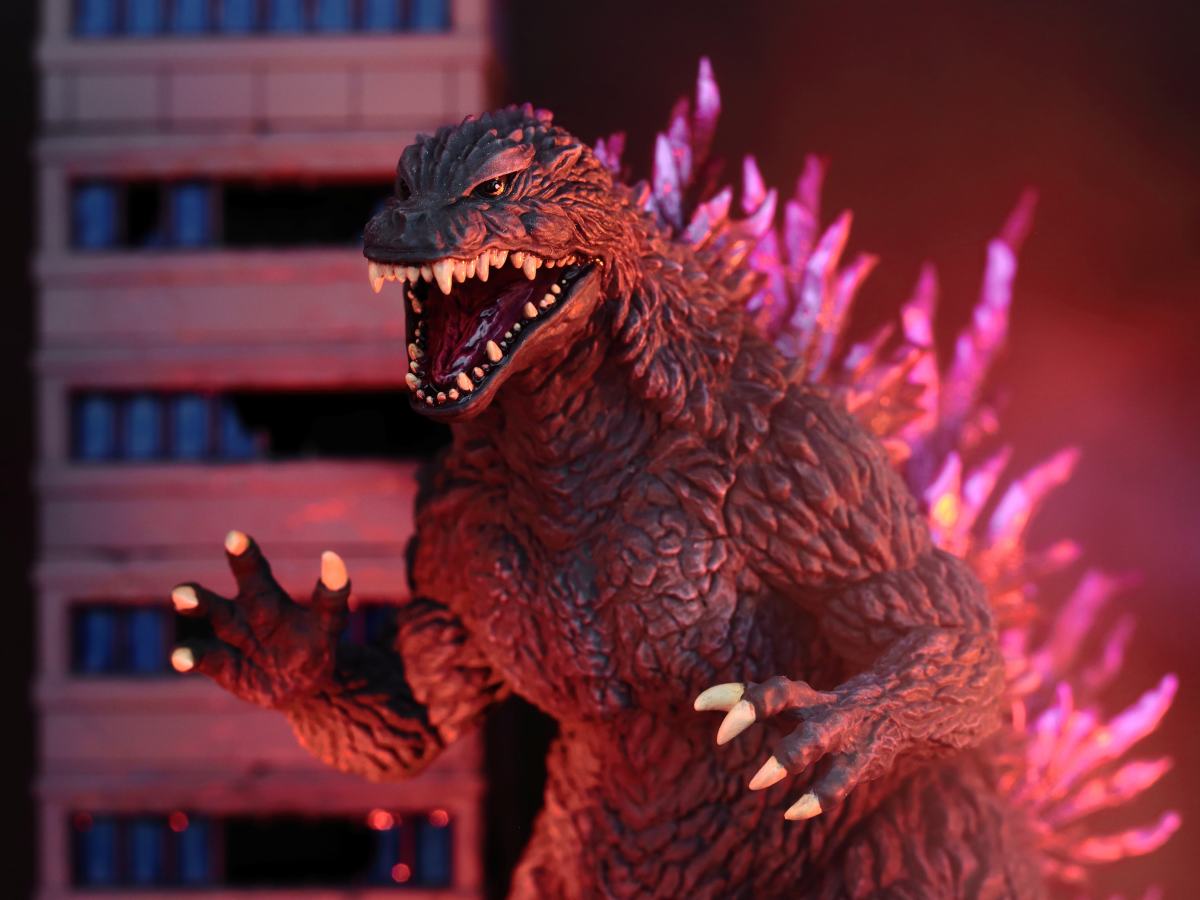
The most iconic feature of "MireGoji" is undoubtedly its sharp, intimidating, lightning-bolt-shaped dorsal fins. The parts feature finely detailed textures on their surfaces. For this build, I opted for the version sold through Aoshima's official online shop, which includes a bonus set of dorsal fins molded in clear plastic. This allows you to choose your preferred look, and the unused parts on the runner serve as a handy reference guide for placement during final assembly.
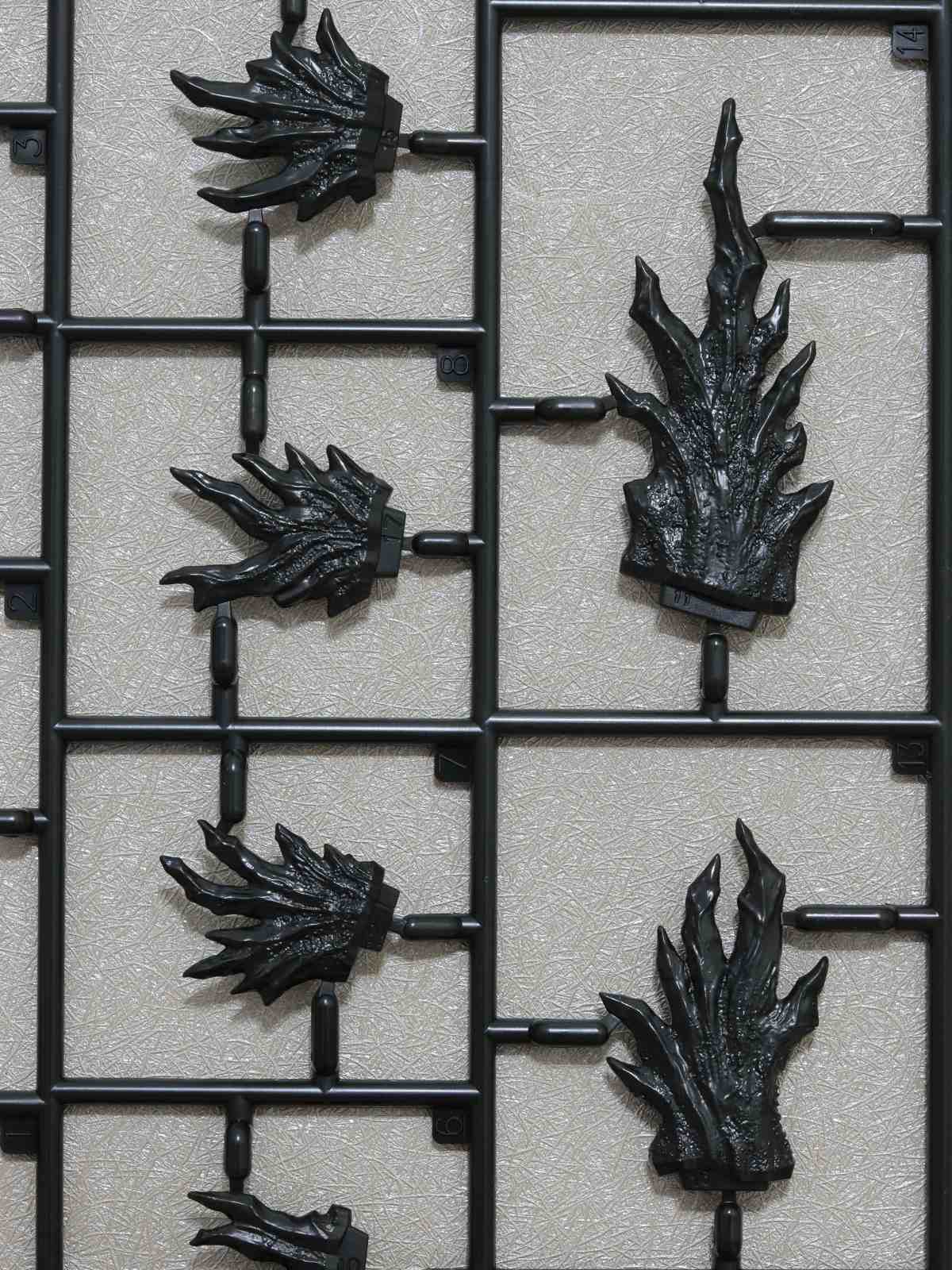
I decided to go with the clear fins for their superior light-transmitting properties. The main body of Godzilla requires plastic cement for assembly, but if you press the parts together firmly, the seam lines are not too noticeable.

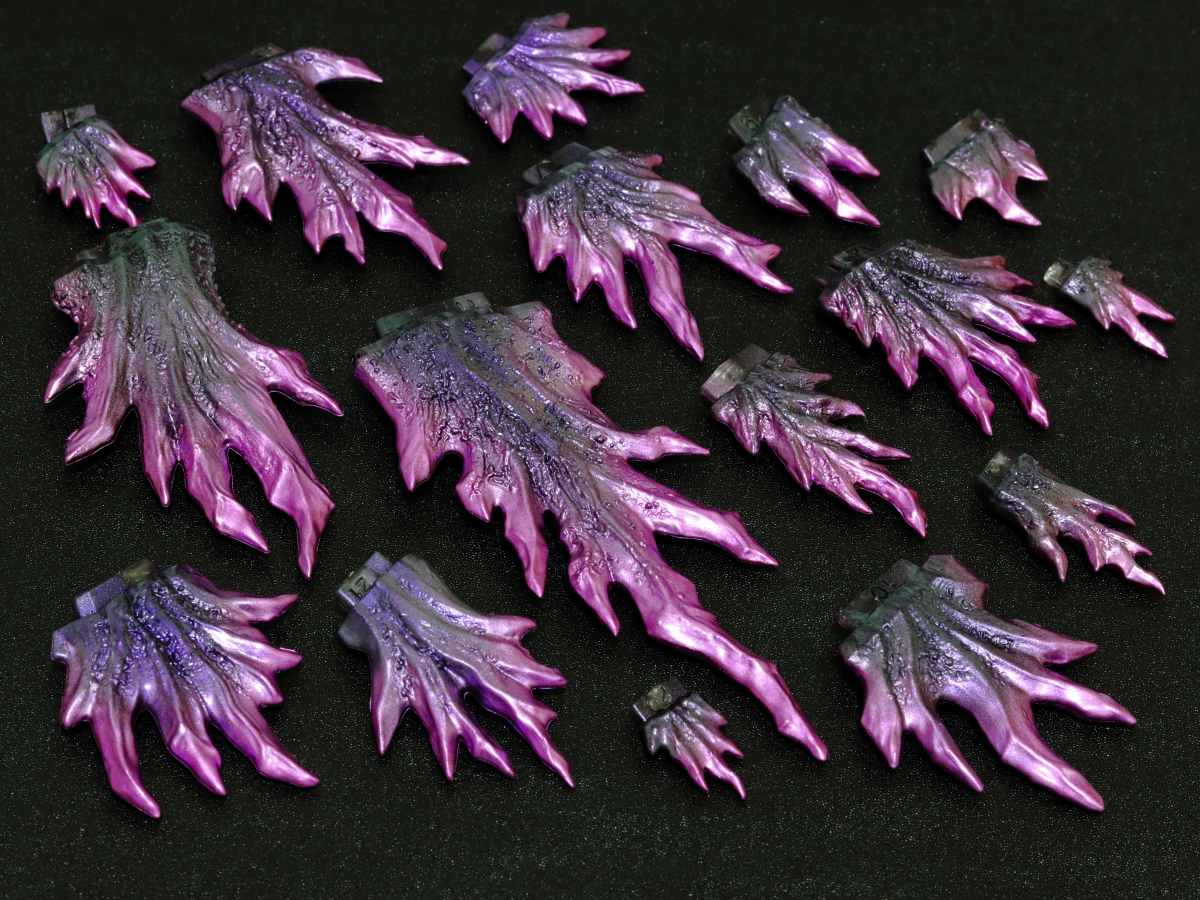
And now for the customary spread of all the dorsal fin parts. I started with a dark green base coat at the roots, then used metallic pink with a touch of purple to create a gradient effect towards the tips, simulating the glow as Millennium Godzilla charges its Atomic Breath.
Next, following the numbered guide, it was time to insert all 38 dorsal fin parts one by one (make sure to count them all and don't lose any!).

Thankfully, the process went smoothly. Here are some shots from different angles:
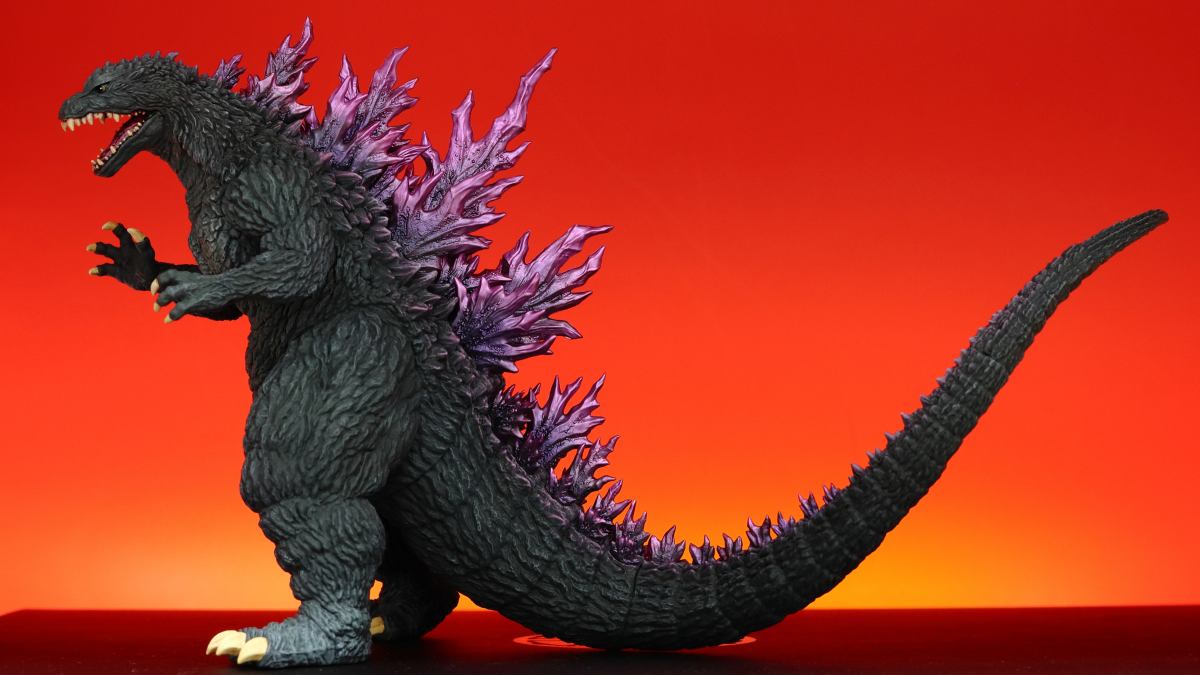
For the paint job this time, I kept it relatively clean, using only a light dry brush to bring out some of the muscle contours.

The tail, constructed from multiple segments, has a very strong sense of motion.

It does take up a bit of space, though. The main body stands at about 13 cm tall, but the total length to the tip of the tail is nearly 25 cm. You'll definitely need to consider the depth of your display cabinet.
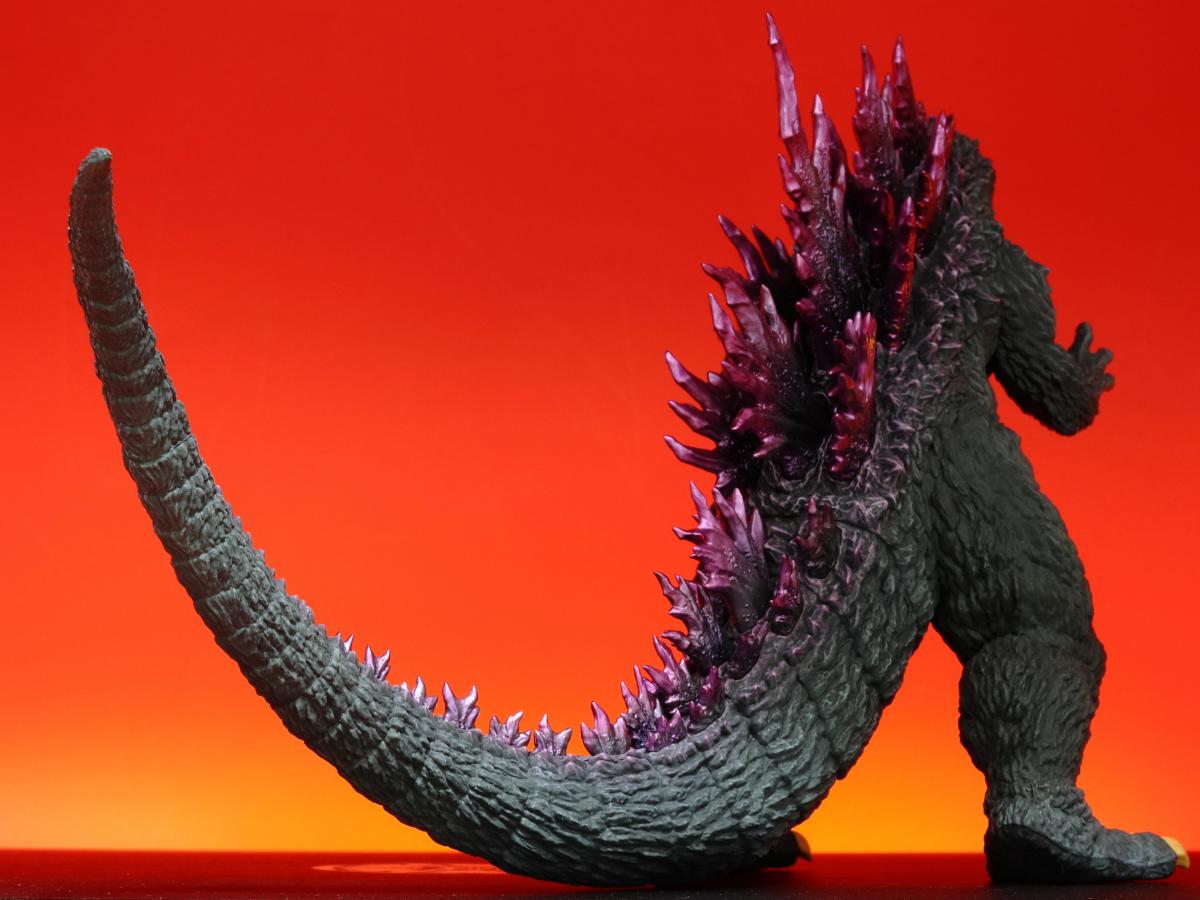
Moving on to the dorsal fins—this is the absolute soul of the Millennium Godzilla. In my opinion, this is the most extravagant and outrageously cool design of any Godzilla generation. It's the ultimate expression of the King of the Monsters.

Under sunlight, the metallic sheen reflects a pinkish-purple glow. This was my first impression of Godzilla, and it's been burned into my memory ever since.

Let's turn him around and get a look at that massive maw. When I first saw the promotional build on the official box art, I thought the thick lips looked a bit awkward. However, after painting the kit myself, I found it looks quite good from most angles.

The grooves and textures inside the mouth are crisp and clear. Applying a wash with transparent red and purple paints really makes the details pop.

The Mitsuo Katagiri (Hiroshi Abe) point of view:
GOJIRAAAAAAAAAAAA!
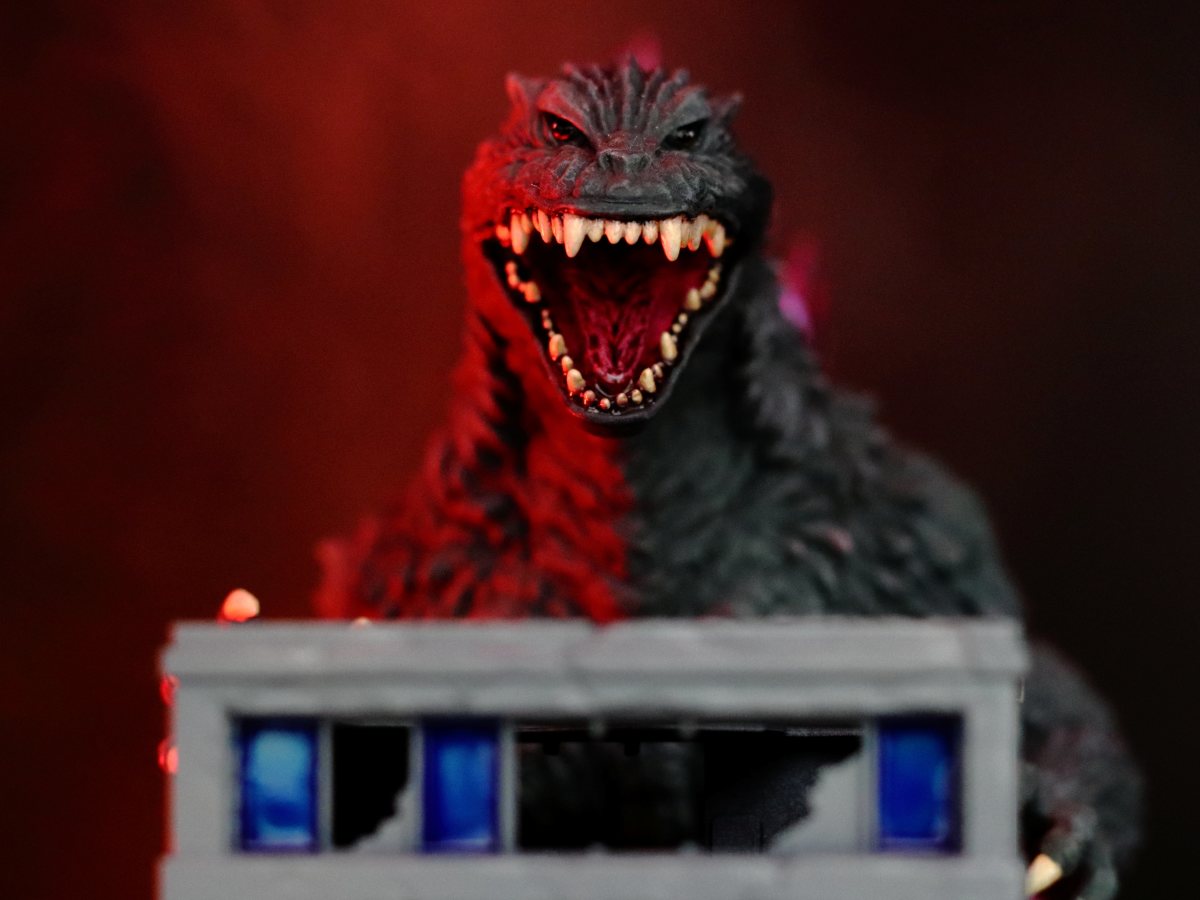
The claws on his hands were painted with an off-white, beige-toned color, with a light dry brush over the surface to highlight the raised areas.
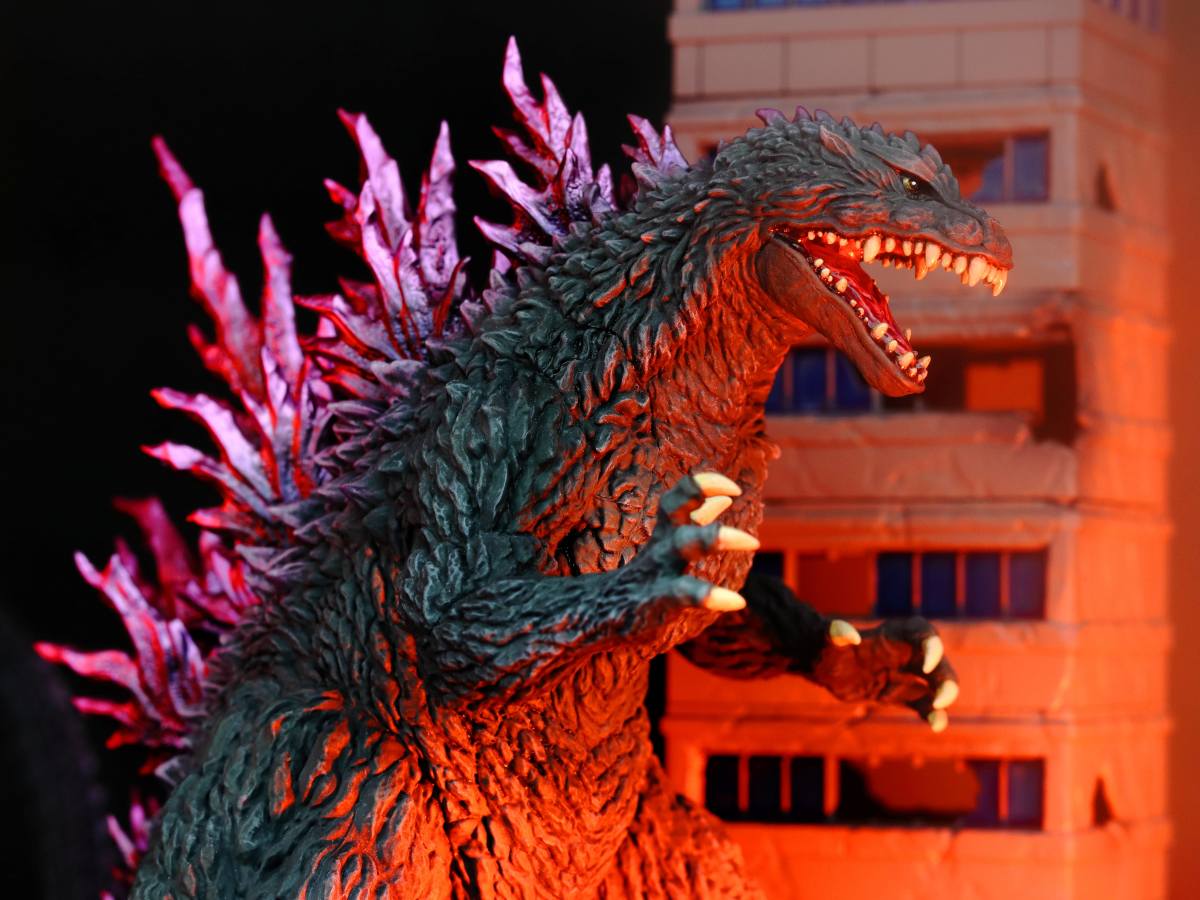
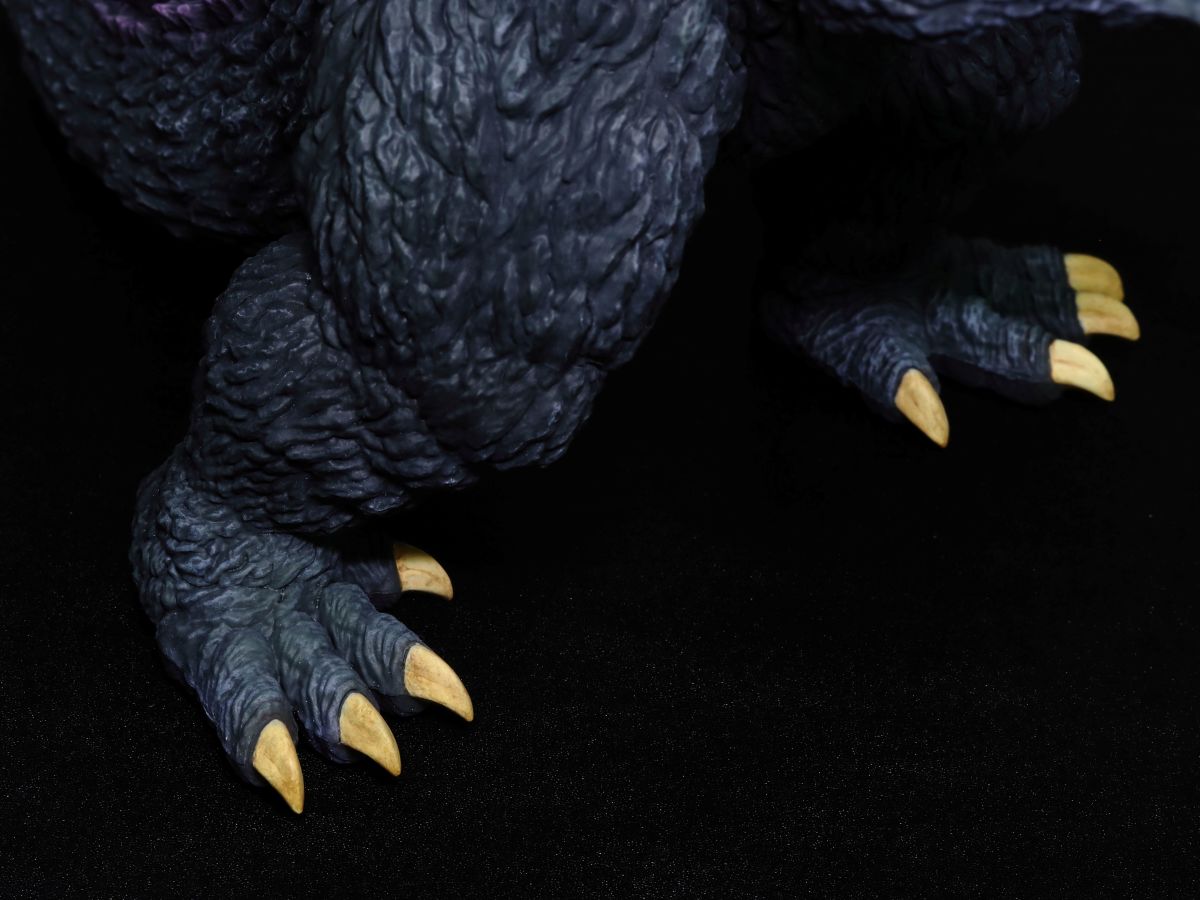
The toe claws received the same treatment, but with an additional brown wash for extra depth.
Drawn by an unknown alien presence, Godzilla appears in Tokyo Bay. Fueled by a vengeful fire, he advances step by step towards Shinjuku......
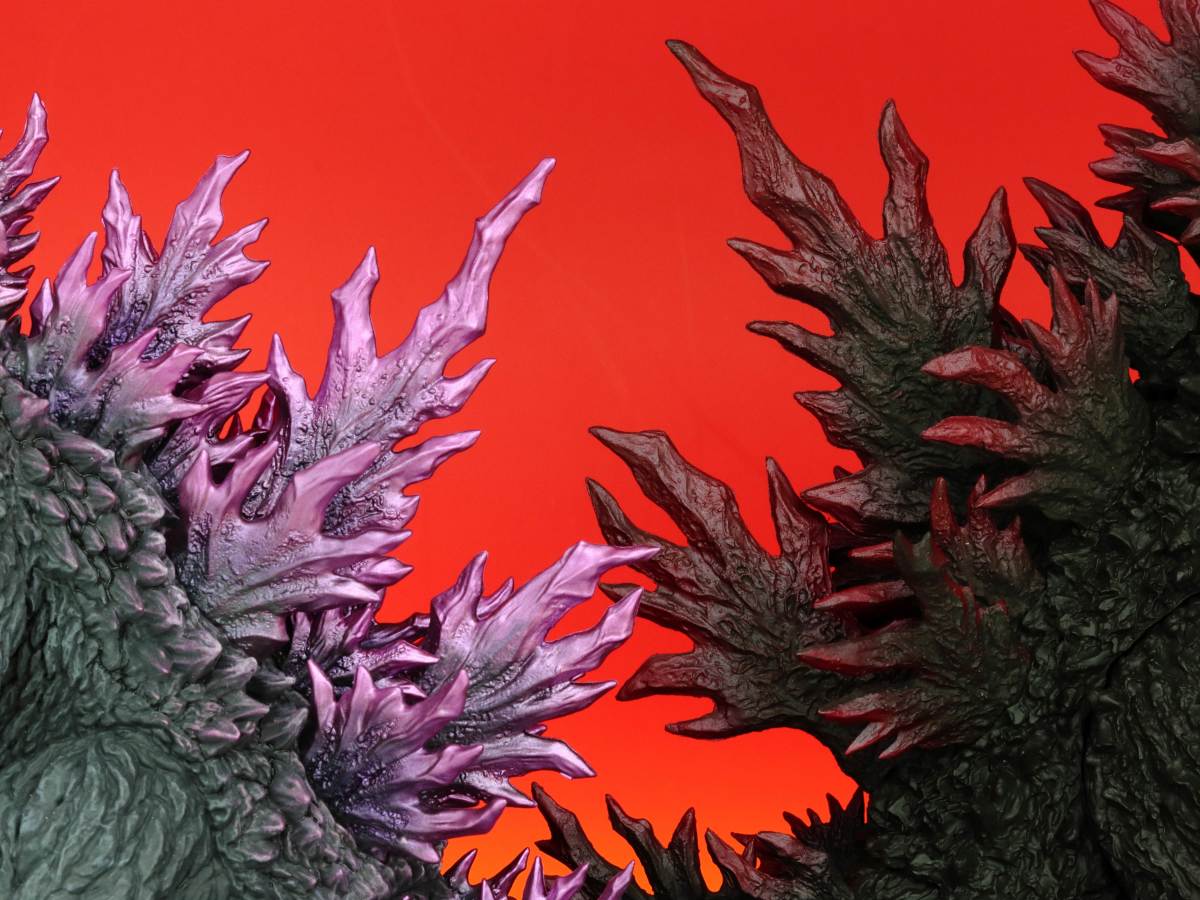
To get a sense of its size and appearance, we have to bring out the previously featured S.H.MonsterArts Godzilla (2000) for comparison. Standing next to the 17 cm tall SHMA figure, the PLAfig. kit is noticeably shorter, looking almost like a juvenile Godzilla next to an adult.

In contrast to the high articulation of the S.H.MonsterArts figure, Aoshima's static-pose kit prioritizes appearance. It sacrifices mobility to eliminate the seam lines and gaps created by joints, resulting in a more complete and aesthetically pleasing sculpt.

The sharpness of the dorsal fins is also where the Aoshima kit has a slight edge. Plus, the use of metallic paint makes for a more vivid and striking display under normal lighting.
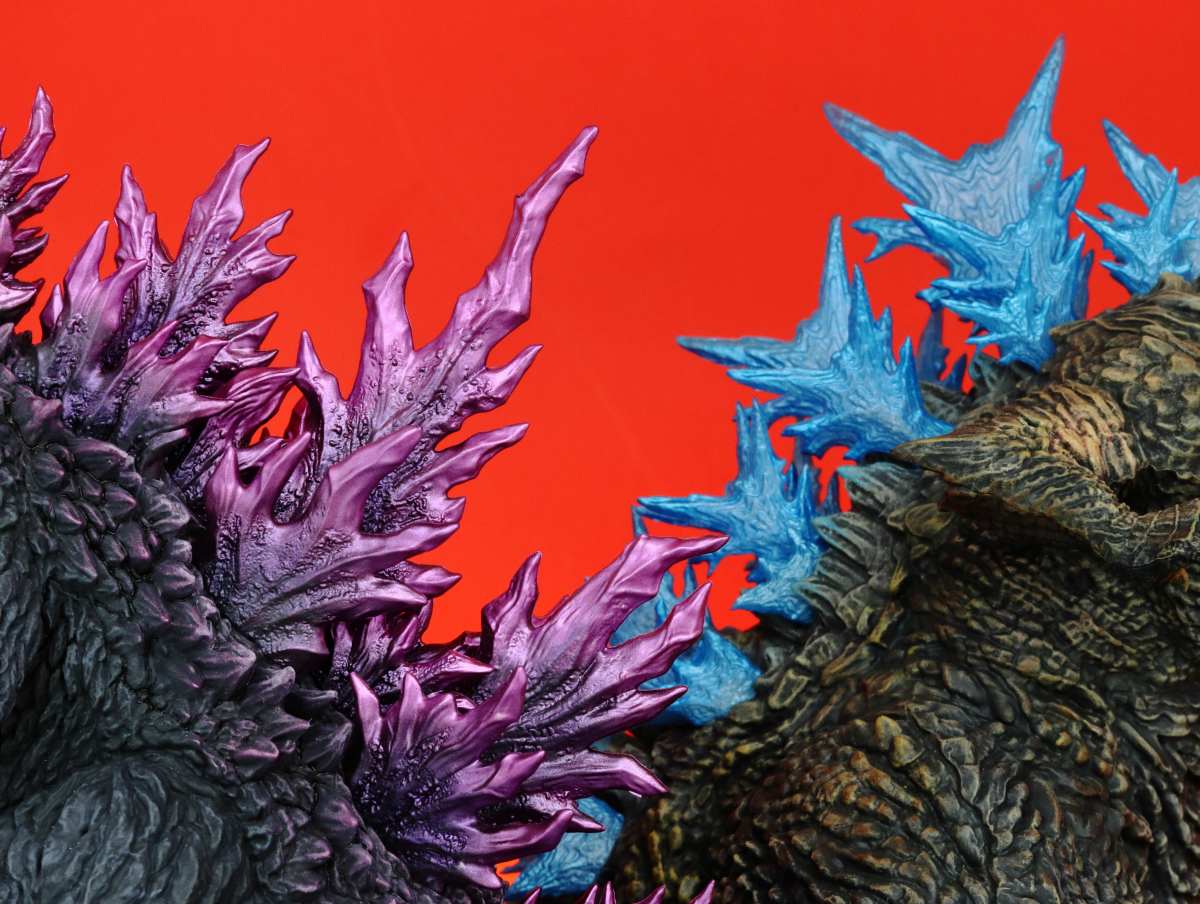
Finally, of course, we have to bring out its predecessor from the same line for a friendly showdown!

The previous Godzilla -1.0 kit, with its forward-leaning, roaring posture, conveys a much stronger sense of visual dynamism. Its silhouette also appears considerably more robust in comparison.

But our Millennium boy is no slouch! Those flame-like dorsal fins erupting from its back are still incredibly eye-catching and command attention!
With more Godzilla films on the horizon, one can only wonder if we'll ever get to see a massive, all-out monster duel between these two titans on the big screen.
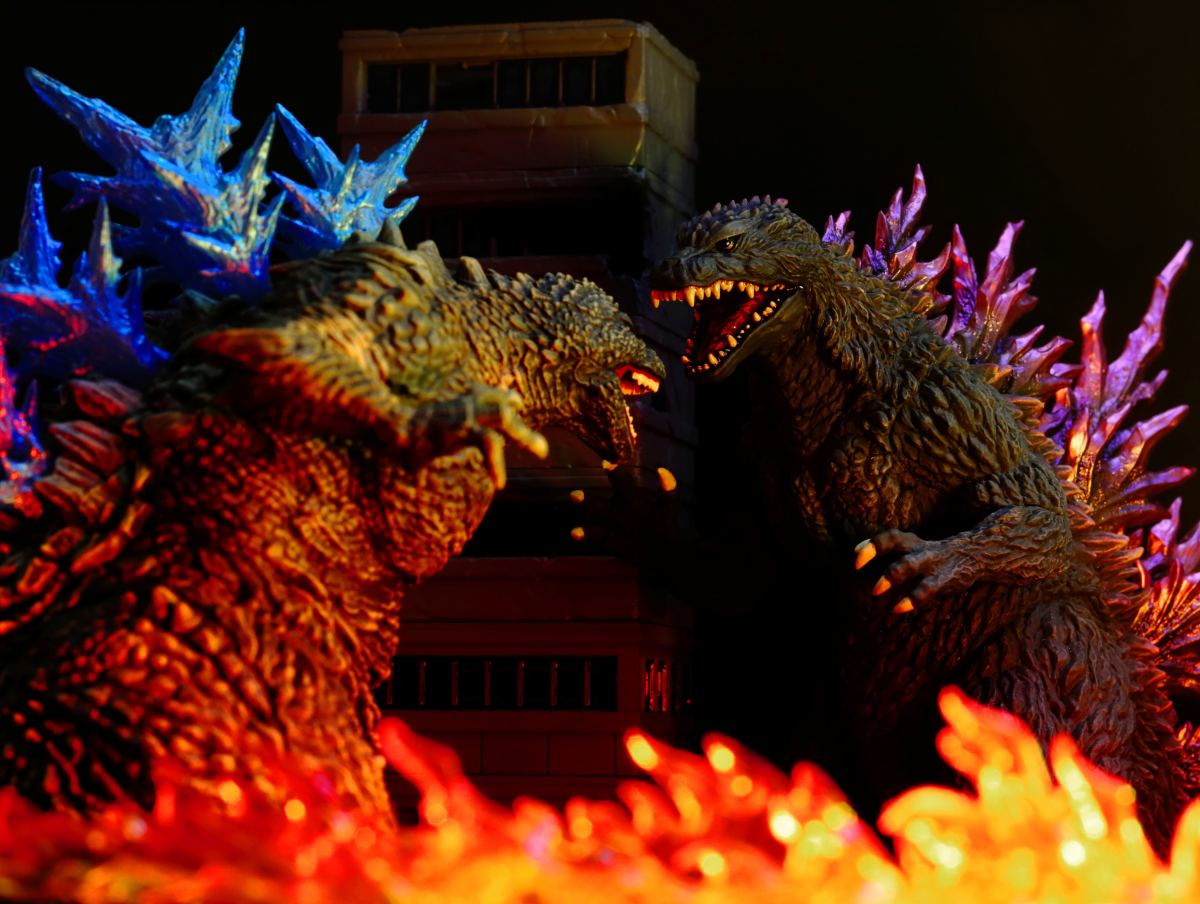
Speaking of new appearances, Aoshima has already planned a repaint of this very kit based on the Millennium Godzilla's return to Shinjuku in the short film "Godzilla Fest 2: Godzilla Appears in Shinjuku." This "Burning" version is on the way, and we can't wait to feel the power of that inferno all over again!