

 (Image: Universal Pictures)
(This article contains spoilers.)
"The Disclosure Day" was the only film I was truly looking forward to this year. This isn't just because Steven Spielberg is the director I admire most, but primarily because I'm a student of ufology. I can almost say my passion for extraterrestrials far exceeds my passion for film, though I don't often show it. But that passion was, of course, sparked by movies—specifically, Spielberg's movies. His "Close Encounters of the Third Kind" and "E.T. the Extra-Terrestrial" were the seminal works that pushed me down the rabbit hole. "Close Encounters," in particular, with its boundless, creeping sense of mystery, has stayed with me to this day. For me, it remains the ultimate alien visitation film, a benchmark of mystique that no subsequent work has ever managed to reach.
Spielberg was once a pioneer, a vanguard who built the foundational understanding of aliens for global pop culture. Therefore, as both a film fan and a UFO researcher, I was incredibly curious to see what new perspectives he could bring with "The Disclosure Day." Speaking purely from the former standpoint, I must regretfully report that after all these years, the researchers he once inspired have long since surpassed him, while Spielberg himself has shown little growth. If your knowledge of aliens is still limited to Grays and blurry photos of flying saucers, you might find this fresh. But if, like me, your understanding has advanced to discussions of the Orion Empire, the Anunnaki, Loosh, and the true origins behind various creation myths, then "The Disclosure Day" feels no more sophisticated than a preschooler's picture book.
(Image: Universal Pictures)
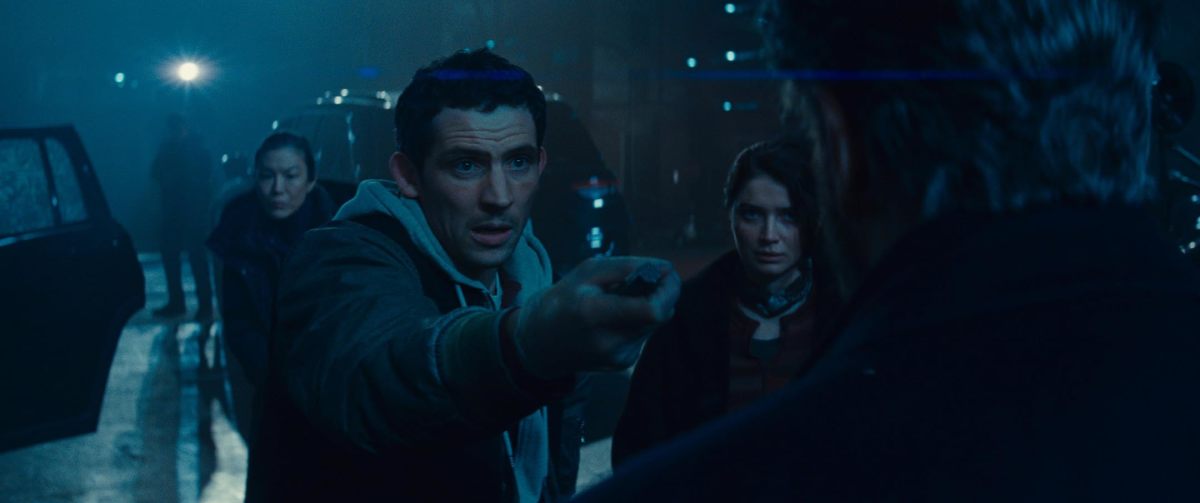
If you're someone who even knows what Loosh is, you'll find Spielberg's information painfully archaic. In this day and age, still looking up at the sky for aliens? The real search should be within government archives, religious texts, and the records of ancient civilizations. They aren't in the sky; they've long been settled on the Earth's surface, and even underneath it. Spielberg himself had aliens helping build pyramids in "Indiana Jones and the Kingdom of the Crystal Skull," so why the retreat? Even if this film is meant as a piece of advocacy to encourage public belief in extraterrestrials, the information presented is far too narrow. A large segment of the public already knows more than Spielberg seems to think. He could have "disclosed" so much more instead of holding back.
However, one of Spielberg's long-held convictions remains surprisingly consistent and, frankly, close to the truth. He has made films about both malevolent, colonizing aliens and pure, benevolent ones. Spielberg consistently categorizes the pure aliens as "external visitors seeking to establish communication," not as "cosmic developers who arrived thousands of years ago to build civilizations." He tends to portray the former as good and the latter as villains. This aligns with the lore, as the beings said to have created and controlled us—whether the Orion Empire or the Anunnaki (some believe they are the same race)—did indeed operate like developers, or perhaps ranchers and miners.
 (Image: Universal Pictures)
These external visitors, by contrast, typically had no direct part in humanity's genetic engineering and are often adversaries of the Orion Empire. Their purpose in intervening in human civilization is primarily to elevate the planet's overall spiritual consciousness, to awaken the spiritual side of us that has long been suppressed by the Orion Empire, and to help us escape its manipulation. This is to prevent us from heading toward self-destruction or spreading our potential for harm to other planets in the galaxy. The visitors depicted by Spielberg in "Close Encounters of the Third Kind" belong to this category, and now, in "The Disclosure Day," he has returned to this same concept, coming full circle to his creative origins.
The purpose of "The Disclosure Day" is similarly meant to "inspire," but for some reason, Spielberg keeps it deliberately vague. He mixes in a secondary justification involving accusations against the government for its long-term, inhumane dissection and imprisonment of aliens. It seems like a move to prevent audiences from thinking the whistleblower is just an immature kid wanting to tell the world aliens exist, so he adds a plotline reminiscent of critiques against the CIA's brutal interrogation of terrorists. But for anyone even slightly familiar with the lore of "alien-human government relations," this is a hard sell. The common understanding is that humans have only dissected deceased alien bodies while treating living ones well, even engaging in equal technological research exchanges. Even setting that lore aside, the idea of humans brazenly performing live dissections is absurd. Did they not consider it would provoke their kind to retaliate with war? We're talking about a higher civilization; killing us would be as easy as crushing an ant.
 (Image: Universal Pictures)
From the outset, Spielberg misunderstands the purpose of disclosure, and the new motive he invents isn't clever at all. He seems genuinely afraid that after the reveal, humanity will lose faith in God, causing a collapse of belief systems and sending the world into chaos. This concern might have held weight fifty years ago, but in this era—after years of indoctrination by entertainment culture and the occasional government intelligence leak or whistleblower reveal—the public has largely accepted the possibility of alien existence. Besides, religions wouldn't completely collapse. God isn't non-existent; they just aren't what we imagined. The spiritual world still exists, and those who truly understand it know that systems like reincarnation, karma, and the third eye have always been there. The image of God may be false, but what they represent remains true.
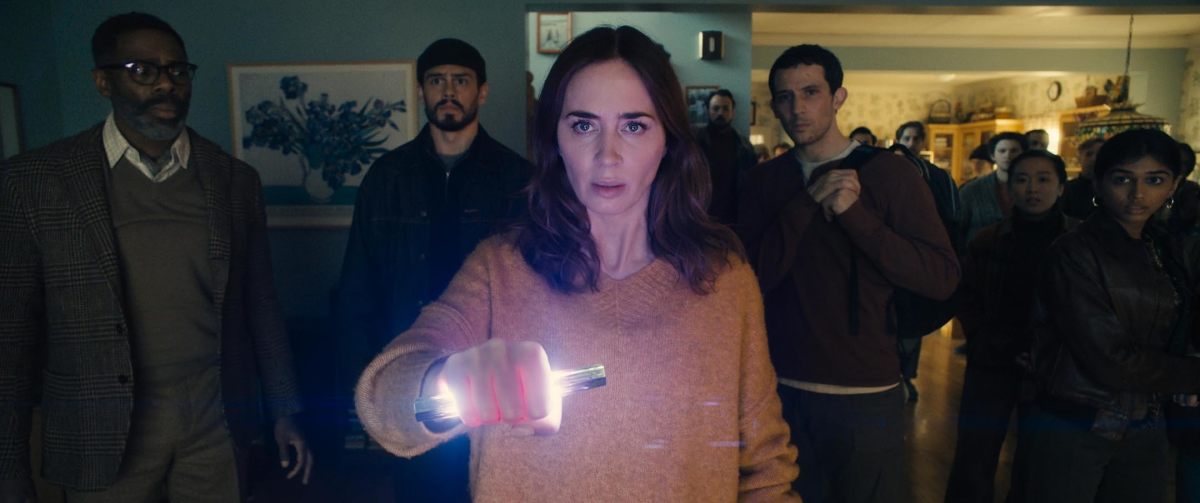
Perhaps Spielberg failed to research this point, which is why he has Eve Hewson's character, Jen, worry excessively, hesitating to assist with the disclosure and saddling the character with an entire segment of pointless theological debate. It's not that a debate is unwelcome, but Spielberg's entry point is wrong, or at least not comprehensive enough to touch the core of the issue. And I strongly suspect Spielberg has forgotten that M. Night Shyamalan once made a film called "Signs," which depicted a man who had lost his faith miraculously rediscovering it during an alien invasion. Shyamalan didn't get bogged down in whether to disclose or not; he tackled the issue head-on, and the resulting philosophical clash was far more interesting than Spielberg's hesitant and overwrought approach.
(Image: Universal Pictures)
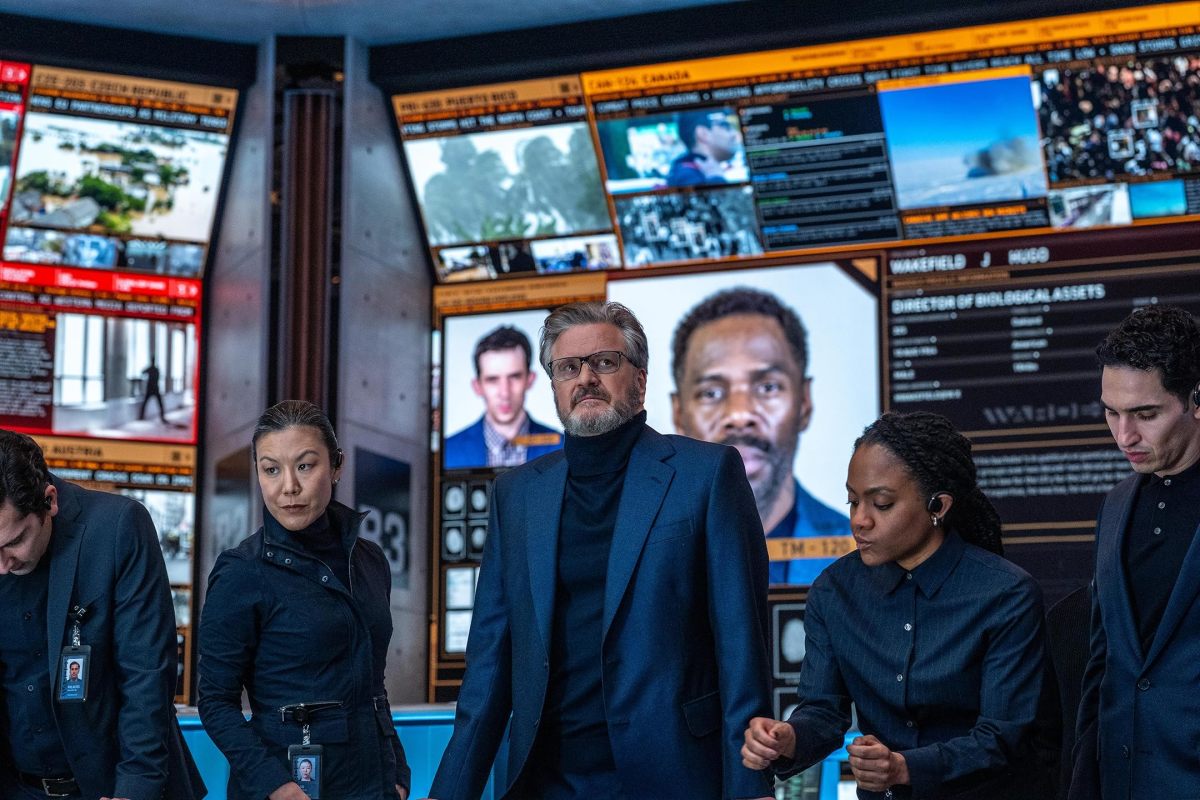
The real disclosure debate Spielberg should have explored is why the government is hiding the truth, and it has nothing to do with the flimsy excuse that "humanity can't handle it." The real reason, as I mentioned earlier, is that the Orion Empire is suppressing our spiritual side (and this isn't my own fabrication; it's a widely circulated theory). The true puppet masters behind world governments are the Orion Empire. They feed on low-frequency negative human emotional energy, and to generate this negativity, they create class systems, wars, hatred, and division to incite humans to fight and despise one another. They are like screenwriters scripting our world, planning a schedule of events: war in January, a pandemic in February, a MeToo movement in March, and so on. This programming schedule is already stacked for thousands of years into the future, and we are all just puppets unknowingly following their script.
What the government is truly covering up isn't the existence of aliens, but the fact that a full confirmation would uproot this entire system, making it much harder to "farm" humanity. This is the angle Spielberg should have filmed, not pondering whether "humanity can handle it." I don't know if Spielberg is genuinely unaware of this information or simply afraid to tackle it. He has repeatedly insisted in interviews that "The Disclosure Day" is not a science "fiction" film but a "speculative science" film—a claim he's been making since he directed "Close Encounters of the Third Kind." And yet, here I am, a mere audience member, speculating more deeply and seriously than he is.
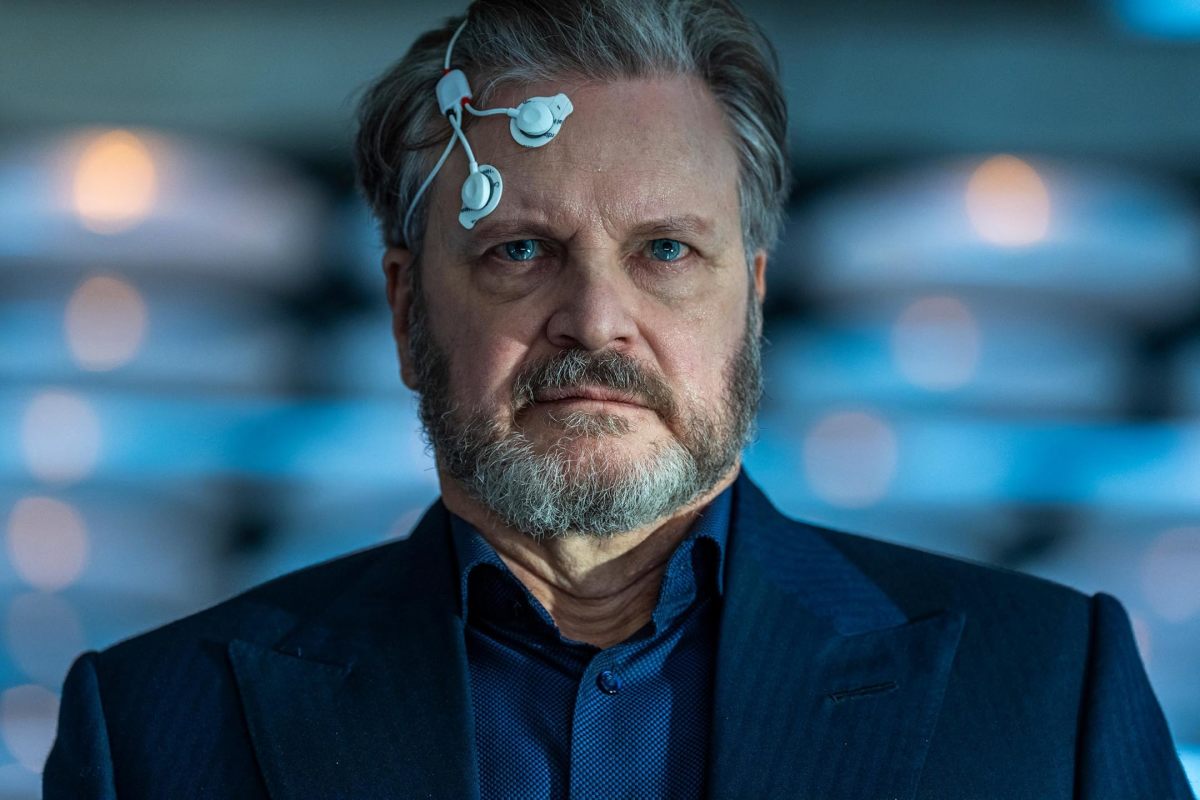 (Image: Universal Pictures)
The only thing that truly surprised me in "The Uncovering" was that Steven Spielberg finally decided to tackle the concepts of "starseeds" and "alien abduction." "Close Encounters of the Third Kind" captured humanity's initial UFO craze; "E.T. the Extra-Terrestrial" shaped an alien into a tangible character to build audience empathy; "War of the Worlds" was a classic colonial invasion story; and "Kingdom of the Crystal Skull" explored aliens imparting knowledge to ancient civilizations. Every time Spielberg directs a film about aliens, he touches upon a different facet of the mythology. This time, it's starseeds and abductions—specifically, an abduction that forges a bond between two people as if they were childhood friends.
Strictly speaking, Spielberg isn't depicting starseeds in the traditional sense, but rather a version of "chosen ones" who are similar. A traditional starseed is an extraterrestrial being who voluntarily "lowers their dimension" to be reborn as a human on Earth to help humanity "ascend" (much like Bryce Dallas Howard in "Lady in the Water" or Jaeden Martell in "Midnight Special"). In "The Uncovering," the characters played by Emily Blunt and Josh O'Connor are chosen, granted superpowers, and tasked with completing a mission for these external visitors. As for the "childhood friends" style of abduction, this refers to cases where aliens abduct different humans to have relations with them, simply extract sperm or eggs, or implant embryos to cultivate alien-human hybrids. Some of these abductees form tight emotional bonds through their shared experiences. Although their memories are often "locked" by the aliens upon being returned to Earth, a powerful connection is triggered when they meet again in their normal lives.
 (Image: Universal Pictures)
The most famous example is Debbie Koper from "Intruders: The Incredible Visitations at Copley Woods," a book documenting real abduction events. She not only reunited with another abductee, a man named Steve, but their connection was so intense that they both left their respective partners to marry each other. The relationship between Blunt and O'Connor in the film is somewhat similar, just without the romantic element. Their dynamic also brings to mind Richard Dreyfuss and Melinda Dillon in "Close Encounters of the Third Kind." Both pairs form a powerful bond through a shared "contact experience," and like Dreyfuss, Blunt's character ends up separating from her partner over it. This is the main reason "The Uncovering" feels so reminiscent of "Close Encounters"—both films follow a man and a woman who meet by chance and must follow clues left by aliens to fulfill a directive.
From the perspective of a UFO researcher, "The Uncovering" is far too elementary. But from a cinephile's point of view, I can't help but admire Spielberg's masterful direction. A large part of why I appreciate Spielberg is his outstanding storyboarding and orchestration of long takes. His cinematography is rarely flashy or ostentatious; Spielberg's genius lies in its practicality. His long takes are usually not so long as to feel deliberate, but just long enough to perfectly convey plot points, maintain rhythm, and build tension in a scene. Every camera movement has a clear dramatic purpose, and it always hits the mark precisely.
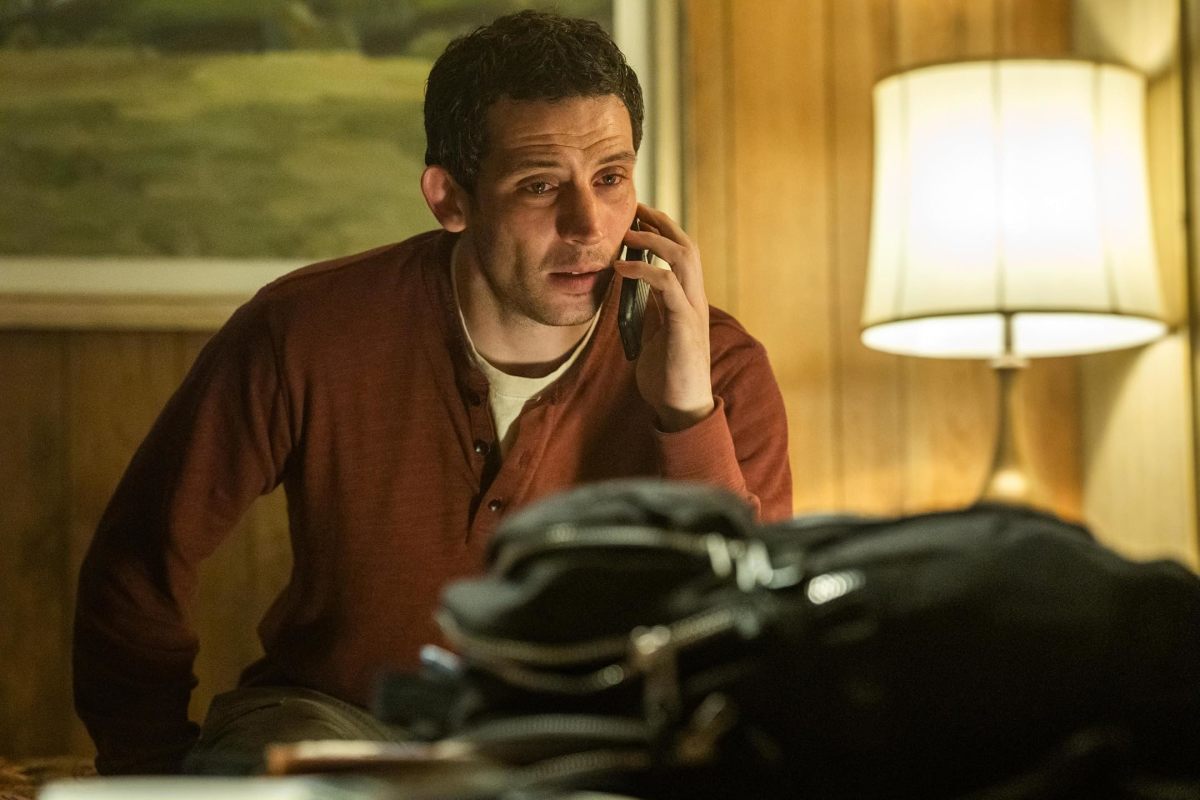
(Image: Universal Pictures)
I believe these techniques significantly elevate the layers of Blunt's performance, creating the illusion that she is "exceptionally good this time." While Blunt is undoubtedly great, her performance here feels more like her standard high-caliber output, magically enhanced by the camerawork that amplifies her on-screen charisma. If you look closely at Spielberg's past work, you'll see he has often subtly boosted his actors' performances. He even boasted about this in his autobiographical film "The Fabelmans," where, as a student, he accidentally filmed his high school bully in such a cool way that the bully could no longer bring himself to hate him, leading to an unexpected reconciliation. Spielberg's skill with the camera is just that powerful. He knows how to shoot actors, how to capture a performance, and most importantly, how to use an actor's eyes to hook the audience. Most people only remember how well Spielberg commands large-scale spectacles, but his true talent is often more evident in the smaller, more intimate scenes.
In terms of plot, I think the film is much more enjoyable if you view it as a political thriller about the media exposing the truth, in the vein of "All the President's Men." From that angle, "The Uncovering" feels more akin to Spielberg's own "The Post." His focus seems to be on the conviction behind the exposé and the power struggle against a government trying to suppress the story. Approached this way, I find "The Uncovering" to be a solid and steady piece of work. I'm not sure if Spielberg will continue making films about aliens, but if he does, and he doesn't include lizard people next time, it would be a real shame. It's about time—he can't keep teasing us like this.
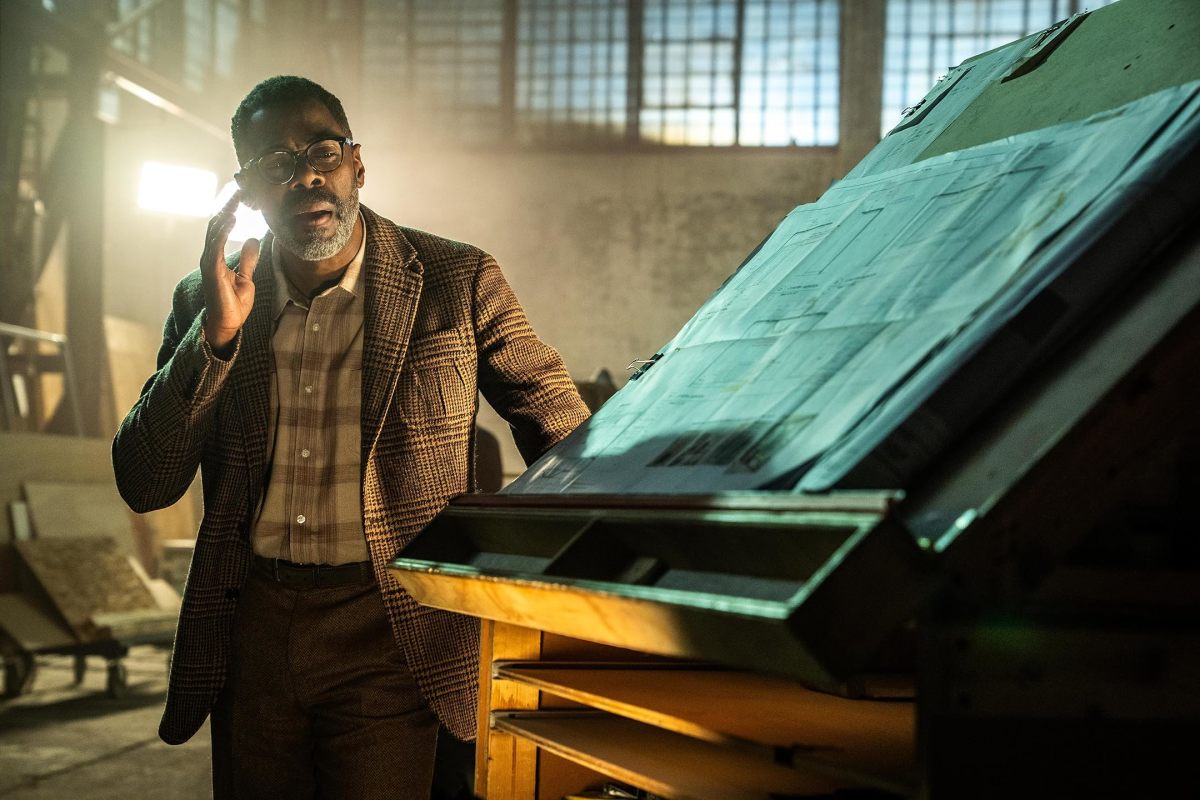 (Image: Universal Pictures)
In recent Hollywood history, only one film has delivered a truly "disclosure-level" shock for me: "Jupiter Ascending." It's not that the film revealed anything I didn't already know, but that it dared to tackle subjects I never thought Hollywood would touch. While its plot is riddled with flaws, from a world-building perspective, the film is packed with substantive material. Those in the know can see that the Wachowski sisters were risking everything to make this movie. Just how much they risked, however, is a story for another day.
Spielberg simply lacks their level of knowledge and audacity. As a result, his forays into the subject of disclosure feel hollow, barely scratching the surface.
P.S. I believe the character of O'Connell was likely inspired, at least in part, by a man named William Mills Tompkins. Many former employees from alien research programs have come forward as whistleblowers, but Tompkins is a rare case—a destined prodigy who claimed to be chosen by extraterrestrials from birth to join their program. Much like O'Connell in the film, his destiny was pre-arranged and his talents were deliberately bestowed upon him. If Hollywood ever wants to tackle a disclosure story with real substance, they should adapt Tompkins' life story directly. His experiences are incredibly compelling and offer ample room for creative expansion.