

Rockstar Games' confirmation that the physical edition of "Grand Theft Auto VI" will not include a disc, opting instead for a boxed download code, has not only sparked backlash from collectors and physical retailers but also prompted outlets like TheGamer to suggest this decision could signal a further decline of the physical game era. IGN, in its own coverage, noted that this arrangement has led some players to worry that "GTA 6" might become a significant turning point for the age of game discs.
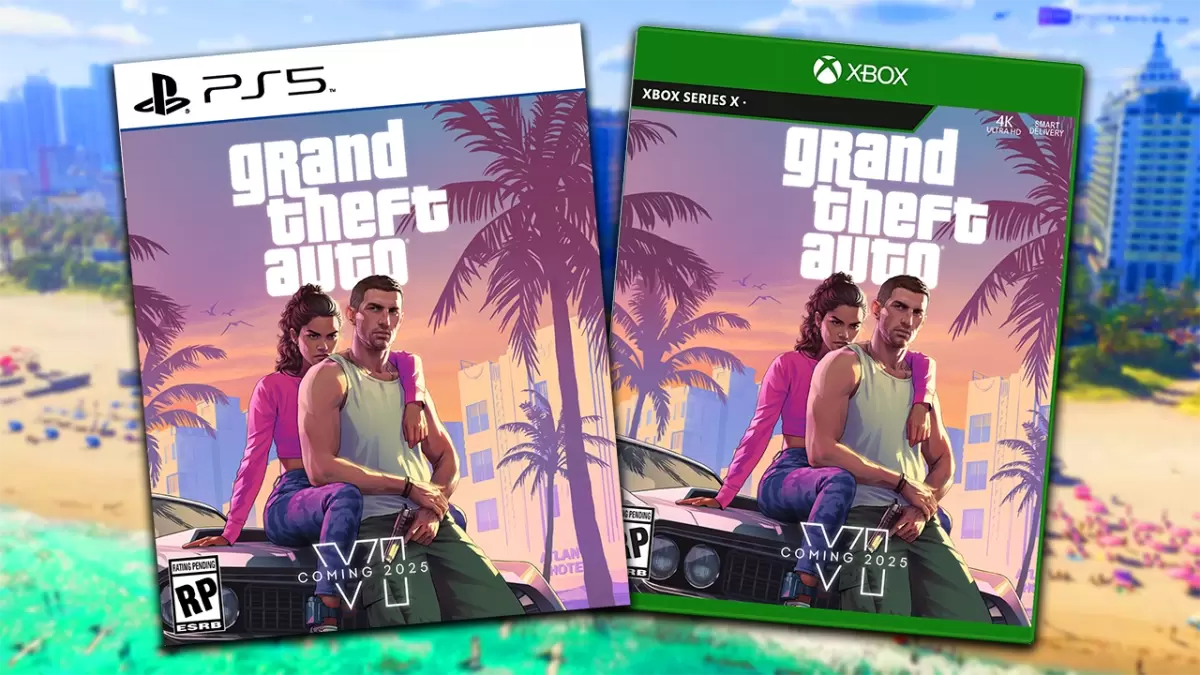
TheGamer's article opened by tapping into players' shared memories of lending and borrowing "GTA" series discs, recalling how physical games—from "San Andreas" and "Chinatown Wars" to "GTA 4" and "GTA 5"—once represented the experience of lending, sharing, reselling, and true ownership. However, with "GTA 6," the $80 boxed edition now offers only a one-time download code, essentially prompting players to "just buy the digital version."
The article argued that as one of the most anticipated games in history, "GTA 6" is still bound to be a massive seller. Precisely because of its expected success, its precedent-setting impact on the industry is even more critical. If even "GTA 6" can launch disc-less and succeed, other publishers will undoubtedly see market acceptance, potentially leading to more physical editions in the future becoming "empty boxes with download codes."

Furthermore, IGN highlighted that "GTA 6" is anticipated to be one of the largest entertainment product launches in history, and its mainstream influence suggests that physical versions should still hold market relevance, similar to EA Sports titles and Nintendo exclusives. Therefore, Take-Two's decision to allow this blockbuster title to ship without a disc could further accelerate the industry's shift away from physical media.
TheGamer also drew a parallel between this development and the rising trend of game prices, suggesting that "GTA 6"'s $80 price tag could establish a new standard for AAA games, while the boxed download code might set the direction for next-generation consoles and digital sales models.
On the other hand, the physical media advocacy social media account "Does it play?" criticized that if a box contains only a download code, it cannot be considered a true physical release. It also refuted the argument of "preventing leaks," asserting that this should not be used to justify undermining physical media. Some players commented that the $80 price point combined with the absence of a disc has already led them to postpone their purchase. 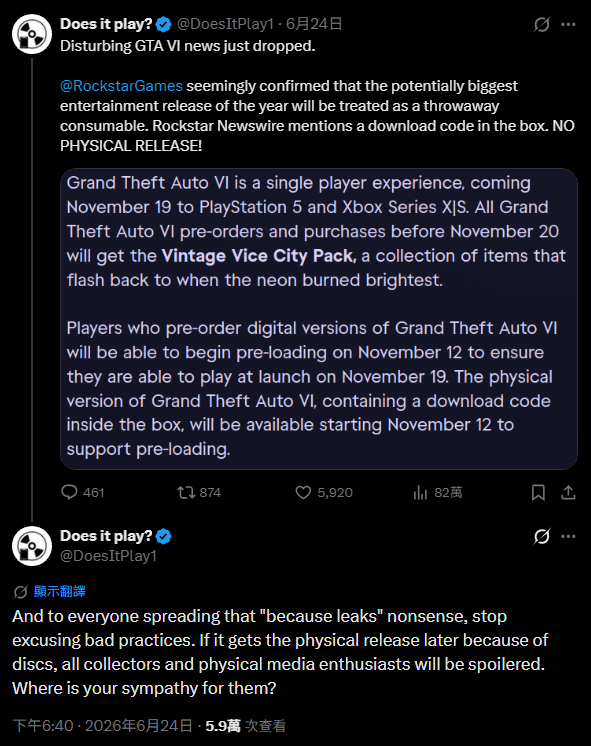
In fact, the gaming industry's ambition to move away from physical games was evident as early as 2013 with the Xbox One's unveiling. At the time, Microsoft attempted to push a more stringent digital licensing and online authentication system. Although the company eventually reversed its policy due to strong player backlash, that controversy already foreshadowed publishers' long-standing dissatisfaction with the second-hand market, game resales, and players' physical ownership rights. 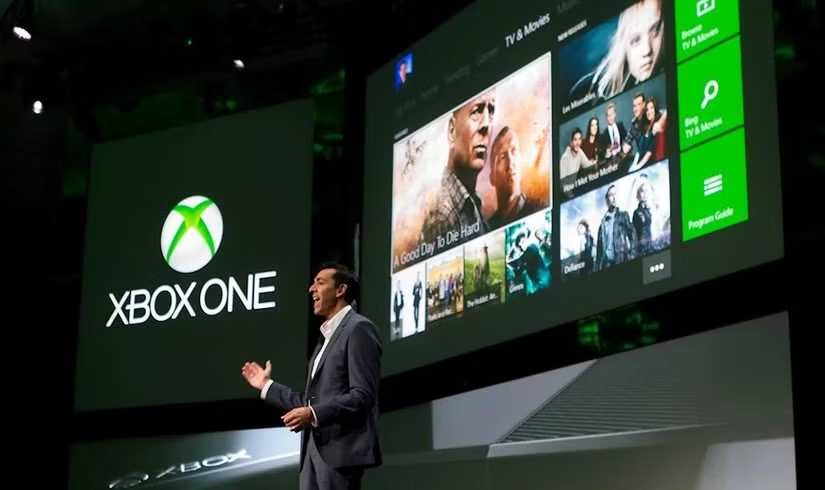
The report noted that in the past, the industry used online passes to restrict second-hand games. Now, it has gradually steered players towards accepting digitalization as the mainstream through methods such as digital deluxe edition bonuses, preload convenience, delayed physical releases, and even boxed download codes.
TheGamer concluded by lamenting that the problem with full digitalization is that players may not truly own their games; titles could disappear due to platform policies or licensing changes, and the second-hand market will be further weakened. For a generation of players who once shared games with classmates and neighbors, this isn't just a change in packaging; it's a fundamental shift in the entire culture of game consumption.