

 (Image courtesy of 20th Century Studios)
(This article contains spoilers. Read at your own risk.)
Anyone who knows me to some extent will probably know that I am practically a Ridley Scott hater. I dislike most of his films, and I have especially little interest in the movies everyone else seems to hold in the highest regard, such as Gladiator and Blade Runner. Every once in a while, he does make something I happen to like, such as Thelma & Louise and Alien—but only the first one. Those cases are rare. Occasionally, he also gets lucky with a script so strong that the film turns out well without requiring him to interfere too much. The Last Duel is one example. The two people who truly deserve the most credit for that film are Ben Affleck and Matt Damon, who also served as co-writers.
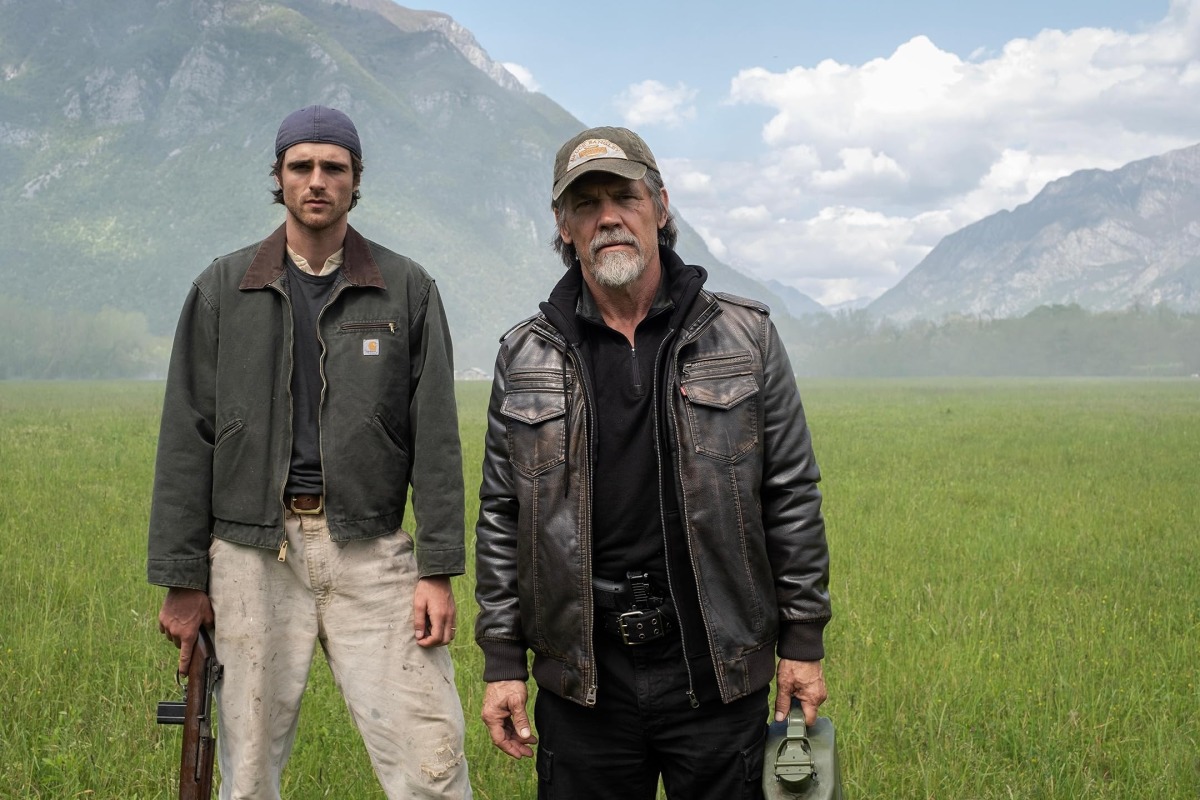
The Ridley Scott films I tend to enjoy are usually the ones with relatively simple themes and structures. Thelma & Louise and Alien are both very direct films, and Scott seems to do his best work when he is dealing with this kind of material. When the subject becomes too large—whether in terms of spectacle or narrative scale—his films can become mechanical and rigid. In worse cases, the themes scatter, or the expression becomes self-indulgent and shallow. Fortunately, The Dog Stars is one of his relatively “simple” films, which is why I found myself responding to it more positively than usual.
(Image courtesy of 20th Century Studios)
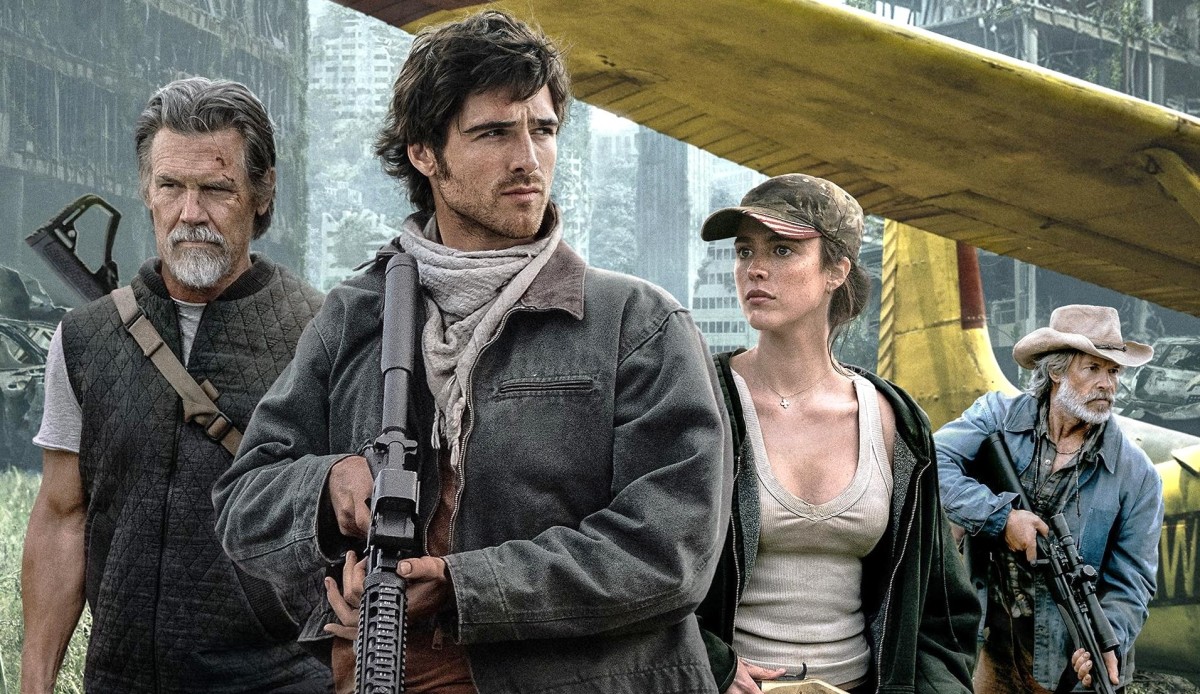
The Dog Stars is by no means an outstanding masterpiece, and it probably will not enter Scott’s canon of classics. At the very least, however, it is a film that tells its story properly and sees it through. The film is an extremely familiar post-apocalyptic story. Every formula you can think of is present: a pandemic breaks out, only a small number of survivors remain on Earth, civilization stagnates and humanity returns to a more primitive age. The protagonist receives a signal representing some kind of new hope and sets out toward that promised land, unsure whether the signal is outdated or possibly a trap. Either way, he goes—and along the way, he is pursued by large groups of criminals straight out of Mad Max.
Within this framework, which offers neither a distinctive identity nor any real freshness, The Dog Stars tells a clean, compact little story. It follows characters struggling to process the loss of loved ones and operating with an excessive instinct for self-protection. Gradually, they emerge from their grief, lower their defenses, step beyond their small private circles and form a larger circle with other people. It is warm, gentle and deeply human. Although The Dog Stars is covered in the trappings of a commercial blockbuster, it understands that its true identity is that of a small-scale character piece. It never tries to exceed that boundary by searching for a miraculous cure, assembling a team to fight an army of savage tribes, overthrowing a brutal warlord, restoring the glory of human civilization, reflecting on humanity’s self-destructive tendencies or staging an extravagant chase involving a convoy of customized vehicles.
 (Image courtesy of 20th Century Studios)
That, however, is also the film’s curse. Plenty of viewers will expect it to contain the elements listed above. More importantly, 20th Century Studios also wants audiences to have those expectations, because that is how the film has been packaged. The studio has crammed nearly all of the film’s limited action sequences into the trailers, encouraging viewers to imagine a cool and thrilling end-of-the-world survival epic filled with savage battles. Inevitably, some viewers will feel that the film failed to deliver what they expected and that they were tricked into buying a ticket. Can you really blame 20th Century Studios? The film reportedly cost somewhere between $70 million and just over $100 million. That is neither extremely expensive nor particularly cheap, so the studio had to make the movie look as appealing as possible.
But that is not the film’s true curse. Even if it had been marketed as a character-driven drama, it would not necessarily have become a critical sensation, because The Dog Stars is awkwardly stuck in the middle. I think it is enjoyable, but, to be fair, it is only ordinarily enjoyable—not the kind of film that inspires huge conversations. It has no genuine breakthrough element. It is genuinely formulaic and offers no new ideas or meaningful innovations to the genre. The character work is not strong enough to give the actors room for Oscar-level performances capable of entering the awards-season conversation. From a marketing perspective, this is a project with no clear selling point to push, which makes it extremely difficult to promote. As a result, 20th Century Studios can only use the film’s handful of large-scale sequences as its main visual hook, while also following the standard procedure of borrowing some of the half-formed star power of Jacob Elordi and Margaret Qualley, neither of whom has yet established themselves as reliable box-office draws.
 (Image courtesy of 20th Century Studios)
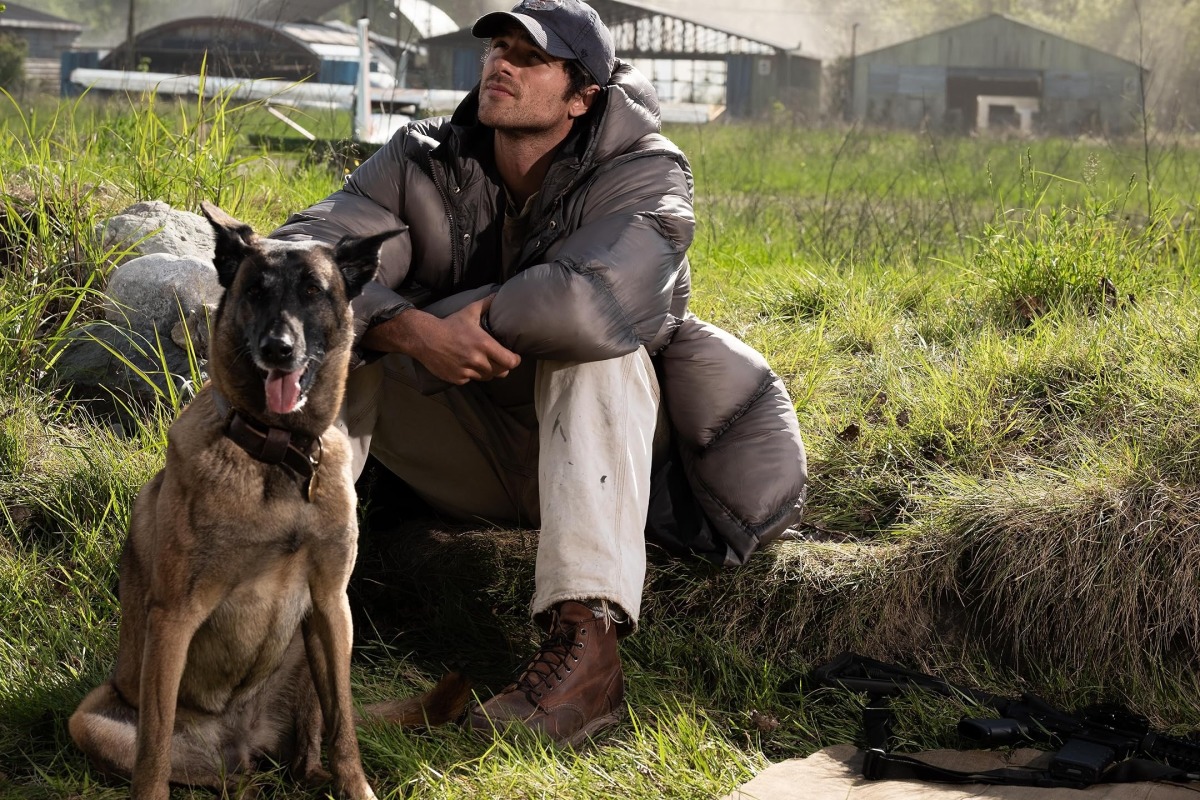
The Dog Stars is a very difficult film to position in terms of market direction and cultural momentum. You can sense that from the quiet online discussion surrounding it. In my view, the ideal version of this film would have been an independent production made for a budget of roughly $10 million to $20 million. The director should not have been Scott, but a talented newcomer making an early feature. With a lower budget, the film would obviously lose its spectacular aerial shots of mountains and wilderness, and there would not be enough money to build richly detailed sets. The chases and shootouts against the scavenger gangs would also be less polished and imposing. In exchange, however, the film could have devoted more attention to its characters or tried to introduce more variation into the story under its visual limitations.
If this had been an independent film directed by an emerging filmmaker, a good enough script could still have attracted major actors willing to accept reduced salaries. If the film received a positive response, the director might have attracted the attention of the industry, been praised as a potential future master and received more directing offers. The problem is that this is a film made by Scott, who is already sitting firmly in the position of a master. Because the finished product is so middling, its very reason for existing becomes difficult to understand. It neither lives up to the director’s reputation nor provides a major breakthrough for its stars. An awards-season run is out of the question, and a major commercial success is an outright fantasy. If it manages to break even, the studio should consider itself lucky.
(Image courtesy of 20th Century Studios)
On a purely personal level, I do like The Dog Stars. But when I consider its artistic achievement, market position and production cost, I cannot understand what value this film is supposed to have. The way it has been handled gives off the impression that the studio is taking it seriously and not taking it seriously at the same time. Tell me that the company made it to evade taxes, falsify its accounts or launder money, and I might actually be more inclined to believe you. I suspect Scott himself may not have been entirely sure where the film belonged. He probably accepted the project simply because he had never filmed such desolate post-apocalyptic landscapes before and wanted to give it a try.
That said, the film’s visual quality is genuinely impressive. Its color palette is simple without becoming muddy, while its use of light, shadow and saturation creates a strong sense of depth and dimensionality. It is nothing like the gray, dusty and inexplicably flat look found in so many modern films. If we are judging the film purely on that basis, I am extremely grateful.
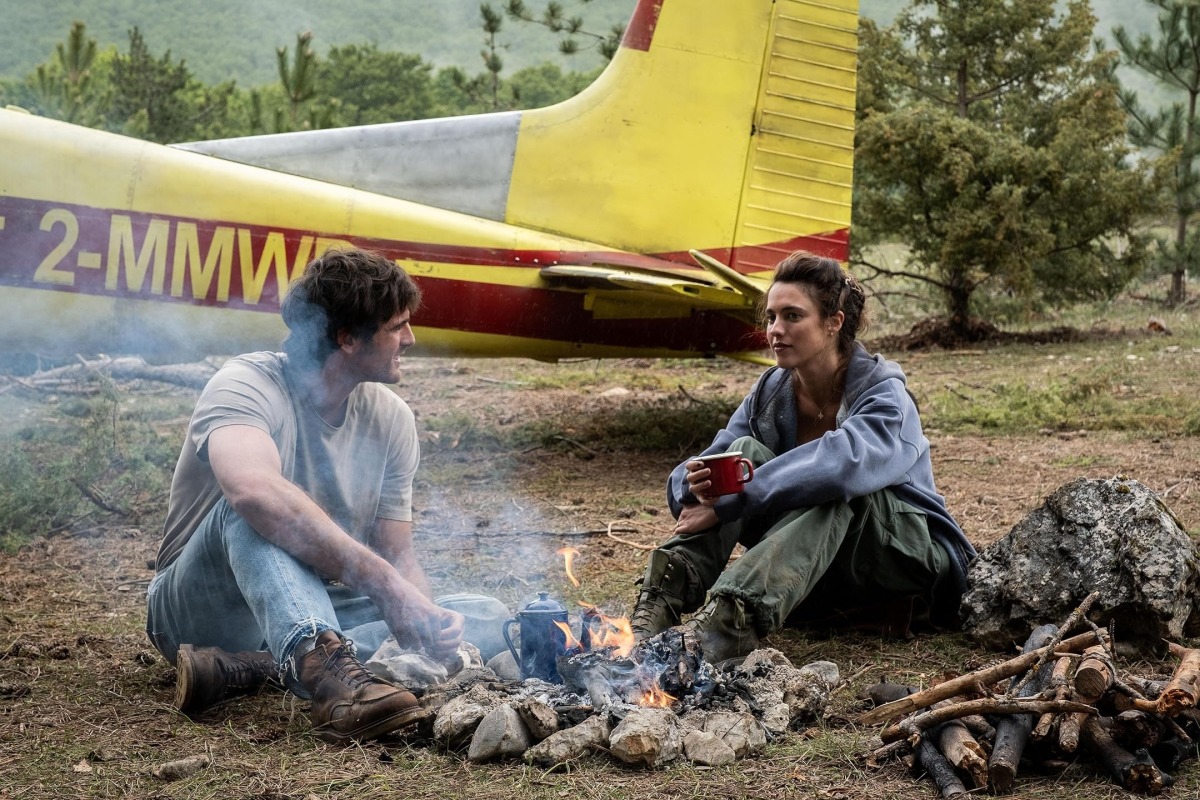
PS: The ending of The Dog Stars is remarkably anticlimactic. In a film like this, the usual formula would have the protagonists unite for a final, desperate battle against a mass of zombies or a gang of raiders led by some warlord. This film refuses to play along. During the final scene, Qualley and Elordi are romantically gazing at the stars. When they started preparing to have sex, I assumed it was simply a moment of tenderness before the battle began. But no. That was the ending. I was instantly stunned. If the film had followed the formula, the scavengers introduced earlier would have stormed the peaceful village where the protagonists had finally settled, and at least one of Josh Brolin or Guy Pearce would have died in battle. None of my predictions came true. It felt as though the production had suddenly run out of money halfway through filming and deleted everything that was supposed to happen afterward. I do not mean that as a criticism. I actually love the decision. It just shocked me at the time, and looking back on it now, I find it hilarious.