

Nvidia's DLSS 5, unveiled in March 2026, has not yet officially launched for RTX 50 series graphics cards. However, its real-time neural rendering model files recently leaked from an "NBA 2K27" early access build, allowing players to prematurely test the technology in other games and reigniting debate over AI-enhanced graphics.

Players have since tested DLSS 5 in titles such as "The Last of Us Part II," "Final Fantasy VII Rebirth," "The Elder Scrolls V: Skyrim," and "Grand Theft Auto: San Andreas."
Based on the publicly available footage, DLSS 5 demonstrably sharpens details and brightens colors in natural environments like forests and vegetation. However, when applied to human faces and skin, it frequently produces a pronounced "uncanny valley" effect.
For instance, characters in "Skyrim" appear with overly glossy skin and lighting akin to a beauty filter after DLSS 5 application. While CJ from "San Andreas" looks more "realistic," his facial features significantly diverge from the original character model. Consequently, some players criticize DLSS 5 for excessively beautifying characters and altering their recognizable identities. 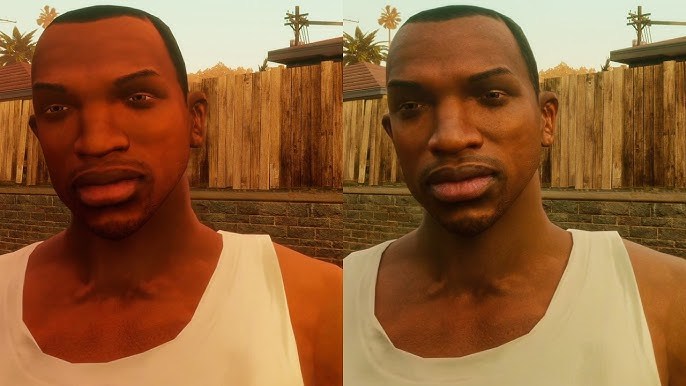
However, the leaked version remains unfinished content and was not intended by Nvidia for official player use, meaning the final effects could still be adjusted. Nevertheless, DLSS 5 had already faced criticism earlier this year when its demonstration of a "Resident Evil" title showed characters altered to fit more traditional aesthetic standards. This latest leak and subsequent testing have brought those concerns back to the forefront.
IGN previously published a commentary, stating that the real concern isn't merely about visual naturalness, but the potential for generative AI to overwrite deliberately designed wrinkles, scars, lighting, and character textures by development teams. The outlet suggested that if such technology becomes more integrated into game development workflows, it could not only disrupt existing art styles but also fundamentally alter character portrayal and the emotions a story originally intended to convey.
via: Polygon