

Hollywood legend Michael J. Fox, star of the classic film "Back to the Future," recently received the Bob Hope Humanitarian Award at the Emmy Awards, honoring his decades-long dedication to Parkinson's disease research and advocacy. Fox was met with a thunderous standing ovation as he took the stage, reflecting in his acceptance speech on his journey of living with the disease for over 30 years.
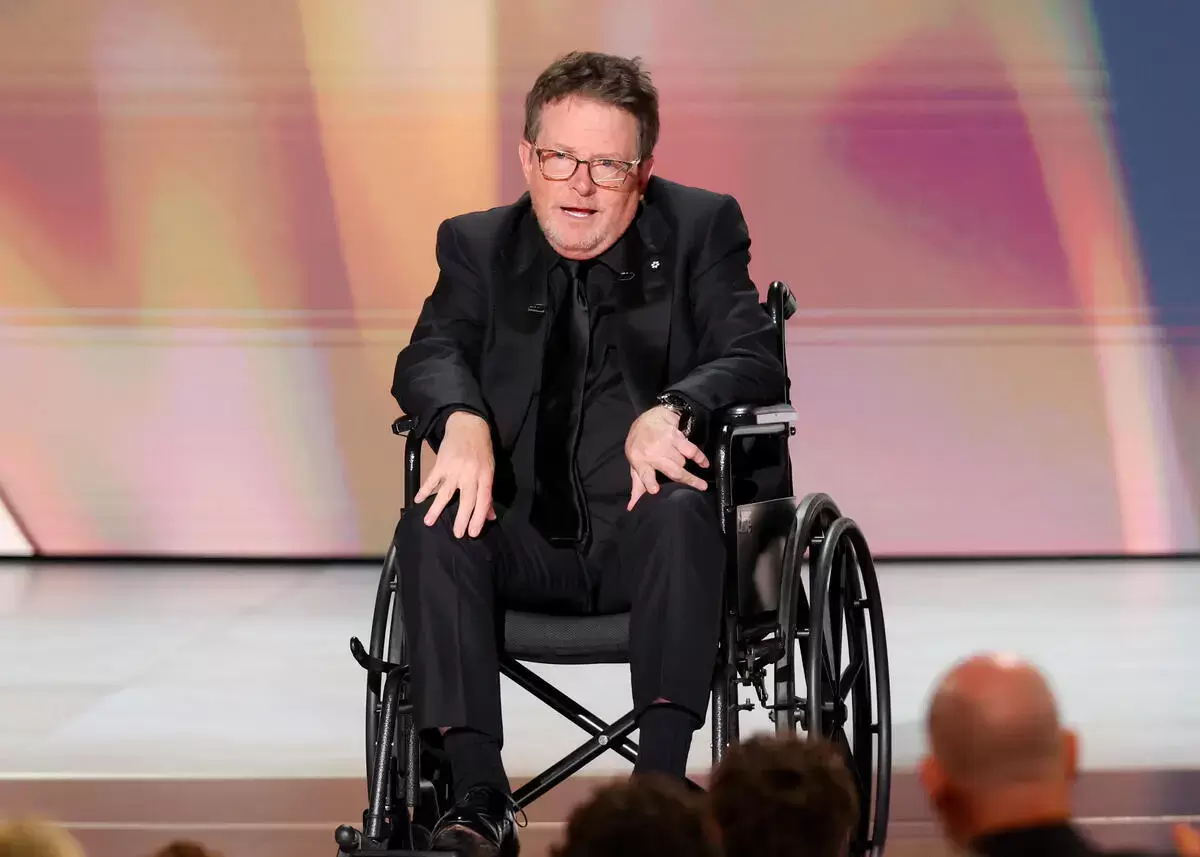
The 65-year-old Fox revealed that when he was first diagnosed with Parkinson's, he initially chose to conceal his condition, fearing it would impact his acting career and how audiences perceived him.
"Would they still laugh if they knew I was sick?" he questioned. It wasn't until he went public with his diagnosis and received an outpouring of support that he gradually understood the disease hadn't taken away everything he once had.
On stage, Fox stated, "I realized that accepting Parkinson's didn't mean I had to surrender to it. It just meant I had to do everything I could for everyone living with this disease."

He also reflected on the continuous research and fundraising efforts since establishing the Michael J. Fox Foundation in 2000, adding, "I'm proud of the progress we've made; we are moving step by step towards eradicating this disease forever."
In a recent interview with "PEOPLE," Fox candidly admitted that as he ages, tremors and balance issues have made life "definitely harder over the years," yet he remains optimistic about research advancements.
To date, his foundation has invested over $3 billion to fund Parkinson's research, with plans to raise an additional $2.5 billion.
"We don't know when the day of a true cure will come, but it will come," Fox affirmed, noting that each year brings more research breakthroughs, new medications, and research tools. "Science is telling us we are getting closer and closer."
Beyond his long-standing philanthropic work, Fox recently returned to the screen with a guest role as a character with Parkinson's disease in "Shrinking," earning another Emmy nomination. He stated that he doesn't rule out continuing to act in the future, but his most crucial mission remains driving research until Parkinson's disease is truly cured.