

 (Image: Sony Pictures)
(The following review contains spoilers. Please proceed with caution.)
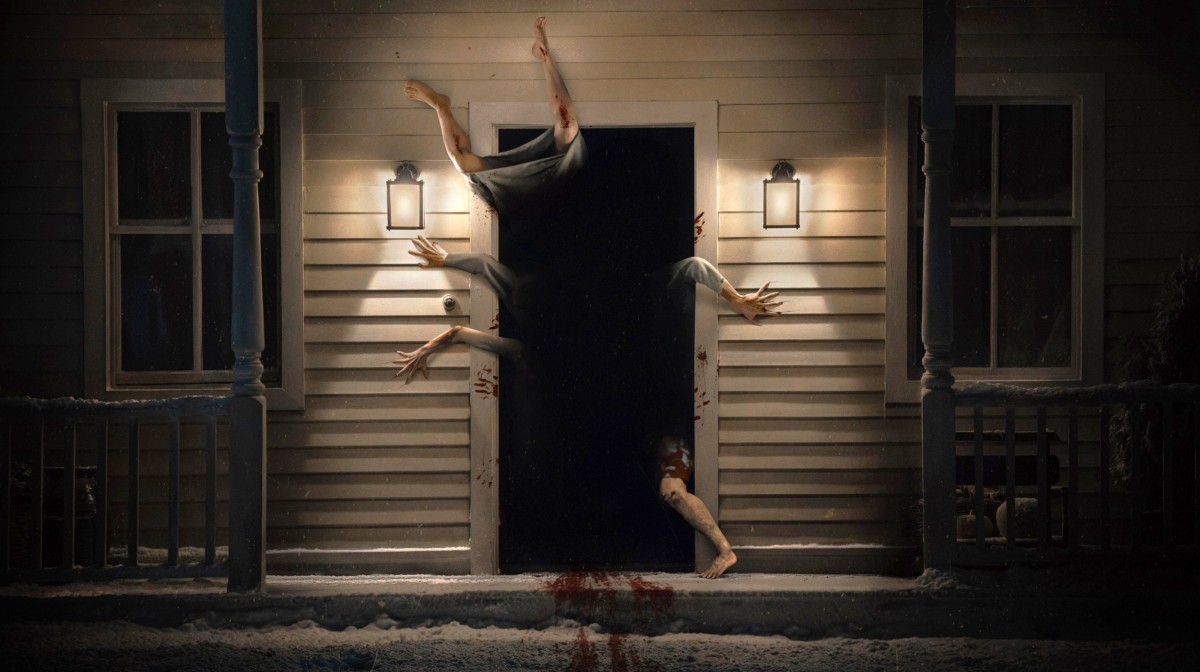
Countless video game IPs have failed in live action, and Resident Evil is naturally one of the most notorious examples. But this franchise has not merely failed—it has proved almost impossible to kill. Hollywood usually backs away after a game adaptation flops once or twice, or after one or two failed attempts at the same property. The original Resident Evil movie series, however, somehow ground out six installments and even reached a proper conclusion, followed by two more attempts to reboot it. Every entry was blasted for mangling the source material and branded a bad movie, yet the franchise kept crawling back to the audience’s feet, bloodied and battered, tugging at their pant legs and begging for one more chance. But chances eventually run out. Disappointment, given enough time, turns into despair.
It is therefore easy to understand why many players still had so little faith in this third live-action reboot, even after Sony Pictures hired Zach Cregger, one of the hottest horror filmmakers working in Hollywood today. When Cregger revealed that he intended to avoid every existing game storyline and tell an original story, some fans felt their old trauma flare up and recoiled even more strongly. Those who genuinely knew Cregger’s work, however, generally felt the exact opposite. He is unlike the filmmakers previously entrusted with live-action versions of Resident Evil. He is not some bargain-basement director who specializes in B movies or cheap-looking productions. He is a genuinely gifted future master. Barbarian and Weapons are both horror classics destined to be remembered by film history.
(Image: Sony Pictures)
Cregger’s involvement was a promising sign that Resident Evil might finally redeem itself in Hollywood. At last, the franchise could escape the shadow of shoddy visual effects, crude storytelling and tired filmmaking, emerging as a genuinely polished, top-flight production carefully prepared by a talented filmmaker. That promise has indeed pulled Resident Evil out of the mud. This is the first live-action Resident Evil adaptation that can genuinely be called a “good movie.” In one sense, that was not especially difficult—the bar was hardly high. Yet the film is good enough to outclass a great many other movies of its kind as well.
First, I need to stress something to the players resisting this version of Resident Evil: strictly speaking, it is not an adaptation in the conventional sense. It does not take a “story” from the games and “adapt” it. It establishes a new continuity, then introduces elements and concepts from Resident Evil to tell an original story. I know some people will sneer that this is a bait-and-switch, arguing that an original story should not have the Resident Evil name slapped onto it. But that is precisely the point. The concept behind this original story is rooted in Resident Evil. Without the name, it would inevitably be accused of plagiarism; with the name, it gets accused of cynically cashing in. There is no winning either way.
 (Image: Sony Pictures)
Taking that idea one step further, Cregger is not trying to film a story at all. He is trying to film the experience of playing Resident Evil. Truth be told, there is barely a story here. An unlucky courier happens to be working the night shift when a virus begins spreading, and the package in his hands just happens to contain the formula for an antidote capable of bringing the outbreak under control. That is it. The premise is extremely simple; what matters is the delivery itself. That journey is where Cregger’s passion lies, and it is why this has to be a Resident Evil movie. He wants to capture the fun of watching a Resident Evil player figure out how to survive the ordeal, and that fun has to be constructed from elements of Resident Evil.
This is a movie adapting the experience of playing Resident Evil, not a movie adapting a Resident Evil story. If you are overly fixated on the idea that an adaptation must recreate one of the games’ narratives, you are destined to be on a different wavelength from the film. But if you understand or embrace the concept and value of adapting the act of play itself, the pleasure this movie delivers is twenty times more exhilarating than the average roller coaster. It is one of the vanishingly few films in cinema history—perhaps the only one so far—to capture something genuinely close to the thrill of playing a video game. That is an extraordinary achievement.
 (Image: Sony Pictures)
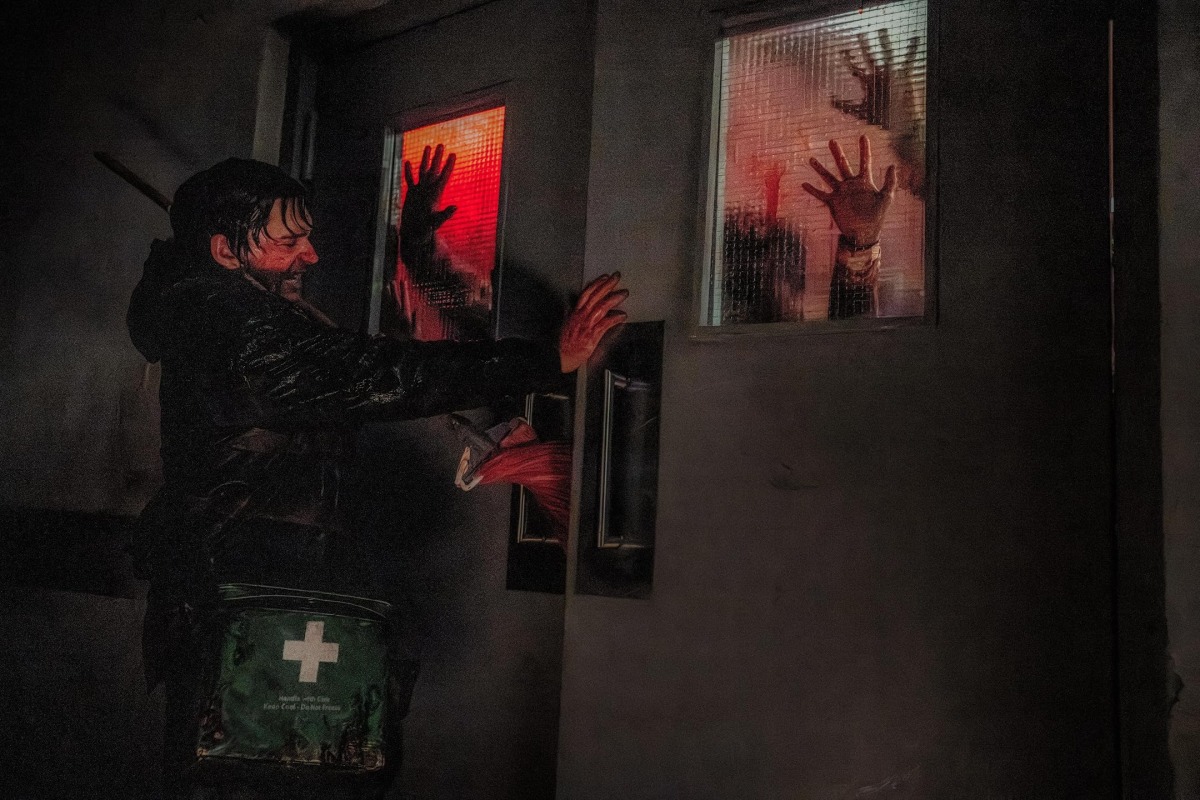
Most video game movies remain preoccupied with translating the multiplicity of game narratives into a single, fixed dramatic narrative. Cregger does not forcibly rewrite video game logic and cram it into a cinematic framework. He does the opposite, considering how cinema can adapt itself to games instead of forcing games to adapt themselves to cinema. He focuses entirely on one objective: creating the immersion of groping your way through an unfamiliar environment in the dark, just as you do when playing a game. That immersion goes far beyond the superficial trick of occasionally switching to a first-person point of view, although he certainly uses that technique too.
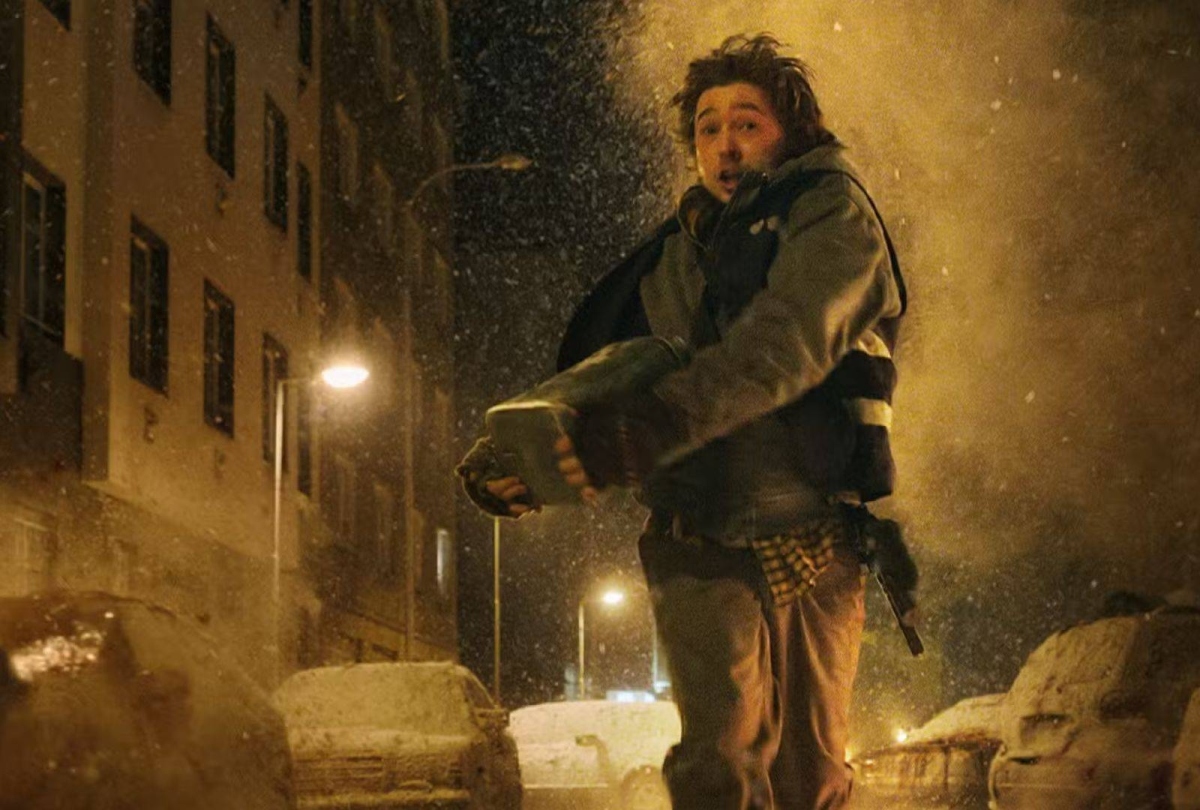
Much of that immersion comes from Cregger’s design of each individual level. Yes, he is not merely writing a screenplay; he is quite literally designing levels and obstacles. Before doing that, however, he makes the film’s most consequential choice: the protagonist has to suck. He has to be utterly hopeless, without the slightest trace of a heroic aura. His incompetence feels so familiar and relatable that the audience can strongly project itself onto him. Cregger wants us to experience the helplessness and panic of an ordinary person suddenly thrown into such a hostile situation. Even when the avatar you control in a game is an action hero, unfamiliarity with the weapons, map or enemy attributes can lead you to make enough mistakes to trap yourself in a corner. That is exactly the kind of fun Cregger is chasing.
(Image: Sony Pictures)
Because the protagonist’s ineptitude feels almost painfully authentic, this is also funnier than any previous live-action Resident Evil production. His bad calls during emergencies, accidental escapes, desperate all-or-nothing gambles and streams of profanity after yet another stroke of bad luck or miscalculation all feel like inspired details drawn directly from Cregger’s own gaming experiences. The protagonist’s ineptitude also includes his cowardice. Yet cowardice can force a person to think quickly and instinctively become more cautious. When his guard goes up, he sometimes begins calling out familiar horror-movie clichés. At other times, he does not even need to say anything: simply choosing to avoid the trope and refusing to take the bait becomes an amusing piece of satire.
A protagonist this pathetic would ordinarily be relegated to comic relief in another movie. Here, however, he is the audience’s primary vessel for emotional investment. Playing someone this hopeless while still remaining likable demands both real acting ability and screen presence. Fortunately, Cregger found Austin Abrams, a rising actor who possesses a hint of leading-man charisma while also excelling at playing hapless losers. I am not casually claiming that Abrams has a special talent for playing the unfortunate. In his previous collaboration with Cregger, Weapons, he played a junkie who stumbled into finding the missing children only to be unlucky enough to get cursed. Even earlier, in Wolfs, he played a young drug runner accidentally swept into an underworld conflict. Abrams is either taking drugs or transporting something, and then a comedy of errors drags him into trouble.
 (Image: Sony Pictures)
Although Resident Evil belongs to the horror genre Cregger knows best, it is an entirely different species of horror movie. Apart from his familiar tendency to frighten the audience while making it laugh—and to jerk its emotions up and down—it bears little resemblance to the way Barbarian and Weapons obsessively play with nonlinear, multistrand storytelling. This film has one line and one protagonist. It charges straight ahead without taking any detours, and it does not even include melodramatic flashbacks to fill in the character’s past. Cregger understands this perfectly. He has repeatedly said that one reason for making Resident Evil was to exercise his staging muscles and discover what he could create from the purest, most minimal elements after removing his elaborate narrative tricks.
Anyone who has seen Barbarian and Weapons should already recognize Cregger’s command of staging. Those films did not become sensations through flashy storytelling alone; their audiovisual design also generated extraordinary tension. To me, Resident Evil feels like a test of whether Cregger can tell a minimalist, linear story as effectively as a nonlinear, multistrand one. That challenge tests more than his staging. It also tests his command of the smallest narrative details—in other words, the level design discussed earlier. The film has to move forward through much smaller events and objects, which presents a different kind of difficulty. Cregger must make the process of “understanding and feeling one’s way through an environment” as thrilling as controlling it yourself, because passive viewing and active play are separated by a genuine divide.
 (Image: Sony Pictures)
Cregger succeeds in making the audience care about every piece of equipment the protagonist picks up along the way. In another movie, using a shotgun for protection and blasting monsters would be nothing special. Here, we cheer when a loser who barely knows how to handle a gun finally manages to load it, pull the trigger and land a successful headshot. The importance of the equipment and the difficulty of using it have both been properly established, so the audience becomes ecstatic when it finally proves useful. Cregger also understands exactly when to reveal his monsters and how long to keep them on screen. Sometimes he withholds the identity of the infected person; even when we know who is infected, he carefully chooses the moment when the monster finally emerges.
Every revelation and every transformation becomes its own climax. The scale of those climaxes gradually rises in carefully measured stages, with the exhilaration, quantity of gore and proportion of CG increasing along with them. The film does not simply throw a fucking truckload of monsters into the frame whenever it pleases so that someone can mow them down. The ways the protagonist defeats these “bosses” are also so hilariously attainable that they become part of the fun. He truly is useless, so his journey constantly swings between extreme misfortune and absurd good luck, interrupted by the occasional flash of ingenuity that lets him look impressive. By the end of this entire gauntlet, you can fully appreciate the ingenuity of turning game mechanics into triggers for narrative payoffs.

(Image: Sony Pictures)
I genuinely dislike praising one film by tearing another down, but the reality is that quality varies. The existence of Resident Evil proves that honoring a game’s defining qualities and the nature of its gameplay does not mean the result has to be a piece of crap like The Super Mario Bros. Movie. Resident Evil has even less plot than The Super Mario Bros. Movie and spends almost no time developing its characters—the most we get is a phone argument with the protagonist’s girlfriend about whether they should have their baby—yet it never feels empty. Pure entertainment still requires craft. It is like a massage: only by pressing the right points with the right amount of force can it feel good and get the blood flowing. In terms of storytelling, I would not dare place it alongside the small-screen achievements of Arcane, the Fallout series or the first season of The Last of Us. But among feature-length video game adaptations, Resident Evil effortlessly claims the throne, both for its storytelling and for the way it recreates the experience of play.