

“His body temperature has exceeded 1,100 degrees… Godzilla is heading for a nuclear meltdown!”
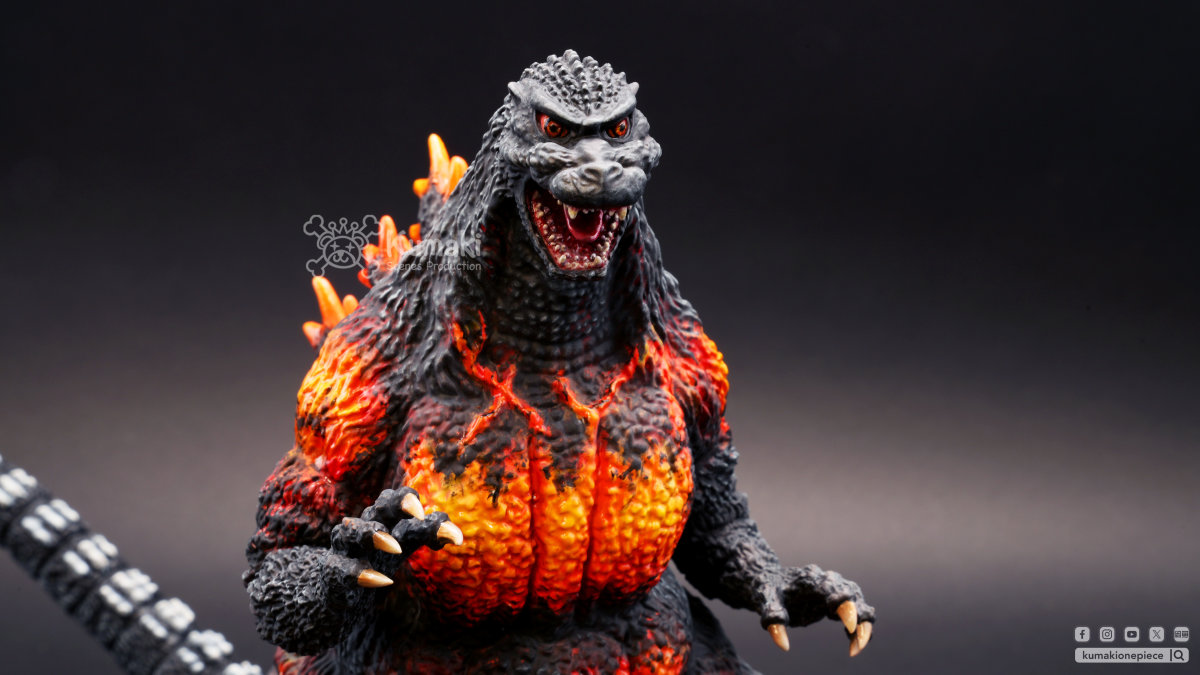
In 1995’s Godzilla vs. Destoroyah, a reaction involving the natural uranium deposits on Birth Island sends the nuclear energy inside Godzilla completely out of control. Searing heat erupts like flames through the cracks in his jet-black body as he emerges from Victoria Harbour and comes ashore in Hong Kong like a vision of destruction. The sight evokes more than simple fear—it conveys a sense of helplessness and despair in which beauty and the end of the world collide. 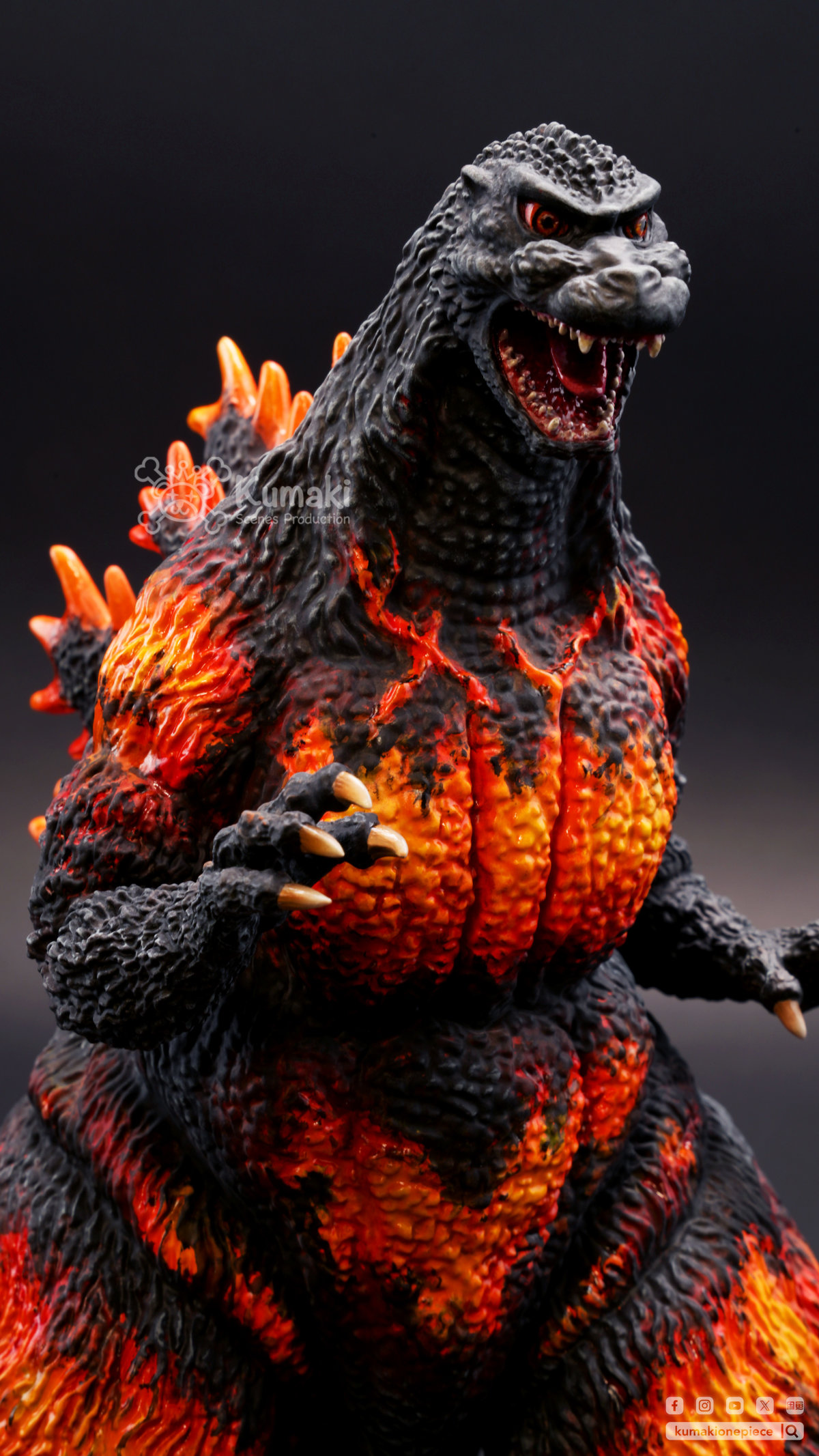
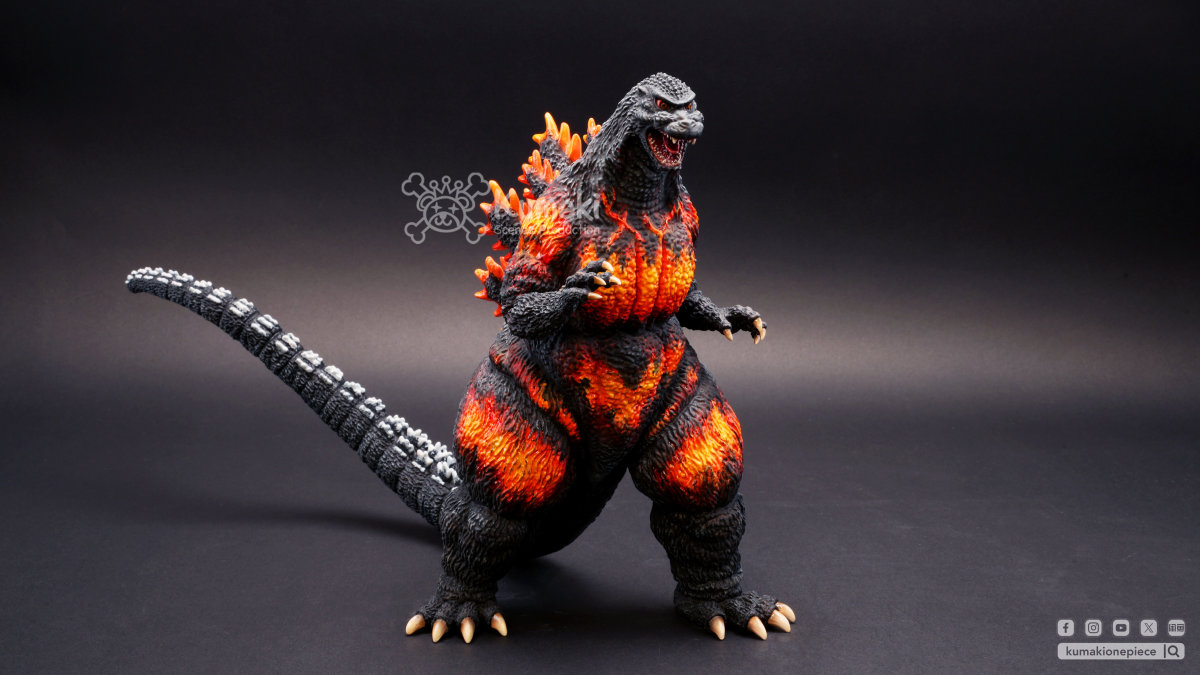
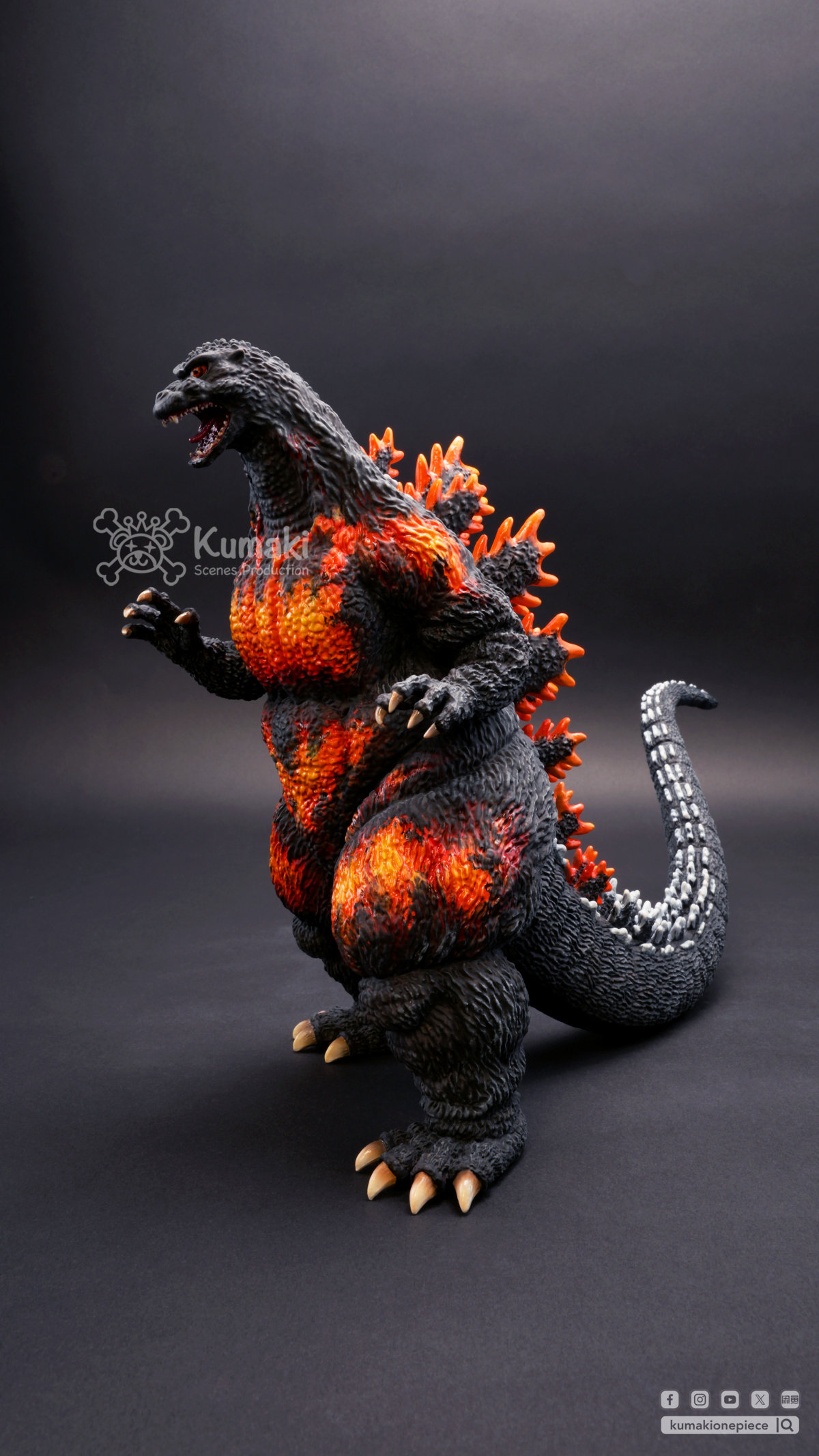
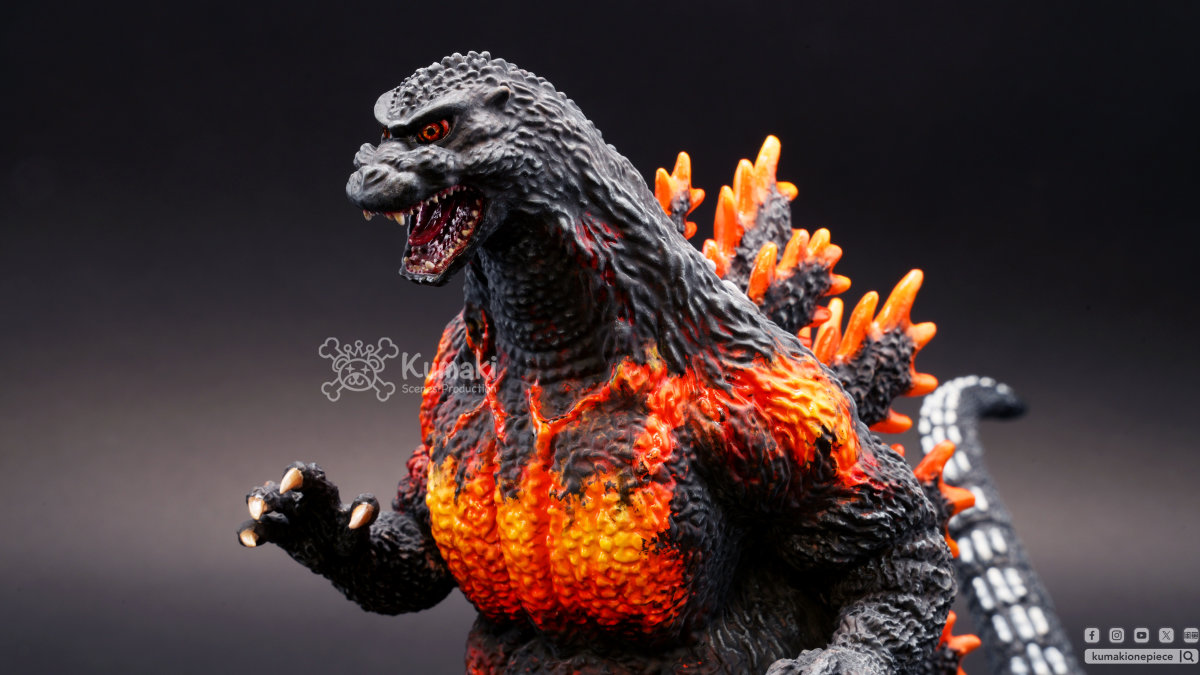
This Godzilla endures the excruciating pain of his body breaking down in a nuclear meltdown, and his roar carries a profound sense of sorrow. Through this complete repaint and seamless modification, I wanted to capture that life-or-death state in which intense heat glows from within while the skin burns and blackens across the surface.
▍ Paintwork and Modification Details: Before & After Analysis
To fully bring out this classic 22.5 cm sculpt by master sculptor Yuji Sakai, I addressed the limitations of the mass-produced ICHIBAN KUJI soft-vinyl figure with extensive structural repairs and a complete repaint.
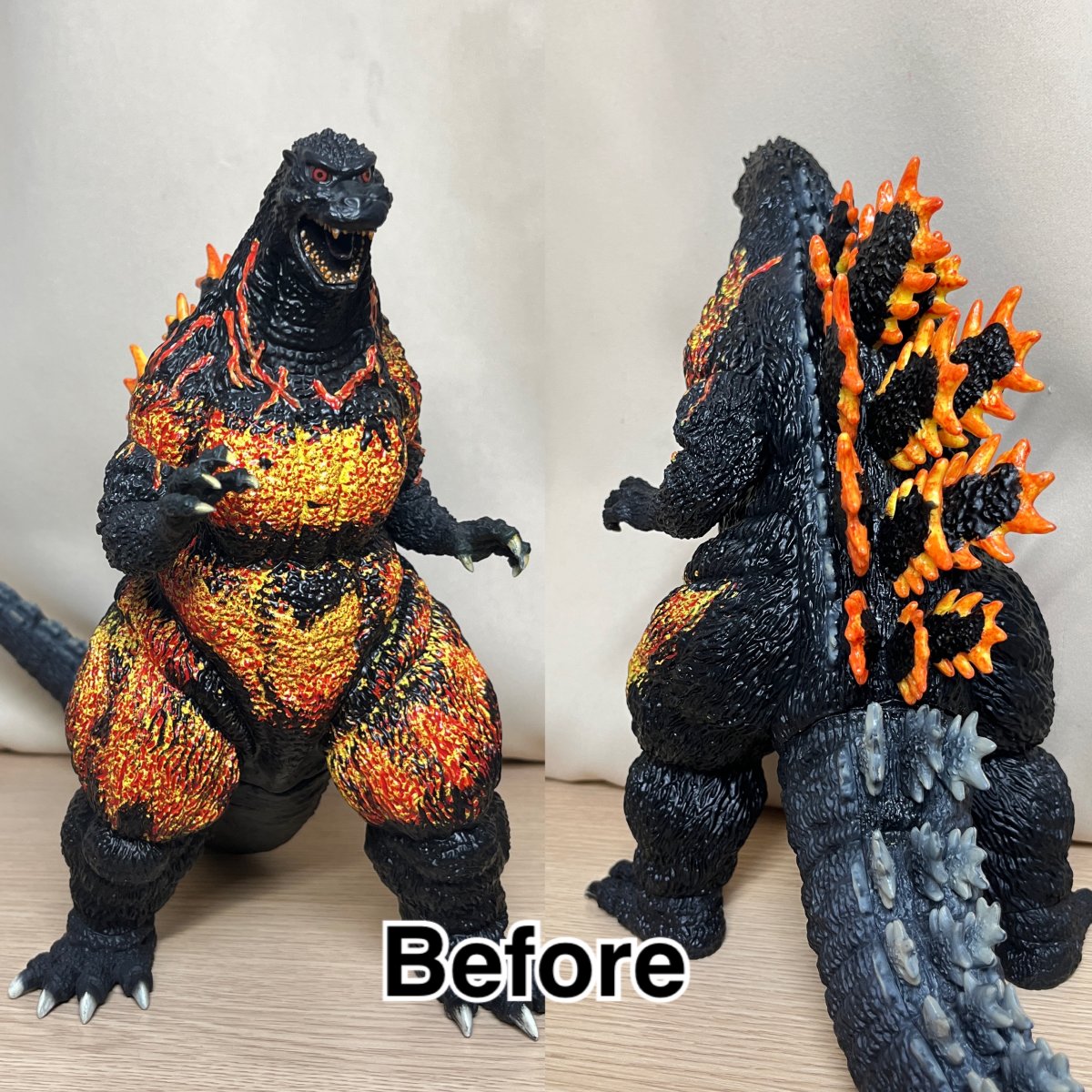 The figure before work began.
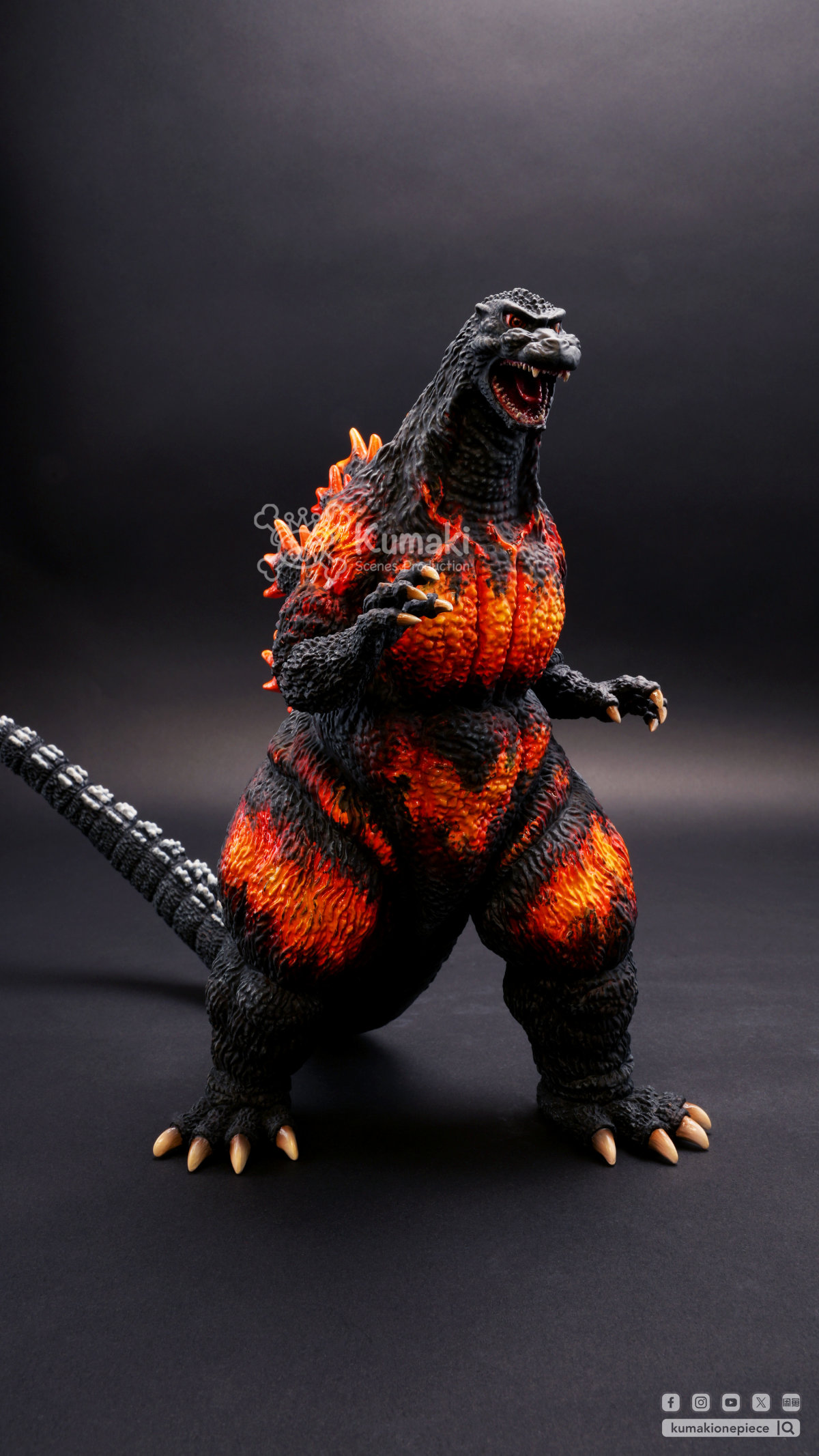
❶ Seamless Finishing and Surface Preparation: Removing Head and Body Seams for a Durable, Chip-Resistant Base
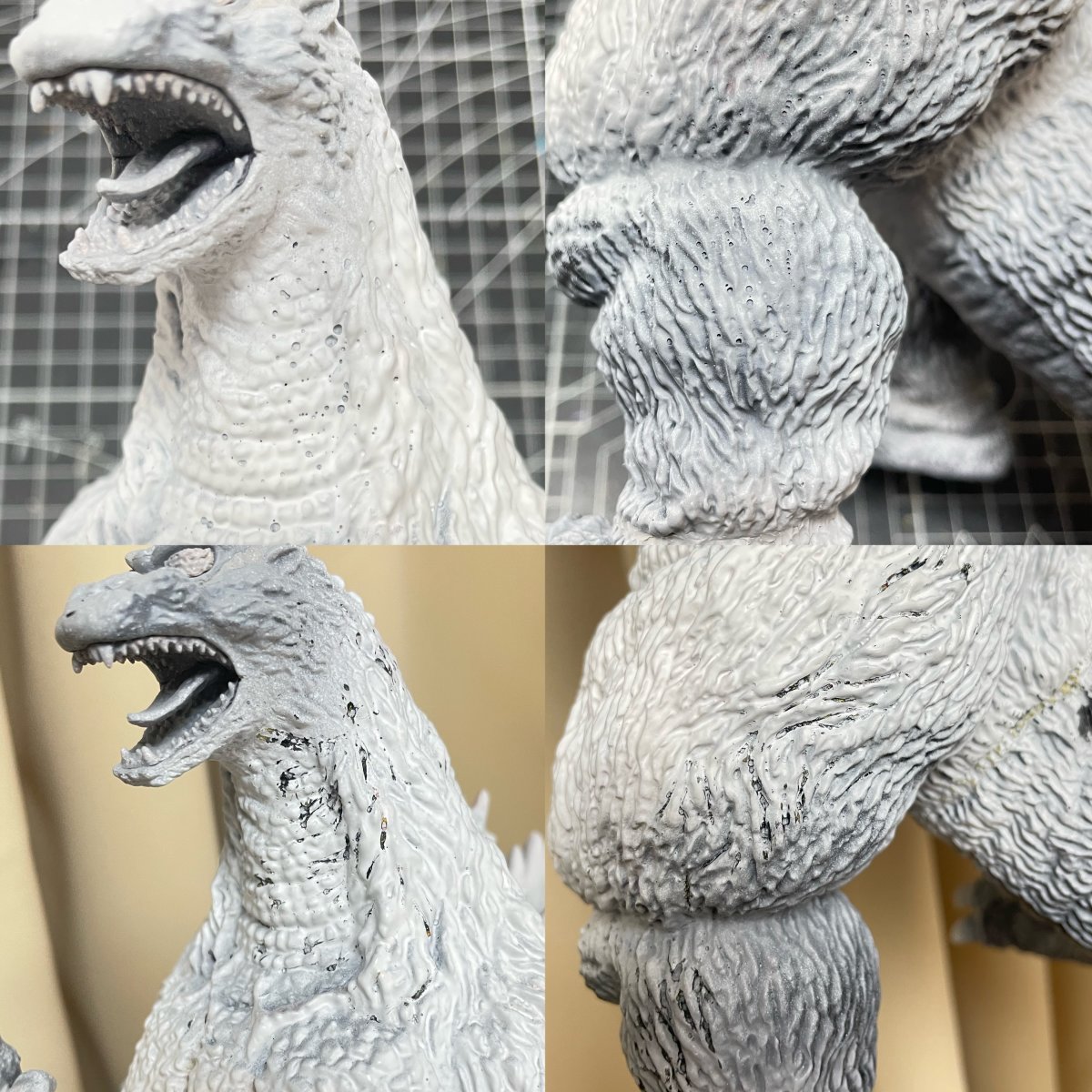
As a mass-produced ICHIBAN KUJI soft-vinyl figure, it had noticeable gaps and uneven joins not only around the limbs but also around the eye sockets, where separate eye-area pieces were used, as well as along the lower jaw, thighs, arms, and tail. These seams seriously disrupted the fine facial sculpt and its organic realism. PVC and soft vinyl can also retain mold-release agents and oils, which may cause paint to remain tacky or peel away if applied directly.
Before painting, every part was thoroughly washed to remove mold-release residue and coated with a dedicated soft-vinyl primer to create a durable, paint-resistant foundation. All assembly points—particularly the edges around the eye sockets, the lower-jaw seam, and the joins across the torso—were then carefully filled with modeling putty and finished seamlessly. Numerous pinholes and air bubbles revealed by the gray primer were also repaired, while the skin texture was re-sculpted to follow Sakai’s original surface detailing. Once the repairs were complete, the distracting separation lines around the head and body disappeared, leaving a smooth, natural surface that appears to have been sculpted as a single piece.
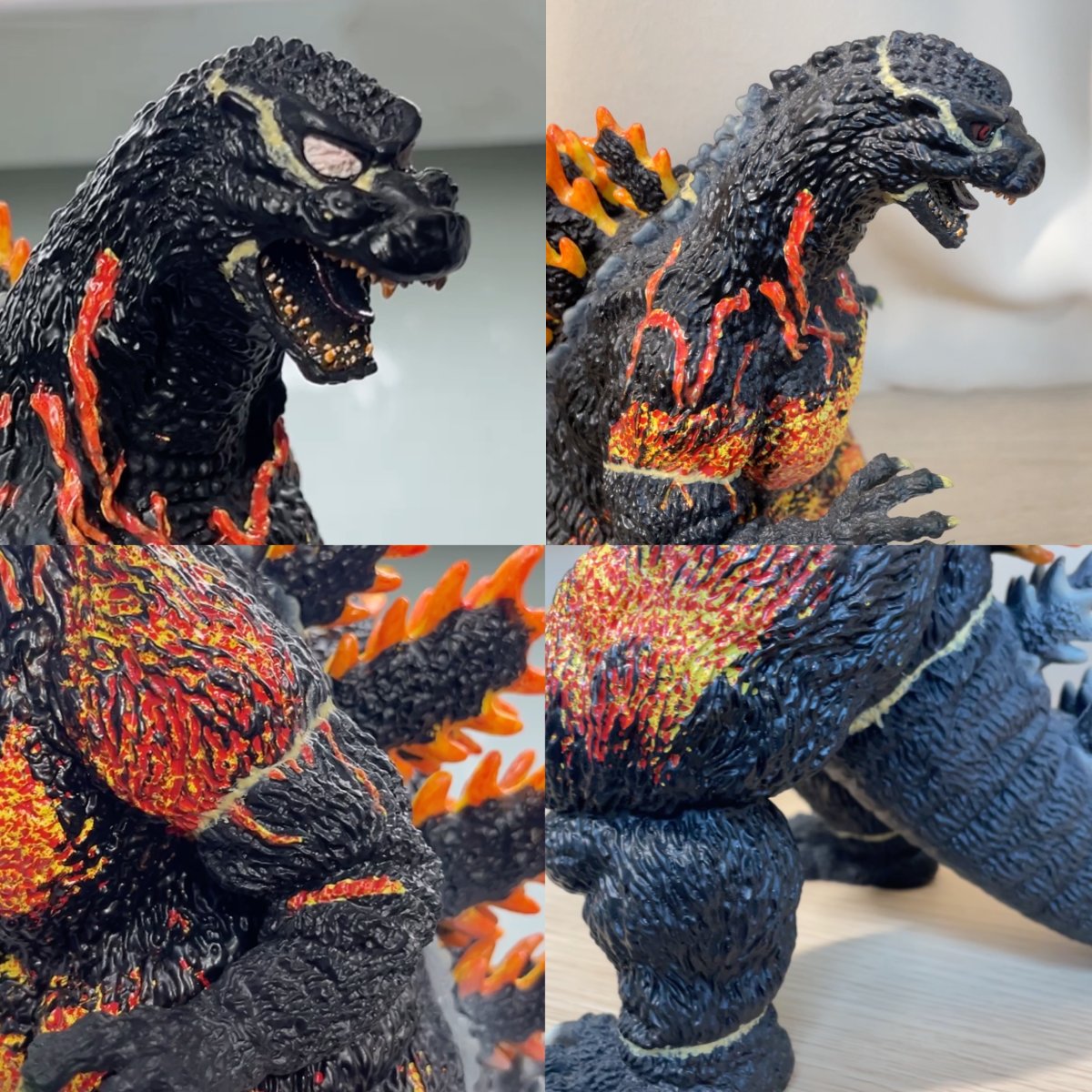
❷ Layered Internal Glow: From Flat Orange to Molten Lava Erupting from Within
The factory-molded orange areas looked relatively flat and lacked the gradual transition of light shining from deep inside the body. The hard boundary between the glowing sections and the black skin also failed to convey the natural transition of flesh being scorched by extreme heat.
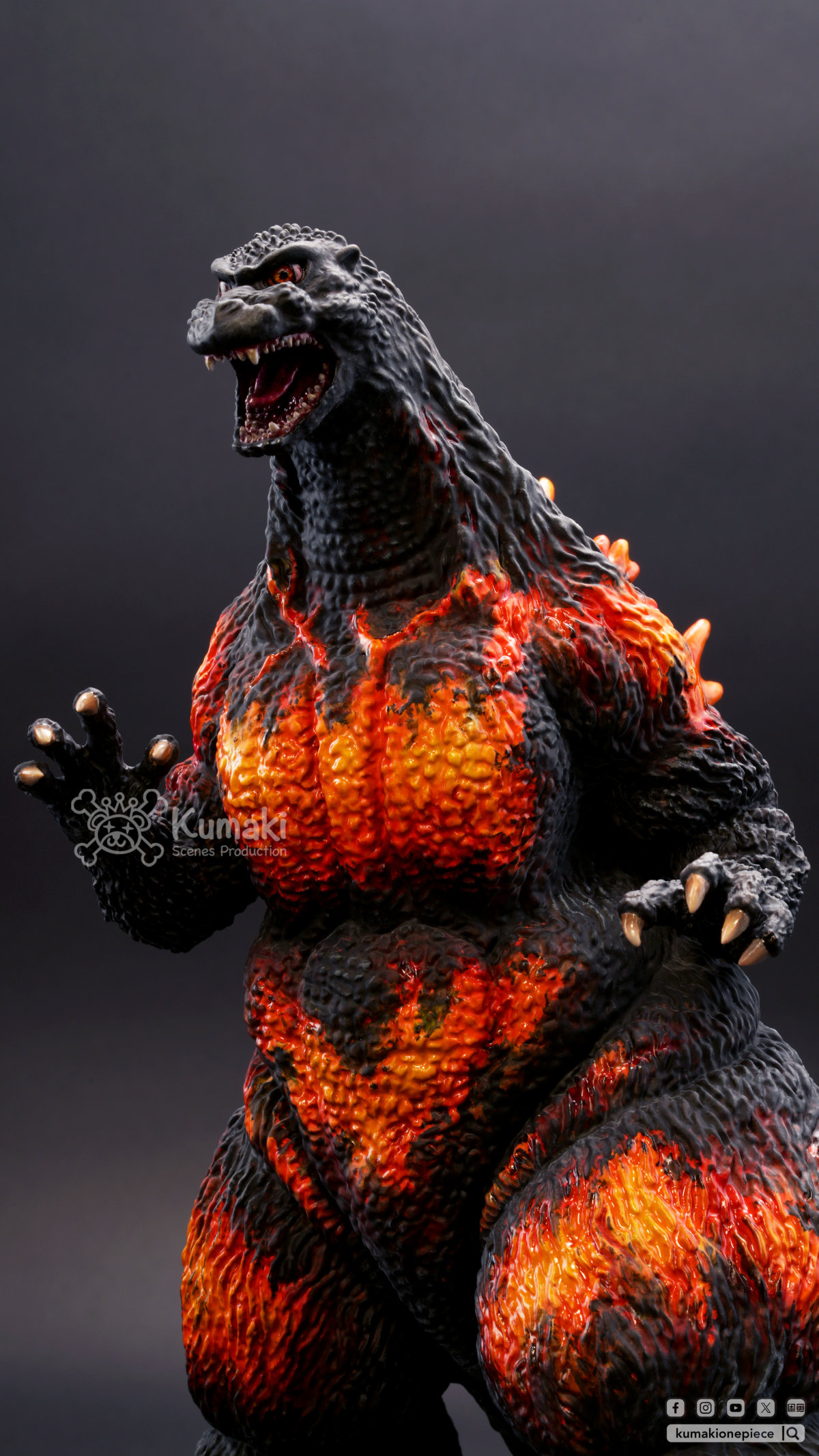
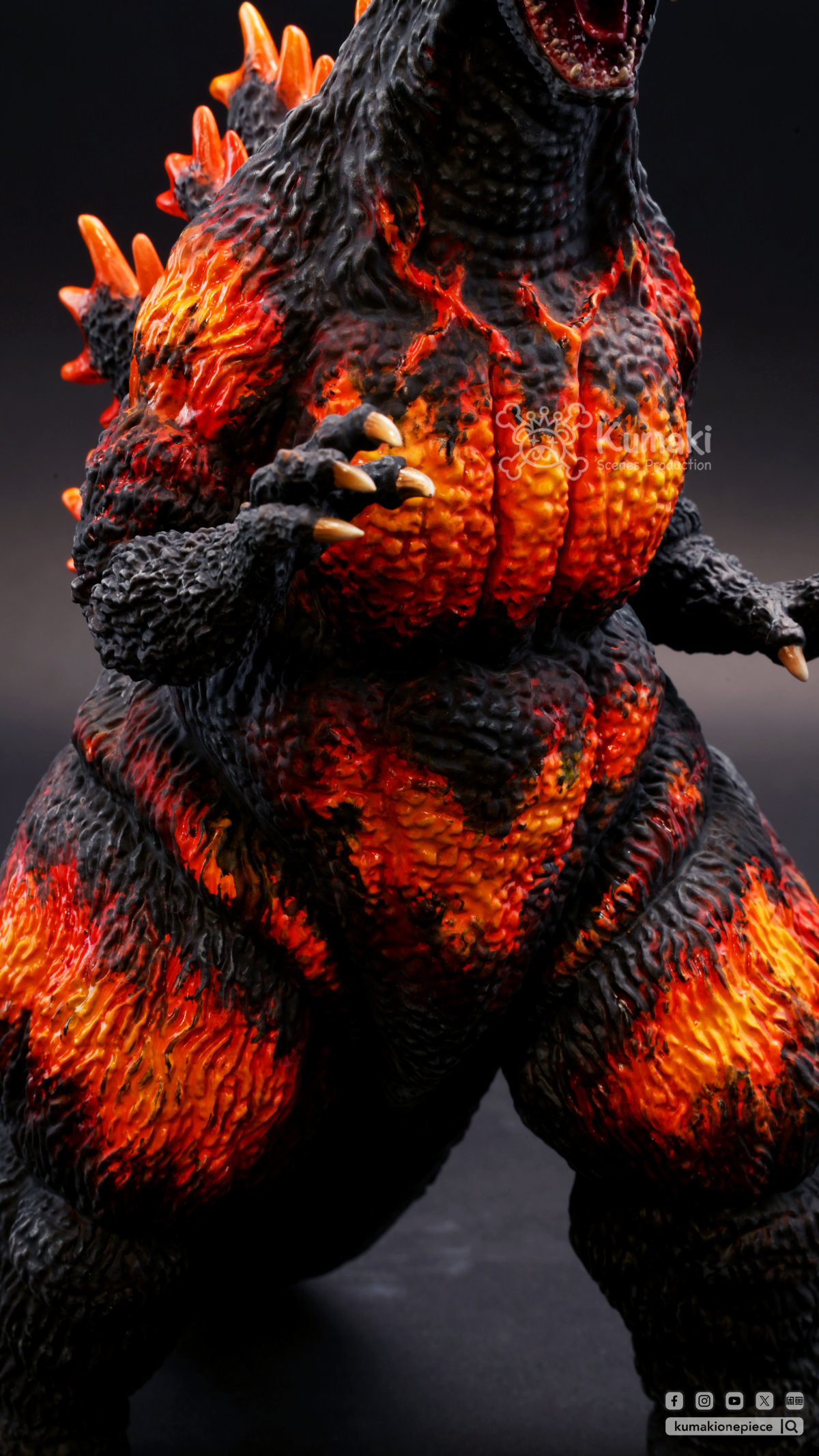
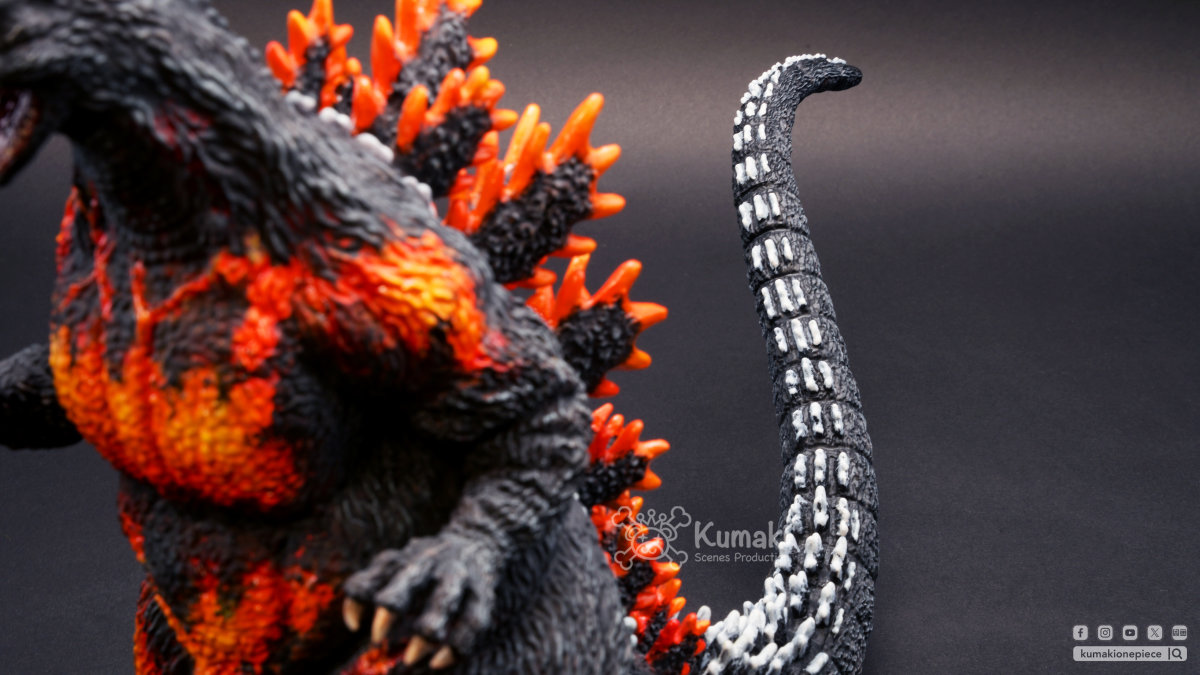
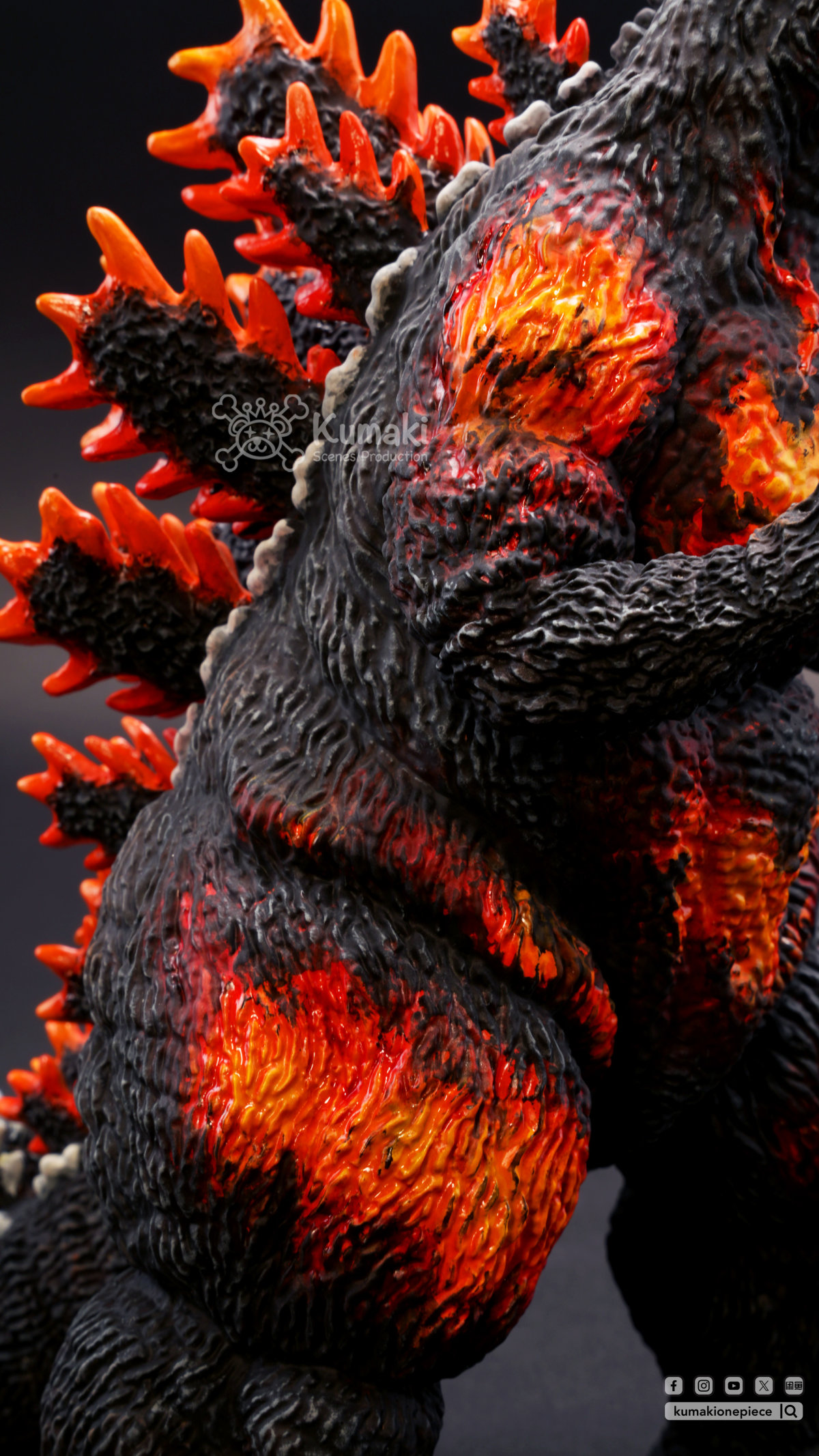
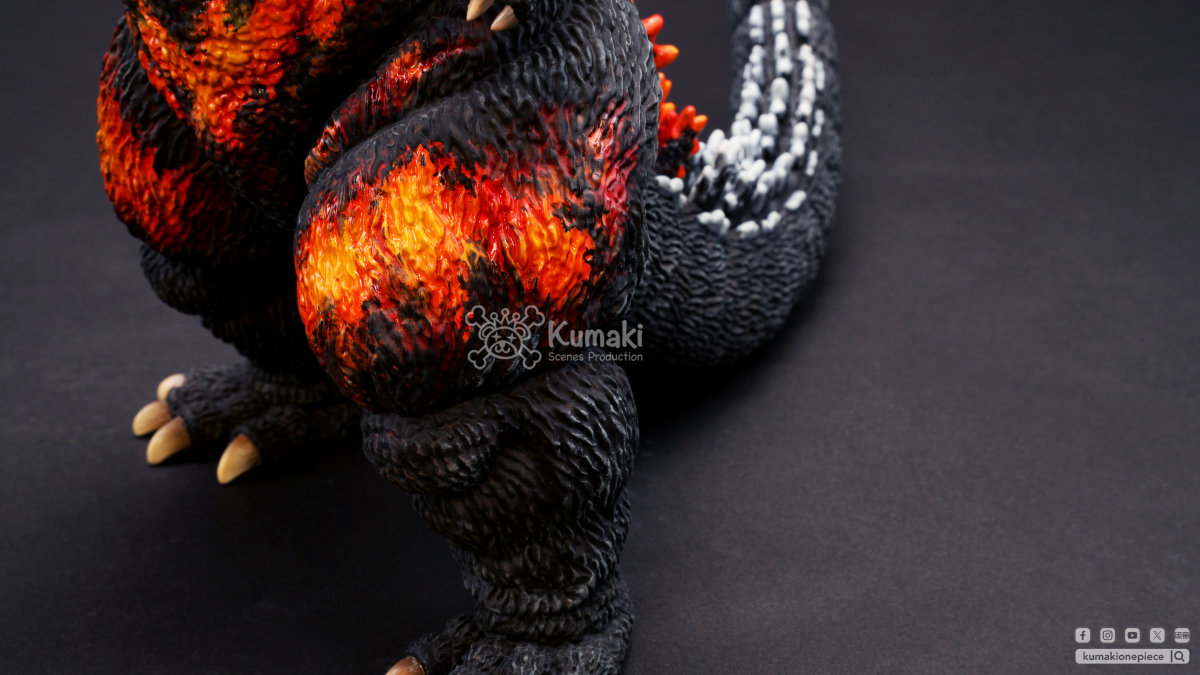
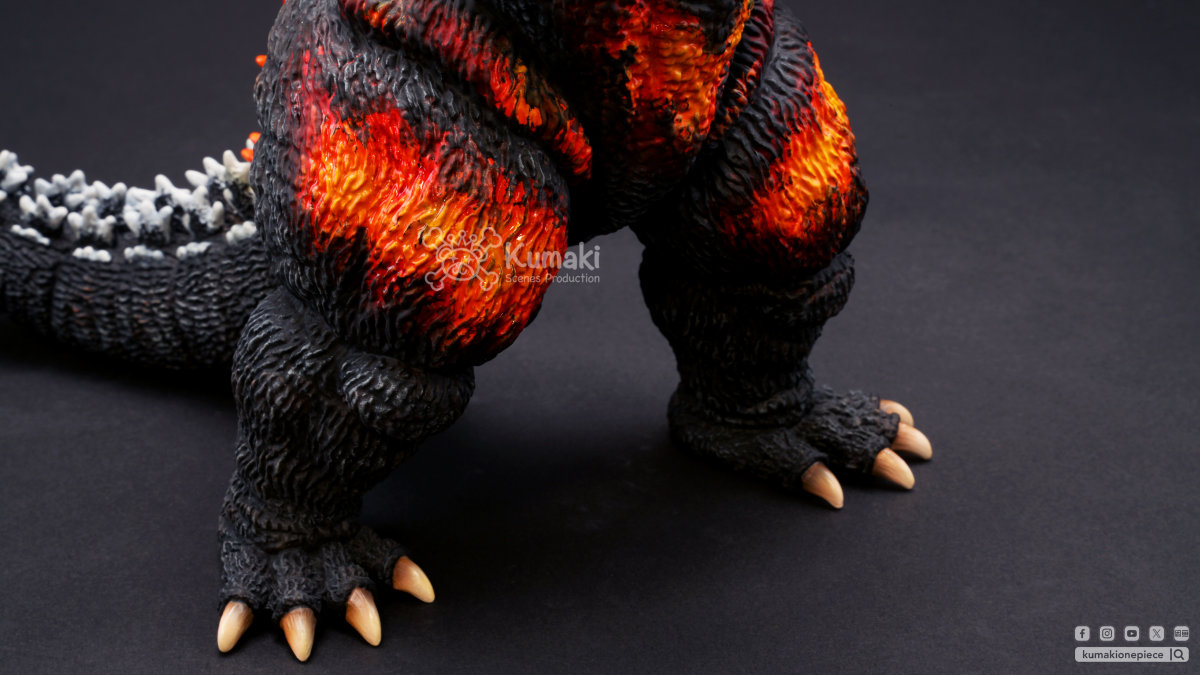
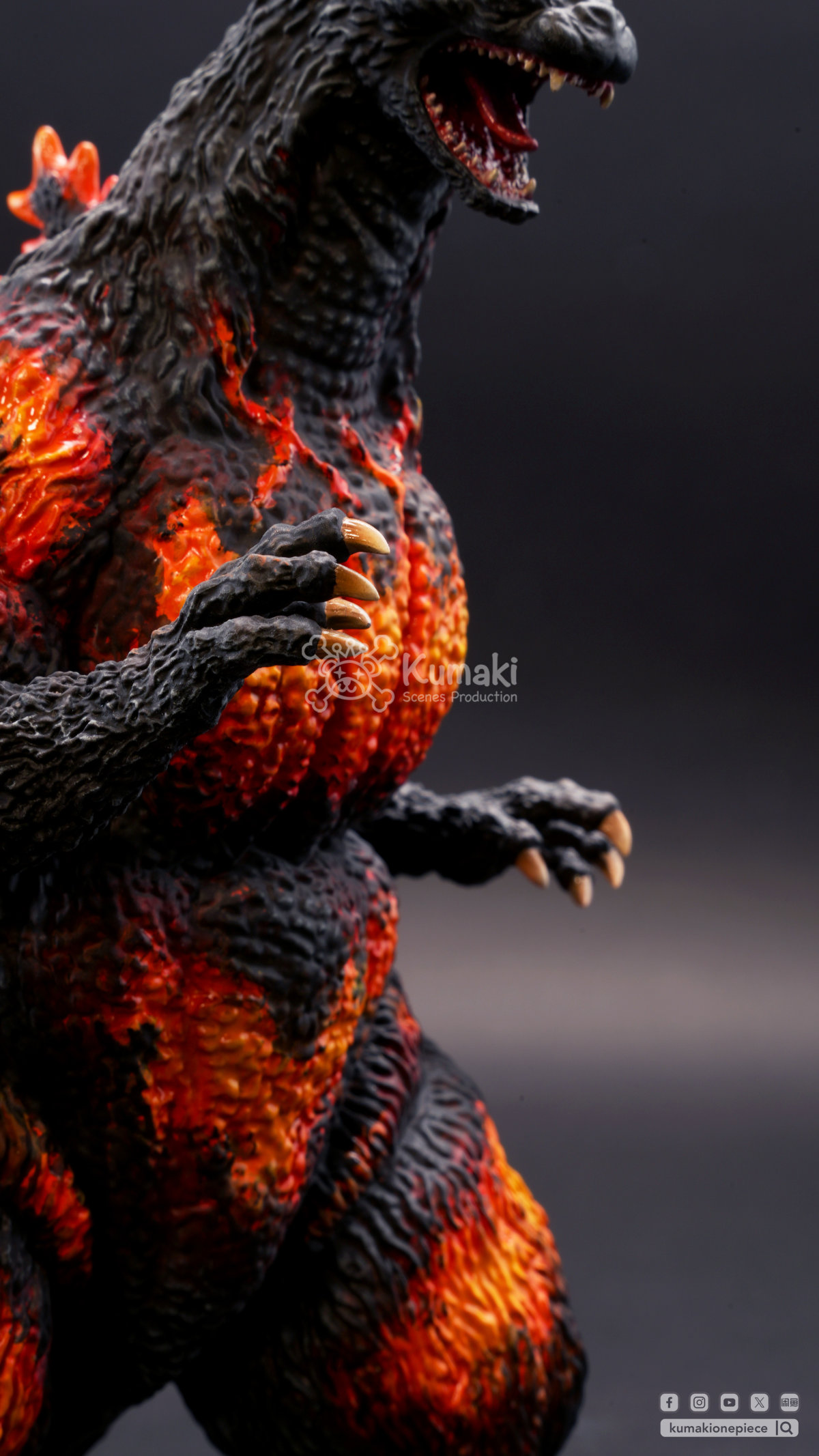
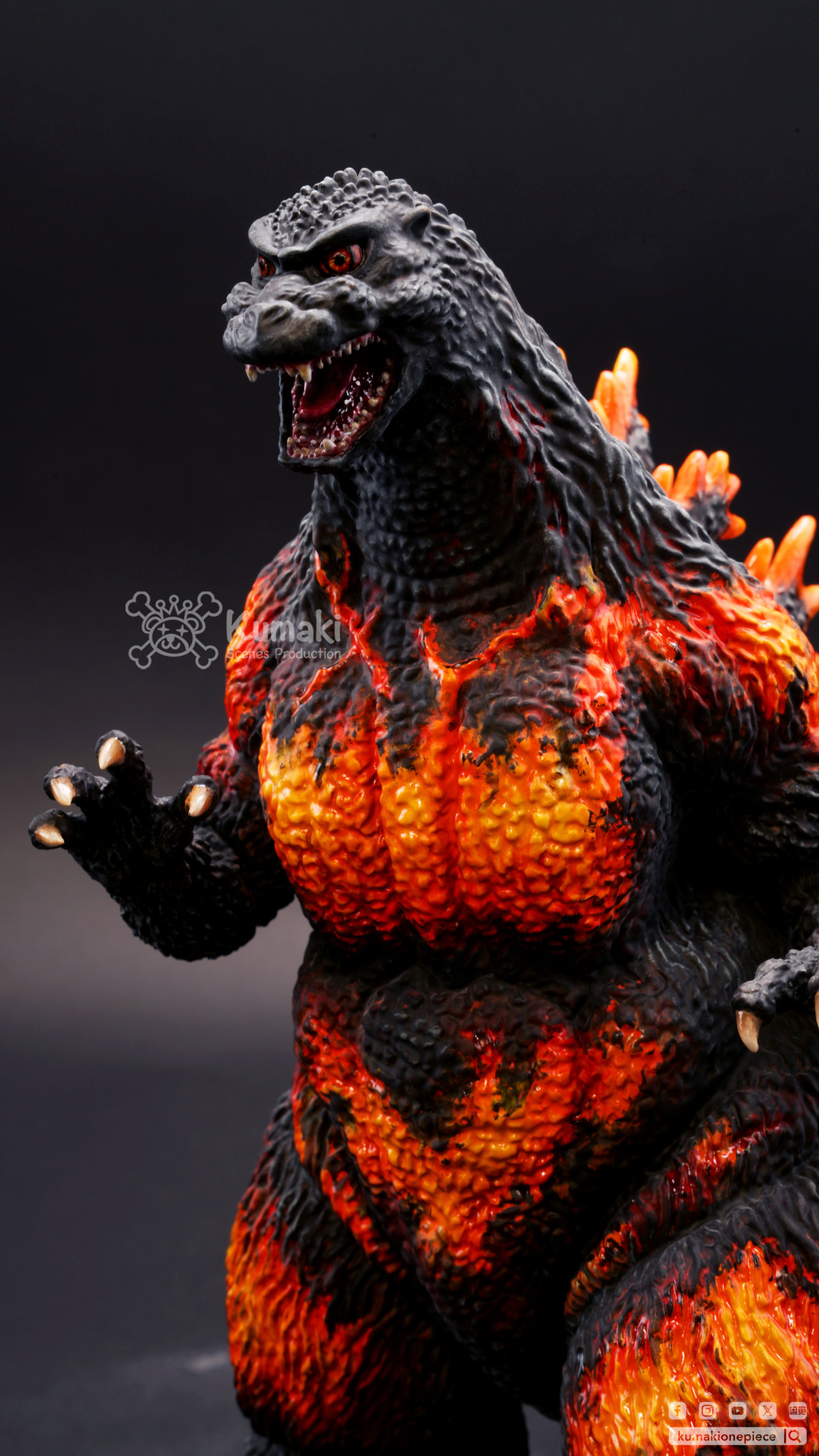
For this repaint, I used a reverse-highlighting technique. High-intensity pure white and orange-red were first applied inside the grooves of the chest, abdomen, and thighs. Bright orange, vermilion, and deep red were then built outward in successive layers before charcoal black and scorched brown were added over the raised folds of the skin. Dark shadow washes were also reinforced deep within the surface fissures so that the stretched, three-dimensional appearance of the cracks across the chest and legs would remain visible even under strong photography lighting. The result resembles flowing lava, as though heat reaching thousands of degrees were burning through the torso from the inside out.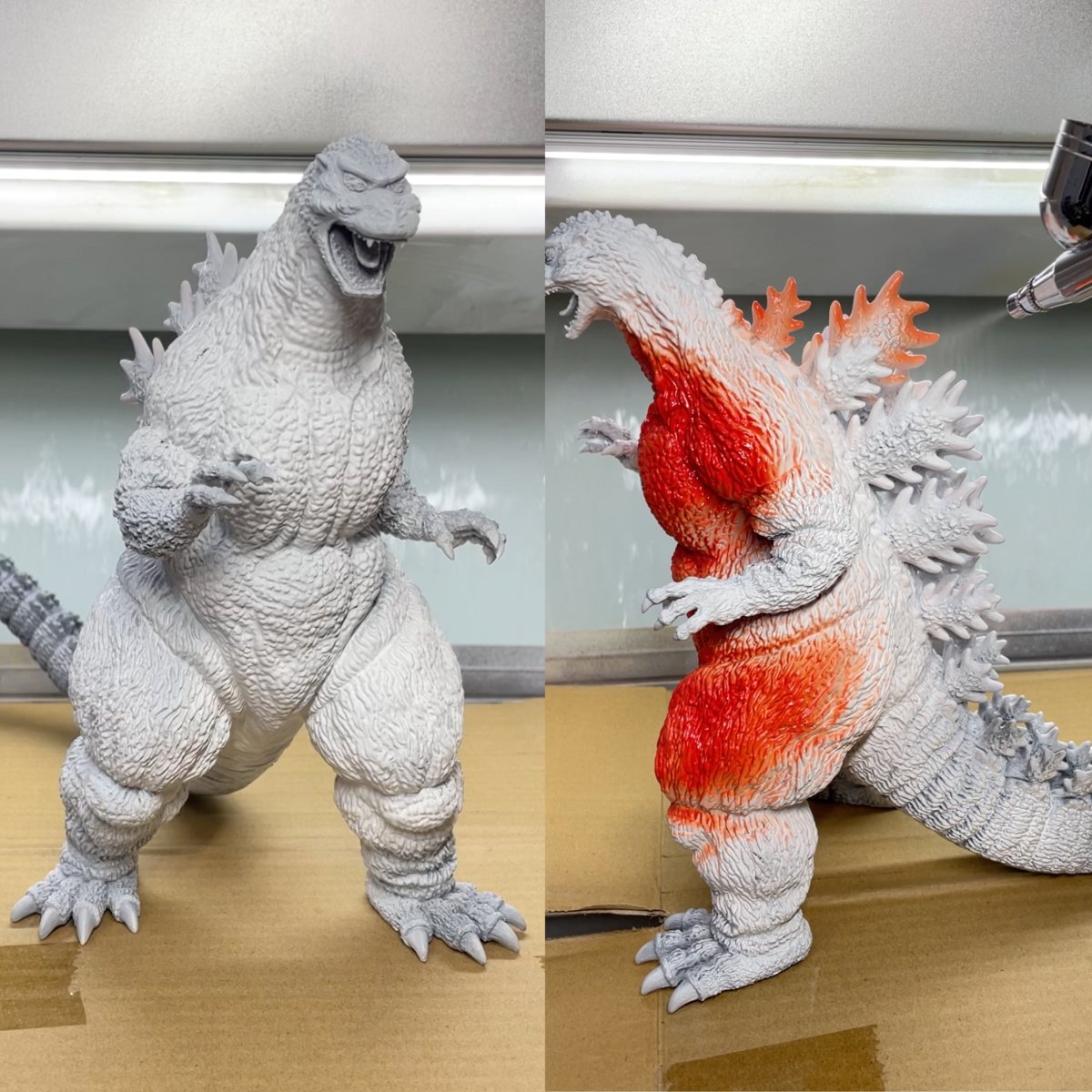
❸ Film-Accurate Research: Correcting the Factory Finish and Completing the Burning Dorsal Fins Along the Tail
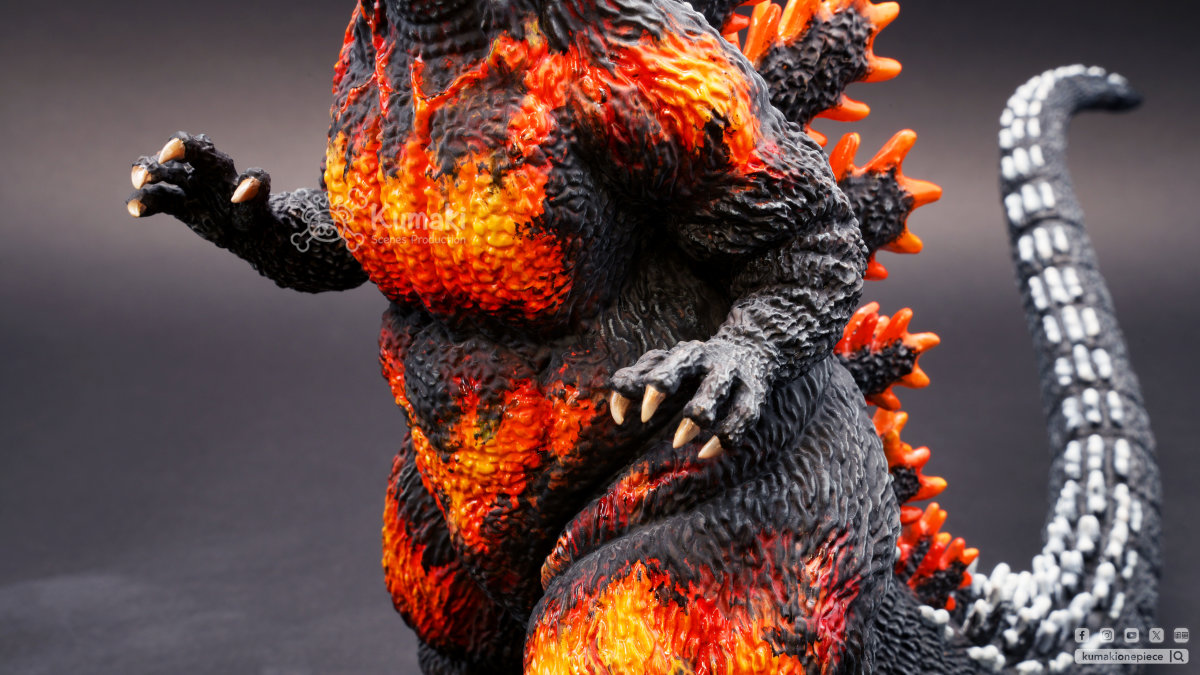
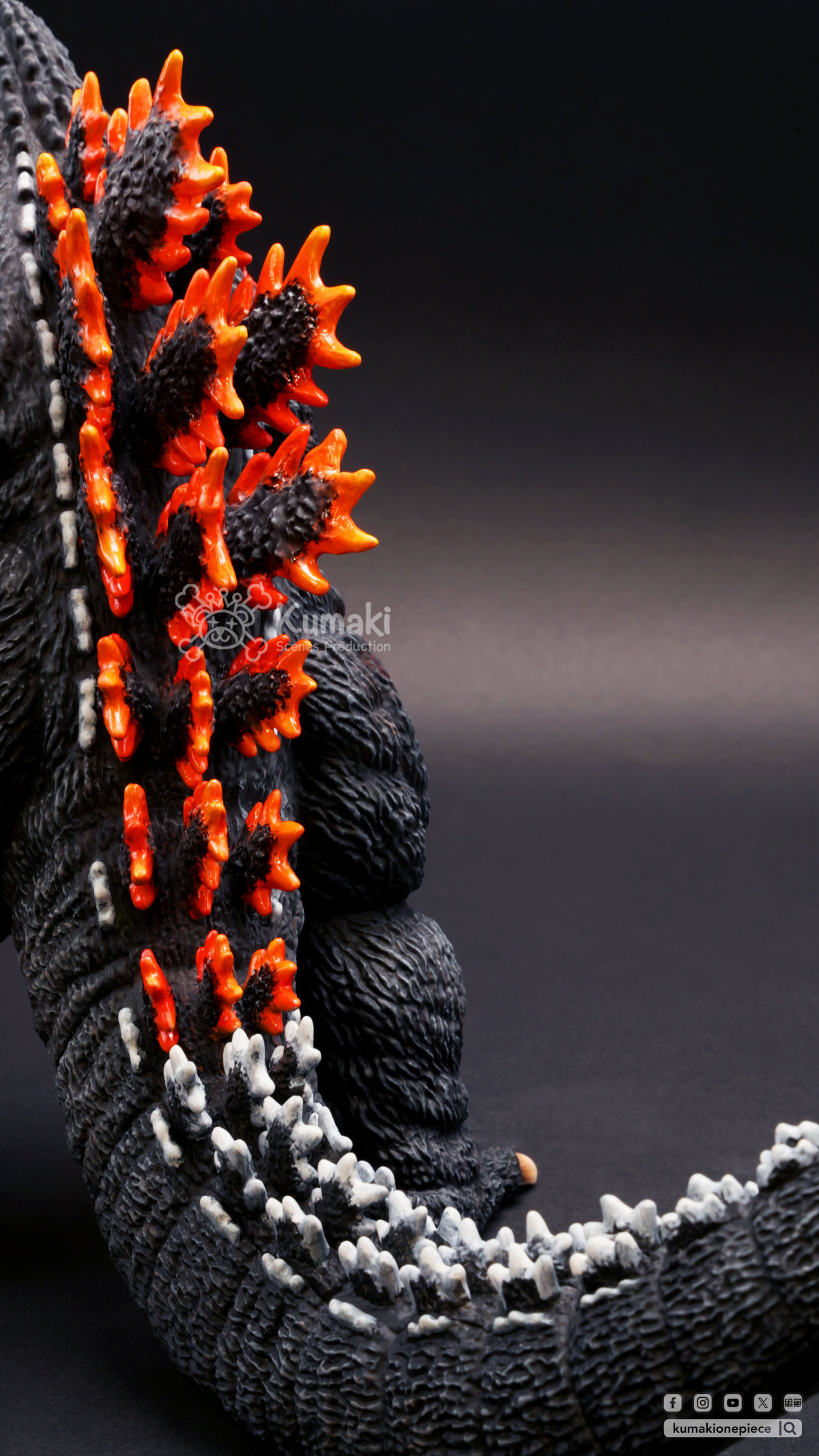
The factory-produced ICHIBAN KUJI figure leaves the dorsal fins along the tail entirely without the glowing Burning Godzilla paintwork, presumably because of production costs. This creates an abrupt break in the glow where the waist meets the tail.
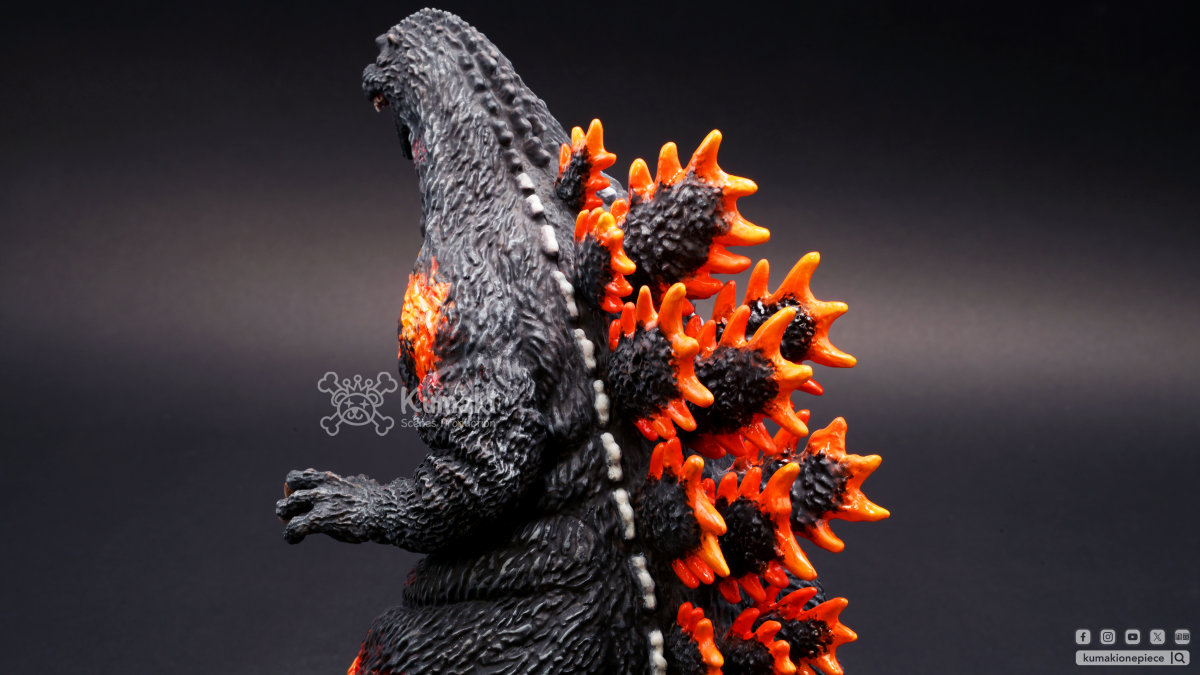
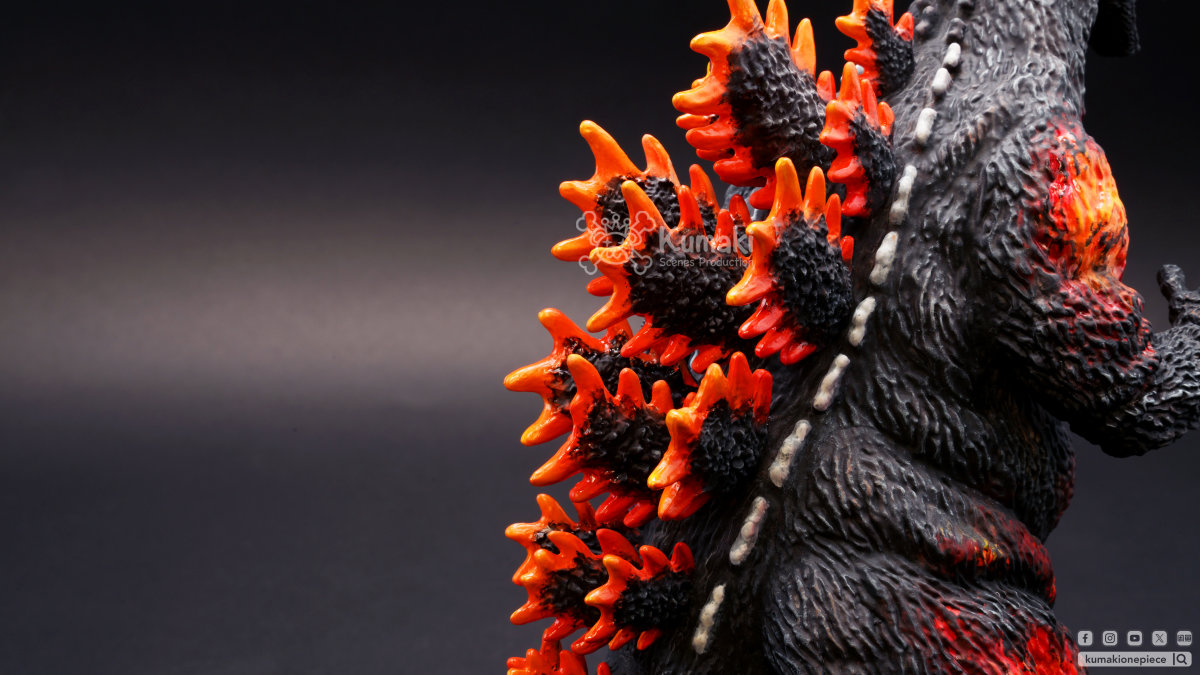
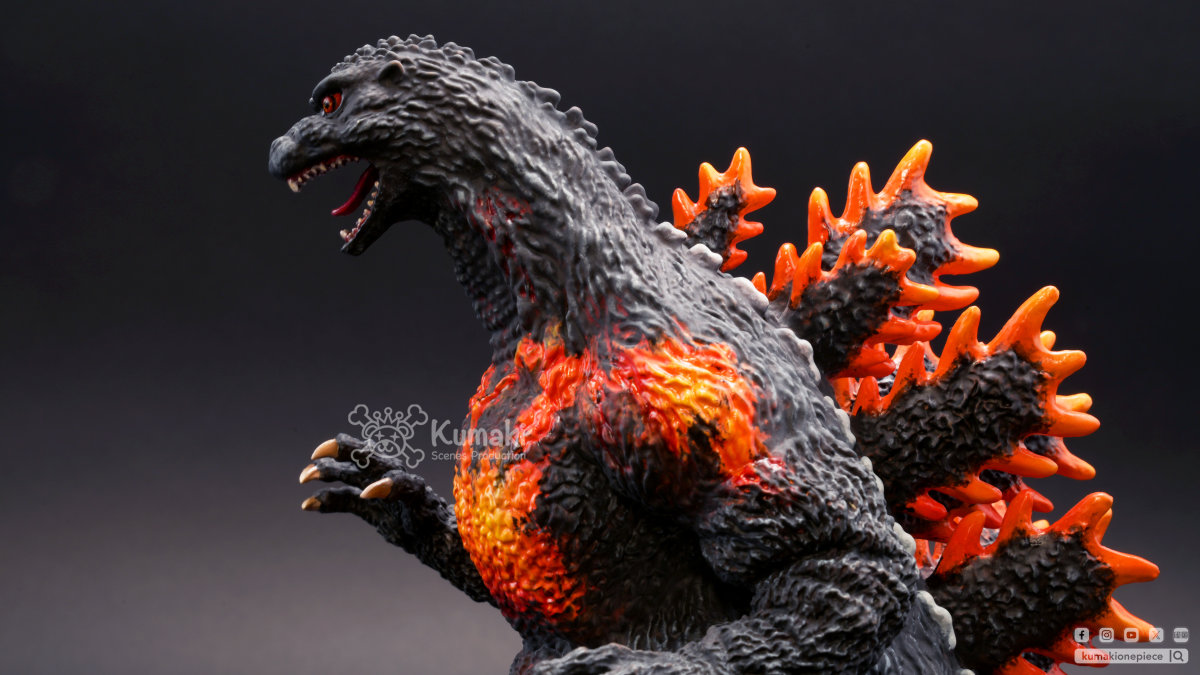
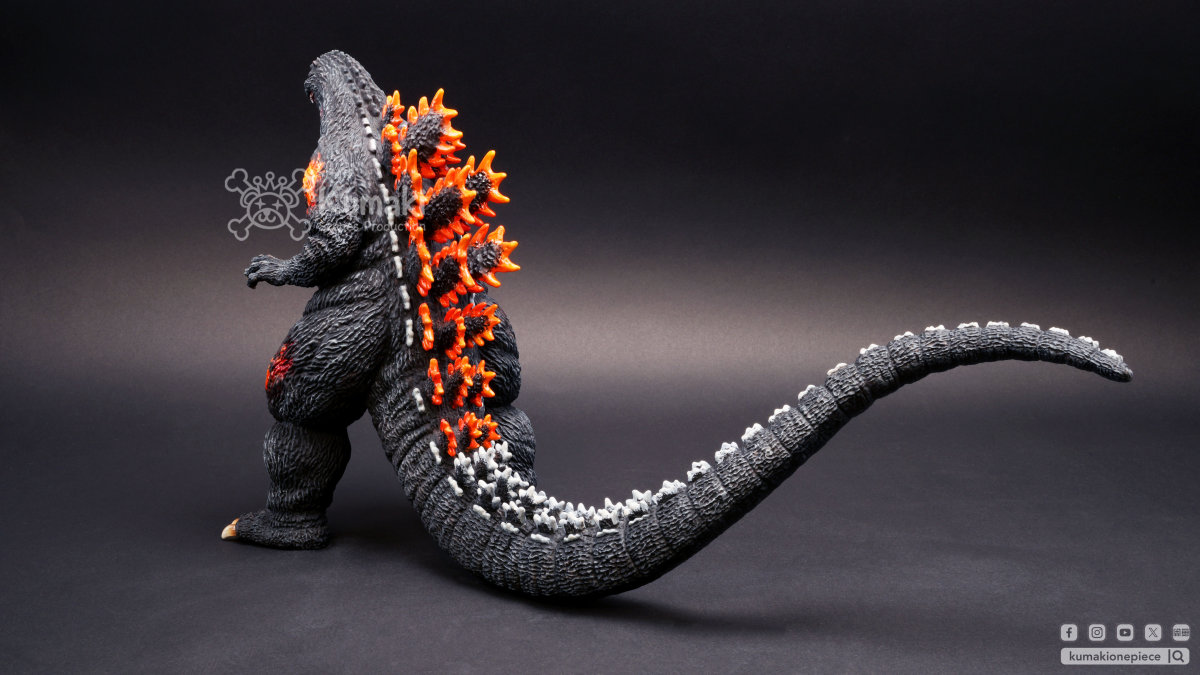
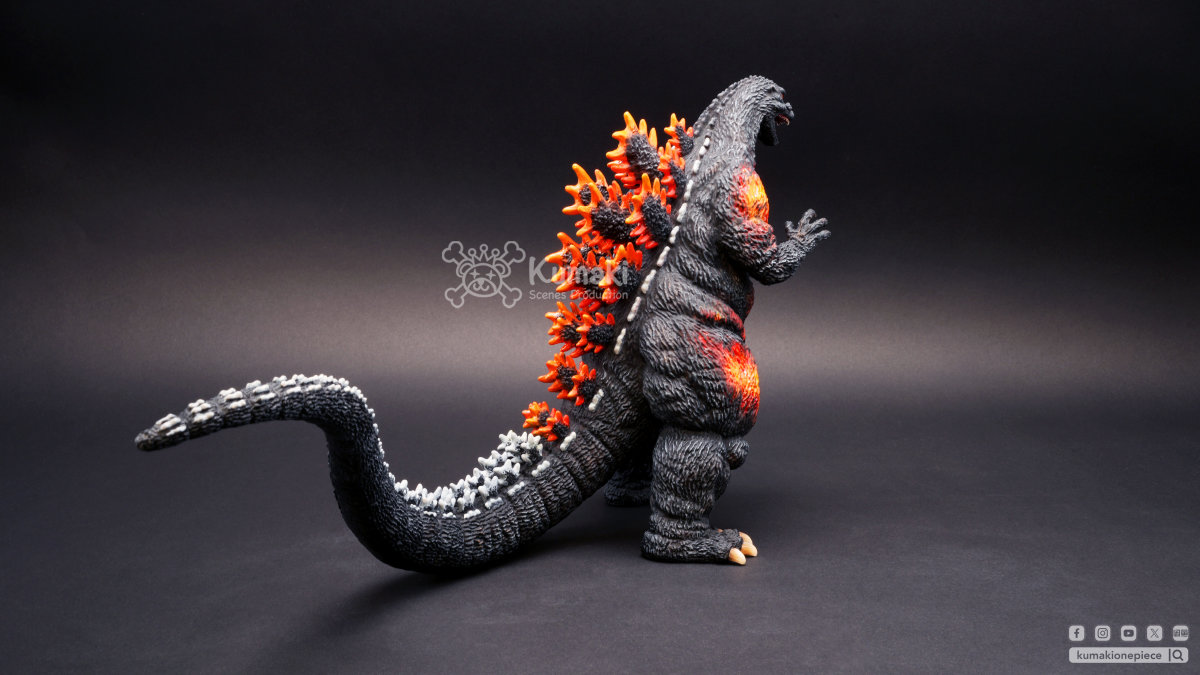
Correcting this became one of the key highlights of the research and repaint. According to the depiction in the 1995 film, Godzilla’s runaway nuclear energy travels along his spine and continues into the tail. I therefore extended the Burning treatment across the tail’s dorsal fins, allowing the searing red-orange glow to flow continuously from the main dorsal plates toward the middle and rear sections of the tail before naturally transitioning back to the classic ivory and gray-white fins near the tip. This not only restores a believable flow of thermal energy but also gives the entire piece a fully cohesive appearance.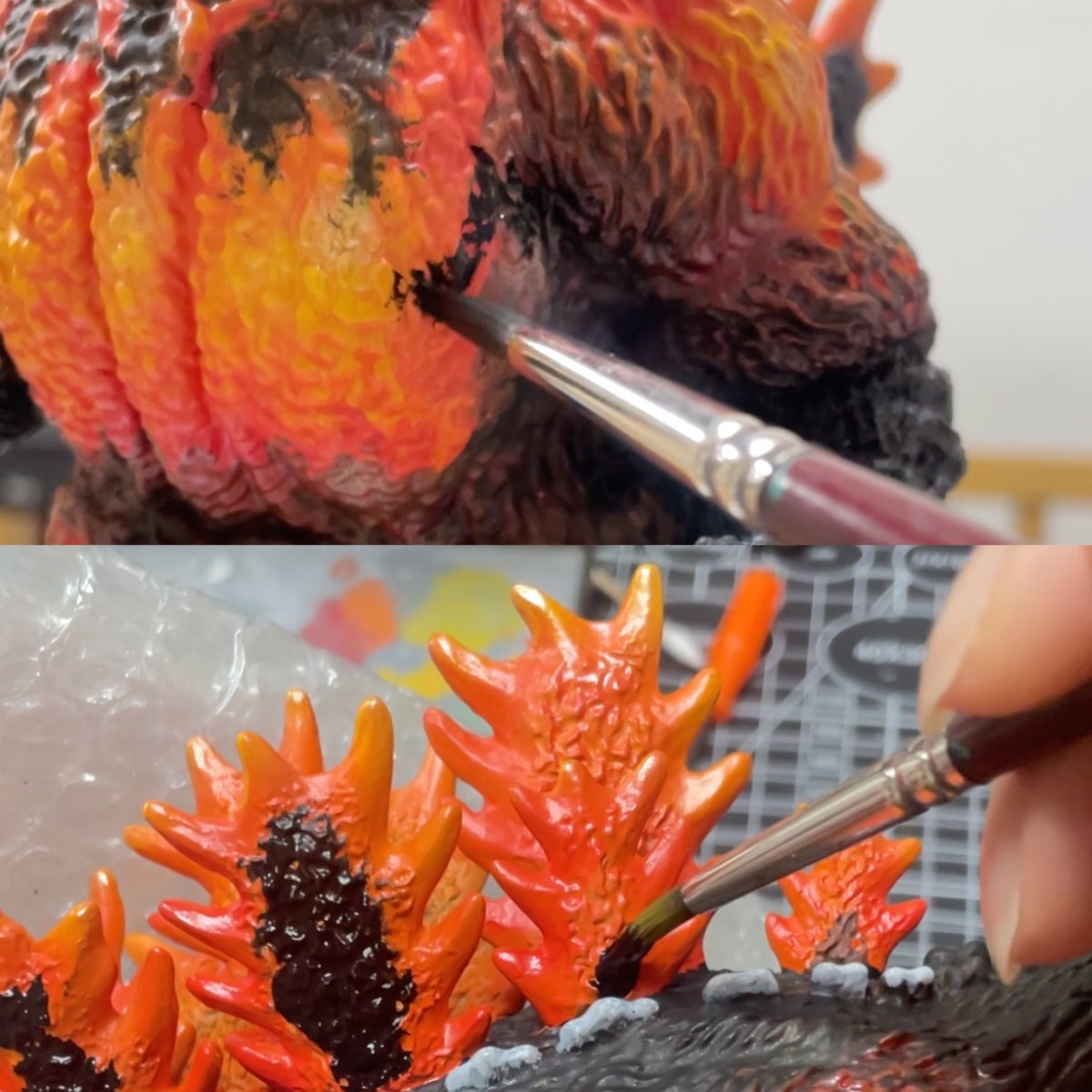
❹ Full-Body Matte Carbon Black Repaint and Dimensional Side-Fissure Detailing
Every black surface across the figure was completely repainted in a high-quality matte carbon black, with additional depth added to the recessed shadows. This dense, subdued black foundation removes the toy-like plastic appearance while making the red-orange Burning areas appear brighter, heavier, and more imposing.
Panel lining and dry-brushing were also used to intensify the contrast between the shadows and highlights around the nuclear fissures running along the sides of the chest and thighs. The deepest points of the cracks glow with a searing yellow, while their edges transition through scorched black and red. This greatly enhances the muscular force and visual tension along both sides of the torso. 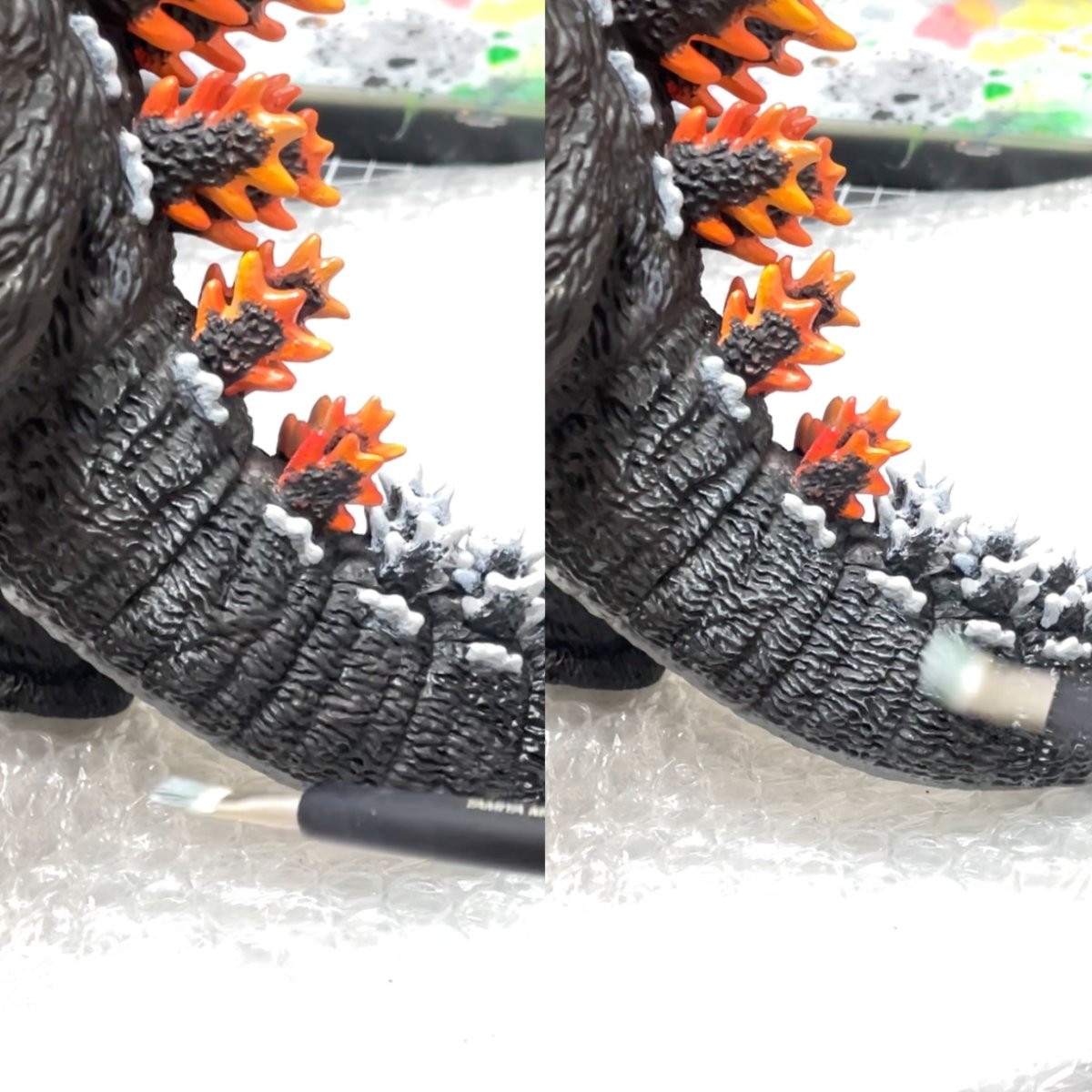
❺ Material Contrast: High-Heat Gloss vs. Charred Matte
Multiple dry-brush and wash passes combining dark gray, carbon black, and brown were applied across the skin to bring Godzilla’s coarse, hardened texture fully to life.
For the finer details, both eyes were carefully repainted with a feverish, bloodshot red stare, while deep crimson shadows were added inside the mouth and the teeth received multiple tonal layers. Instead of using a single flat color on the claws, I applied translucent ivory yellow with darker shading around the bases, creating the appearance of real keratin exposed to intense, scorching heat.
For the final finish, the glowing sections retain a subtle sheen reminiscent of superheated liquid, while the surrounding charred skin received a deep matte treatment. This contrast between glossy and matte surfaces creates the illusion of energy flowing through the otherwise static figure whenever it is placed under light. 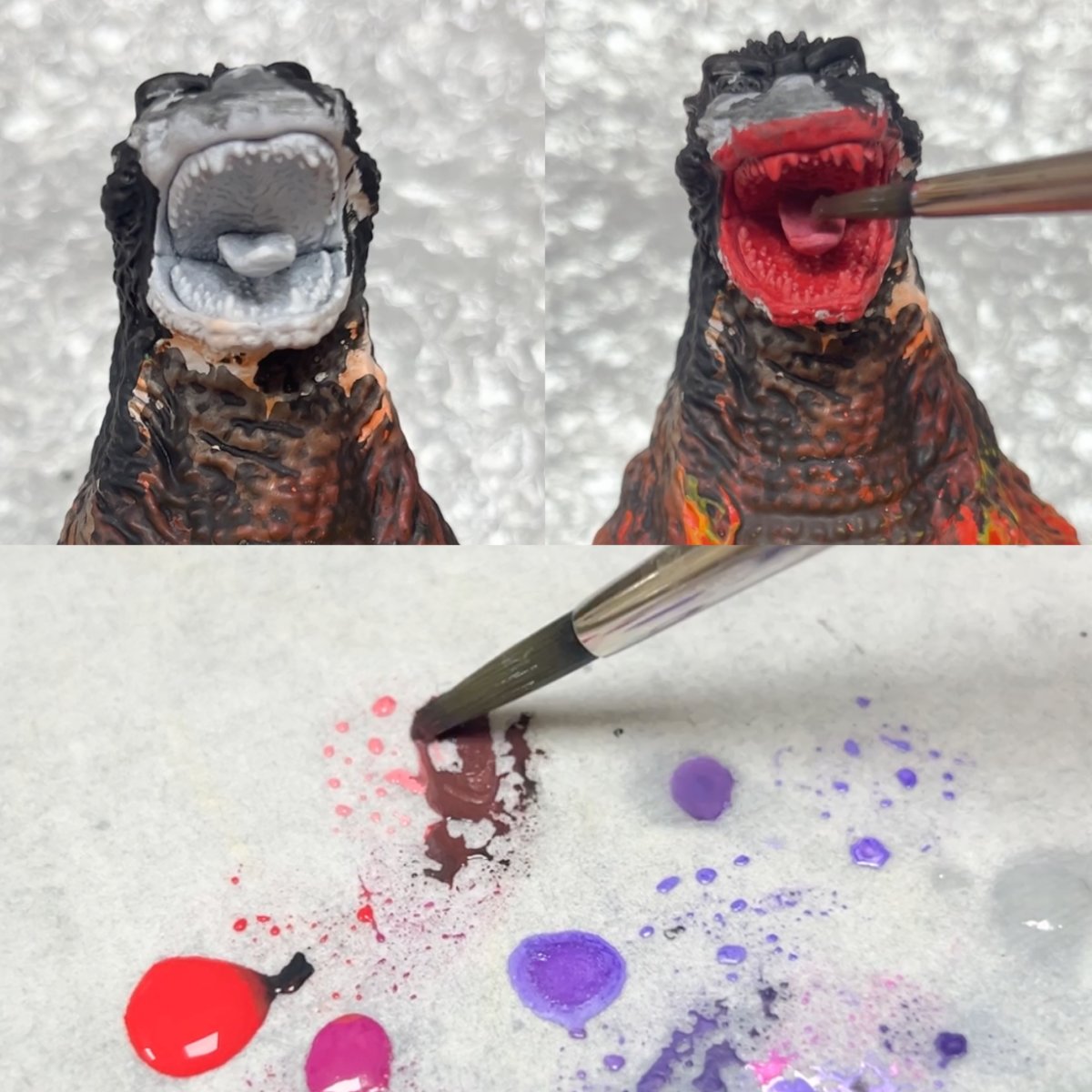
▍ Technical Concept
The central concept behind this project was the seamless integration of material preparation, complete head-and-body seam removal, and realistic object-source lighting (OSL).
Large-format SOFVICS soft-vinyl figures excel at creating a powerful sense of volume, but the assembly seams found on mass-produced pieces—particularly around the eyes and lower jaw—along with their relatively flat paintwork can obscure an excellent sculpt. By combining mold-release removal and adhesion primer, putty-based seam filling and texture re-sculpting, layered masking, airbrushed gradients, and hand-painted dry-brushing, I restored the continuous organic lines of the head and elevated the entire piece to a sculptural level of finish.
▍ Conclusion and Multi-Angle Gallery
As @kumakione, every kaiju repaint feels like a conversation across time with master sculptor Yuji Sakai. Watching a once-flat soft-vinyl figure reignite beneath layers of paint and flame-like color, restoring the awe-inspiring yet heartbreaking presence of the King of the Monsters from 1995, is one of the most exhilarating moments in model making.
To finish, here is a full-body and detail tour of the completed piece from multiple angles. Thank you for reading, and comments and discussion from fellow model enthusiasts are always welcome!
If you have a kaiju, Godzilla, or any other model that you would like to free from its toy-like plastic appearance and transform with a cinematic finish, feel free to send me a message. Whether it involves complete seam removal, a story-accurate repaint, or a one-of-a-kind luminous finish, I approach every project with the highest standard of craftsmanship to give your treasured collection new soul and life. 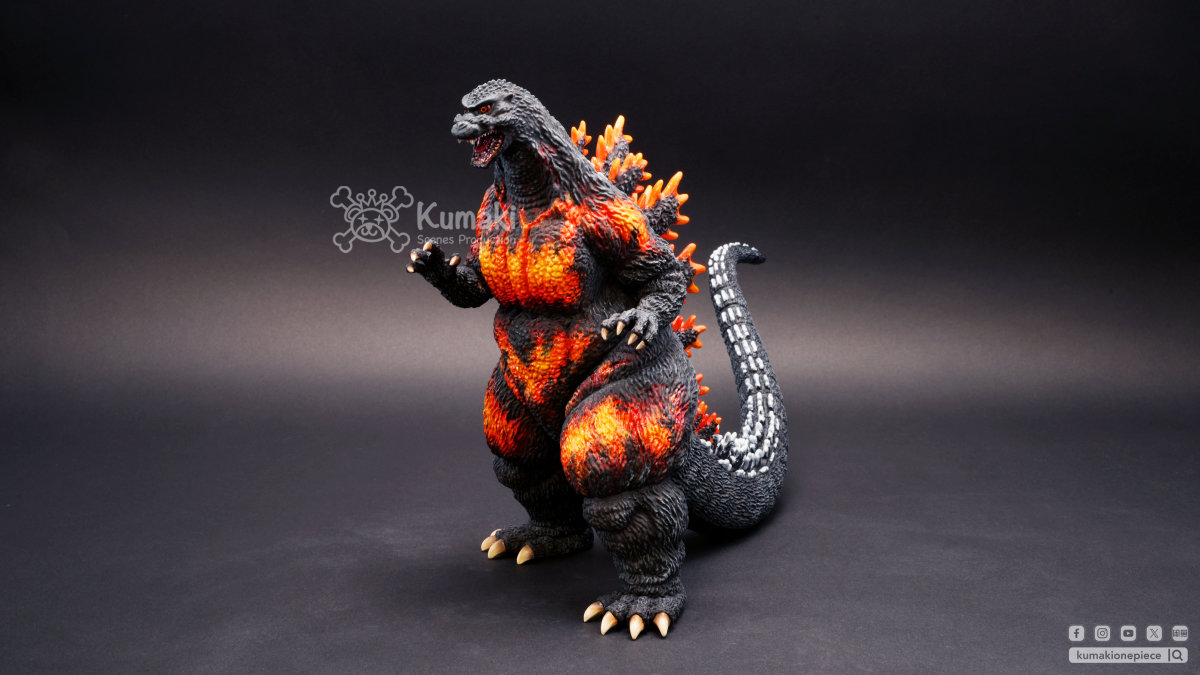
//Kumaki - 動漫場景室 (Anime Scene Studio)
We provide handcrafted anime model services, combining each piece with scene-based storytelling and creative craftsmanship to enhance its visual appeal and completeness as a collectible.
//
If you enjoy our work, please like, follow, and share our Facebook and Instagram pages!
You can also visit them to see more of our projects. Thank you!
Facebook Page: https://www.facebook.com/KumakiOnePiece/
Instagram: https://www.instagram.com/kumakionepiece/