

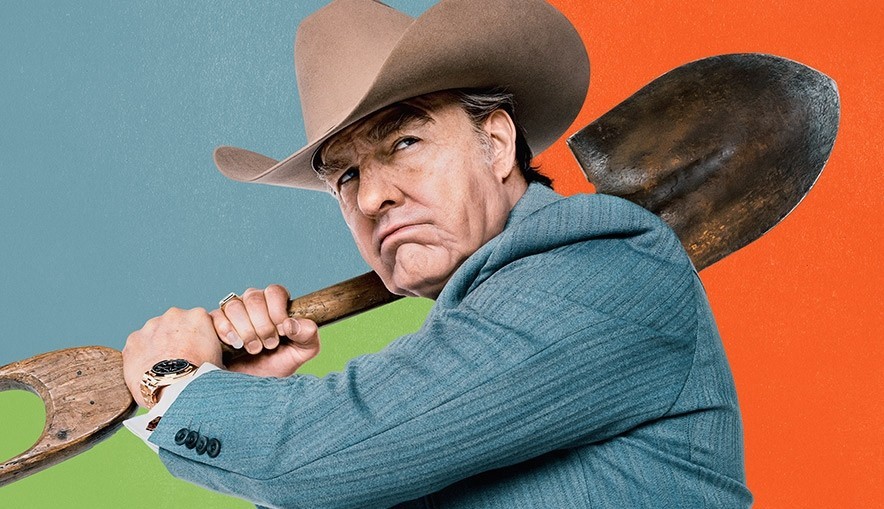
 (Image courtesy of Warner Bros. Pictures)
(Warning: This review contains spoilers.)
What kind of movie is "The Digger," exactly? Fans of older films might describe it as a political fever-dream comedy descended from "Dr. Strangelove or: How I Learned to Stop Worrying and Love the Bomb." More contemporary audiences may place it alongside "Don't Look Up," while anyone still baffled after watching the trailer will probably just call it the new Tom Cruise movie. But audiences are not the only ones trying to define "The Digger." The movie itself is engaged in the same struggle. The trailers do not reveal the full picture, but that uncertainty is the film’s central idea: "The Digger" is trying to figure out what kind of movie it wants to be.
"The Digger" has been marketed primarily as a comedy, but it is not especially funny. Dramedy may be the more accurate label. Its lack of laughs will inevitably spark debate. Some viewers will call it painfully unfunny, while others will insist those critics simply did not understand it. The movie anticipates both reactions because its characters ultimately have the same argument. Personally, "The Digger" reminded me more of "Synecdoche, New York." Both films use theatrical spaces in a self-aware fashion, constantly shifting between reality and performance. The two are fundamentally different in concept, of course, but they share the same atmosphere: audiences are trapped inside a theater with the protagonist for an extended rehearsal, cut off from the outside world as an obsession with character study spirals out of control. 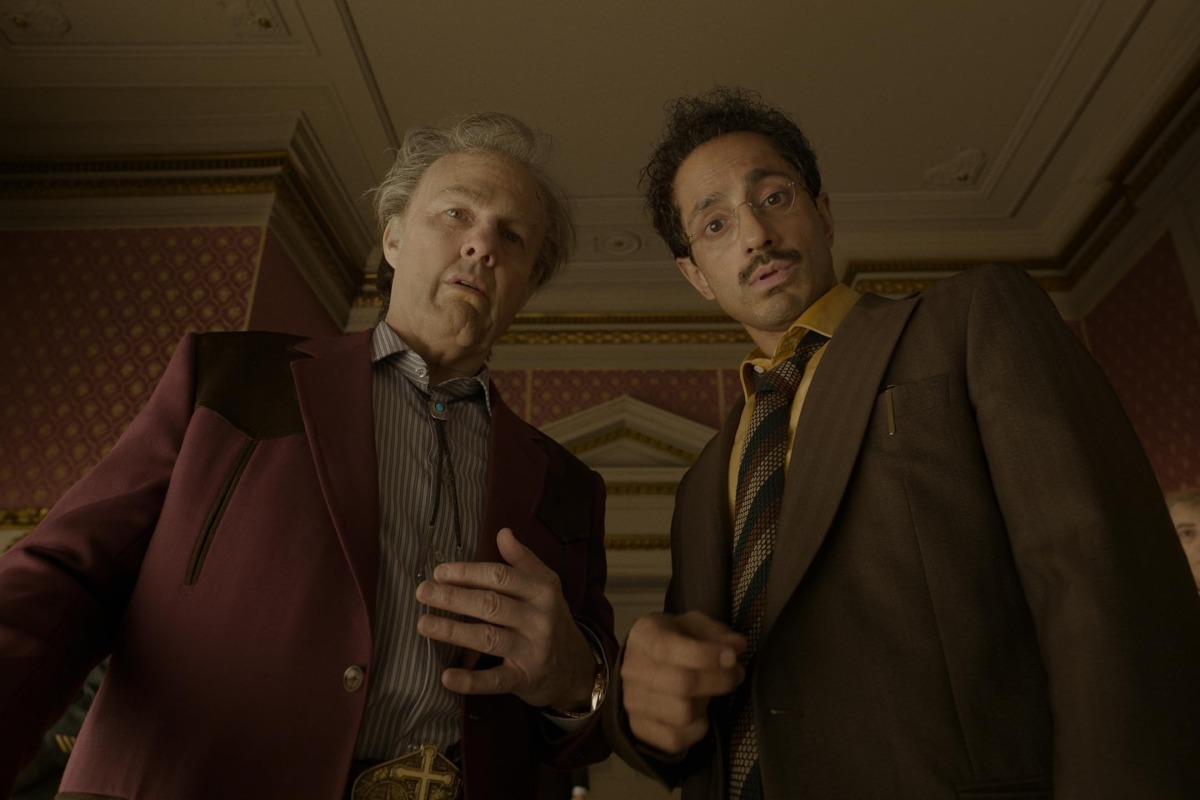
(Image courtesy of Warner Bros. Pictures)
Yet "The Digger" does more than use a theater as its setting. Its heightened performances, blocking, scene changes and overall structure all operate according to the logic of a stage production. This is not simply a movie about people rehearsing a play. The movie itself is a play that happens to have been recorded by a camera crew. Viewers who understand and adjust to that creative choice will likely enjoy the experience. Those who cannot will find the entire exercise grating. The debate over whether the movie is funny works much the same way. "The Digger" actively tests what audiences find amusing and what comedy even means, depending on the observer’s perspective. To ordinary people, the actions of politicians and the powerful can appear ridiculous or repulsive. Behind those actions, however, may be calculated decisions made because no better options exist. The same figures can be hailed as heroes who restored order or condemned as villains who created the chaos.
Consider Donald Trump and Elon Musk. People who despise them see a pair of clowns constantly making absurd decisions and issuing outrageous statements, as though they were performing in a comedy. To their admirers, however, those same decisions represent the surest path toward fixing society. Political filters can push either view to the extreme, turning public figures into monsters or elevating them into near-mythic saviors. That is what "The Digger" truly wants to excavate. Warner Bros. Pictures, meanwhile, wants audiences to see the film as a commercial blockbuster. "The Digger" is an arthouse movie at heart, but it reportedly cost as much as $180 million. To protect its investment, the studio has dressed it up with a FIFA World Cup partnership, IMAX screenings and an aggressive Tom Cruise publicity campaign. With another Oscar push in sight, Cruise returned to elaborate magazine photo shoots and lengthy interviews for the first time in more than a decade. He even appeared in costume on the cover of TIME, making the campaign feel more like the launch of a superhero tentpole.  (Image courtesy of Warner Bros. Pictures)
Financially, however, "The Digger" seems destined to fail—and fail spectacularly. Cruise no longer has the same box-office pull in prestige dramas that he enjoyed earlier in his career, and that is partly a problem of his own making. He spent so many years starring in big-budget entertainment that audiences now seem interested only when he delivers another spectacle. His public image has become inseparable from commercial action movies. If Warner Bros. wanted "The Digger" to sell, it might have been better off casting Leonardo DiCaprio, who previously worked with Alejandro G. Iñárritu on "The Revenant." DiCaprio’s brand has remained synonymous with prestigious, high-caliber dramas. Even audiences who normally watch nothing but blockbusters will buy a ticket for him as an occasional dose of cinematic sophistication. I can also imagine DiCaprio playing this role in much the same way as Cruise. He is no stranger to gaining weight, aging himself with makeup or adopting a thick Southern accent.
"The Digger" does not merely anticipate being criticized as unfunny. It also predicts that it will eventually become a cult movie. The film certainly has the qualities needed to attract a devoted niche following, undergo a gradual critical reassessment and perhaps even become a recognized classic. Such films often feature bold, controversial creative swings or touches of magical surrealism, and "The Digger" has both. Whether it will actually enjoy that fate is another question. In the past, critical reappraisals were often fueled by second and third lives on VHS and DVD, along with repeated television broadcasts. Those outlets effectively relaunched overlooked movies and introduced them to new audiences. In the streaming era, however, a film can arrive on a platform and disappear beneath an enormous catalog within weeks. Physical media and television once offered the kind of long-tail exposure that streaming rarely provides.  (Image courtesy of Warner Bros. Pictures)
Overall, I liked "The Digger." Still, much like "Don't Look Up" and many other films attempting to criticize contemporary society, it is often too eager to attack its targets. Characters launch into lengthy tirades, creating moments that feel overly blunt, exhausting and cheap. "The Digger" is a comparatively mild offender, partly because its theatrical format naturally depends on dialogue and partly because the rhythm of its rants is sometimes controlled well enough to avoid becoming entirely irritating. The greatest challenge for any film confronting the present is managing its anger. When artists are too close to the subject and identify with it too deeply, they may lose patience before they have fully processed their emotions and rush to vent them instead. Audiences, equally close to the issue, may also struggle to step back far enough to appreciate the work. Finding the right distance is what allows beauty to emerge. That remains an eternal challenge for artists and audiences alike.