

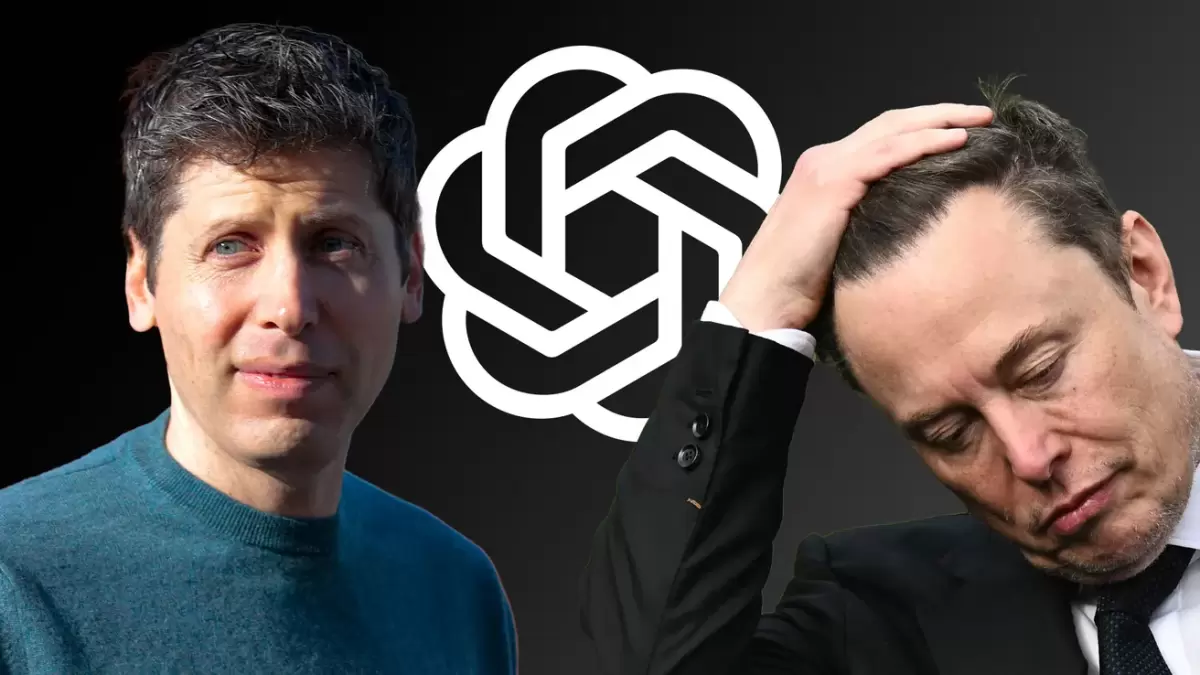
OpenAI CEO Sam Altman has sparked backlash across gaming and tech communities after arguing that leaving large amounts of DRAM idle in personal computers is an inefficient use of the world’s memory supply. His remarks have reignited debate over the AI industry’s competition with consumers for hardware resources, with Tesla CEO Elon Musk publicly firing back.
During a recent appearance on "Cheeky Pint," Altman said many people want to run AI models locally and assume that open-source models will allow them to operate entirely on personal computers without relying on data centers.
From a global resource-allocation standpoint, however, Altman argued that placing large amounts of the world’s limited DRAM supply in individual computers—where it may be used only 5% of the time—is highly inefficient. With supplies under severe pressure, he said memory should instead be utilized as fully as possible in the cloud, despite many consumers instinctively preferring the opposite approach.
Some users interpreted the comments as a call to divert memory from personal computers to data centers, fueling a wave of criticism and memes. Altman, however, was discussing computing-resource efficiency and did not propose any policy restricting consumers from buying or owning RAM.
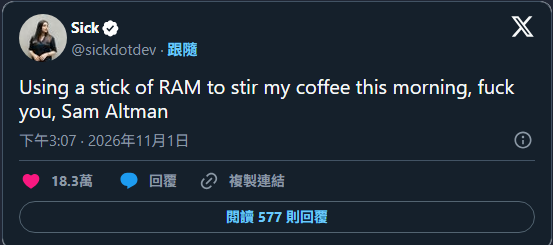
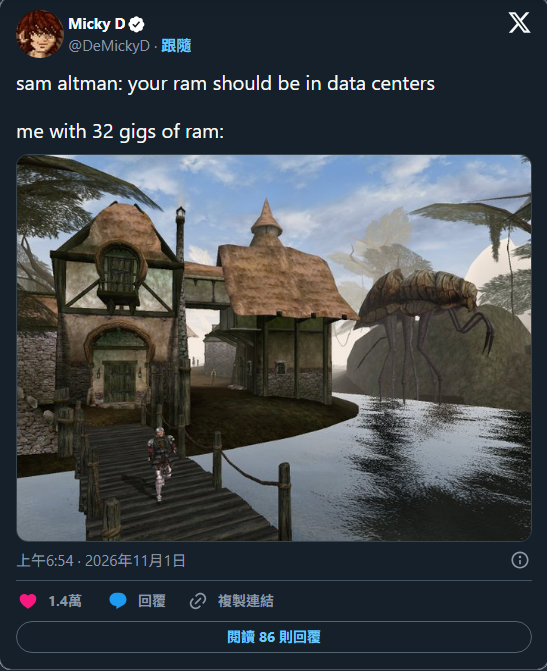
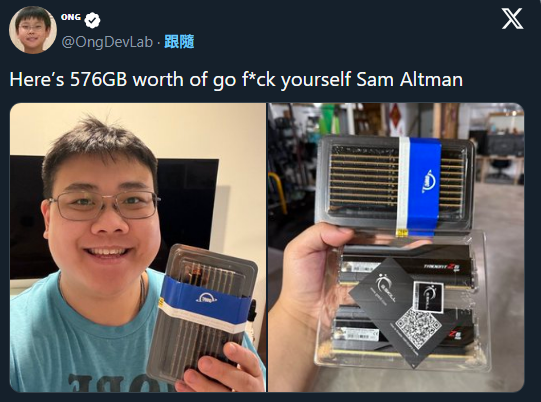
Musk later shared an "Inglourious Basterds" meme on X (formerly Twitter), writing, “The people deserve to have their RAM too!” in a jab at Altman’s remarks.
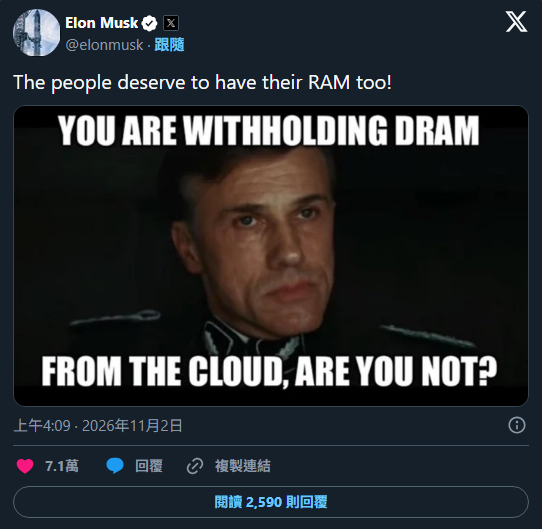
The controversy comes as surging demand from AI data centers continues to strain memory supplies. Rising prices for PC components and gaming hardware have made comments about resource allocation especially sensitive, while memory shortages are also adding cost pressure for console and graphics card manufacturers.
Musk’s own AI agent, Grok Bot, is facing resource-cost challenges as well. TechCrunch reported that some subscribers had exhausted their weekly allowances earlier than expected. Responding to the complaints, Musk acknowledged that the cost of operating Grok Bot had become unsustainably high relative to revenue. When other users questioned the impact of the change, he said the company was simply taking a sensible approach.
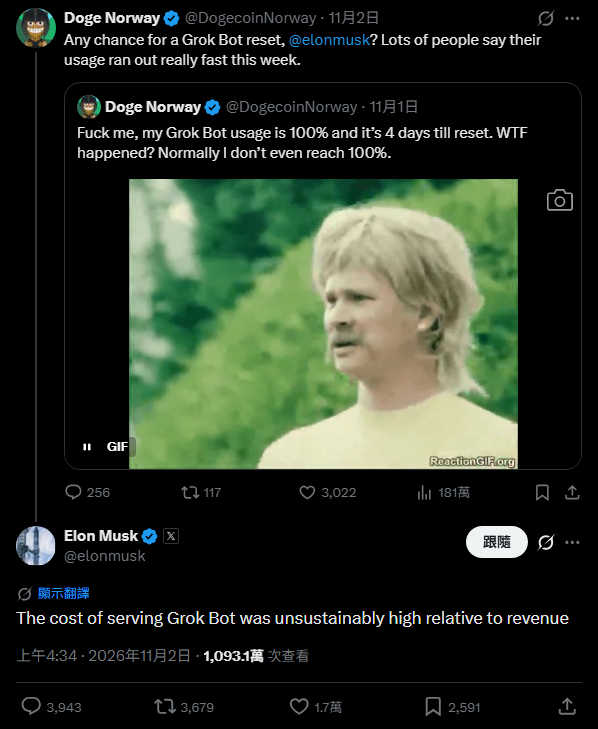
Grok Bot can autonomously perform tasks through virtual computers, requiring more computing power than a standard chatbot. Musk has not said whether its previous usage limits will be restored.
Meanwhile, CNBC reported that OpenAI is seeking to raise as much as $20 billion in a new funding round, down from its previous target of $30 billion. The latest developments at both companies highlight the mounting hardware-supply and operating-cost pressures facing the AI industry as it races to expand computing capacity.
via: TechCrunch IGN CNBC