

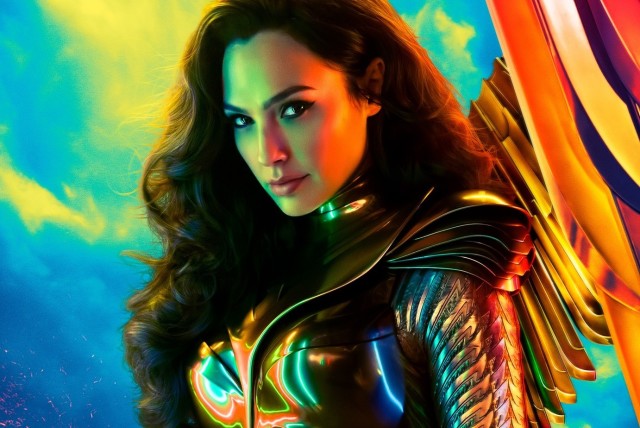
(Image Source: Warner Bros. Pictures)
(The following contains spoilers, please read with caution)
‘Wonder Woman’ and ‘Wonder Woman 1984’ have certain structural symmetries, such as the evil god’s potential manipulation of human nature, the inversion of the subject-object relationship between Diana and Steve Trevor in the human world, and Diana once again having to suffer the loss of a loved one to achieve her next transformation; however, in terms of tone and theme, the two films are completely different, which may cause some viewers to feel discomfort. Unlike the first installment, this film is not as tight-knit, steady, or evenly paced in action and plot. With the foundation of the previous film's success, the director, who has more creative freedom this time, seemed to want to take some risks. It cannot be said that this is a flawlessly executed daring attempt, but at least it is a somewhat noteworthy one.
There is a wide temporal gap between ‘Wonder Woman’ set in World War I and ‘Wonder Woman 1984’ set in the 1980s. If the filmmakers wanted to set the story in the past again, Patty Jenkins could have continued to explore World War II, the Vietnam War, or the Cold War. But doing so would have made the topic too repetitive, which would be uninteresting. The topic of war seems unnecessary to extend further, making a direct leap to the 1980s an absolutely fresh attempt. Thus, the ‘Wonder Woman’ series has seemingly turned into a kind of chronicle, with each installment serving as a historical observation and discussion of a specific period of human civilization.
(Image Source: Warner Bros. Pictures)
‘Wonder Woman 1984’ is the familiar Faustian fable we know well, akin to ‘The Wishmaster’ or ‘The Adventures of Baron Munchausen,’ where the protagonist’s realized desires must be exchanged for an equal price. The lead character, seduced into signing a deal with the devil, inevitably regrets the decision to make their wish, and they learn lessons in the process of correcting their mistakes, regardless of whether the wrongs can be righted. However, wishing for something one should not is not a novel theme, which might be one reason the official promotion did not reveal much of the main storyline, as the direction is too easy to predict.
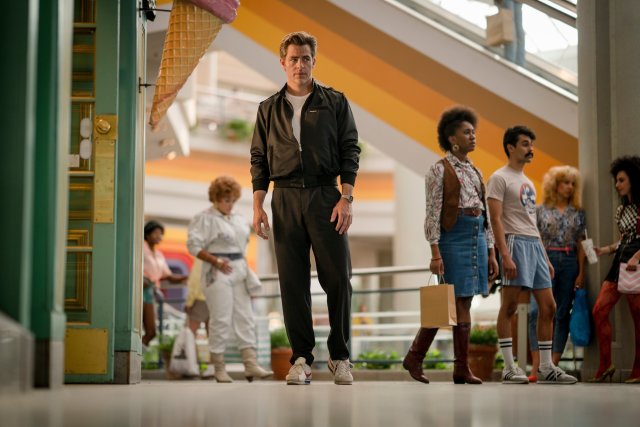
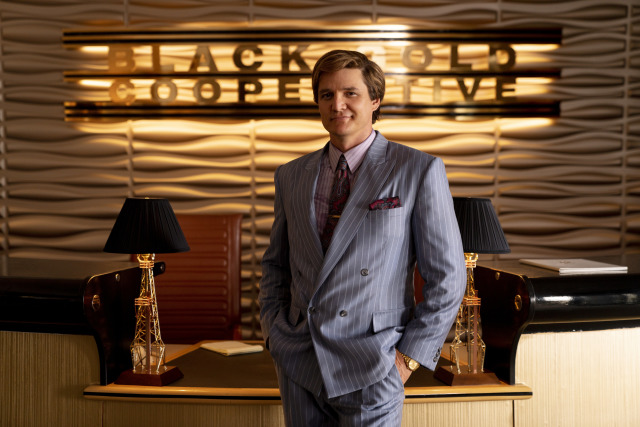
‘Wonder Woman 1984’ does not seek to overturn the established game rules of 'wishing for desires,’ but rather blends elements to reflect the atmospheric zeitgeist of the era; the 1980s in the United States was a time just emerging from the desolation of the 1970s, with society thriving. President Reagan revived the domestic economy, and people’s lives became more stable, leading them to focus on their inner desires, longing for wealth, beauty, and wanting more; this seemed to be the prime moment for the devil to stir up human desires, capturing hearts to sign the deal. Max Lord, a mogul marketing the fulfillment of desires to the public, plays the role of a devil's envoy, but in his desperation to save his floundering business, he is unwilling to just be the devil's spokesperson; he yearns to become the devil who consumes the souls of all.

(Image Source: Warner Bros. Pictures)
‘Wonder Woman 1984’ is not the first superhero movie focused on an old-fashioned backdrop; the prequel series ‘X-Men’ has always had this as a theme. However, ‘Wonder Woman 1984’ provided a more competent example compared to the misaligned ‘Apocalypse;’ while both use the 80s as a stage, the former accurately captured the spirit of the era, writing a visually and textually rich love letter to it, whereas the latter was merely an incomplete patchwork. The first two entries in ‘Apocalypse,’ ‘First Class’ and ‘Days of Future Past,’ were excellent references, but still managed to ruin the reputation that had been painstakingly built.
Patty Jenkins revealed during the promotion of the first installment that Christopher Reeve’s ‘Superman’ not only inspired her creation of ‘Wonder Woman’ but also deeply motivated her decision to make filmmaking her career. We can see more traces of Reeve’s ‘Superman’ influence in ‘Wonder Woman 1984,’ or conservatively speaking, some similar commonalities; Diana and Clark from ‘Superman 2’ both relinquish their powers for love, enjoying a brief period of time together, yet being burdened with heavy responsibilities, Diana also must forsake love when she regains her strength, similarly to Clark’s choice in ‘Superman 2.’ The scene in ‘Superman 2’ where power is transferred from the hero to the villain replays here, as Max Lord barges into the White House, making the president succumb to him. Even without mentioning the above examples, just watching Diana navigate the urban landscape of the 1980s exhibiting heroic acts gives a strong sense of déjà vu from Reeve’s version of ‘Superman.’
(Image Source: Warner Bros. Pictures)
Returning to what was previously mentioned, ‘Wonder Woman 1984’ cannot be deemed a perfectly executed daring venture. Patty Jenkins takes a bold attempt to tell a story within an entertaining blockbuster that possesses a relatively low sense of crisis and urgency, which is quite a risky strategy. The first installment follows a straightforward hero’s journey, which is a well-accepted formula, while ‘Wonder Woman 1984’ differs from the usual dual-villain superhero films; it virtually treats the antagonists as protagonists, disassembling the narrative into three concurrent storylines, and while these three lines are interconnected, there is no tightly knit intersection, significantly reducing the tension in the interactions between Diana, Barbara, and Max Lord.
‘Wonder Woman 1984’ feels more like a simultaneous telling of three stories rather than one story through three characters; they each have their journeys and personal demons, though they are all manipulated by the same wishing stone. The disasters that occur within the film seem grand, but there is no direct binary opposition. Each character is governed by an invisible force, lacking a clear mechanism of mutual confrontation, which inevitably makes the film appear loose. ‘The Batman’ is an excellent example: Penguin, Catwoman, Batman, and Max Shreck each have rich character arcs, interweaving complex yet profound antagonistic conflicts. Despite introducing as many as three villains into the film, it never comes off as chaotic. By contrast, ‘Wonder Woman 1984’ allows the theme of ‘pursuing desires’ to link the circumstances of each character together, while ‘The Batman’ shapes the tragic nature of each character through the theme of ‘the essence of monsters.’ Both films possess ambitions of comparable scale, but sadly the level of completion is not on the same footing.
(Image Source: Warner Bros. Pictures)
I appreciate the vision that ‘Wonder Woman 1984’ attempts to present, but strictly speaking, the current two installments are not to my taste. Their conclusions always come off as preachy and have a rather nauseating sense of genuine energy. While many Hollywood films do possess a didactic quality, most understand how to soften their tone, allowing audiences to digest similar viewpoints without annoyance. The ‘Wonder Woman’ series, however, tends to be embarrassingly direct, and ‘Wonder Woman 1984’ still delivers a blunt preachy conclusion despite the audience's focus already being difficult; this will likely only reduce the viewers' willingness to accept this conclusion (at least it did for me).
What I feel takes more points away from the film is, in fact, Gal Gadot. If Wonder Woman weren't played by Gal Gadot, I would like this film even more. She is beautiful but truly not a good actress, and unfortunately, this installment has a lot of dramatic scenes that reveal her struggles. I have always felt Gadot is not a very successful casting choice; she only fits the appearance and temperament but cannot handle such an important iconic character in terms of acting. While she excels in portraying a cool martial demeanor, a confident and cheerful disposition, or that dazzling smile that is difficult for mere mortals to resist, she utterly fails to convey delicate emotional scenes.
(Image Source: Warner Bros. Pictures)
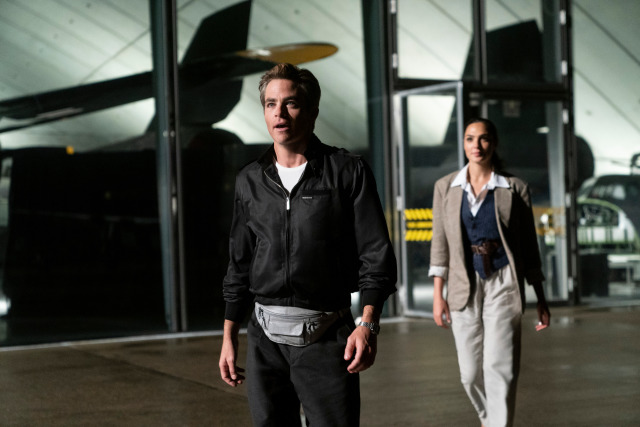
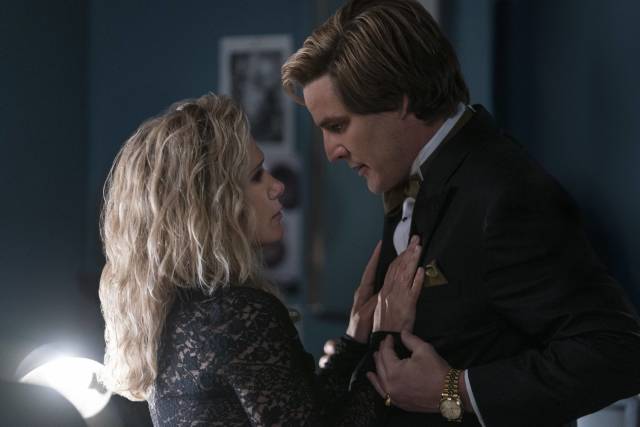
In several key scenes in ‘Wonder Woman’ where she must express emotions like sadness, guilt, and powerlessness, I only felt immense frustration. I struggled to connect with the emotions of those scenes due to her performance. ‘Wonder Woman 1984’ continues to prove that she is not yet a sufficiently sensitive actress; key moments like saying goodbye to Steve and urging Max Lord to let go of his destructive ambitions needed strong performances to support them, but whenever the camera shifted to Gadot, my emotional connection was severed. Regardless of how well the scene was staged or how strong her co-actors were, Gadot’s performance often stifled the chance for that scene to achieve a closer sense of perfection.
To me, Gadot’s beauty does not make up for her acting shortcomings, so when you tell me she is set to play Cleopatra next? I can only feel shocked. Putting aside the racial controversies, purely in terms of talent, I cannot believe she can hold up this role, let alone such a grand production. With only star power, Gal Gadot cannot hold the scene, her positioning akin to a mix of Michelle Pfieffer’s Catwoman plus a gender-swapped Kristen Wiig's character, ultimately reducing to disposable, leading to the focus shifting entirely to the dazzling Pedro Pascal. This installment should have been called ‘Max Lord 1984’ since his character almost feels like the protagonist, as his storyline aligns more closely with the film's core themes, and given that this character is often in states of heightened euphoria or extreme anxiety, Pascal’s performance naturally stands out more dramatically than others.

(Image Source: Warner Bros. Pictures)
I wonder if Warner Bros. has considered Jim Carrey for the role of the big villain, Max Lord, not just because of the flamboyance of the character, but also because Max Lord’s experience is strikingly similar to Bruce Nolan’s from ‘The Truman Show,’ as both wish to change their fates but end up as omnipotent beings capable of altering everyone’s fate, granting wishes to mortals; and the most cherished loved ones in their lives conveniently become the catalyst for their abandonment of their powers and returning everything to normal. When Diana urges Max Lord to retract his wish, the song “Beautiful Lie” from ‘Batman v Superman: Dawn of Justice’ punctures the lies woven by desire, both surprising and compelling. Bruce, blinded by hatred and obsession, transforms into Max Lord, enslaved by desire; while Clark awakens Bruce, Diana awakens Max. The Martha that needs saving has become the courage we need to face reality.
The entire ‘Wonder Woman 1984’ feels like a non-comedic version of ‘The Truman Show,’ only with an added superhero to thwart Jim Carrey's whims of granting others lottery wins.
Text by: Joker