
Hey everyone, today I'm excited to share a custom Strike Gundam that I modeled and 3D printed myself.

This particular mobile suit, piloted by the protagonist in the anime "Gundam Build Fighters," caught my eye because my son was watching the series. After successfully printing a Tachikoma from Ghost in the Shell (here), I decided to challenge myself with a Gundam.
My initial concept was to design something akin to a G-Frame candy toy kit for printing. After gathering some impressive reference images online, I began the modeling process. However, as I continued to refine the design, it grew increasingly detailed. One day, I had a sudden realization: "Hold on, this project might be a bit more ambitious than I initially thought!"

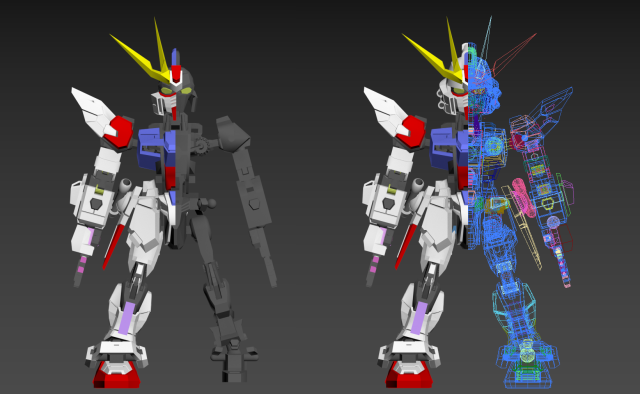
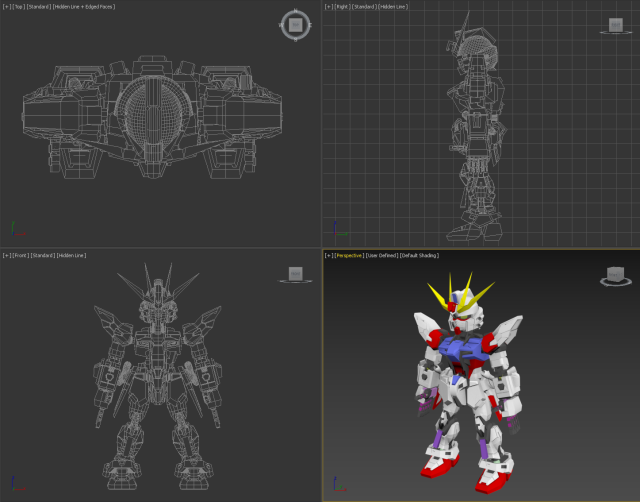
But with so much work already invested, and my aversion to leaving projects incomplete, I simply gritted my teeth and pressed on. I also decided to use this as an opportunity to truly test the capabilities of my current personal 3D printer.
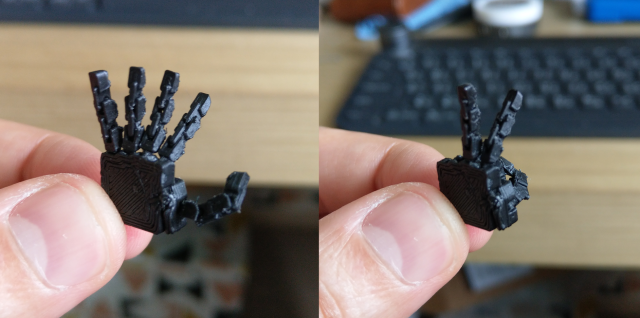
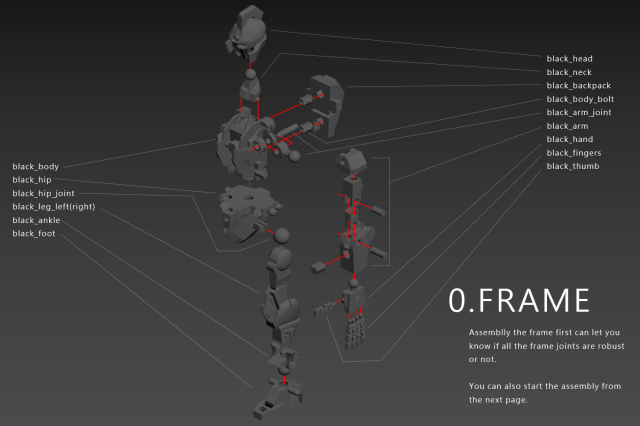
A key advantage of FDM printing is its ability to create certain joints as a single, integrated piece. Leveraging this, I first experimented with articulated hands.
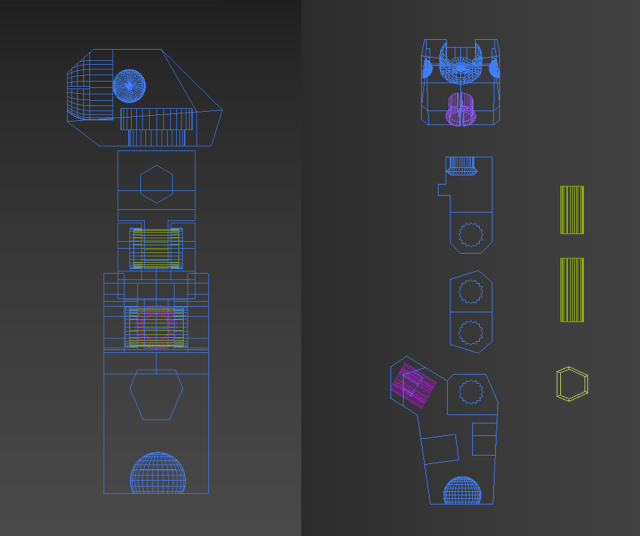
Following that, I moved on to the full body's articulation. My initial hope was to minimize the total number of printed components by utilizing these integrated joints. However, I consistently struggled to achieve sufficiently tight tolerances. Ultimately, I reverted to a more traditional peg-and-hole joint system to resolve any looseness.
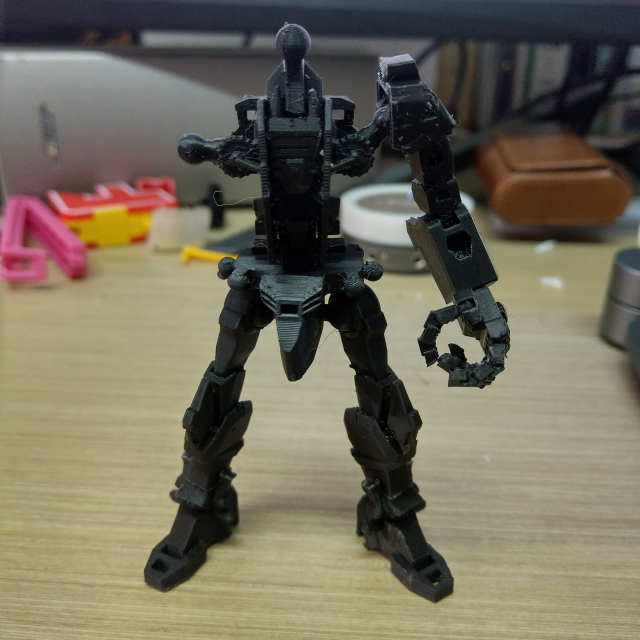
My core design philosophy was to ensure the finished model would look impressive even during a simple dry-fit assembly. To achieve this, I meticulously separated parts by color during the design phase, allowing them to be printed individually.
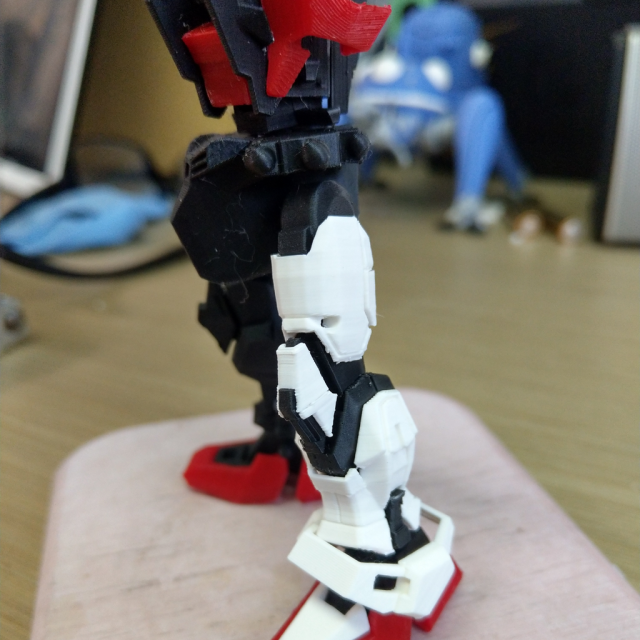
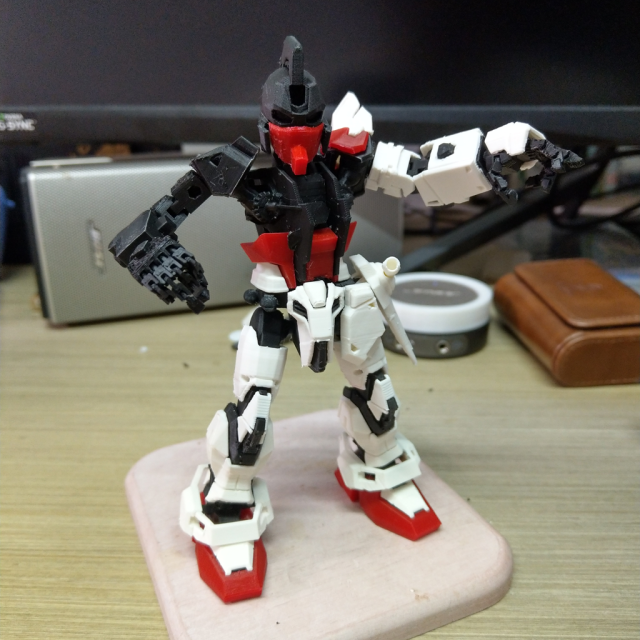
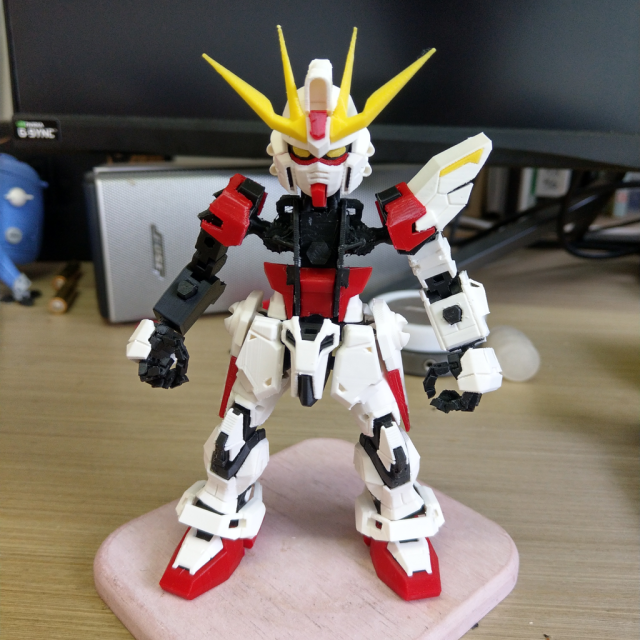
Here's the progress at roughly 50% completion.
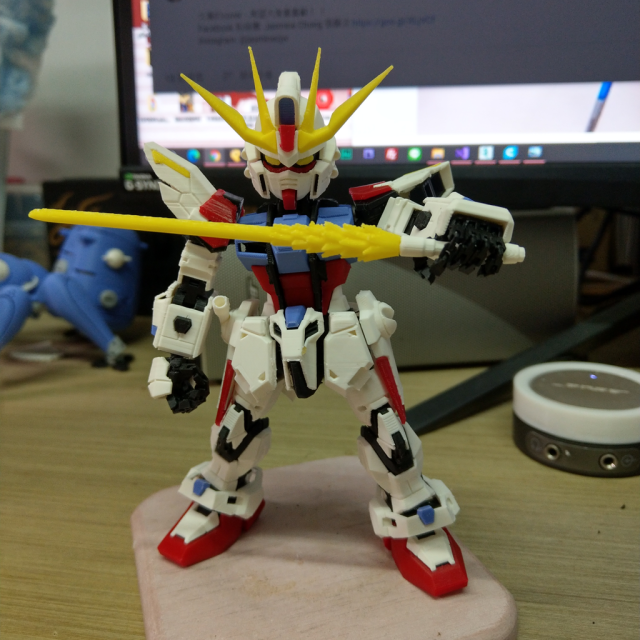
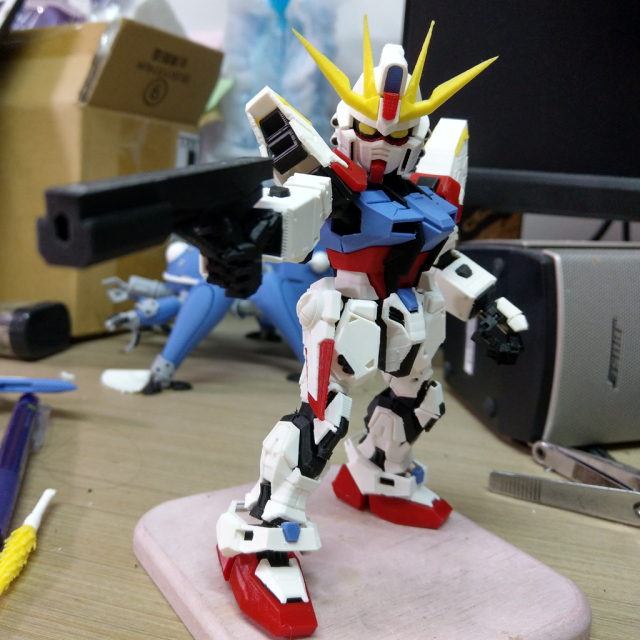
While the articulated hands could somewhat grasp the beam saber and rifle, I eventually added pegs to the palms for more secure weapon attachment and easier posing.
With the internal frame and main body proportions finalized, another two months flew by. The next phase involved tackling the backpack thrusters and other auxiliary equipment.
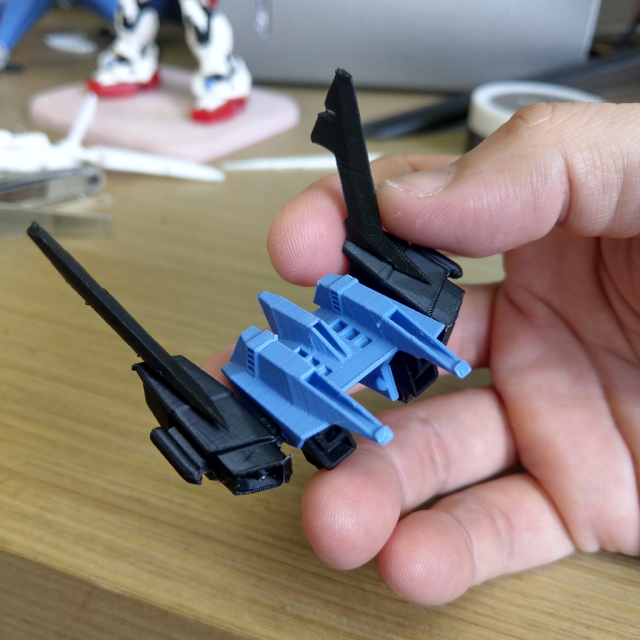
Once the equipment was finally complete (which felt like another month in itself), I figured, "Why not go the extra mile and design a display stand as well?"
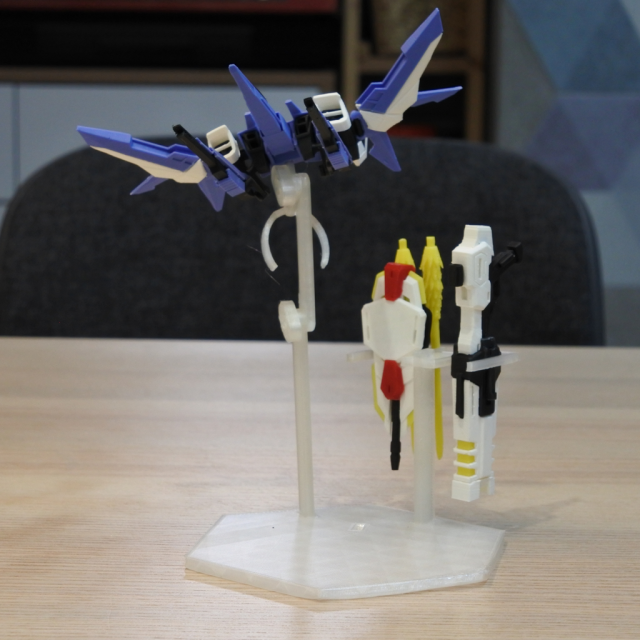
And to cap it all off, I decided to document the assembly process with some instructional photos.
Finished Photos:


In summary, I believe that current consumer-grade 3D printers are now capable of producing models that rival the quality of injection-molded kits. In fact, the level of detail on some parts can even exceed that of traditional plastic molding.
When it comes to available designs, the internet is brimming with creators specializing in articulated models, from free platforms like Thingiverse to paid sites such as Cults3D. This means even those without 3D modeling expertise can easily acquire print files and produce their own models. For skilled modelers, a 3D printer represents the final frontier of craftsmanship, allowing them to directly transform concepts into tangible, physical parts.
Having covered the advantages, let's address the drawbacks. Even the most popular consumer 3D printers still present a significant learning curve for newcomers. Achieving successful prints often requires mastering everything from material selection and calibration to parameter tuning and environmental settings – it's rarely a "plug and play" experience.
The specific model I chose is the CR6SE. Since acquiring it last year, I've faced numerous issues, including feeder malfunctions, loose screws, power switch failures, and a jammed main fan. Any hiccup typically results in filament clogs and what we affectionately call "fried rice noodles" – a mess of unstacked filament. The frequent print failures and the difficulty in quickly troubleshooting these problems are, in my opinion, the biggest deterrents for new users.
Fortunately, 3D printing technology continues to advance rapidly year after year. My hope is that in the not-too-distant future, we'll all have access to 3D printers that are as user-friendly and reliable as conventional inkjet printers (even for the less tech-savvy among us).
Just a small share, thanks for reading!