
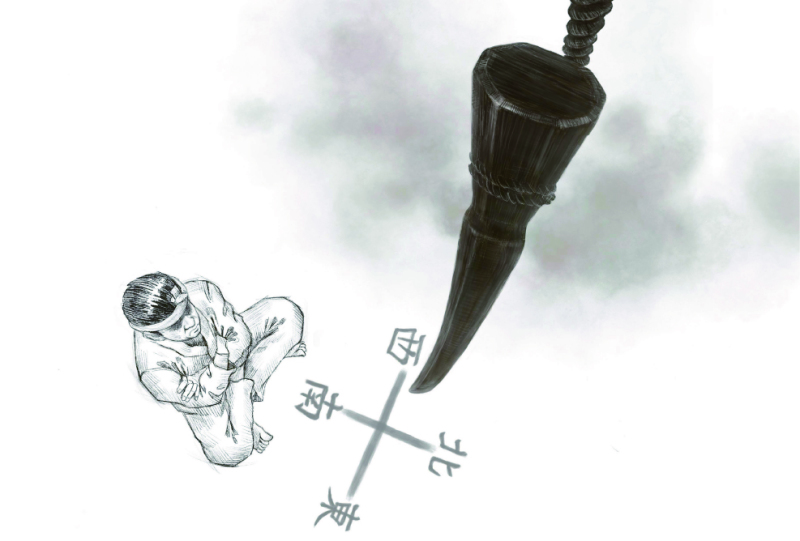
“The wooden sword, used for daily practice swings, was suspended from the ceiling. The rope was cut—and the needle of fate instantly fell, determining the future of the Miyawaki family.”
Image credit:ニコニコニュース
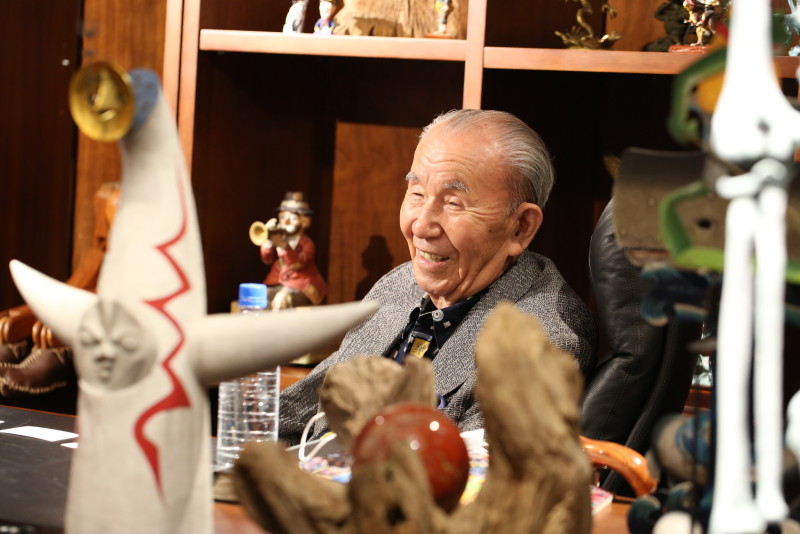
With a history spanning nearly 60 years, Kaiyodo stands as one of Japan's most iconic and artisan-driven model companies. Operated by two generations, Director Osamu Miyawaki and his son, Managing Director Shuichi Miyawaki, the company is renowned for its incredibly poseable "Revoltech" series figures. They have also crafted exquisitely realistic dinosaur display models for natural history museums in both Japan and the United States, and are the organizers of "Wonder Festival," the world's largest garage kit exhibition and sale event. It's hard to believe that Kaiyodo began as a mere 1.5-tatami model shop, converted from a rental bookstore near Doi Station in Moriguchi City, Osaka.
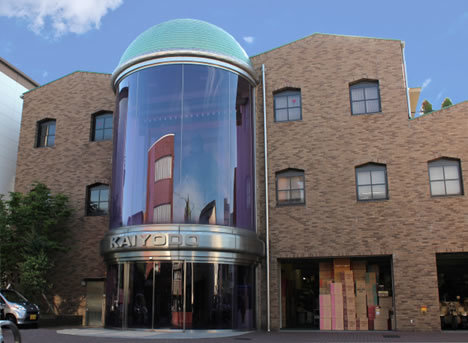
Currently, Kaiyodo's headquarters are located in Kadoma City, Osaka. Image credit:海洋堂
A Fateful Wooden Sword
In 1964, 36-year-old Osamu Miyawaki and his wife, Rie Miyawaki, had a son named Shuichi. Osamu had cycled through over 30 jobs, experiencing roles as diverse as a South Manchuria Railway employee, a bonito fisherman, a tuna boat crewman, an advertising agent, and a rental bookstore owner, yet he never found a stable career. With his son Shuichi nearing elementary school age, Osamu knew it was time to settle down and start his own business. But what kind of shop should it be? Should he leverage his past skills to open an udon noodle shop, or should he choose a model kit shop, centered around his son's favorite toys?
Ultimately, Osamu Miyawaki made his decision through "wooden sword divination." He took the wooden sword he used for daily practice swings, suspended it from the ceiling with a rope, and drew the four cardinal directions—East, West, North, and South—beneath it. If the falling sword pointed East or West, he would open an udon noodle shop; if it pointed North or South, he would choose a model kit shop. He cut the rope—and the needle of fate instantly fell, leading to the birth of Kaiyodo, the model shop. Had it landed just a few degrees differently, Kaiyodo might have been a chain of udon noodle shops today!
Diagram illustrating the wooden sword divination. Image credit:海洋堂
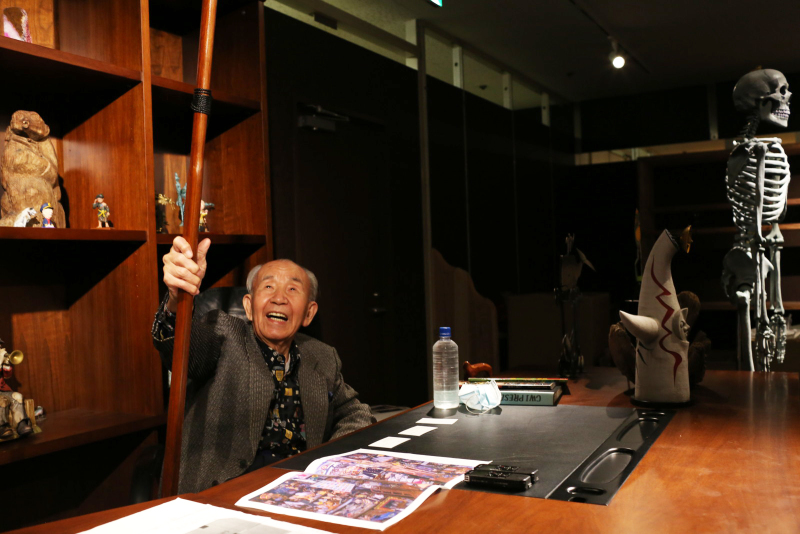
The very wooden sword that determined Kaiyodo's destiny is still carefully preserved by Director Osamu Miyawaki to this day. Image credit:ニコニコニュース
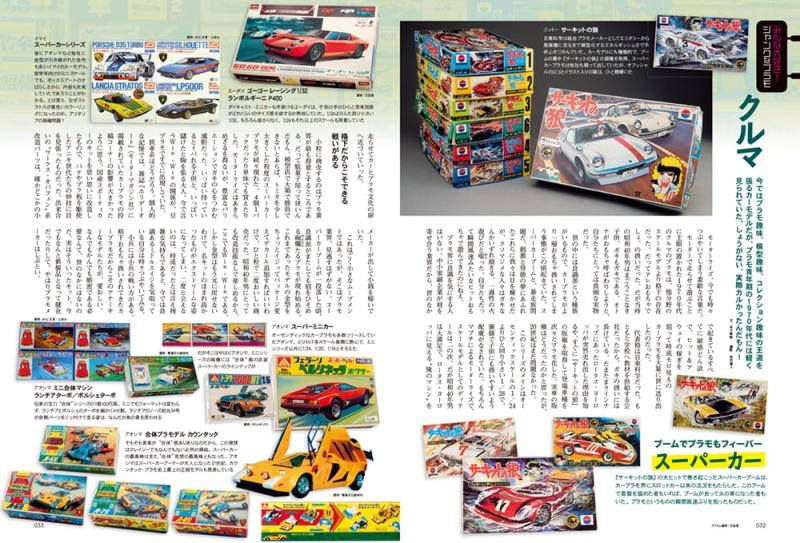
During the Showa 40s (1965-1974), model kits were cutting-edge and popular toy products introduced from overseas. Japanese manufacturers like Tamiya, Imai Kagaku, and Marusan also began production, focusing primarily on subjects such as ships, airplanes, vehicles, and buildings.
Image credit:昭和40年男
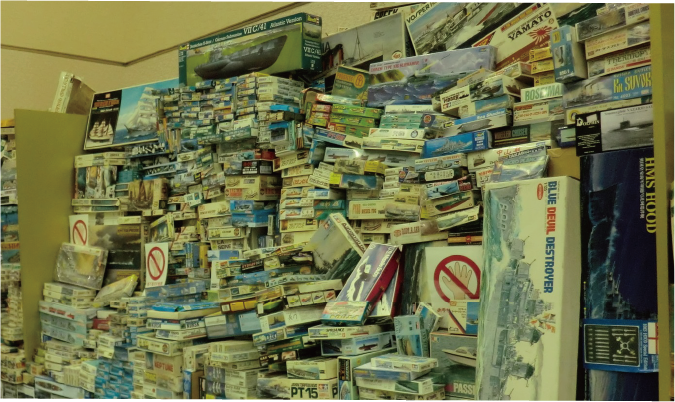
Many of the model kits in Shuichi Miyawaki's collection have been preserved since the days of the original model shop. Image credit:海洋堂
Kaiyodo's Endless Creativity Captivated Young Fans
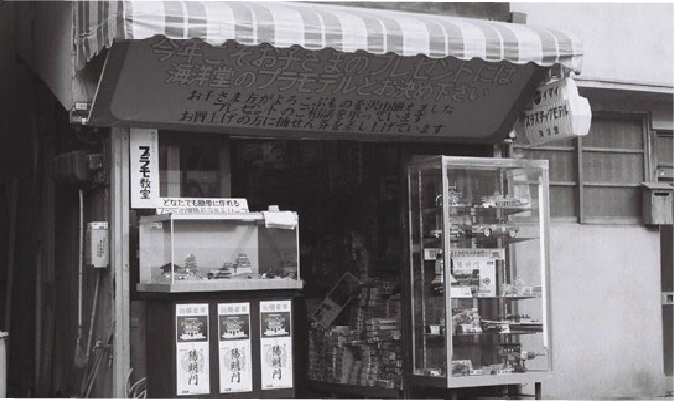
Kaiyodo began with a modest 70,000 JPY in capital and a tiny 1.5-tsubo (approximately 53 sq ft) shop. Despite limited resources, founder Osamu Miyawaki harbored an ambitious dream: to become the best in Japan. He leveraged his inexhaustible creativity and proactive spirit to forge strong connections with children. Miyawaki tirelessly traveled daily to wholesalers to procure the model kits kids desired. When he heard complaints about a lack of space to play with models, he built a dedicated boat pond and tank dioramas right inside the shop. He even established model-building classes and offered free trips for children to visit Japan's renowned Tamiya factory. Any profits earned were immediately reinvested into renovating the store to better meet customer needs. Unlike typical model shops focused solely on transactions, Kaiyodo's dedication to creating an engaging environment for children was unprecedented, a business model rarely seen even today. This unique approach propelled Kaiyodo to become Tamiya's top tank model seller for three consecutive years, rapidly spreading its reputation across Japan.
Kaiyodo's shop in its early days, packed with model kits in a very narrow space.
Image credit:Kaiyodo
By the time Managing Director Shuichi Miyawaki reached second grade, the shop had expanded to 10 tsubo (approximately 355 sq ft), with almost the entire first floor transformed into a model haven, complete with ship ponds and tank dioramas. Shuichi Miyawaki fondly recalls his home being the ultimate playground for his classmates, where he was seen as their undisputed leader.
Image credit:Kaiyodo
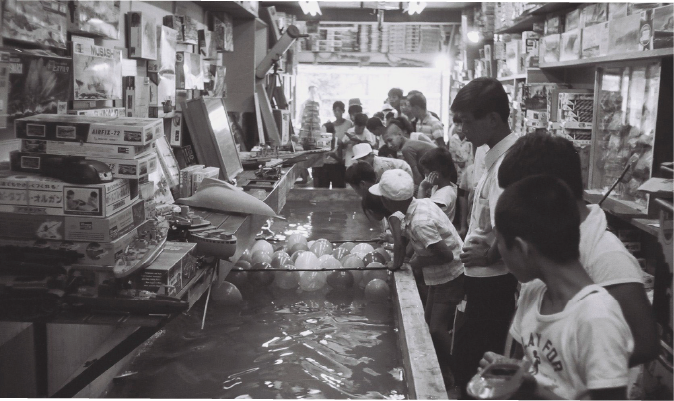
Image credit:Kaiyodo
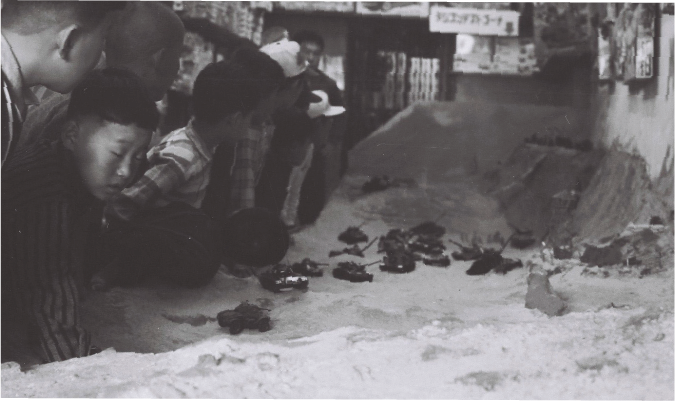
Image credit:Kaiyodo
Scenes from Kaiyodo's "Model Classroom" at the time, where children were not only taught to build models but sometimes also enjoyed playing by the river.
Image credit:Kaiyodo
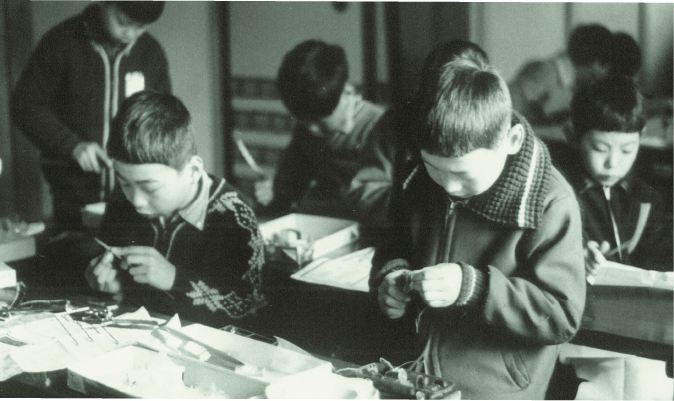
Image credit:Kaiyodo
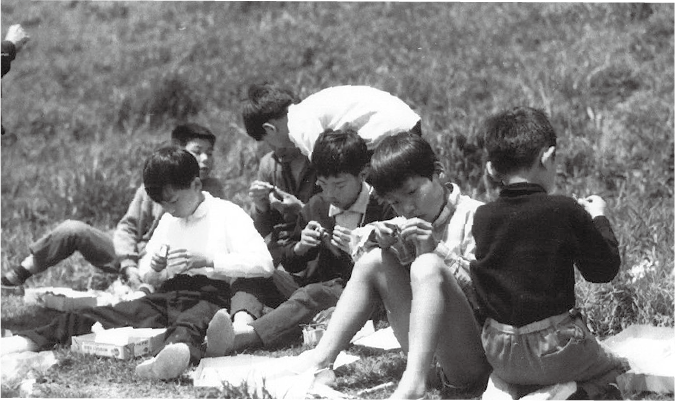
The Art of Scale Modeling: How Kaiyodo Mastered Sailboats
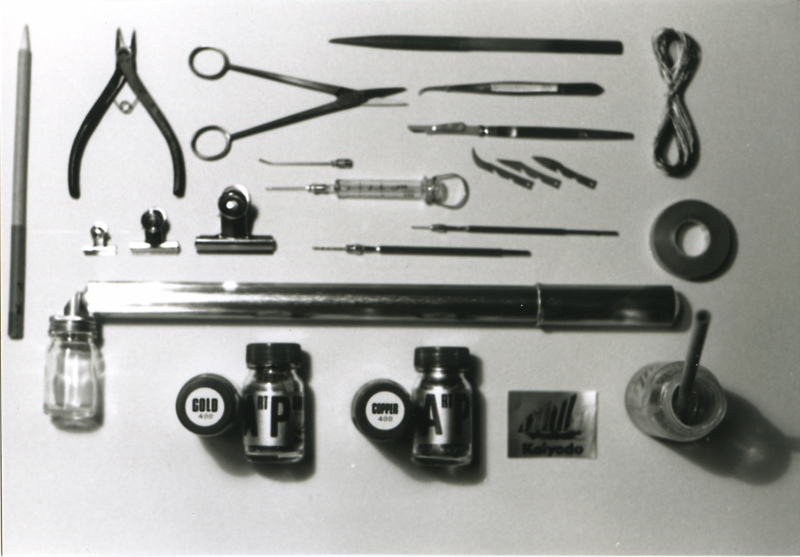
During Japan's period of high economic growth in the 1970s, competition among model shops nationwide became incredibly fierce. Managing Director Shuichi Miyawaki remembers a time when there were five or six model shops near a single elementary school. Osamu Miyawaki observed a new trend: not only children, but also adults were willing to invest significant sums in high-quality models. To stand out in this evolving market, he recognized the need to adapt and began championing the concept of "model artification." He developed a specialized set of tools specifically for building sailboat models and, leveraging his own advanced modeling techniques, started selling exquisitely finished models.
Model tools developed by Kaiyodo, including nippers, craft knives, tweezers, and hand drills. At the time, the concept of "model-specific tools" didn't exist, so most tools were adapted from industrial or medical instruments.
Image credit:Nico Nico News
Kaiyodo achieved something truly remarkable with Revell's plastic sailboat models. By transforming them from their original molded plastic colors into stunning pieces with a copper-like finish and adding intricate details like fabric sails, they imbued them with an undeniable sense of luxury. These 10,000 JPY sailboat kits were originally considered a success if even one sold annually. Yet, Kaiyodo managed to elevate their perceived value by an astonishing 20 to 80 times, consistently selling 100 to 200 kits. This feat was so incredible that even Revell's US headquarters sent representatives to Japan to investigate. Back then, Kaiyodo was synonymous with "Kaiyodo of Sailboats."
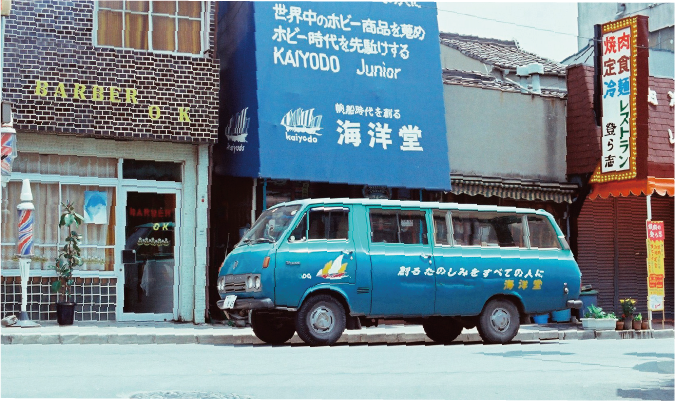
In the 1970s, Kaiyodo's storefront sign featured a prominent blue design and a sailboat logo, perfectly capturing a maritime theme.
Image credit:Kaiyodo
Miyawaki Osamu's model of the USS Constitution frigate, titled "Shura," was a masterclass in texture, utilizing various shades of red and green bronze to the point where it was almost indistinguishable from a plastic kit. This piece was even selected for a city art exhibition as a fine art creation. However, it was later disqualified when it was discovered to be a plastic assembly model. Miyawaki's defiant response was legendary: "A painting always needs a canvas, doesn't it? Plastic assembly models are my canvas. I chose the red copper color best suited for the theme of 'Shura' and created this work using every technique I've mastered throughout my life!" This powerful statement ultimately led to the reversal of the disqualification.
Image credit:Nico Nico News
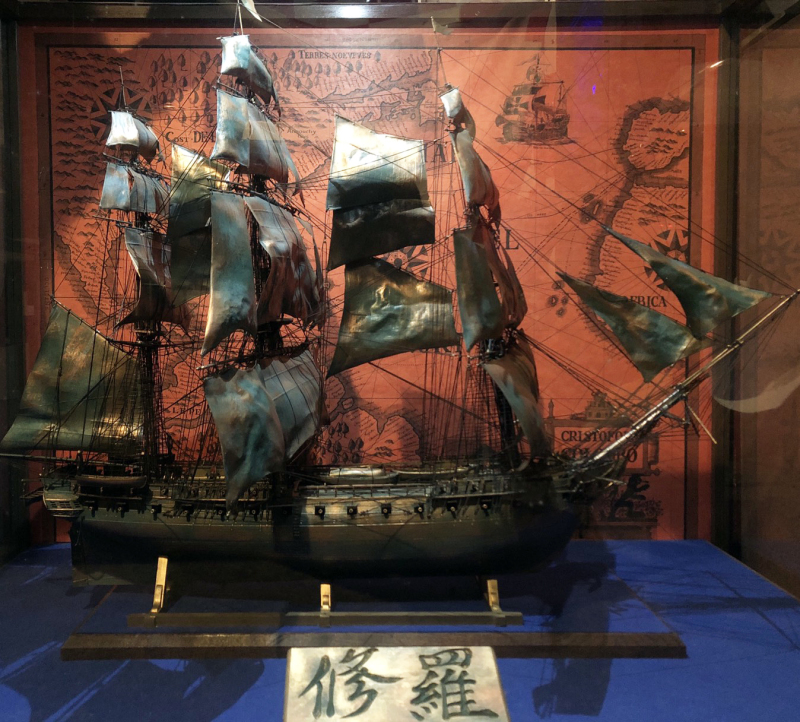
Image credit:Kaiyodo
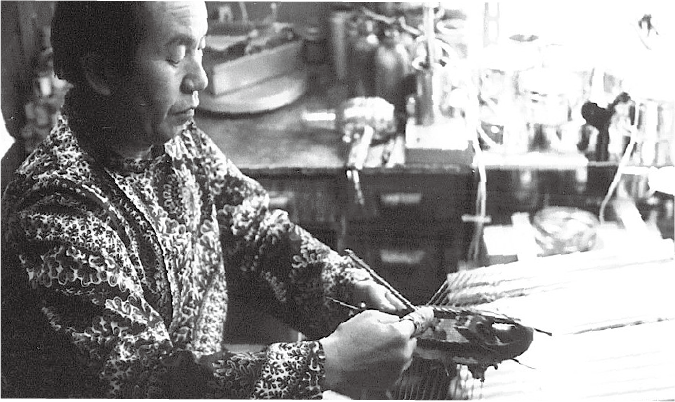
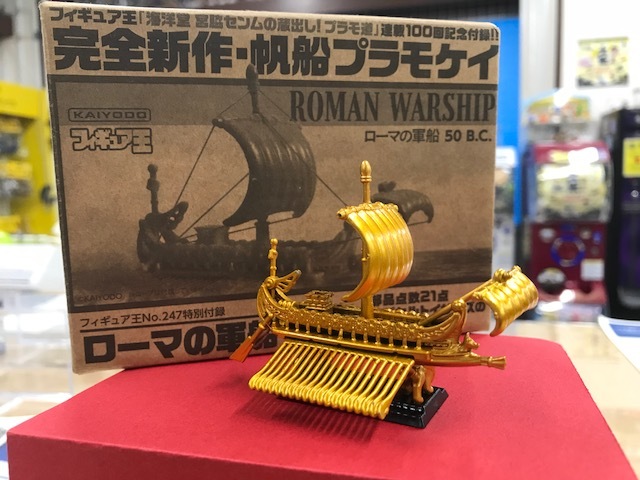
When Imai Kagaku faced a business crisis, they approached Kaiyodo for consultation. Miyawaki Osamu provided his business acumen and product development ideas, leading to the launch of highly accurate scale model series like "Roman Warships." While these products were well-received, the relationship between Imai Kagaku and Kaiyodo remained contentious. At the time, an Imai Kagaku representative reportedly stated, "I really don't want a model shop like Kaiyodo handling product planning for a manufacturer," leading to a complete breakdown in their partnership.
Image credit:Nico Nico News
Overly Bold Ideas Lead to Trouble: Kaiyodo's Lifeline Wasn't Models
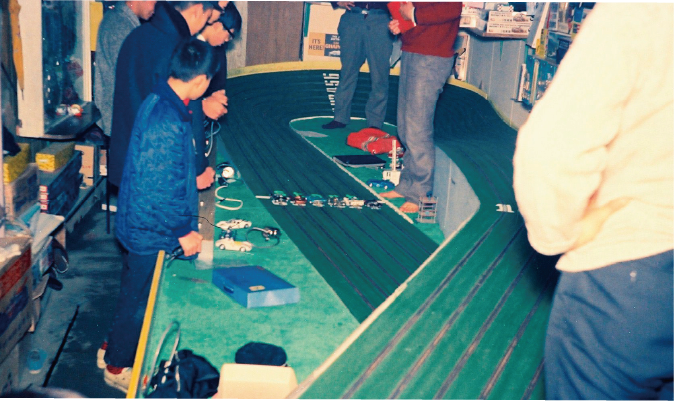
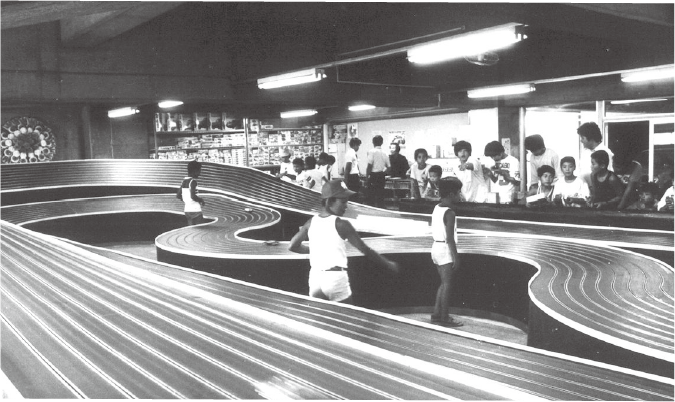
However, Kaiyodo's initial growth wasn't as smooth sailing as the models Miyawaki Osamu sold. His overly ambitious ideas plunged him into significant debt. During the boom of motorized model cars, he leased a 200-tsubo warehouse (approximately 7,100 sq ft) and built a 180-meter long track, converting it into a dedicated model car racing circuit. He even boasted of creating the world's largest model shop. But this time, the goddess of victory didn't smile upon Miyawaki. He faced mounting expenses, fierce competition, and kids found the track too large to be engaging – after all, not everyone was a "Bakusou Kyoudai" character chasing invisible tail lights.
Furthermore, these racing venues later became associated with adult gambling and were deemed "undesirable places" by schools and parent associations. Coupled with the rapid decline of the motorized model car trend, these factors led to massive losses for Kaiyodo, forcing them into a vicious cycle of borrowing to pay off debt. Fortunately, Kaiyodo was ultimately saved by installing state-of-the-art large arcade machines in the 1970s, which successfully attracted children and pulled the company back from the brink.
The large warehouse where the 180-meter track was set up. Image credit:Kaiyodo
The Sculpting Craze: How Kaiyodo Ignited the Garage Kit Revolution in Japan
Around 1977, before the massive Gunpla boom sparked by "Mobile Suit Gundam," the Japanese plastic model kit industry was actually in decline. However, the children who grew up playing with model toys retained their passion as adults. They loved anime and tokusatsu works, but standard model kits could no longer satisfy their demands—the kits they wanted weren't being produced, or the ones available simply didn't look right. Faced with this, many decided to "make it themselves," leading to a growing trend of producing "Garage Kits" (GK models).
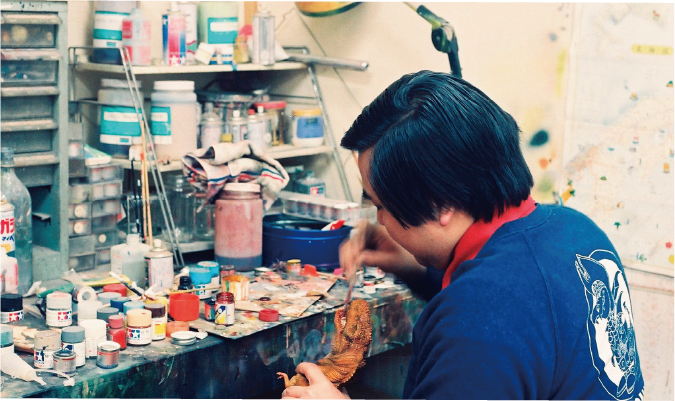
At the time, courses teaching model making and sculpting were widespread. To offer an alternative, Kaiyodo's Osamu Miyawaki, driven by the philosophy that "HOBBY is fun," transformed a 200-tsubo warehouse into the "Kaiyodo Hobby Museum." The museum not only showcased Kaiyodo's extensive works but also featured numerous workstations. This attracted many modeling enthusiasts who resonated with Miyawaki's vision. They frequently brought their own materials to craft GK models and share replication techniques with Miyawaki and his son, including sculptor BOME, who remains with Kaiyodo to this day.
After the large warehouse was converted into the Hobby Museum, it housed numerous works and workstations. Image credit:Kaiyodo
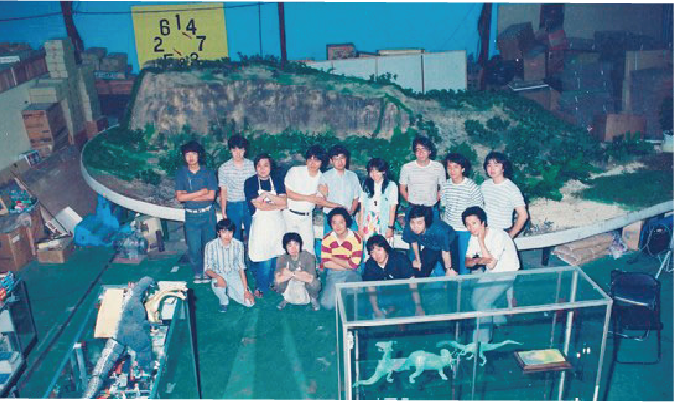
Image credit:Kaiyodo
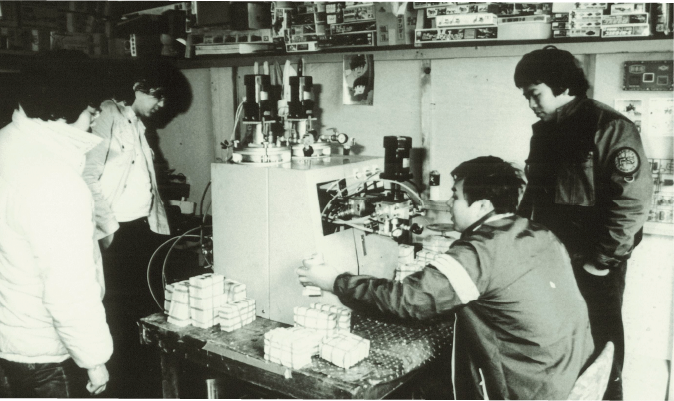
Image credit:Kaiyodo
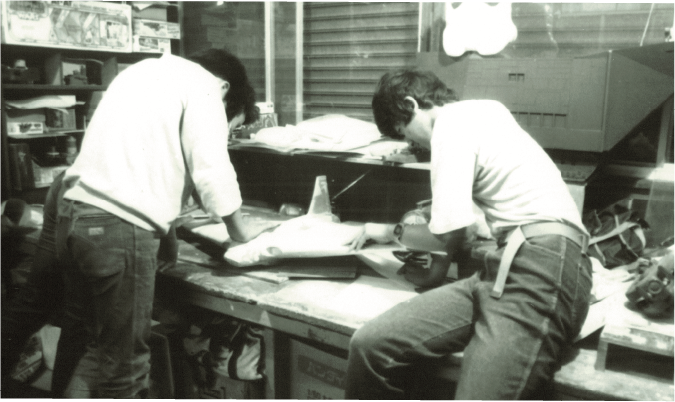
Image credit:Kaiyodo
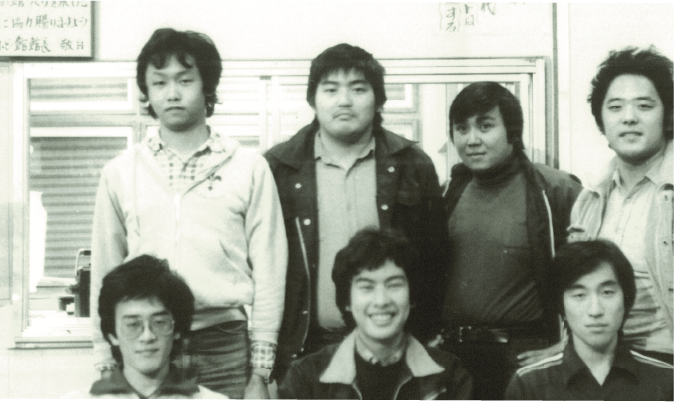
The second person from the right in the back row is the young Managing Director Shuichi Miyawaki at the time, and the leftmost person in the front row is BOME, a sculptor working for Kaiyodo.
Image credit:Kaiyodo
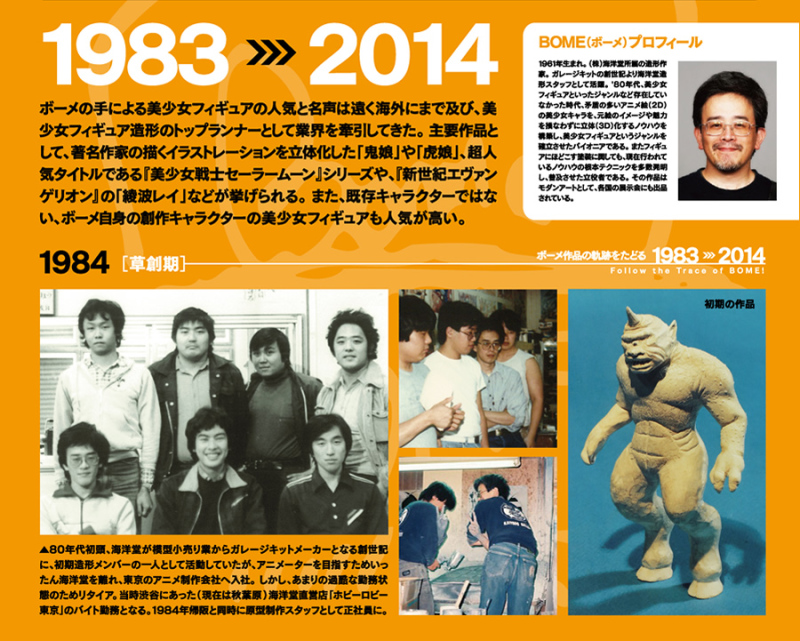
BOME originally aspired to become an animator in Tokyo, but after joining an animation studio, he quickly experienced the harsh working conditions. In 1984, he returned to Osaka and became a full-time employee at Kaiyodo.
Image credit:Kaiyodo
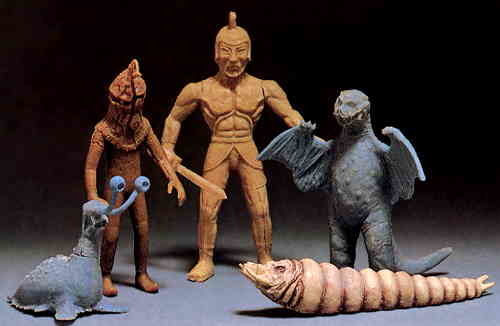
One of the frequent modeler guests was Tetsuya Kawaguchi, often hailed as the "father of (monster) GK models" (we'll delve into his story in a future article). His primary profession was a dental technician, skilled in dental model construction and denture fabrication. He applied this expertise to replicate his self-made "Mothra Larva" model. Miyawaki and his team were greatly surprised by the quality of the replica, leading to extensive discussions and exchanges with modelers from various fields. After repeated trials, they established a low-cost, high-precision method: "first create molds using silicone, then inject non-foaming polyurethane (PU) for replication." This technique became the standard production method for the vast majority of GK models, profoundly influencing the future development of the Japanese modeling industry.
Tetsuya Kawaguchi's self-made monster prototype from 1981. Image credit:怪獣原型師列伝
The early days of Wonder Festival. Image credit:ニコニコニュース
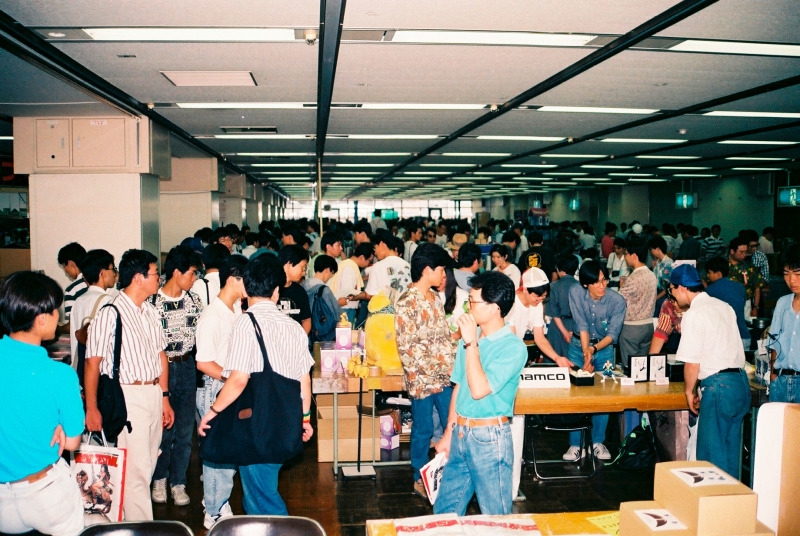
While this revolutionary new technology reshaped Kaiyodo, Shuichi Miyawaki diligently learned the ropes of the business, drawing inspiration from his father's tireless work. In 1984, celebrating its 20th anniversary, Kaiyodo transitioned from a model shop into a manufacturer amidst the burgeoning GK model craze. Shuichi Miyawaki was poised to become managing director the following year, ready to steer Kaiyodo into its next exciting chapter. In the next installment, we'll delve into Kaiyodo's intense GK model rivalry with GENERAL PRODUCTS, the precursor to GAINAX. We'll also explore the profound impact of Kaiyodo taking over as host of Wonder Festival, and the company's renewed emphasis on its "sculpting spirit" after evolving into a full-fledged figure manufacturer!
Continue Reading: The Untold Story of Kaiyodo: Part 2