


If you are an ordinary citizen in South Korea, when you hear someone in front of you calling themselves a 'prosecutor', you are likely to automatically show respect while feeling a sense of awe. Among the three highly regarded and elite professions known as the 'Three Masters'—Doctor, Lawyer, and Prosecutor (all pronounced the same in Korean)—the prosecutor holds a level of authority that allows them to operate independently of the administrative and legislative systems, possessing unquestionable absolute power to order police investigations. Such official power makes all the citizens look up to it while simultaneously wishing to never have to encounter it throughout their lives.

Adapted from the webtoon of the same name and starring Lee Joon-gi, the imaginative revenge drama 'Again My Life' features a prosecutor as its main character, narrating the educational journey of the prosecution system. This is not the first drama to center around a prosecutor (and certainly won’t be the last); the concept of revenge through rebirth is not new either (and it won’t be the last time seen); however, 'Again My Life' has somehow managed to stand out amidst a sea of strong contenders like 'Our Blues', 'My Liberation Notes', 'Taejong Lee Bang-won', and 'Marry Me, or Not'. It has secured an impressive average rating of 9.2% and peaked at 12.0%.
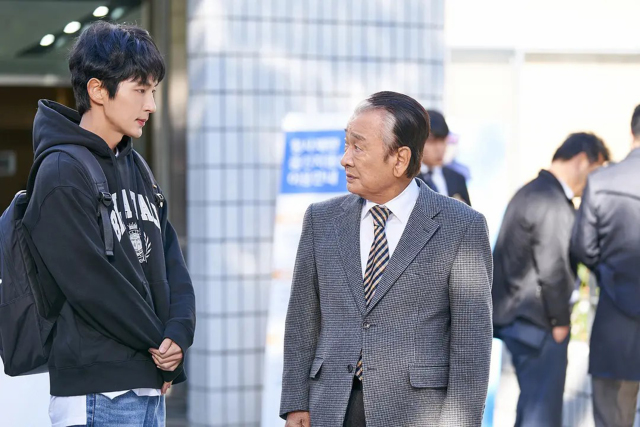
The reason for this can be attributed in part to the charm of the male lead Joon-gi, who has the looks, can perform action scenes, and has impeccable acting skills. Coupled with an engaging theme that features exhilarating battles against villains, it’s no surprise that this drama has gained popularity. On the other hand, this coincides with the honeymoon period right after the new president Yoon Suk-yeol took office; since he is also a prosecutor known for uncovering corruption, South Korean viewers have naturally transferred their expectations of the president onto the character of Prosecutor Kim in the drama, which is quite reasonable.

However, the irony is that although Kim Hee-woo is a prosecutor in the drama, his target for revenge, Congressman Jo Tae-seop, also comes from the judicial system. The adversaries Hee-woo defeats throughout his journey are colleagues and seniors from law school and the prosecution office. These individuals have secretly formed an underground organization resembling a shadow government and brazenly utilized their accumulated connections to create a massive collusion structure spanning politics, economics, and academia.

Though it is an adaptation of a webtoon, the ability to craft such a story is rooted in two long-standing hidden dangers in South Korean politics. The first is the dominance of academic factions, where seniors from the same school and department promote their favored juniors without hesitation. The necessity for professional backgrounds among bureaucrats creates opportunities for such academic cliques to form. The second issue is that the prosecution system, which should operate independently from both the administrative and legislative branches, has gradually become corrupted due to a thirst for absolute power; the aforementioned academic faction has accelerated this corruption, and ambitious mid-level officials may join factions for personal gain, even becoming tools for politicians to suppress their rivals during regime changes. The most evident example is the lack of immunity from judicial pursuit for nearly all former South Korean presidents.

In the drama, Hee-woo strives to gain the power (essentially greater power and financial backing than in his previous life) needed to take down Tae-seop. With the help of various opportunities and allies, he finally climbs to a high position, gaining more funding and eventually becomes a national hero uncovering darkness. In fact, if it weren’t for his clear and unwavering revenge goal (or if he weren’t the protagonist of the story), he could easily become the next Tae-seop, falling prey to the temptations of power and money, losing sight of his original intentions.
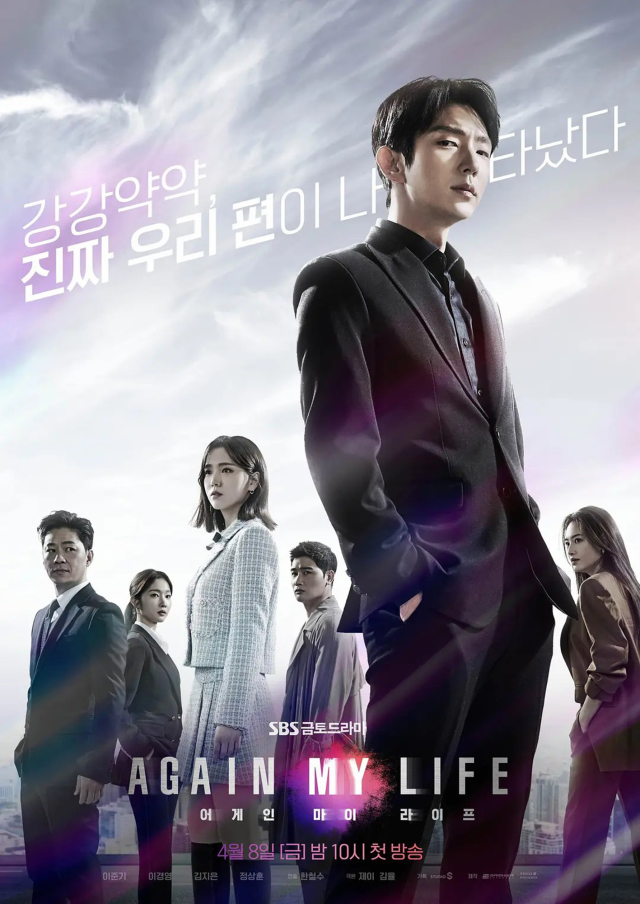
In summary, 'Again My Life' is indeed a drama with both exciting highlights and impressive scenes, with a frequency of twists that is astonishing yet thrilling. But as we shout in excitement following the drama's ups and downs, it’s worth reflecting on this: it is precisely because South Korean society still exists in a state rife with issues, where good and evil are hard to distinguish, that such themes resonate with the general public. In the drama, Hee-woo takes down Tae-seop, becoming a national hero who brings justice; in reality, most prosecutors likely continue to waver in their choice between being a ‘hero or a villain,’ leaving little time to save the citizens yearning for justice.