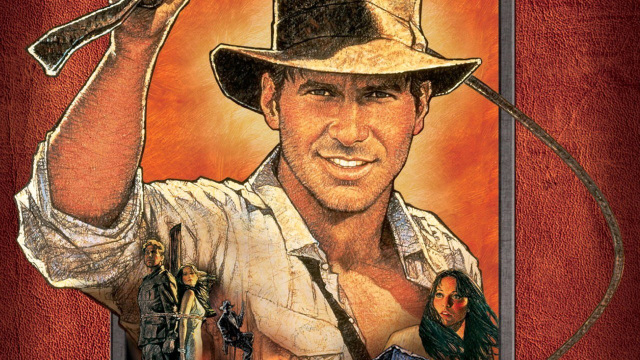

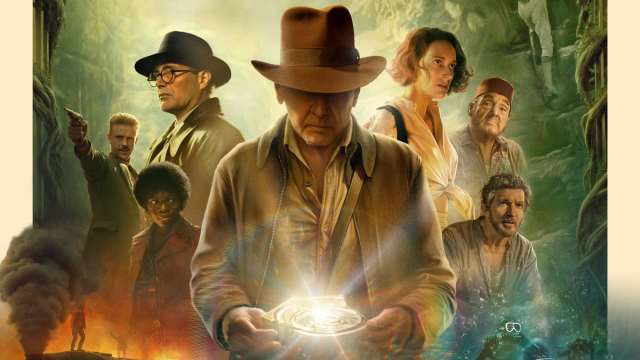
Since 1981, the adventure film "Raiders of the Lost Ark" directed by Steven Spielberg has been a legendary work that has shocked the commercial film industry to this day. Modern treasure-hunting movies took shape from it, influencing future excellent similar films and video games like "Tomb Raider," "National Treasure," and "Uncharted." The two sequels produced in the 80s, "Temple of Doom" and "The Last Crusade," were also both critically and commercially successful masterpieces, and there was even a TV series in the 90s titled "The Young Indiana Jones Chronicles." However, in 2008, the long-awaited "Indiana Jones and the Kingdom of the Crystal Skull" had impressive box office results but faced a critically disastrous reception, leaving the planned sequels in limbo. Fifteen years later, the final chapter of the series finally makes a strong appearance, but whether the outcome is good or not is surprisingly polarized. Today, let’s discuss the work "Indiana Jones: Dial of Destiny."
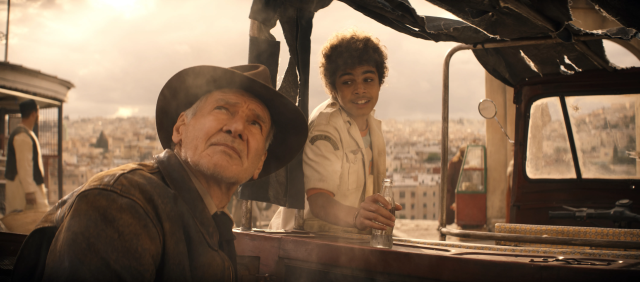
The story begins in 1944, as World War II is nearing its end. Indiana Jones and his friend Basil come to Nazi Germany in search of treasure, but they accidentally discover half of the Antikythera mechanism created by Archimedes. While being hunted by a large number of Nazis, they successfully escape and bring the mechanism back to the United States. Over twenty years later, the now-seventy-year-old Dr. Jones is old and frail, no longer the treasure-hunting enthusiast he once was. However, at this moment, his goddaughter Helena suddenly appears, expressing her desire to take a look at the mechanism from back then, which draws attention from a group of former Nazi villains also coveting the treasure. Dr. Jones is once again swept up in an unexpected treasure-hunting journey.
Steven Spielberg, who directed the first four installments, takes on a producer role this time, with James Mangold, known for directing films like "Ford v Ferrari" and "Logan," taking over the movie. Looking back at Mangold’s directing career, one notices that his most acclaimed works are dramatic films or commercial films that focus more on character development, such as "The Time Traveler's Wife," "The Last Duel," and the aforementioned "Ford v Ferrari" and "Logan." However, when tackling blockbuster movies, he tends to encounter failures, as demonstrated with the critically panned "The Wolverine: Samurai." Unfortunately, the previous "Indiana Jones" series falls exactly into the category of popcorn movies—something Mangold is not particularly skilled at, making this concluding chapter a work of a distinctly different style from the other films in the series.

The Indiana Jones we are familiar with has always embodied a spirit of pursuing thrill and justice, embarking on lively and exciting adventures. Although he endures suffering along the way, the outcomes are always favorable. However, the old Dr. Jones in 1969 is a completely different story; his son has died in battle, he is estranged from his wife (the heroine from the first film, Marion), and most of his friends have passed away. He has lost the admiration he once enjoyed in the classroom. One could say that the Jones in this film is simply a lonely old man, with retirement activities mainly revolving around napping on the sofa. It isn’t until Helena arrives that he is reluctantly forced to embark on a new journey. This “reluctance” is where many viewers’ dissatisfaction arises; that Indiana Jones... doesn't want to go on an adventure? What went wrong with him? Is he just tired of it all?
Yes, Indiana Jones in this concluding chapter is no longer the man we once knew. Although there is a reasonable explanation for his disillusionment (the previously mentioned tragedies of his family), this transformation clearly fails to convince many viewers, including myself. His sadness also affects the tone of the entire film; the adventurous comedic style established by Spielberg dissipates under Mangold's directorial oversight, with almost no funny moments and action sequences losing their previous comedic flavor. Story-wise, the director seems to strive to make it more brutal and realistic. Friends and colleagues of Jones are killed like ants, his aging body struggles to keep up with his desires, and even the old character Salah's wish to join in the adventure is dismissed casually (I was really hoping to see him come out at the end to save the day, but he didn’t, leaving me confused about the point of that segment where he expressed his desire for adventure). That dreamlike world of adventure is overshadowed by such cold, hard reality, and it’s no wonder some viewers left feeling unsatisfied.
The handling of the characters, however, poses no issues, as this is the director's strong suit. The character of Helena Shaw has a considerable presence; unlike Dr. Jones, who is bound by traditional notions despite his rich archaeological knowledge, she can be described as a “rogue with basic conscience.” Unfortunately, the film only touches lightly on her various traits. While her intelligence and mischievousness are depicted, her initially established cunningness feels less palpable, and her obsession with money seems to be downplayed as well. The interactions between her and Jones lack memorable chemistry. Though she isn’t off-putting, one wouldn't exactly be inclined to watch a film led by her; she’s at best “one of the protagonists.”

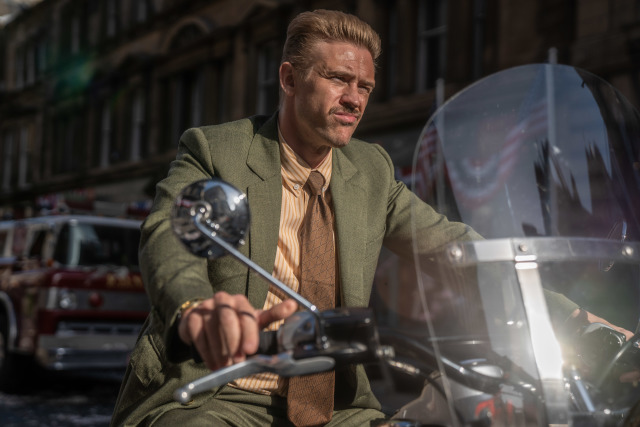
Dr. Voller, played by Hollywood's recent go-to villain Mads Mikkelsen, is designed as a somewhat typical villain leader, yet his undeniable personal charm adds layers to his character. His deep love for history and archaeology, alongside his clear disrespect for Hitler despite being a Nazi, makes him a superb villain different from those in previous installments of the series. Other characters, like the sly child Teddy and others, are more stereotypical and one-dimensional (I truly don't understand why Antonio Banderas has a cameo), with not much else to say, aside from the fact that boyd Holbrook playing Dr. Voller's henchman is quite handsome.
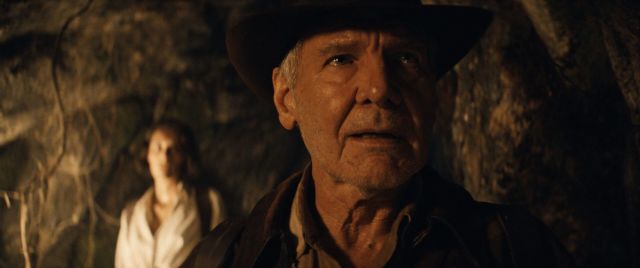
I picked quite a few flaws earlier, but don’t get me wrong; I still generally like this film. It is undoubtedly an excellent commercial film. However, as the legendary final chapter of a classic series, it should have achieved scores of 90 points, even 98 points, yet what we see in the end is only 75 points, which naturally leads to disappointment. This also involves what I believe is the film's biggest failing—there’s no sense of closure.
With the conclusion of a long-standing IP, we naturally expect to see the main characters achieve happy endings and fulfill their dreams. Yet "Indiana Jones: Dial of Destiny" not only has Dr. Jones appearing battered, but he also fails to achieve his desired ending. Instead of continuing to live back in 2000 years ago, he is knocked unconscious by Helena and forcibly brought back to the real world. Of course, as a longtime fan of the series, seeing the familiar Marion reappear at the end is likely to evoke emotion, but at the same time, I also feel a sense of lament. These adventure heroes in the films may find happiness but can never maintain it; for the sake of sequels, they are destined to suffer, to be surrounded by hardship. The recent sequel featuring Ethan Hunt follows this pattern, and Indiana Jones surely does too; while it seems he reconciled with Marion, they still face the pain of losing their son together. This may be an ending Dr. Jones is willing to accept, but is it truly what he wants deep down? I think not. Comparatively, the unloved happy wedding ending of "Kingdom of the Crystal Skull" might have been more appropriate as the conclusion to Dr. Jones's story.
If I were to arrange the ending of this film, this is likely what I would do: let Dr. Jones stay in the past, tearfully bidding farewell to Helena and the others. Then, we would jump to the present day, decades later, where Helena's descendants visit their late grandmother's house and discover a room filled with Indiana Jones memorabilia, allowing the audience to reminisce over his extraordinary adventures. Finally, the descendant dons Jones's hat and takes up his whip, symbolizing that his adventurous spirit continues on.
Perhaps the story of Indiana Jones doesn't end perfectly, but for us viewers, that familiar hat, that familiar whip, that familiar handsome face will forever remain a beautiful memory in life.