

Preface:
Although biopics cannot simply present dramatic and formal effects with respect to shots, editing, and script content, you cannot subjectively manipulate any biopic, especially when depicting controversial figures, because you are recreating a part of history. While the film and history cannot be conflated, I do not seek to explore its authenticity; I want to discuss how to present a dull and boring biopic.
However, there is one film that escapes the long-standing imprisonment of biopics in a rust-filled cage, and that is "Oppenheimer". It employs a non-linear narrative technique, shots, and sensational psychological effects combined with music to present a moving biopic. "Oppenheimer" has become a top model for biopics.
Before making a biopic, you must understand who you want to focus on: a person, an event, or a topic. Like "Oppenheimer", the core focus is on the scientist Oppenheimer, expanding to other events through this core, creating dramatic tension and depth in the story.
However, after watching "Ferrari", I felt completely disappointed, and even my racing enthusiast friends were disappointed. Perhaps this is the "Oppenheimer effect", which has raised my standards for biopics, but there may be other reasons as well.
Short Review:
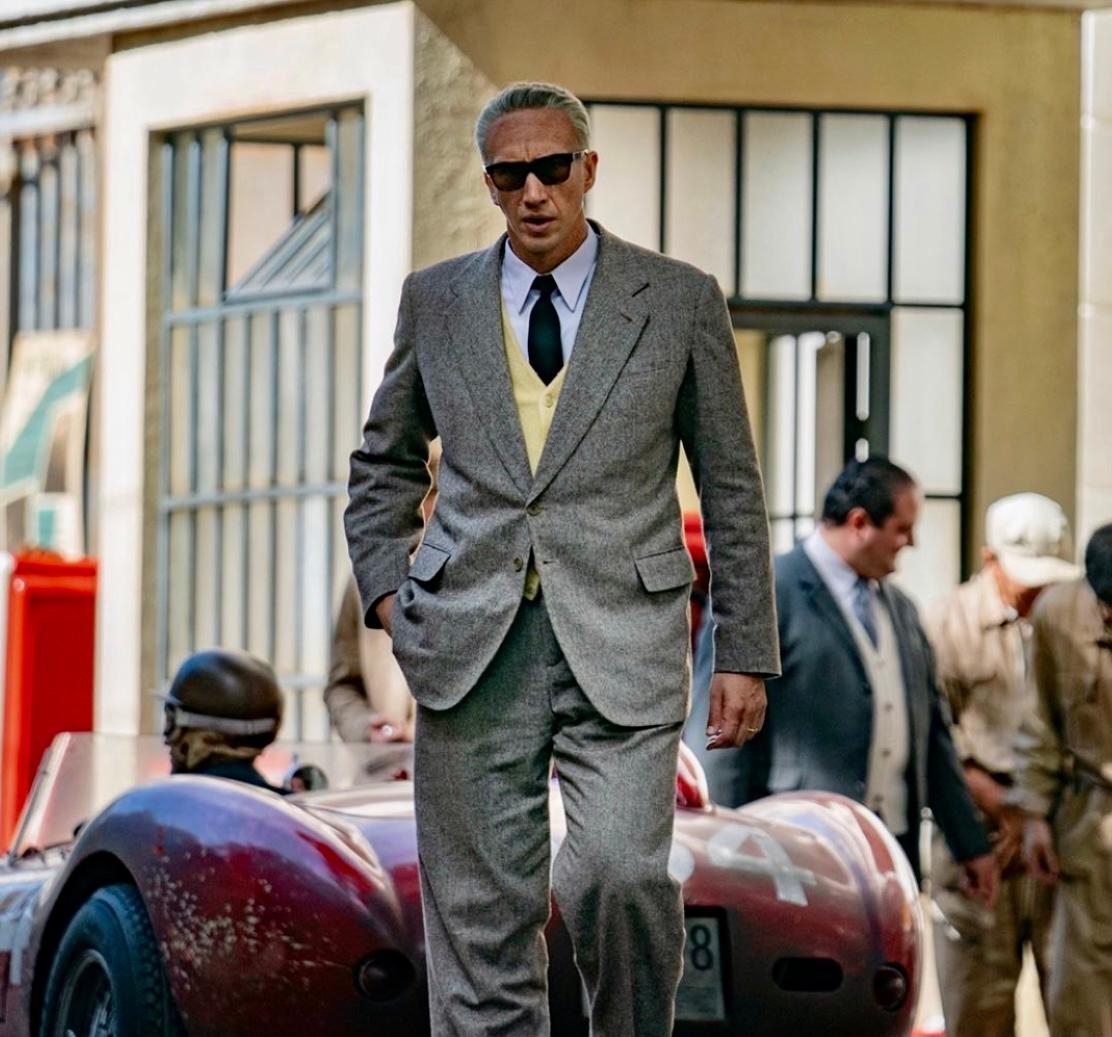
"Ferrari" attempts to focus on very scattered themes; one moment it discusses Enzo Ferrari's extramarital affair and the strained edges of his marriage with Laura Ferrari, and the next moment it shifts to the racing competition with Maserati. This arrangement may intend to create another kind of dramatic effect by employing cross-cutting to elevate narrative tension, using the soaring vocals of opera, the thunderous sounds of racing engines, and the screeching of tires on the ground to evoke the triangular relationship between Enzo, Laura, and Lina. While there is some feeling in this, it feels like something is missing—whether it's a matter of editing rhythm not being well executed or sound not being impactful enough?
However, one thing I am very certain about is that the racing is not sufficiently passionate or thrilling; the sense of speed is lacking. Only during the time trials is there a palpable tension, but in the later one-thousand-mile race, the racing feel is inadequate, especially when compared to another racing biopic, "Rush". "Ferrari" heavily utilizes tracking shots and push-ins to create a sense of competition between Ferrari and Maserati, but it loses the feeling of speed, making the visuals feel numb. Enzo and Laura's interactions are more intense than his racing; here I must commend Adam Driver and Penélope Cruz for their performances. I think this is the only redeeming quality of the film. After "Marriage Story", Adam Driver, along with the emotionally adept Oscar winner Penélope Cruz, makes me wish they would focus more on the marriage story between Enzo and Laura rather than the racing.
However, the cinematography in "Ferrari" is beautiful, which is something Michael Mann excels at. In "Collateral", he hardly used artificial lighting, instead capturing the neon lights of the city and natural nightlights to create the most natural and realistic dark night scenes of Los Angeles. In the one-thousand-mile race in "Ferrari", it feels so beautiful that it resembles a car advertisement.
One more point to criticize, which both my friends and I found very out of place, is that the car crash scenes are particularly exaggerated. You know that in a film that adheres to realism, a suddenly dramatic scene can feel very out of place. Michael Mann likes to capture scenes from different angles, showing cars rolling and flying, using dynamic editing to create a sense of movement. In "Collateral", cars could fly as high as possible without issue because it isn't a completely realistic film. But placing such elements in "Ferrari" feels particularly odd, and my friends mentioned that real car rolls are not this exaggerated. While film and reality are indeed different worlds, the entire visual language you create determines that you are making a realist film. Even if you want to recreate a thrilling true car accident, it doesn't need to be this dramatic; it only serves to blur the focus.
I still highly recommend watching "Ferrari". I don't think it’s bad; I just find it a bit regrettable. Perhaps the ambition was too great, leading to some small details not being done well. However, biopics have always left little room for discussion, almost entirely focused on how they differ from history. Thus, if you place importance on historical accuracy in film, it can come off as somewhat humorous. So enjoy Michael Mann's "Ferrari"; you may not experience speed and passion, but you can enjoy the romance of racing.