

"Billy Elliot"
Preface:
As long as there are dancing scenes in the movie, regardless of their length or quality, I will give this film a significant score because dancing is the most pure dynamic element in cinema. Just a brief three seconds can let you fully feel the charm of the movie, just like pulling your eyes in an instant. The golden age of Hollywood is a good example; with the advent of sound films, everyone wanted to bring stage plays to the big screen. Surprisingly, the sense of dance in a two-dimensional frame can be even more captivating than on a three-dimensional stage. During that time, you could almost always see the shadow of musicals, "Just give me music, and any place is my runway."
.
However, over time, the audience's standards for musicals have become higher; they no longer want to see mindless dancing. They believe there must be reasonable grounds for the dance to be convincing, no longer just pure dynamics. What motivates the protagonist to dance? What does dancing mean to the protagonist? And what emotions and meanings does the protagonist express through dance? "Billy Elliot" not only provides great answers but also portrays deeply rooted familial love, creating unforgettable moments and lingering music. One think of T. REX's "Cosmic Dancer," and my tears slowly fall.
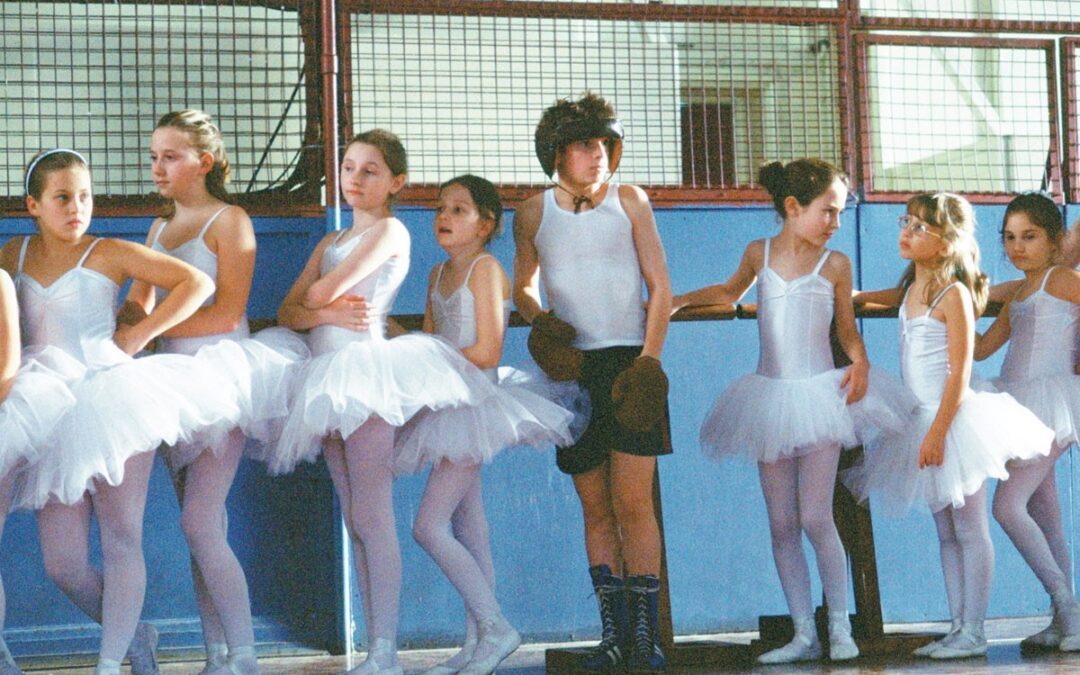
"Billy Elliot" tells the story of a young boy Billy, growing up in a working-class environment, living with his widowed father, brother, and grandmother suffering from Alzheimer's disease. Billy inherently loves to dance and often sneaks into his brother's record player to dance to the music. While he is attending boxing lessons, he glimpses a group of girls taking ballet classes next door, and he is deeply attracted to ballet. However, his traditional father firmly opposes Billy dancing ballet, believing that boys should box and not dance ballet. It seems like a cliched theme, but the post-directive plot and the actors' lifelike and sincere performances will definitely make you cry.
Film Review:
"The Historical Background of 'Billy Elliot'"
"Billy Elliot" is set between 1984 and 1985 during the major miners' strike in northern England, where, due to government profit issues, more than 20 mines were closed without the miners’ consent through voting, leading to mass unemployment among miners. This discontent led to a miners' union strike across northern regions, marking the largest strike in British history. But due to the strike, many miners could not endure a year without wages and withdrew from the strike, returning to work in the mines early. Their actions led to feelings of betrayal among the miners supporting the strike, leading to disdain towards those who returned to work. Billy's father and brother are among the miners supporting the strike, which is plainly reflected in the film, showcasing the severe class division in Britain.
.
"What motivates the protagonist to dance?"
The movie mentions that Billy's mother loved Fred Astaire when she was young and would mimic his dance moves in the lobby after watching his films. Fred Astaire was a famous musical star during Hollywood's golden age, choreographing all the dances himself, known for his elegance and charm, ranked fifth on the American Film Institute's list of the greatest movie stars of the century. In the film, we also see Billy dancing with a cane in a classic dance segment from Fred Astaire's "Top Hat." This shows the profound influence of Billy's mother on him. Although Billy claims to have forgotten his longing for his mother, he can still feel her presence and can recite the letters she wrote to him by heart (indicating he has read them many times), thus connecting his mother's influence to his love for dance.
.
In fact, Billy's motivation comes from his own determination; he mainly uses borrowed strength, with the greatest push being Mrs. Wilkinson. She not only provides Billy with a goal to pursue but also privately trains him in ballet, laying the foundation for his journey. However, we never really know Mrs. Wilkinson's motivations—whether they stem from self-interest or genuine good intent. Julia Walters, who plays Mrs. Wilkinson, has also said that the character is quite complex: "Mrs. Wilkinson feels disappointment on various levels, whether it's towards her family, society, or herself; she is so tired and cold, yet her relationship with Billy is very special." Every expression Julia Walters portrays in the film perfectly encapsulates the complexity of Mrs. Wilkinson. In her final farewell to Billy, she acts very cold and says harsh words, yet you can sense her reluctance to part from Billy: "After being trapped in a well of despair for so long, finally seeing a glimmer of light ready to illuminate the entire well, should you extinguish it or fan it to shine brighter?"
"What emotions and meanings does the protagonist express through dance?"
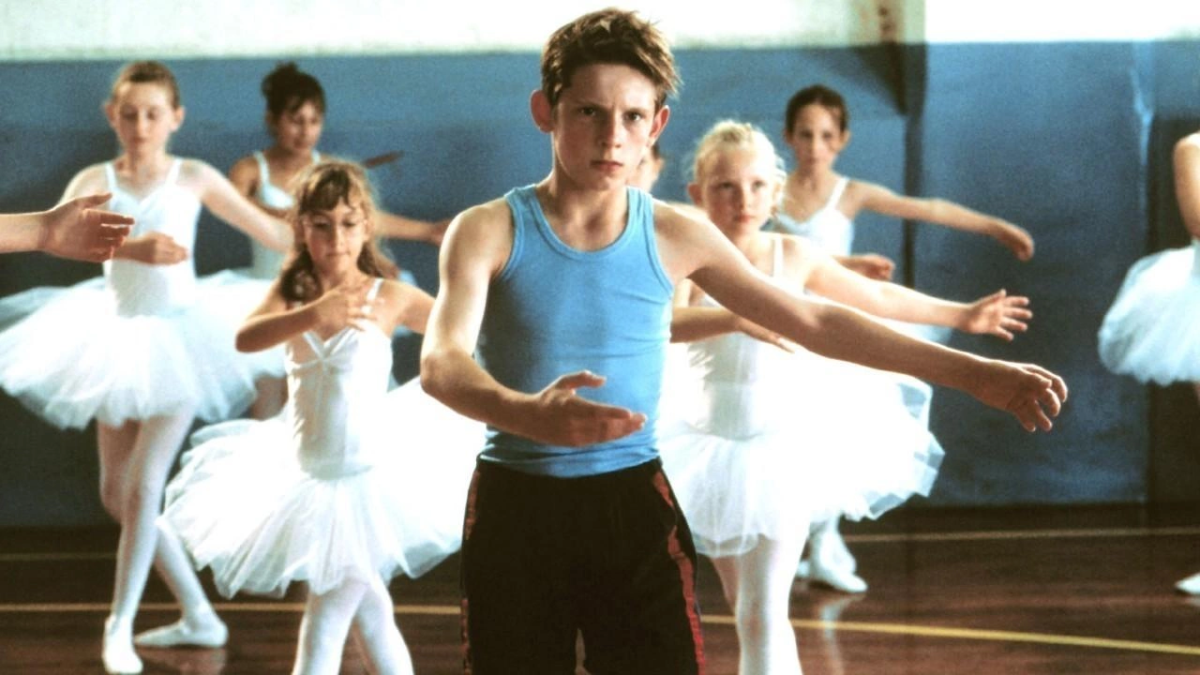
Billy grows up in a chaotic environment, experiencing the largest strike in British history, with his father and brother diligently participating in the strike. Witnessing his brother being beaten by the police and frequent disputes at home, these violent incidents trigger a transformation in Billy's heart. Coupled with the film's dull tonal palette and the suffocating atmosphere of a closed-off town, it enhances Billy's discomfort with excessive pressure. Several scenes clearly show that Billy will act out due to stress, and his only way to release pressure is through dance. However, the societal gender bias and his father's opposition prevent Billy from embracing what he loves. The accumulated anger and dissatisfaction can all be felt in his dance; the steps are no longer lightly playing with the water but rather trying to stomp dry this miserable puddle.
.
On Christmas Day, while teaching his friends ballet at the sports hall, Billy is unexpectedly discovered by his father. Seeing the disappointment and weariness on his father's face in that moment, he gives up all struggles and dances to the music, this time not with angry dissatisfaction, but with determined anger, as he dances towards the sports hall's dividing wall, crashing against his father's stubborn heart wall, step by step proving his love for dance to his father.
.
"Did Billy become an opportunity for his father's redemption?"
Initially, when his father opposes Billy's ballet dancing, we find him quite annoying, but after witnessing Billy's compelling dance, he decides to abandon the strike to return to the mines to earn fare money for Billy to attend the Royal Ballet School auditions. This scene is not just the most heartbreaking moment of the film but also adds depth to the father's character as he sheds the dignity of being from the working class to reclaim his dignity as a father.
.
"What does dance mean to the protagonist?"
After auditioning for the Royal Ballet School, the final judge asks Billy, "What do you feel when you dance?" Billy replies, "It feels great. At first, I felt very stiff, but as I kept dancing, it seemed like I tossed everything out of my mind; my whole body slowly fades into this space. It feels like a raging fire is burning in my body. On stage, I feel like a little bird soaring, like currents flowing everywhere." For Billy, dancing is not only a way to express his emotions but also allows him to escape from chaos, even if just for a moment. This reply from Billy is like a confession to musicals, a tribute to all dancers in the world, fitting perfectly as the ending montage for a dancing-themed film.
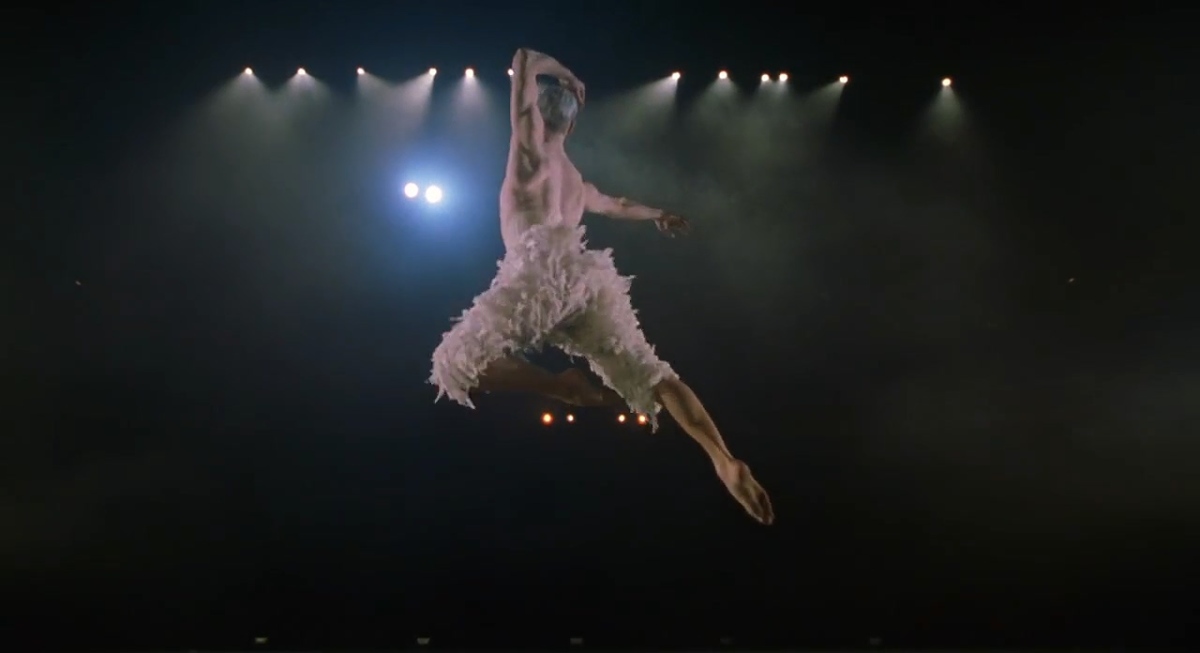
"Billy Elliot" explores the impact of growing up in such an environment through the relationship between historical background and family, how children should voice their own opinions against the exploitation of the working class by the bourgeoisie, reflecting Billy's rebellion against his father or perhaps a resistance against this town. In the end, Billy dances from the right side of the screen to the left, showcasing the essence of breaking through adversity, then cutting back to the yellow wallpaper from the opening, resonating with Billy's gratitude towards his past self for not giving up on his passion for dance.