


"Film is what I desperately want to say." -- Martin Scorsese
.
At that time, the young and ambitious Scorsese already possessed the artistic backbone—an obsession with film that, even at the age of 82, has grown stronger with age. He has always defended his films and his ambitions. When the Motion Picture Association of America rated his 'Taxi Driver' as X, he was so angry that he summoned the film brats of that time like Steven Spielberg and Brian De Palma to his home for a meeting (now these film brats have become the godfathers of cinema). Spielberg recalled: "I have never seen Scorsese so angry; there were tears in his eyes, and I could tell they were tears of rage. He was so furious that he smashed a glass water bottle, and there were shards all over the kitchen floor." That glass water bottle seemed to represent his ambitions, shattered on the ground. As he said, "Film is what I desperately want to say." Nobody could stop Scorsese from telling the story he wanted to share, the declarations he wished to make, the films he wanted to create, except for his family.
.
If there were to be a film that Scorsese most wanted to convey, it would certainly be his debut work 'Mean Streets', because the story depicted in 'Mean Streets' is essentially his childhood story, his most personal work.
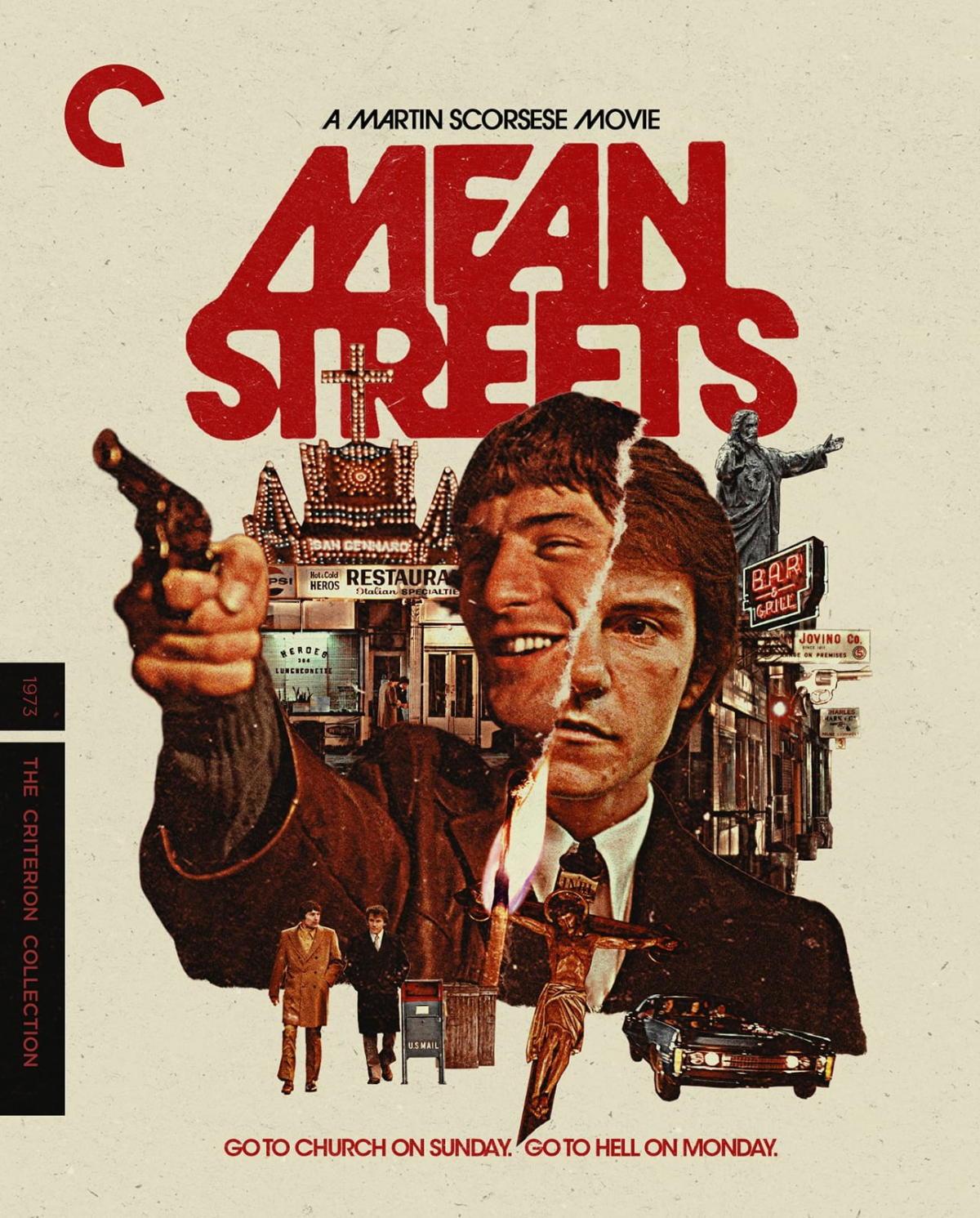
Scorsese grew up in Little Italy in Manhattan. In 1950, this place was dubbed as a large Sicilian village in Manhattan, as most of the residents came from Sicily, Italy. Scorsese's parents were also second-generation Sicilian immigrants who worked hard and moved to Queens but, for unknown reasons, his father had a dispute with the landlord, leading them to move back to Manhattan. Scorsese recalled, "Moving to Queens was the real move to America; it was a true upward step." On his first night back in Little Italy, he ran straight to the fire escape and looked down at the street scene: "All life, all sounds, many children running around in the street, drunken men lying everywhere; it was a nightmare I could never forget." At that time, Little Italy was rife with guns, bribery, and brawls, but the residents grew accustomed to these issues.
.
Outside, there were occasional roars, sounds of fighting, or gunfire, sometimes mixed with rock music and operatic melodies played by neighbors—during hot weather, Scorsese and his brother Frank would sleep on the fire escape, having to listen to these sounds to fall asleep. But it wasn't any easier indoors; Scorsese's parents often quarreled, mostly over debts owed to the mob by Uncle Joey, and his father would frequently fight with Uncle. He said, "I would hear this kind of drama every night; for the first 25 years of my life, I heard all these things. I listened to them argue about what was right and wrong; it felt like the place where we lived was a jungle. Most importantly, maintaining the dignity of one's surname and earning respect was like walking a tightrope."
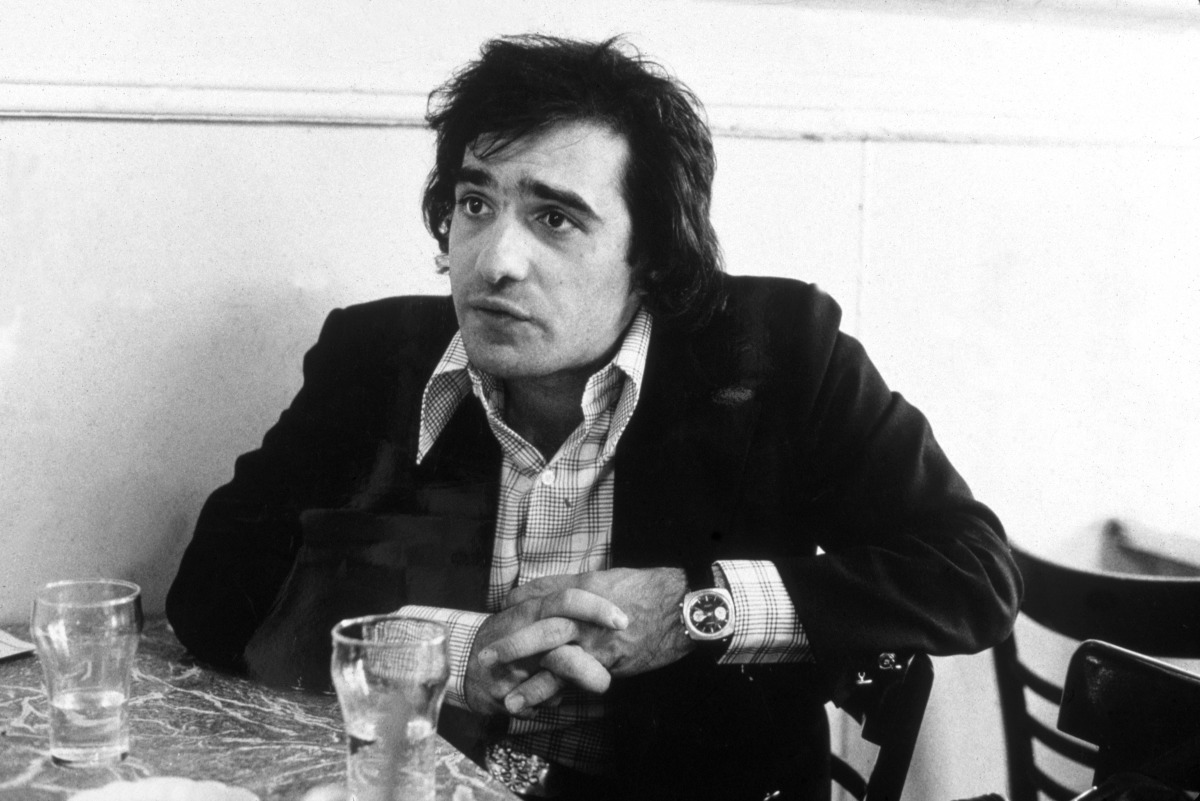
Scorsese recalls the moment he realized he must make a film like 'Mean Streets'. He recounts a night when a police officer drove him and his friends home in a convertible. However, the officer's loud chatter was so unbearable that Scorsese and his friends wanted to get out and walk home, leaving one friend with the officer. When the car continued to the next intersection, the traffic light was green, but a car in front was stationary. The officer pulled out his gun and yelled at the driver, "I’m a police officer, get your car moving." The driver complied. The next morning, Scorsese heard that the officer had pulled out his gun and less than half-an-hour later, was shot dead by another weapon that emerged nearby. The friend in the back seat was also shot. He recalled, "We might have been killed then; I had already sat in the back seat, that’s why I needed to make 'Mean Streets.' From that moment, I thought about how he ended up in that situation; I don’t even know the guy who pulled the trigger. I told myself: this is the story I want to tell." The ending of the officer’s story also features in the final car chase in 'Mean Streets'.
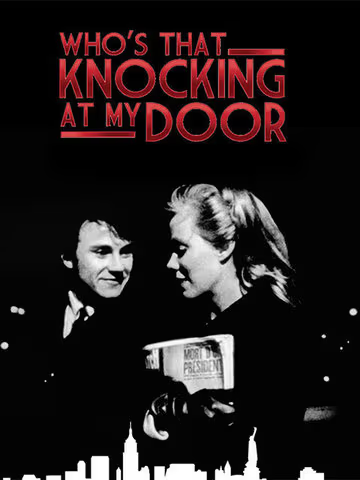
Many mistakenly think that 'Mean Streets' is Scorsese's first film. In fact, his actual debut was 'Who's That Knocking at My Door' in 1967, but in this film, you can find many similarities with 'Mean Streets'; it can be said that 'Who's That Knocking at My Door' is a prototype of 'Mean Streets'. Charlie in 'Mean Streets' corresponds to J.R. in 'Who's That Knocking at My Door'; Johnny Boy corresponds to Gaga; Michael corresponds to Joey. They all have their own bar where they can hang out and chat; Charlie and J.R. both share a romantic history akin to 'Breathless', and they are both devout Catholics. Not to mention, Scorsese injected his rock ‘n’ roll soul into 'Who's That Knocking at My Door', crafting an unforgettable opening for 'Mean Streets'. Just hearing The Ronettes’ 'Be My Baby' makes the bold red 'Mean Streets' title pop up in your mind. This kind of magical occurrence also appears again in his 'Goodfellas'—when you hear The Crystals' 'Then He Kissed Me', you’ll inevitably recall Henry guiding Karen through the kitchen in a single shot. This is Scorsese's unique cinematic magic; no one can wield rock music like him with such proficiency.
.
One scene in 'Who's That Knocking at My Door' also possesses the same magic, where J.R. (played by Harvey Keitel) fantasizes about sex with various girls, accompanied by the most outrageous lyrics from The Doors' 'The End', which tells of a killer slaughtering his family. This four and a half minutes of sexual fantasy is undoubtedly a sin for the extremely conservative J.R., as heavy as killing his own family. The sex scene in 'Who's That Knocking at My Door' is a masterpiece; Scorsese completely depicts Keitel's facial contours in close-ups with black-and-white lighting; the intimate kisses on his cheeks and neck evolve into a struggle for desire rather than mere sex.
.
"In a way, I don’t particularly like my first feature, 'Who's That Knocking at My Door'; the reason is that we encountered many problems during the production. When we started shooting this film, I already knew what I wanted to make, but the budget didn't allow for it." -- Martin Scorsese
.
Scorsese and his friend Mardik got together to finance 'Who's That Knocking at My Door', ducking his wife’s nagging in their car, brainstorming how to secure funding, the limitations of filming locations, and where to find investors willing to back their distribution. The original script did not include J.R.’s fantasy sex scene; it was the distributor who insisted on including a sex scene in the film to make it presentable. At the time, Scorsese was in Amsterdam and quickly called Keitel to come and shoot it. But I guess the main point was that Scorsese wanted to incorporate more religious messaging, but the constraints of location prevented him from doing so, and he could only include a brief appearance of such themes in the third act. This regret may be why he incorporated numerous religious issues in the original script of 'Mean Streets'.
.
However, in the actual finished product, these religious elements were cut, retaining only a few key scenes. The reason was that Scorsese's girlfriend Sandy felt there were too many instances of religious anxiety, and instead suggested Scorsese include funny anecdotes from his childhood, like playing with firecrackers and getting into a brawl in a pool hall over someone calling another a moron. Without Sandy's suggestion, we might not have seen that medieval brawl sparked by "Mook".
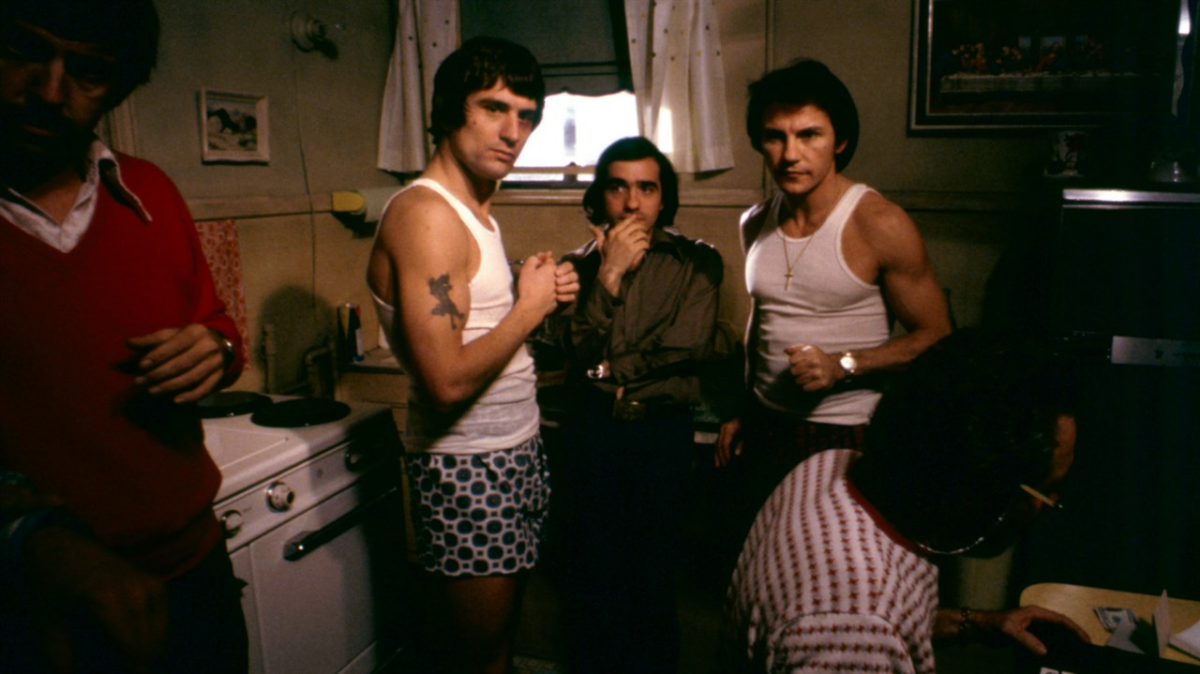
Harvey Keitel, who played J.R. in 'Who's That Knocking at My Door', was Scorsese's initial long-term collaborator and friend before Robert De Niro arrived on the scene. Scorsese also shaped the main character in 'Mean Streets' based on Keitel’s image. Scorsese describes Keitel's emotions as very gentle, contrasting sharply with his own anxious personality. He stated: "I usually reserve something when meeting unfamiliar people, but Keitel can very comfortably interact with newly acquainted boys and girls; he is more gentle than I am." Keitel was not only Scorsese’s favored actor but also Quentin Tarantino's favorite, appearing in Tarantino's debut film 'Mean Streets' and 'Reservoir Dogs'. In 'Mean Streets', Keitel plays an experienced robber whose soft-heartedness leads to tragedy, akin to Charlie in 'Mean Streets'; in 'Reservoir Dogs', he plays a similar role, only more resolute and efficient, just as Scorsese describes him—being able to turn significant matters into trivial ones while reducing minor issues to mere grains of sand.
.
Keitel couldn’t handle a virgin in 'Who's That Knocking at My Door', but outside of the film, he was a director's killer of virgins.
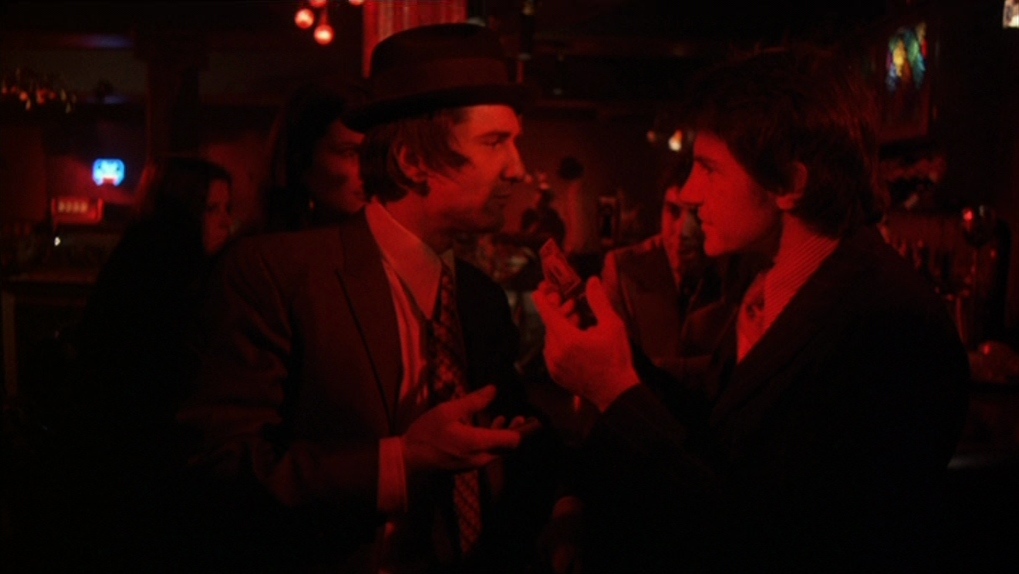
"I remember De Niro attended a dance hosted by the parish priest for Italian-Americans. Therefore, when shooting 'Mean Streets', I thought this was a perfect role for him. He had an apartment on 14th Street and still kept his old clothes. I remember when I saw him wear a hat, I thought it was perfect, though I didn’t tell him, but when I saw that hat, I instantly knew that was Johnny's hat!" -- Martin Scorsese
.
Recently, De Niro mentioned in a GQ interview about his role as Johnny in 'Mean Streets,' expressing his reluctance because he initially wanted to audition for the lead role of Charlie. However, Scorsese informed him that Richard already had a selection; that person was Harvey Keitel, leaving De Niro with only three roles to choose from. However, when Scorsese saw him wearing that hat, he was convinced that De Niro was the best choice for Johnny. 'Mean Streets' marked De Niro's first appearance in a Scorsese film, after which they would go on to forge a vast criminal empire, just like Scorsese's relationship with Keitel. This year, De Niro also received an honorary Palme d'Or at the Cannes Film Festival, recognizing his brilliant achievements over sixty years in acting.
.
In fact, the protagonist Travis in 'Taxi Driver' was originally meant to be played by Keitel, but the screenwriter Paul Schrader, after seeing De Niro's stellar performance in 'Mean Streets', strongly wanted De Niro to take on the role of Travis. Scorsese had no choice but to agree; however, he still sought to include Keitel in a role, so he cast him as the white pimp Sport. Quentin Tarantino commented on 'Taxi Driver': "It’s hard to imagine a Sport played by Harvey Keitel, just as it is hard to imagine a Travis played by Robert De Niro." I guess that’s the best affirmation of both Keitel's and De Niro's performances!
.
Charlie, like Scorsese, comes from Little Italy and has a group of friends. They drive around aimlessly, sometimes tricking kids into giving them money to see Scorsese’s favorite movie at the time, 'The Searchers'; sometimes they go around asking for money, or chatting casually in bars. Among this group, there is a guy named Johnny Boy, a nickname similar to how a foolish friend in 'Who's That Knocking at My Door' was called Gaga. Johnny is lazy, causing trouble, and owes debt to another friend of Charlie, Michael; Charlie often cleans up for him and finds ways to help him get funding, but Johnny always finds a way to waste Charlie’s efforts.

Why does Charlie continue to help Johnny? There are three reasons. First, he has fallen in love with Johnny's cousin Teresa, which makes him feel it’s his responsibility to help Johnny, even though Teresa advises him to stop caring about her foolish cousin. Second, he wants to ease the guilt in his heart; Charlie has an uncle, Giovanni, who is a powerful mafia boss, and at times he helps his uncle with illegal dealings. As a devout Catholic, he feels ashamed of his actions, but he never finds solace in church; just as Charlie says in prayer at church, "The biblical declarations and prayers are just words to me, failing to erase the guilt in my heart." So Charlie intends to gain redemption by helping Johnny, hoping that someday Johnny will truly wake up. Third, Charlie is too soft-hearted, and as viewers, we can hardly understand how Charlie continues to stand by this fool. Of course, this fool ultimately makes things explode at the end.
.
The relationship between Charlie and Johnny mirrors that of Scorsese's father and uncle, where his uncle owes debts to the mafia, yet his father continually lends money to pay off the debts. This is also one of the reasons why Scorsese's mother often quarreled with his father. Although he transforms his familial issues into humorous scenarios among friends, it remains an act of great courage, as exposing trauma for others to scrutinize is no easy task. Scorsese states: "From that moment on, I have consistently worked hard to confront the issues of our family."
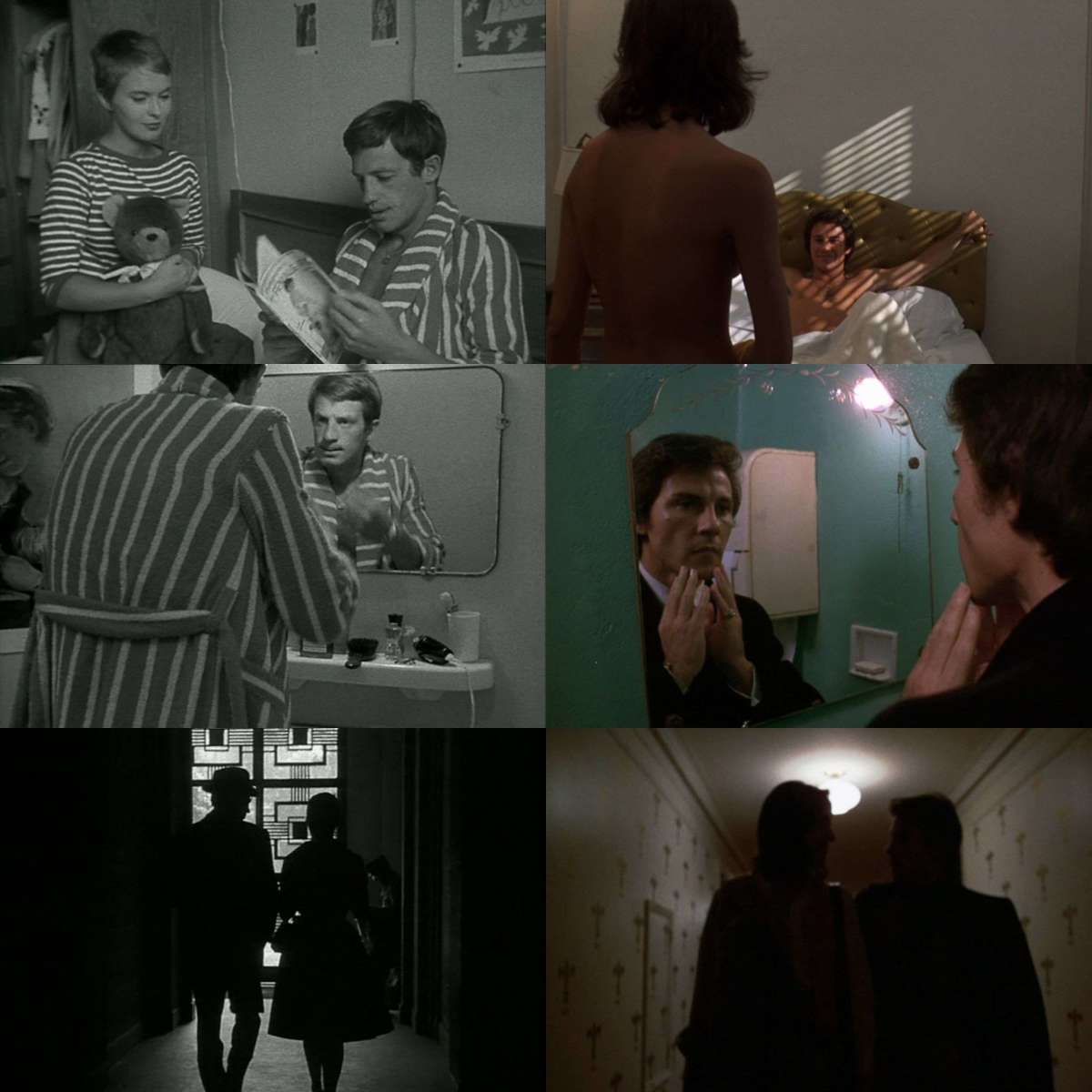
In the early 1960s, the French New Wave rose, and Scorsese was swept up in this trend, being fascinated by Truffaut's 'Jules and Jim' and Godard's 'Breathless'. The opening of 'Mean Streets' imitates the opening of 'Jules and Jim', turning the rehearsal process into a silent montage accompanied by music and credits, as if to tell us: "This is me, this is us, this is our story." presenting a documentary imagery. The opening narration was also inspired by 'Jules and Jim'; like it, it tells the story of others from an outsider's perspective. The narration in 'Jules and Jim' is provided by Truffaut himself, and in 'Mean Streets' it is also the director, Scorsese himself—only this time, it is his story, and through Keitel, he invites you to see the environment he grew up in as a child.
.
In 'Who's That Knocking at My Door', Scorsese fully utilizes the jump cut editing technique from 'Breathless' to create a sense of fragmented memory and employs flashback effects to deepen the memory of gathering with friends. However, in 'Mean Streets', he no longer does so; instead, he uses editing with greater spatial continuity to capture the interactions between friends. Scorsese seems excited to share every detail of his life with us. 'Mean Streets' still mimics scenes from 'Breathless', such as the intimate interactions between Charlie and Teresa in a hotel room, with sudden jump cuts, sudden gunshots, and Charlie looking in the mirror touching his face—all these segments pay homage to 'Breathless'. What a youthful, vibrant, and passionate film.
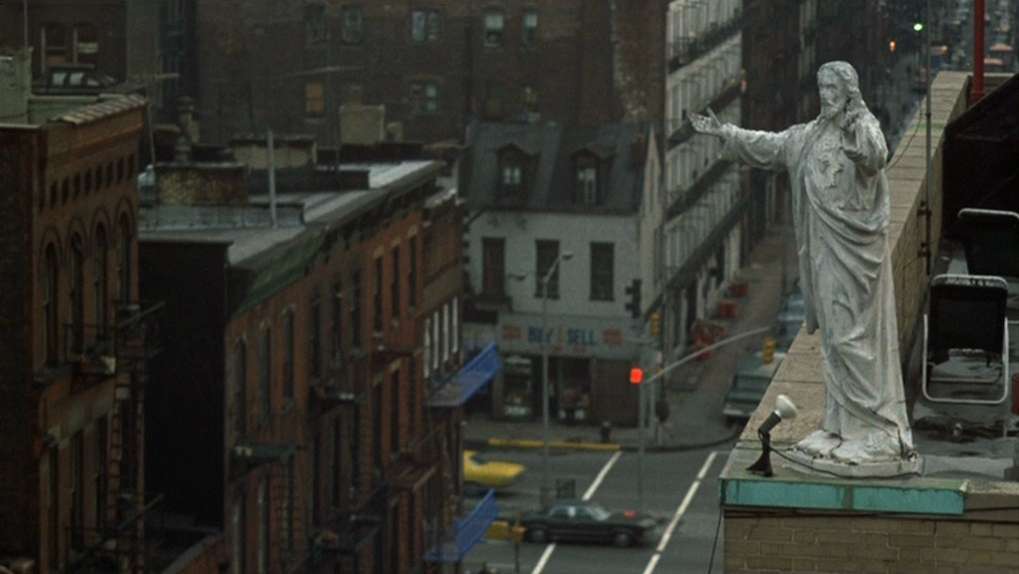
"Guilt can’t be redeemed in church; it can only be repaid on the streets, at home, in real life. Other methods are bullshit." -- Martin Scorsese
.
Before watching 'Mean Streets', I never comprehended why Scorsese's mafia films always present violence in a raw and real manner, completely uninterested in glorifying violence and criminals. Yet after watching 'Mean Streets' and understanding Scorsese's story, I finally grasped his intention. He wanted us to see the truth as he genuinely saw it; he had witnessed these brutal streets since childhood, and these memories could not be erased. Scorsese said: "I watched men and women self-destruct, end their own lives, and then go to church to hear a priest talk about compassion; this contrast will forever remain in your heart." This is also the reason he wished to embed religious themes into his films; as a Catholic, he must grapple with the sins he sees.
.
Additionally, Henry Hill, the titular character in 'Goodfellas', believes that 'Mean Streets' has replaced 'The Godfather' as the favorite mafia film.
.
Although 'Mean Streets' may not be Scorsese's best work, it is a must-watch among all his films, as it marks the origin of Scorsese's stylistic film-making, the beginning of Scorsese's journey. If you don’t appreciate Scorsese's aesthetic of violence, trust me, watch 'Mean Streets', and you will undoubtedly find different answers.
.
"I want to examine myself and my friends from a human perspective. Even if this film gets ignored, I believe that a few years from now, people will see its existence again. They will understand that this is the daily life of Italian Americans—not the godfathers, not the bosses, but the everyday lives—this is how they talked, dressed, and acted in the early 1970s and the late 1980s. It was the same in the early 1960s; this was their lifestyle." -- Martin Scorsese