


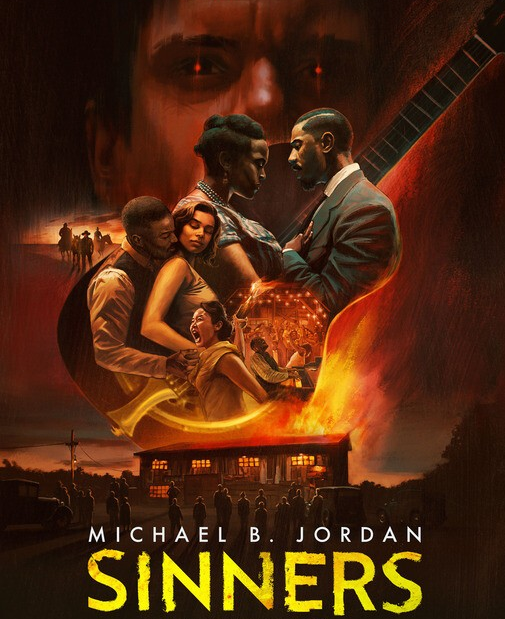
'Sinner' is undoubtedly the most fascinating work I have seen in recent years. Very few films make me go to the cinema repeatedly, and this level of obsession is akin to Martin Scorsese's infatuation with 'The Searchers' or Quentin Tarantino's addiction to 'The Ultimate Thunderbolt.' 'Sinner' completely releases the desires within me; it is undoubtedly my favorite film of the year, the best Black film, and the best vampire film.
.
After director Ryan Coogler's debut work 'A Day at the Oscars,' it is clear that he has always harbored an ambition to defend and promote his own race. Much like Scorsese's feelings when filming 'Mean Streets,' Coogler's 'Sinner' has even grander aspirations. He defends a community—its culture, music, and social events—not merely a decade's worth of history but a century's worth of history. This is a story that will make the Black community weep.
.
At the turn of the 20th century in the Mississippi River Delta, despite having gone through the American Civil War, inequality and racial segregation still pervaded. Most of the economy relied on plantations, represented by fields of cotton, which, although seemingly pure and flawless, are a past the Black community wishes to forget—much like the shadow of extermination camps for the Jewish people. They transformed this sorrow into a gospel seeking redemption, but as their hopes grew stronger, so did their anger, which was manifested in powerful stomping. They poured all their emotions and hopes into music; only music could express their feelings, only dancing could liberate their freedom. This is the blues; this is the ancestor that gave rise to future jazz, rock, and R&B.
.
A group of immigrants also quietly arrived—Chinese, who, like the Black community, were deprived of many rights and were second-class citizens. Because of this, the Chinese and Black communities existed in a symbiotic relationship. With the increasing number of immigrants, they provided grocery services to their Black neighbors, like Grace and Zhou Bo in 'Sinner.' Today, the history and culture of Chinese in Mississippi stretches nearly a century, showcasing that director Coogler not only cares for his race but also for other marginalized groups suffering from discrimination.
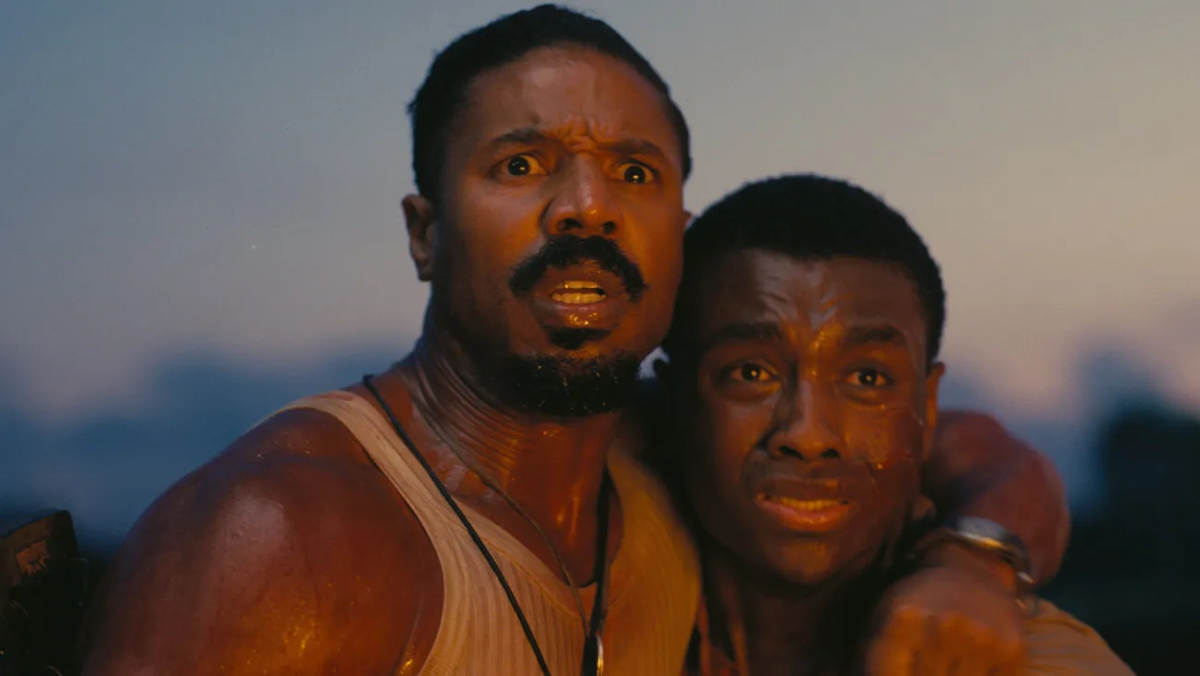
In the movie's opening, the interspersed shadowy memories and remixed strings create a discordant atmosphere throughout the film. Whether it's shots looking up at the sky or a dying snake, they seem to suggest ominous signs approaching for the audience, transforming excitement and anticipation for the opening of the new bar by the Smokes brothers into tension and worry. This reminds me of how Johnny Greenwood also created an equally chilling atmosphere with strings at the beginning of 'The Oil Business,' making the land feel less pure.
.
The continuous follow-shot paired with an impactful score is undeniably an irresistible visual magic. The first time I saw such a formal technique was in Martin Scorsese's 'Goodfellas'. You could say Scorsese is a pioneer of this type, but the one who uses it to perfection must be the genius director Paul Thomas Anderson (PTA), as you can almost see this formal technique in all of his films, particularly in the opening of 'Magnolia' which brought back the initial awe I felt when watching 'Goodfellas.'
.
In 'Sinner,' I also felt the same sense of wonder, especially in the montage of different music generations stirred by the blues at the bar, reminiscent of the club scene opening in 'Babylon' (though not as chaotic). Coogler uses a continuous shot interspersing many historical scenes of musical heritage, narrating the Black community's significant contributions to music and culture, which greatly impresses me as an old rock fan. Within this, I also see many dancers from different cultures and communities, which inevitably reminds me of Johnny Greenwood's first scored experimental documentary 'Bodysong,' where clips of dancing from various cultural backgrounds were also edited, but accompanied by Greenwood's unsettling string music.
.
"The music you play will attract evil spirits."
.
This phrase inevitably reminds me of Elvis Presley's experience. Elvis was also born in Mississippi and deeply influenced by Black music. Initially, it was gospel music from the church that captivated him, and then he fell in love with blues and country music, beginning to elevate these genres. His brilliance attracted the attention of Colonel Tom Parker, a manager who would torment him for life. Parker, like a vampire, continually drained Elvis's energy and finances, preventing him from singing the songs he wanted to sing or acting in the films he wanted to act in, which made Elvis very weary and exhausted. Only during the recording of his eighth album 'How Great Thou Art' did he feel a bit of respite, as this album was the reason he fell in love with music—gospel music. In 'Sinner,' the broken Sami returns to his father's embrace, just like Elvis, a soul yearning for God's comfort, which is deeply moving.
.
In 'Sinner,' the vampires are not just simple predators; their threat symbolizes racial persecution—the tearing apart of South America by Spain and Portugal in the 18th century, the massacre of local indigenous people during British colonization of America, the overrun of slaves in the U.S., the Civil War, and the Osage Indian murders due to oil disputes. These cruel historical events explode in scenes confronting the vampires. However, Smok, Sami, and other survivors represent the persecuted, who must fight for their existence, much like the indigenous South Americans in 'The Church,' who had to resist these foreign colonizers for their territory.
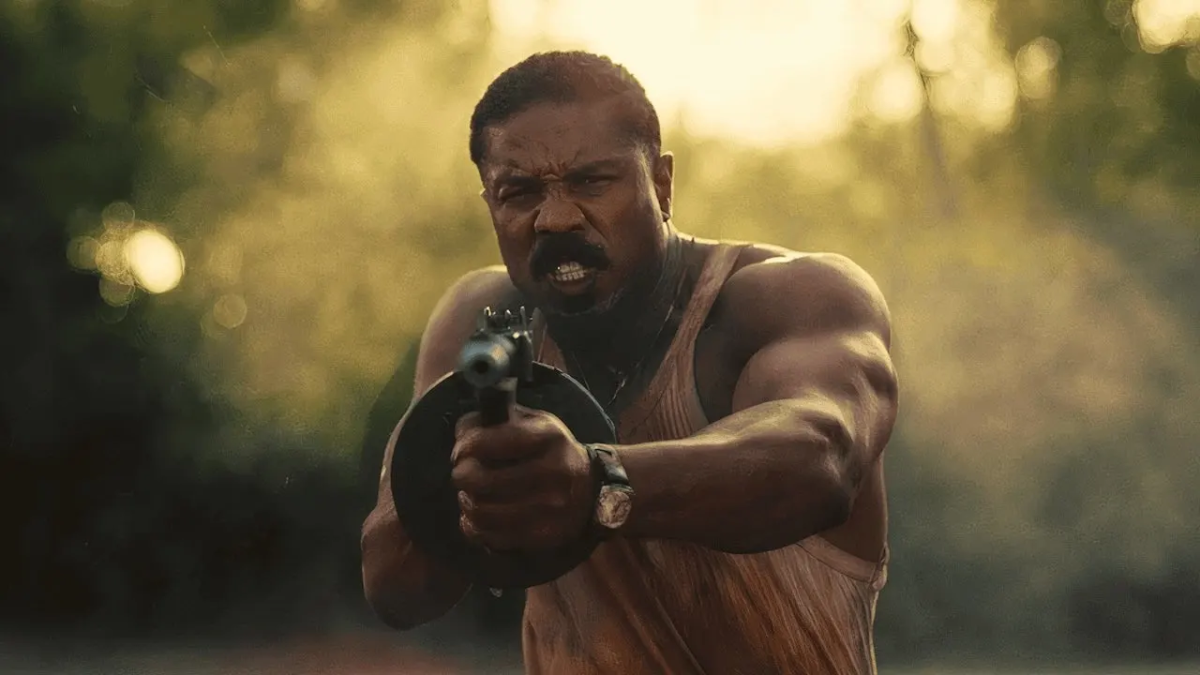
However, that vampire battle is not liberation through freedom; it represents the psychological trauma caused by years of accumulated persecution. In the end, Smok firing at the KKK members with a submachine gun is the true liberation, symbolizing the outbreak of the civil rights movement in the 1960s. It mirrors the ending of 'We Had No Tomorrow,' where the doomed lovers are mercilessly gunned down. Behind this violence is the accumulated resentment of local residents, marking a brutally satisfying conclusion—a violent release of racial, life, and freedom liberation.
.
'Sinner' makes me feel the excitement of the people in the 1970s towards films. It embodies an explosion after repression, filled with the forbidden fruits of freedom. Freedom is like a rubber ball; the greater the pressure applied, the higher it bounces. For today's conservative society, 'Sinner' is an excellent piece for catharsis, and it must be seen.