
"Minecraft" creator Markus Persson, also known as Notch, has once again sparked widespread debate with a provocative statement regarding game ownership and server shutdowns. 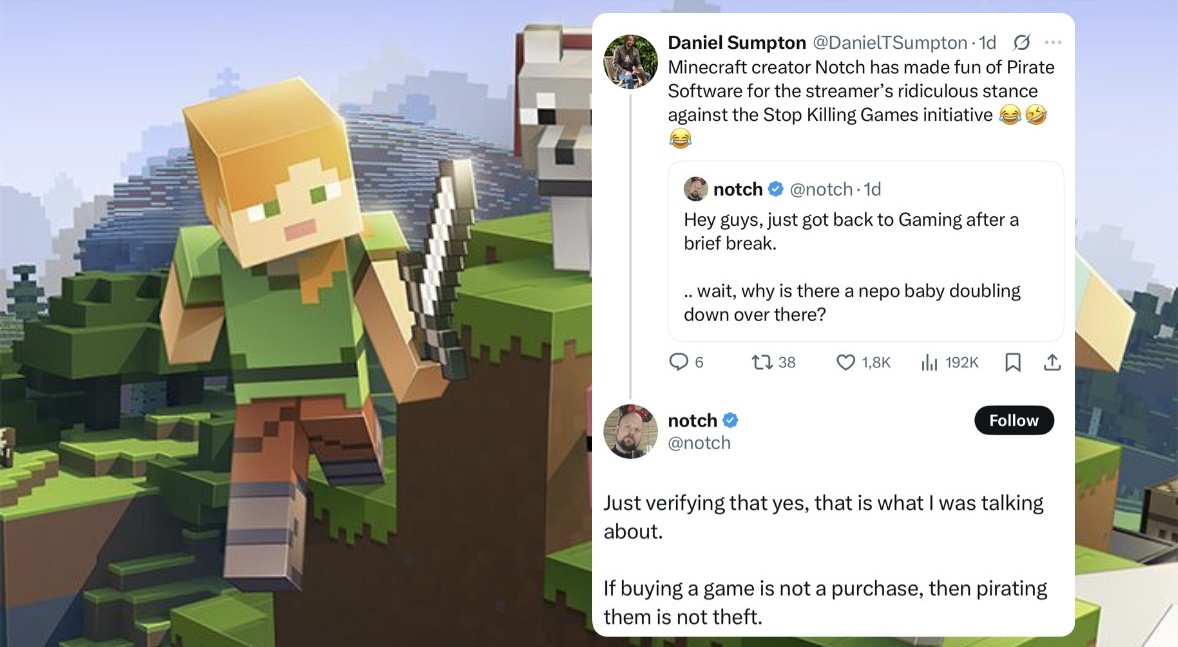
His recent comments address the growing "Stop Killing Games" initiative, a petition advocating for legislation to prevent developers and publishers from permanently shutting down servers, which renders purchased games unplayable. The movement has garnered nearly 1.3 million signatures, pushing for new laws in European and UK parliaments.
One catalyst for the controversy was Ubisoft's announcement to shut down servers for "The Crew," making the game inaccessible to players. As similar cases proliferate, many gamers are questioning whether their "right to purchase" truly holds meaning.
In response, Persson critically stated, "If buying a game isn't owning it, then piracy isn't stealing."
Persson highlighted that older games often allowed players to host their own servers, extending a game's lifespan even after official support ended. He implicitly criticized the modern gaming industry's shift towards a "rental ownership" model, blurring the lines between physical and digital property and threatening consumer rights.
Known for his outspoken nature, Persson publicly stated in 2012 that if players couldn't afford a game, they should "just pirate it," provided they purchased it later when able. At the 2011 Game Developers Conference, he famously declared, "Stealing a car removes one car from the world, but pirating a game creates an extra copy, and potentially an extra fan."
While Persson's remarks are extreme, they highlight long-standing issues concerning consumer rights and game preservation in the digital age. If "buy-to-own" becomes a nominal rather than actual reality, do players truly own their games? This debate over ownership and digital assets is likely just beginning.