

Gaming giant Capcom officially unveiled its new "Capcom Fan-Work Guidelines" on its official website on November 4, simultaneously announcing them on its official X (formerly Twitter) account.
The document expresses support for user-generated content while clearly outlining the conditions and prohibitions for using their intellectual property. It serves as a practical and valuable reference for creators. While generally more relaxed, the guidelines also include specific rules, leading to both praise and confusion among netizens and sparking considerable discussion.
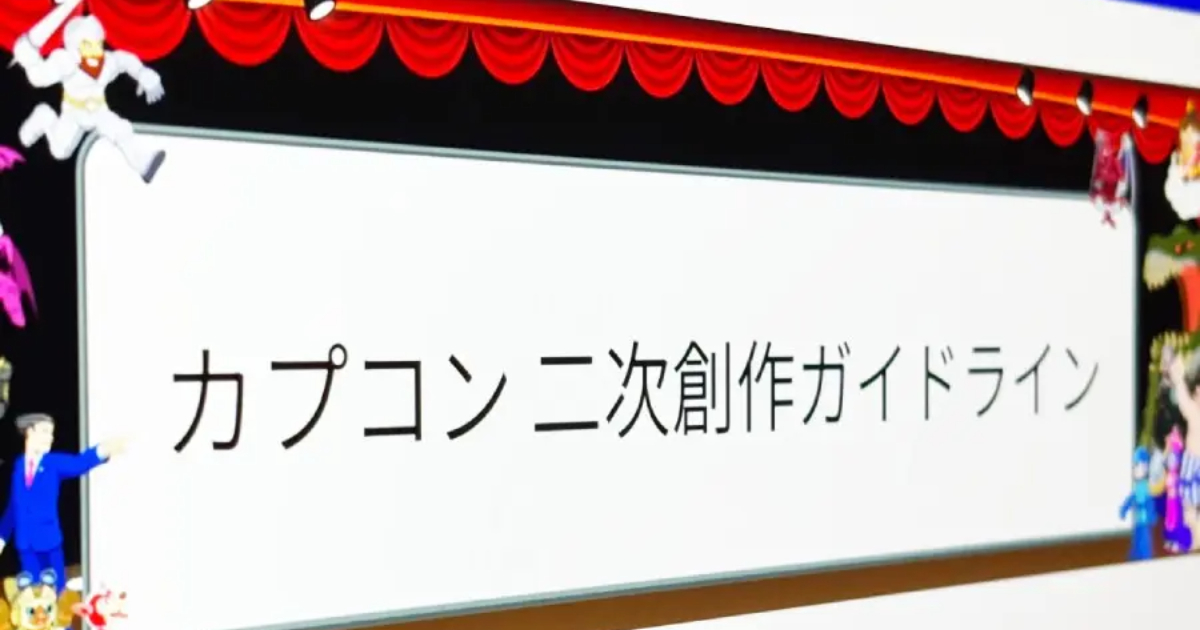
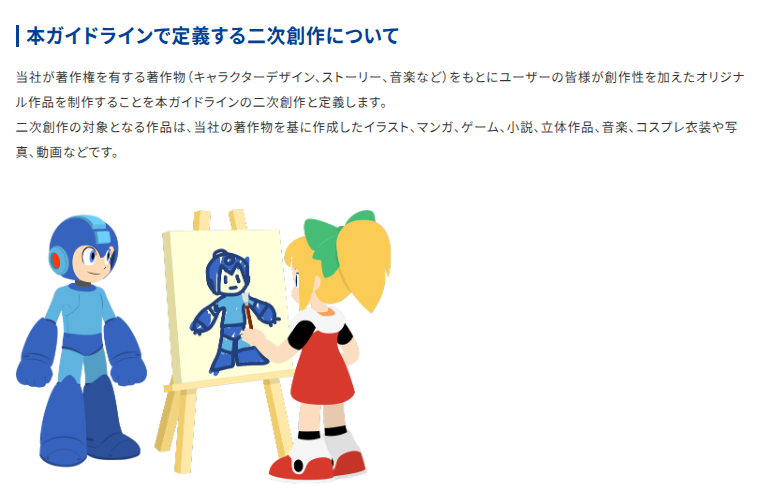
The guidelines specify the scope of application, detailing acceptable fan-work types (illustrations, comics, games, novels, 3D models, music, cosplay costumes or photos, videos, etc.). They also clarify copyright attribution requirements (e.g., avoiding misrepresentation as official works, recommending "fan-made" labels, and prohibiting direct use of official Capcom copyright notices), addressing common creator concerns.
It's quite rare for a major publisher to publicly detail fan-work usage rules so extensively. The guidelines open with the statement, "Capcom supports user creative activities," signaling an intent to foster closer ties with players while safeguarding their own rights.
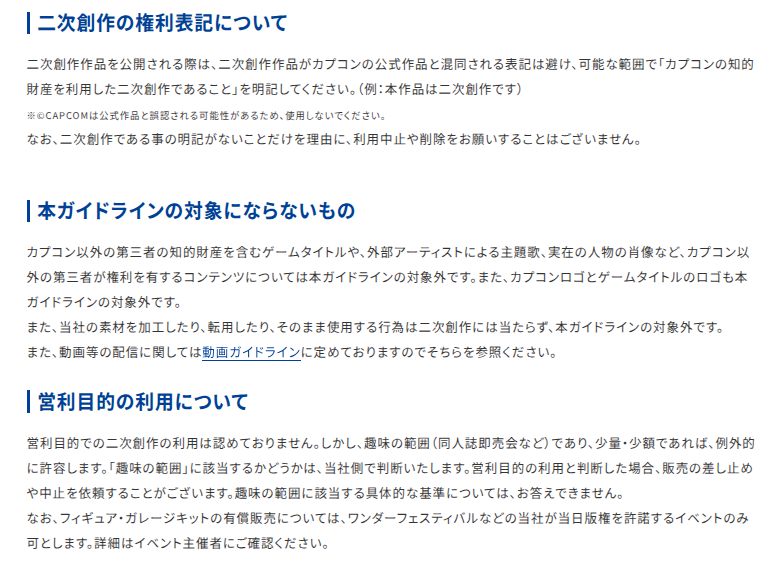
Key Point One: What About Commercial Use? Small-Scale Doujin Works May Be Exceptionally Permitted
Regarding the most-discussed aspect—commercial use—Capcom's stance is "commercial use is generally prohibited." However, there's a crucial exception: small-scale, low-value sales within the scope of doujin activities (such as doujin conventions) and deemed hobby-related may be exceptionally permitted by Capcom.
It's important to note, however, that what constitutes "hobby-related" is ultimately at Capcom's discretion. If Capcom determines an activity to be commercial in nature, they may demand a halt to sales or removal of the content. In essence, Capcom conditionally tolerates doujin creations but restricts attempts at commercial expansion. Furthermore, for paid sales of character figures/Garage Kits, Capcom specifies that these are only allowed at events like Wonder Festival, which offer "one-day copyright permits."
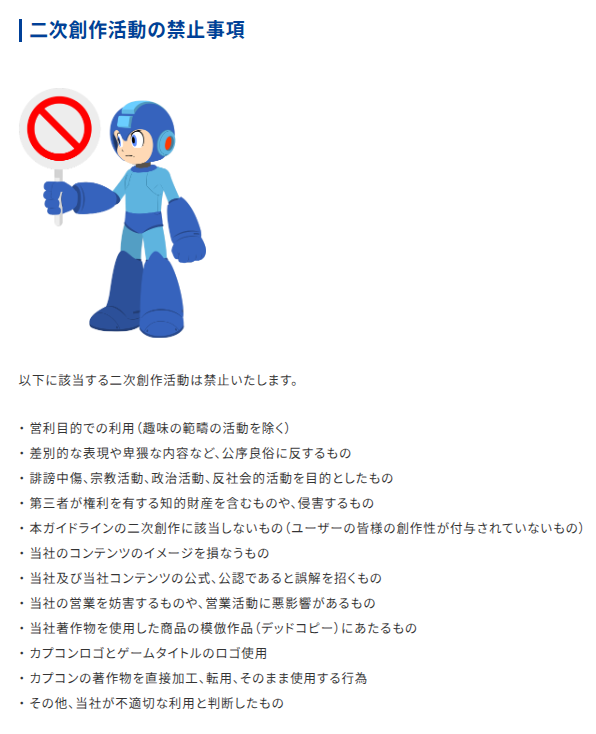
Key Point Two: Prohibited Content Clearly Listed — Adult and Discriminatory Content Strictly Forbidden
The guidelines also list prohibited actions. Beyond commercial use (outside the doujin scope), they explicitly state that "content violating public order and morals (e.g., discriminatory expressions, obscene content)" is strictly forbidden, indicating very stringent restrictions on adult-oriented content.
Other prohibited items include:
Creations intended for defamation, slander, religious, political, or anti-social activities;
Content containing third-party intellectual property rights or that infringes upon them;
Directly processing, repurposing, or using Capcom's copyrighted works without alteration.
If deemed in violation, Capcom may demand cessation of use or even pursue legal action.
However, these guidelines do not specifically address generative AI (e.g., AI-generated images, text), and some clauses remain somewhat vague, leading to varied interpretations. Consequently, many in the community are asking for clarification on questions like: "Can AI use be explicitly addressed, and how?" and "Is adult content completely prohibited?" hoping for future supplementary explanations.
Overall, Capcom's latest guidelines appear to be a more creator-friendly and compromising version: encouraging player creativity while attempting to curb commercialization or improper use through regulations. Nevertheless, the ultimate right of interpretation remains with Capcom, so creators engaging in fan-works should carefully review the relevant rules.
via: 日本CAPCOM官方網站