

With rapid advancements in technology, "generative AI" has become a hot topic. Beyond image generation, there's a growing trend in voice synthesis, where AI learns from voice data to replicate specific vocal styles. This development poses significant challenges for voice actors and other audio professionals.
Japan's Ministry of Justice has officially begun addressing the issue of "generative AI using individuals' voices or likenesses without consent." An expert review committee will be established to clarify the legal boundaries of civil liability in such cases. The committee will provide guidance on whether specific scenarios constitute an infringement of "publicity rights" (the commercial value of a celebrity's likeness) or "portrait rights," with practical guidelines expected by July. Voice actress Megumi Ogata has praised the government's initiative, expressing hope for industry protection.

The review committee is scheduled to hold its first meeting on April 24, with approximately five subsequent sessions planned. These meetings will analyze various specific cases to determine what constitutes infringement and potential claims, ultimately compiling legal reference standards for judgment. Currently, legal statutes do not explicitly define the commercial value derived from a celebrity's name or likeness (known as "publicity rights") or general "portrait rights." These concepts have historically been established through judicial precedents.
However, with the rapid proliferation of generative AI, new challenges have emerged. A major point of contention is whether "voice constitutes a part of portrait rights or publicity rights," a question that currently lacks clear judicial precedent.
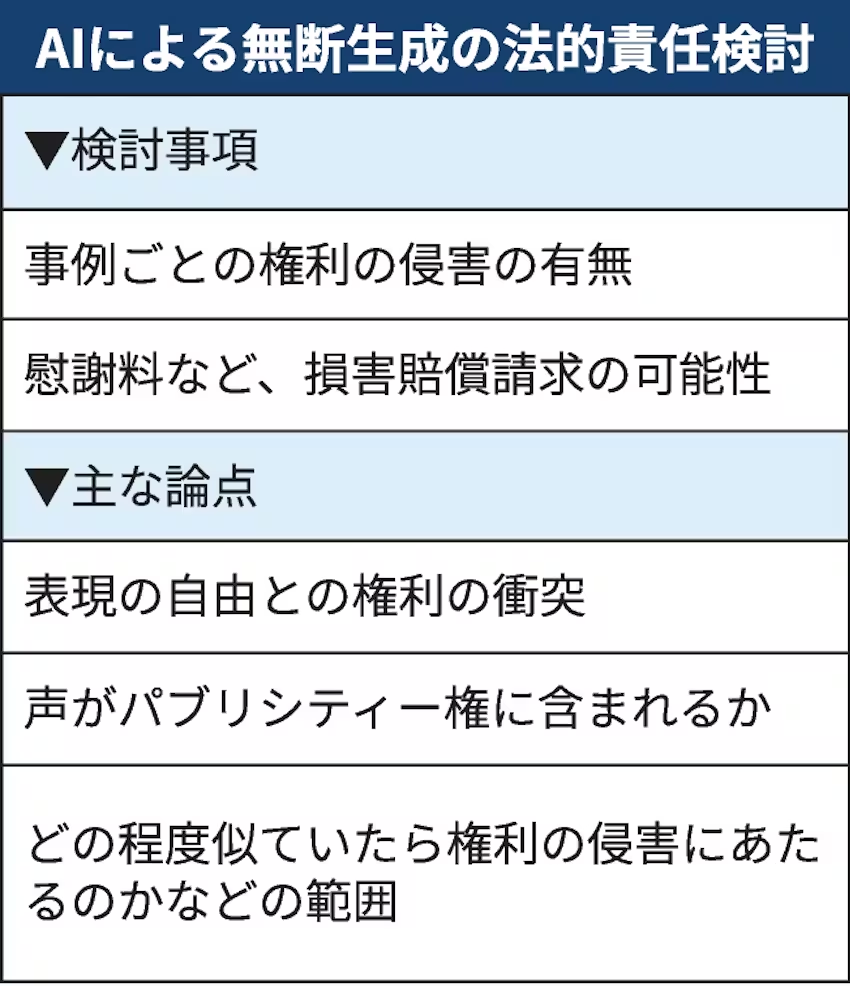
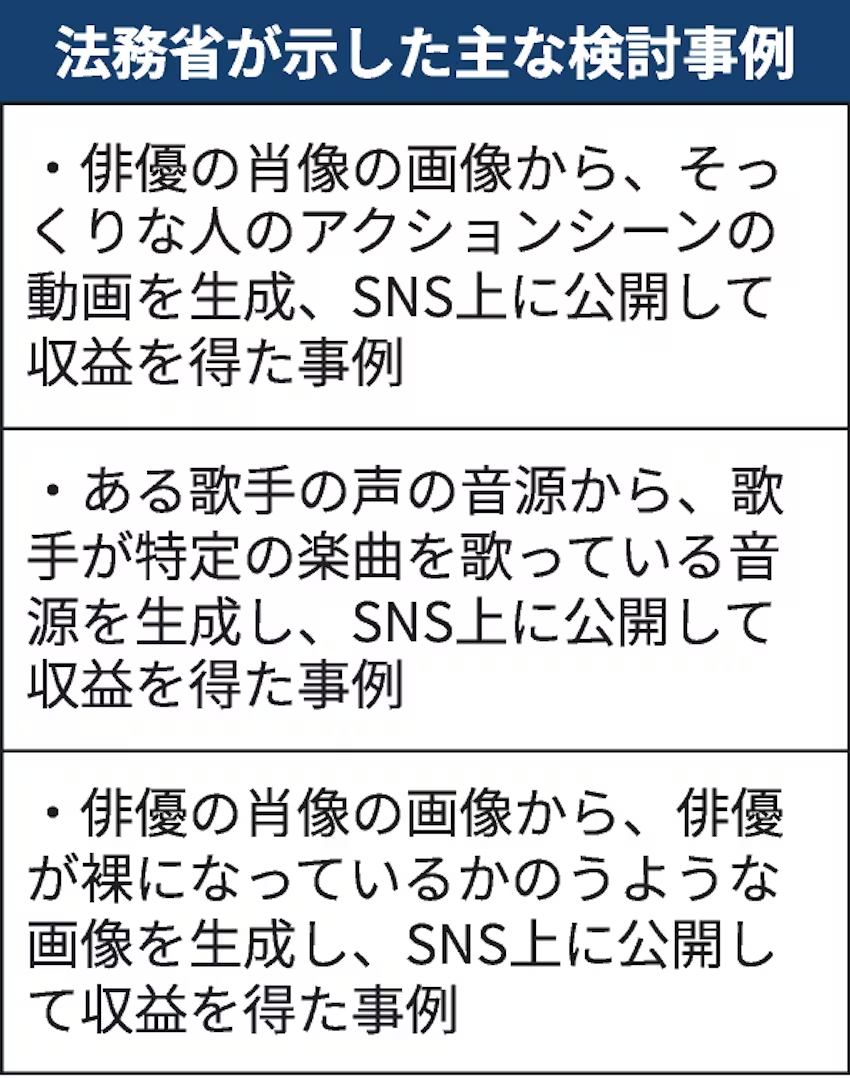
The committee will also specifically discuss scenarios involving "monetizing AI-generated content." Examples to be analyzed include creating videos where an actor's face is used to generate a realistic action scene, or using a singer's voice data to produce an audio file of them performing a song.
Voice actress Megumi Ogata shared the news, stating, "My sincere thanks to everyone involved who patiently negotiated throughout, and to all who listened to these issues." She added that "we've finally reached the starting line" and emphasized, "It's not just us; with technologies like deepfakes, anyone can become a victim. I will continue to closely monitor the development of regulations."
However, Japan's Ministry of Justice also stressed that this initiative is not aimed at enacting new legislation directly. Instead, the goal is to clarify the scope of existing laws to provide a practical basis for application.
Overall, this marks the Japanese government's formal step toward addressing the legal gray area surrounding the unauthorized use of faces and voices by AI, starting with clarifying existing rules before potentially moving toward more explicit legal regulations.
via: 日本經濟新聞