

A "Grandma's Cafe" (Baachan Kissa) in Japan, partially run by individuals with dementia, has sparked a lively debate on social media. The buzz centers around one particular grandma who, due to her dementia, fries pork cutlets non-stop every single day. Instead of stopping her, the cafe has ingeniously incorporated her into the kitchen, allowing her to continue making the dish she knows best. This "reverse thinking" approach to care has earned widespread praise from netizens.
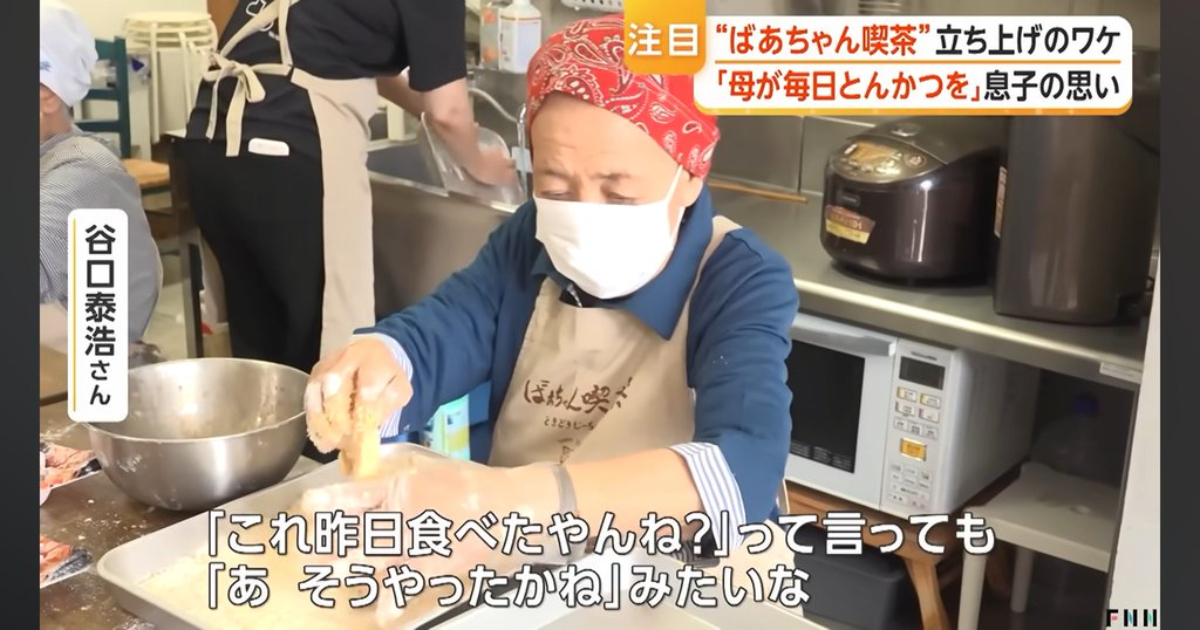
Hiroyuki, the founder of Japan's "2ch" forum, shared a video on X, commenting, "It's fascinating how they set up a shop where a grandma with dementia, who fries pork cutlets every day, can just keep frying them." He introduced the "Grandma's Cafe," where dementia patients prepare dishes themselves, aiming to help seniors rediscover their purpose through work.
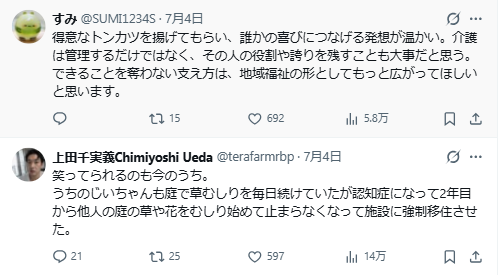
The post quickly went viral, igniting a flurry of discussion. Many netizens lauded the approach, noting how it successfully transforms the repetitive nature of dementia patients' actions into valuable work, helping them maintain a connection with society.
One user commented that the care staff didn't negate the elder's behavior but instead found a suitable role for her. "It not only makes the individual feel valued but also brings happiness to those around them," they added.
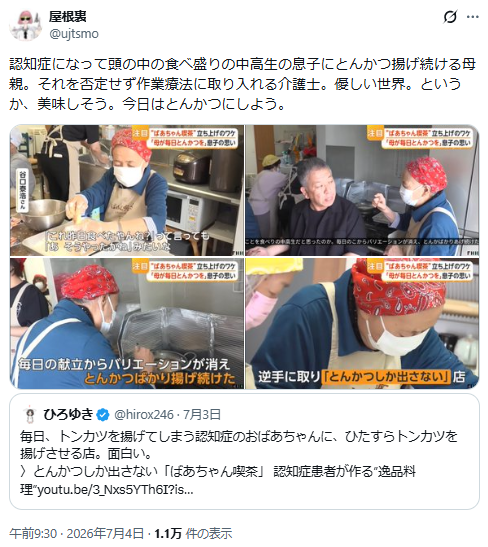
Another user shared a touching detail: the grandma in the video, due to her dementia, believes her son is still in high school and constantly fries pork cutlets for him. Instead of forcing her to confront reality, the care staff integrated this behavior into her occupational therapy. Many were moved, exclaiming, "What a kind world!"
Numerous comments emphasized that, rather than simply placing dementia patients in care facilities, it's crucial to help them find "things they can still do."
One netizen pointed out that the grandma's skill at frying pork cutlets has not only become a local specialty but also allows her to continue contributing to the community. They praised the care team for recognizing and realizing this potential. Others suggested that for those in the early stages of dementia, continuous work and social interaction might even help slow the progression of the disease, highlighting its significant therapeutic value.

However, this model isn't without its critics. Some netizens expressed concerns about safety, pointing out the inherent risks of allowing dementia patients to handle hot oil, knives, and raw meat. They noted that the food service industry requires strict food hygiene management and crisis response capabilities, and while the underlying philosophy is commendable, potential issues like burns, fires, or food safety cannot be overlooked.
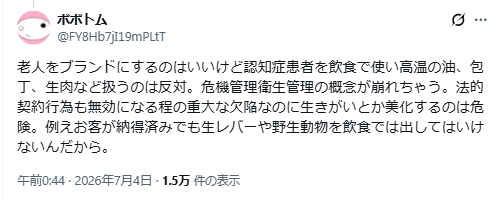
The "Grandma's Cafe" case has prompted a re-evaluation of possibilities in dementia care. Supporters argue that instead of merely restricting patients, leveraging their remaining abilities can help seniors regain a sense of purpose and a social role. Opponents, however, caution that while encouraging autonomy and maintaining dignity, food hygiene, workplace safety, and risk management must also be prioritized.
Regardless of the differing views, providing long-term care support through diverse methods, especially when safety permits, is undoubtedly a commendable endeavor.