

Among the many denizens of the virtual world, VRChat stands out as a truly iconic game. Thanks to streamers hyping it up and the integration of MMD models, Japan boasts some of the highest player numbers globally.
Recently, a Japanese X (formerly Twitter) user shared their surprising experience: after playing VRChat for about three years, racking up over 3,000 hours with a VR headset, their health check-up revealed their eyesight had actually improved! This totally flipped the script on the common belief that "VR is bad for your eyes." The post blew up, sparking heated discussion, with tons of VR players chiming in with their own tales of improved vision.
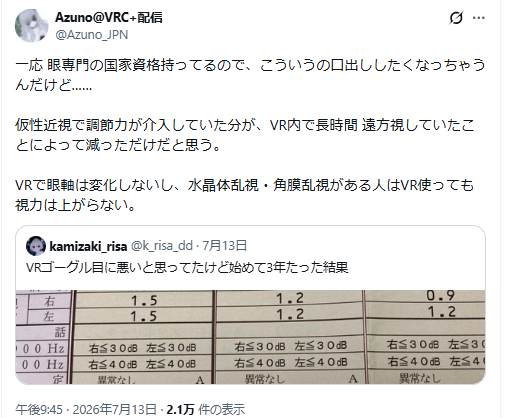
X user kamizaki_risa recently posted their health check results, stating: "I always thought VR headsets were bad for your eyes, but after 3 years of playing, this is the result."
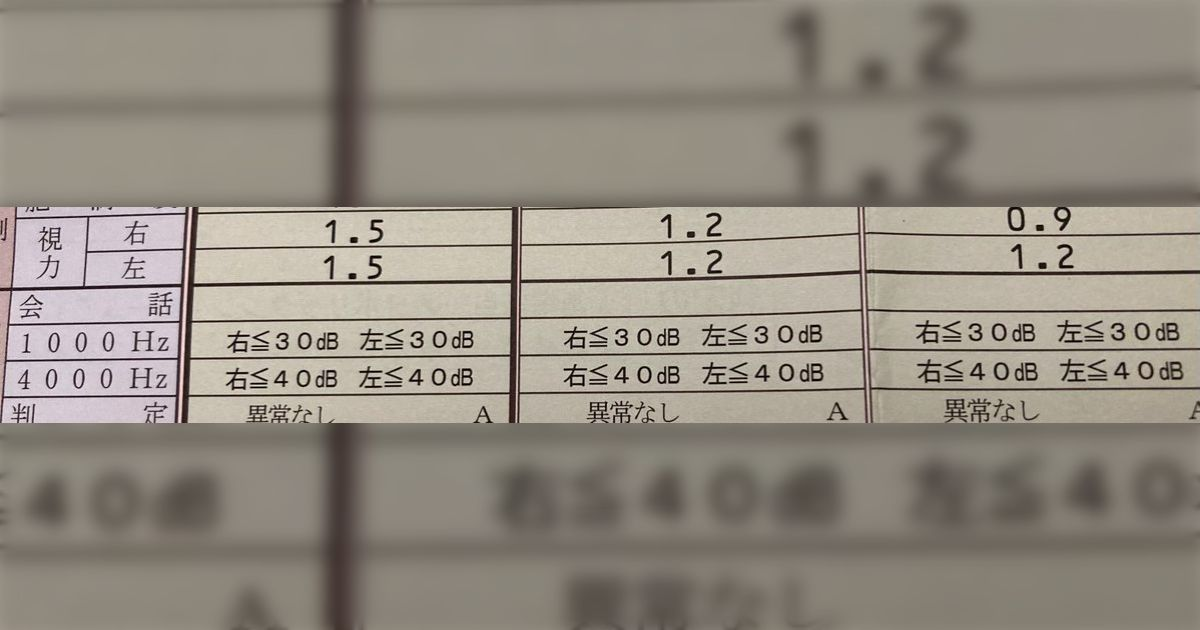
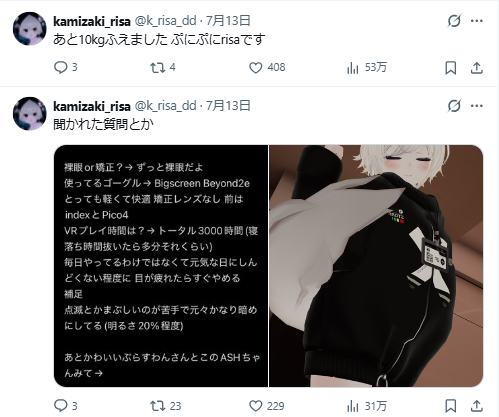
They revealed that over the past three years, they'd accumulated roughly 3,000 hours playing VRChat. While joking about gaining 10kg, the real shocker was their vision actually *improved* according to their health check, leaving them utterly amazed.
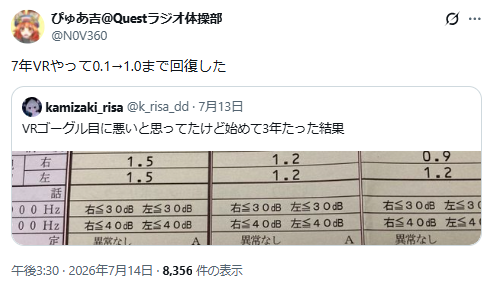
The post immediately struck a chord with many VR players. One player commented, "I've been playing VR for 7 years, and my vision went from 0.1 to 1.0." Another shared, "Last year, my right eye was 0.4 and left was 0.1; this year, it's 0.7 and 0.4, and it feels like it's still getting better."
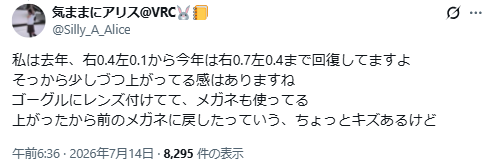
Yet another player reported their vision recovered to 1.5 during their health check this year, suggesting VR might not be as detrimental to eyesight as commonly believed.
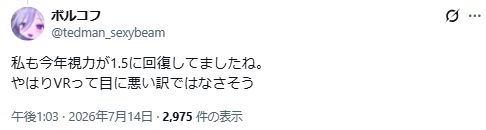
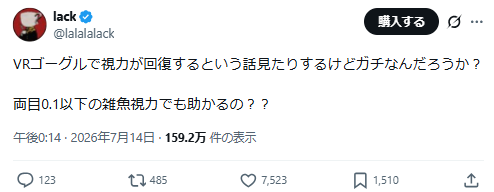
This sparked a glimmer of hope for many netizens with poor eyesight, who flooded the comments asking: "If this is true, shouldn't we be promoting VR?" and "Both my eyes are less than 0.1, is there still a chance for improvement?"

Many VR veterans also weighed in with their two cents. Some pointed out that most VR headsets are designed with lenses that set the actual focal distance at roughly 1.5 to 2 meters. This means your eyes aren't constantly straining to focus up close like they would with a phone or computer screen.
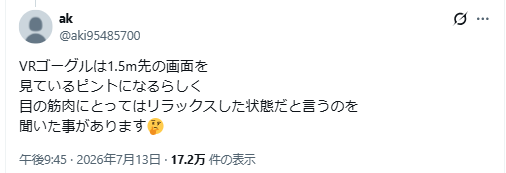
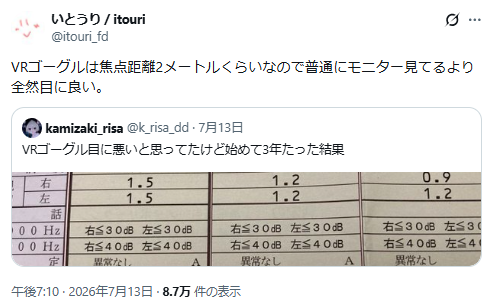
The theory is that staring at simulated distant views for extended periods might actually relax the ciliary muscles in your eyes. Others speculated that constantly gazing at distant vistas and frequently shifting focus in the VR world might help keep your eye's accommodative function in tip-top shape.
Indeed, some studies are already exploring VR-based training methods—combining alternating near/far focus, distant gazing, and binocular stereopsis—to help alleviate pseudomyopia caused by ciliary muscle tension.
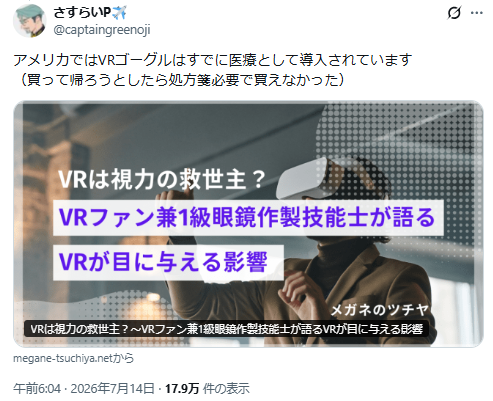
However, a qualified ophthalmology professional stepped in to caution against interpreting these anecdotes as "VR can cure myopia."
He explained that these cases likely involve pseudomyopia—where ciliary muscles are strained from prolonged close-up focus, leading to accommodative dysfunction. VR, by simulating distant viewing for extended periods, could relax these muscles, thus improving vision test results. He further noted that VR doesn't alter the axial length of the eyeball, so true myopia won't be reversed. Issues like corneal astigmatism or lenticular astigmatism also won't improve with VR use.
Furthermore, since consumer VR devices haven't been widespread for very long, relevant medical research is still quite limited, and there's insufficient evidence to prove VR's effectiveness in improving vision or treating myopia. Essentially, it's best to be prepared for the fact that once vision declines, it generally can't be restored to normal.
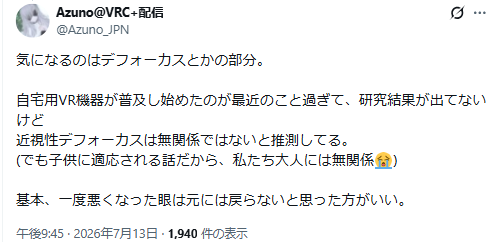
While many VR players have shared their experiences of improved vision, sparking discussions about VR's potential positive impact on eye accommodation, these remain personal anecdotes and are not yet fully substantiated by medical research.
Experts also caution that prolonged screen time, whether on VR, computers, or phones, can lead to eye strain. They recommend regular breaks and good eye habits. If you have vision problems, consult a professional ophthalmologist instead of expecting VR to be a myopia cure.