

In this tech-driven era where everyone has a smartphone, mobile games are launching one after another, with some IPs even spawning multiple titles. The market competition is, as expected, incredibly fierce.
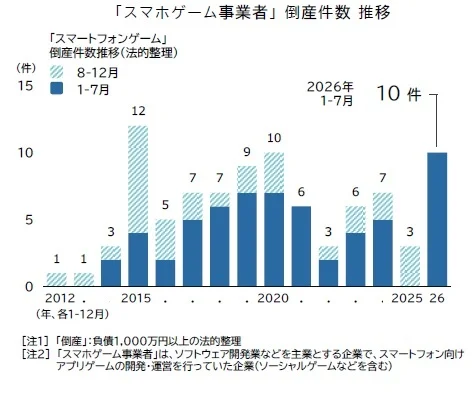
Recently, Teikoku Databank conducted a survey on the bankruptcy status of companies developing and operating smartphone app games (hereinafter referred to as "mobile game developers") in Japan. From January to July this year, 10 mobile game developers went bankrupt. This figure not only significantly surpasses last year's total of just three bankruptcies but is also on track to exceed the previous record of 12 set in 2015, with projections indicating a new all-time high for the full year.

Looking at the 29 mobile game developers that went bankrupt over the past five years, small-scale operators with less than 10 million yen in capital accounted for the largest share, with 15 companies (51.7%), roughly half of the total. Many of these operators, despite managing game operations themselves, lost their original contracts due to larger game companies withdrawing from development, ultimately leading to their insolvency.
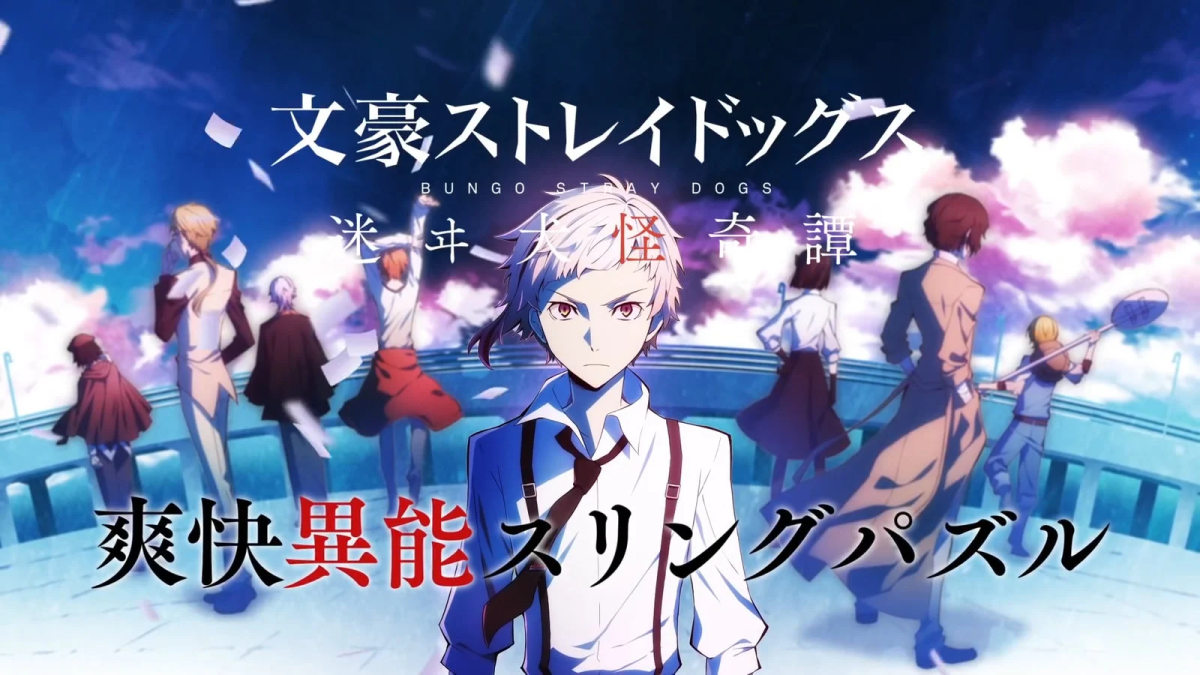
In recent years, the mobile game market has frequently seen a trend where even games based on popular anime IPs, or those with massive promotional budgets and considered major titles, suddenly announce "service termination."
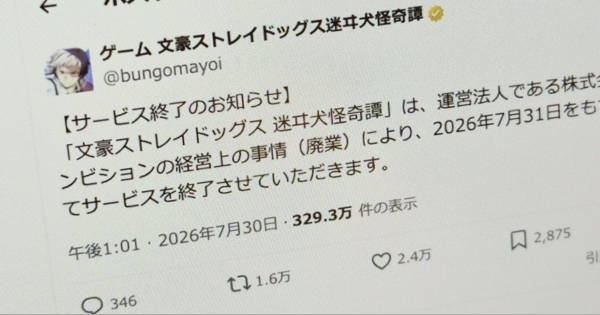
A recent prime example is Tokyo-based game company Ambition, which declared bankruptcy in July this year. Their game, "Bungo Stray Dogs: Tales of the Lost," based on a popular anime, announced its service termination just one day before the company filed for bankruptcy. The abrupt shutdown, with only a day's notice, shocked players. Further fueling the outrage, the official announcement stated that unused in-game paid currency, "Ability Stones," would not be refunded, sparking widespread discussion and confusion across social media platforms.
Furthermore, many games, even after several years of operation, eventually shut down due to difficulties in maintaining profitability. The mobile game industry has undergone a massive transformation from its past era of "get rich quick" overnight hits.
Around 2015, the mobile game market's mainstream shifted from browser-based games to "native apps." This transition led to a significant wave of consolidation, particularly impacting companies whose primary business was web games.

Subsequently, the COVID-19 pandemic led to increased time spent at home, boosting demand for games. Coupled with ample policy support from the Japanese government, such as "zero-interest, zero-collateral" loans, the industry's consolidation trend temporarily slowed. However, with the continuous integration of technologies like 3D graphics and full voice acting, game content has become increasingly complex. This, combined with a persistent shortage of game development talent, means that initial development costs for a single game can now easily balloon to hundreds of millions of yen.
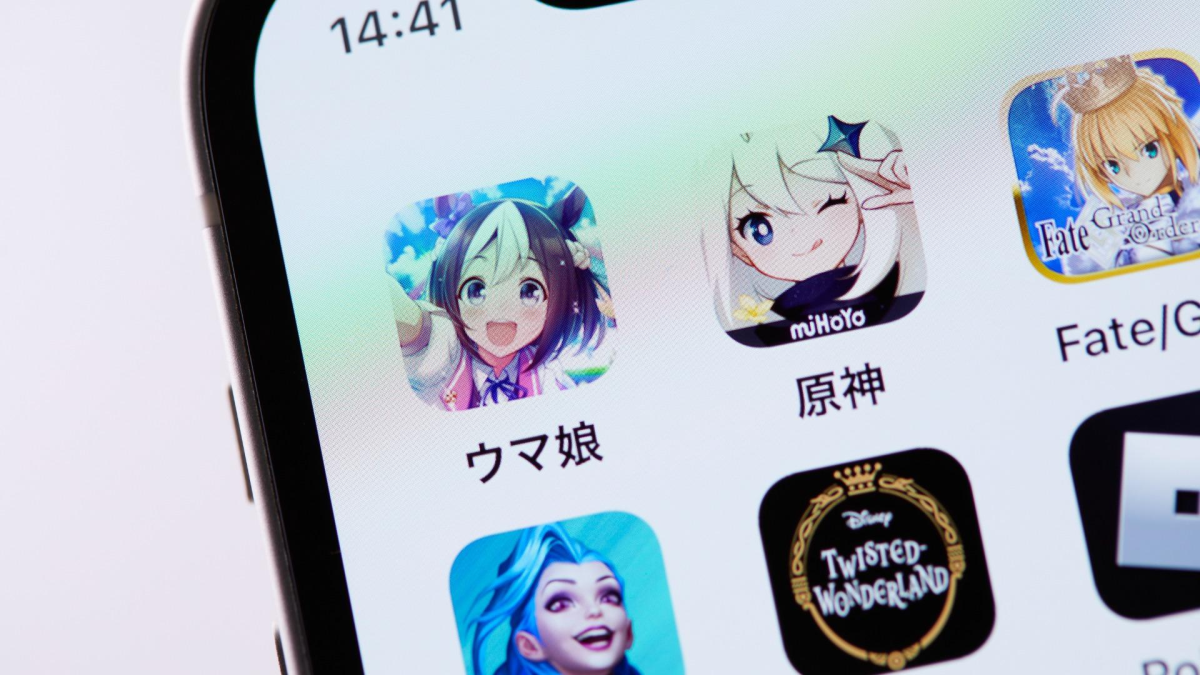
On the other hand, a game cannot simply be left alone after its official launch. Developers must continuously release new characters, host events, and more, incurring substantial maintenance and operational costs. Furthermore, companies face intense competition from long-running, ultra-popular titles, games developed using existing IPs, and overseas corporations from China, South Korea, and other regions with significant capital and development capabilities. Consequently, even large enterprises find it increasingly difficult to create genuine hit titles, making profitability from games a much tougher challenge.
Teikoku Databank stated, "The sheer volume of mobile games currently being released is immense. In an already saturated market, it's incredibly difficult to create an original title from scratch and turn it into a hit. For pure game developers solely focused on 'game creation,' survival may become even more challenging in the future."

In other words, the current mobile game market is no longer an era where "creating a game that becomes an instant hit guarantees massive profits." High development costs, high operational expenses, a shortage of talent, and fierce domestic and international competition mean that even with the backing of a major corporation, long-term game survival is not guaranteed. These factors collectively contribute to the increasingly frequent "service terminations" observed in recent years.
Note: Financial figures and earnings forecasts should be confirmed through the company’s official announcements.
via: PR TIMES