

The July announcement of an anime adaptation for manga artist Nene Ayatsuki’s Mii-chan and Miss Yamada has sparked ongoing debate. The series, which touches on themes of intellectual disability and the sex work industry, has drawn discussion regarding the author's statements and the potential social impact of the anime.
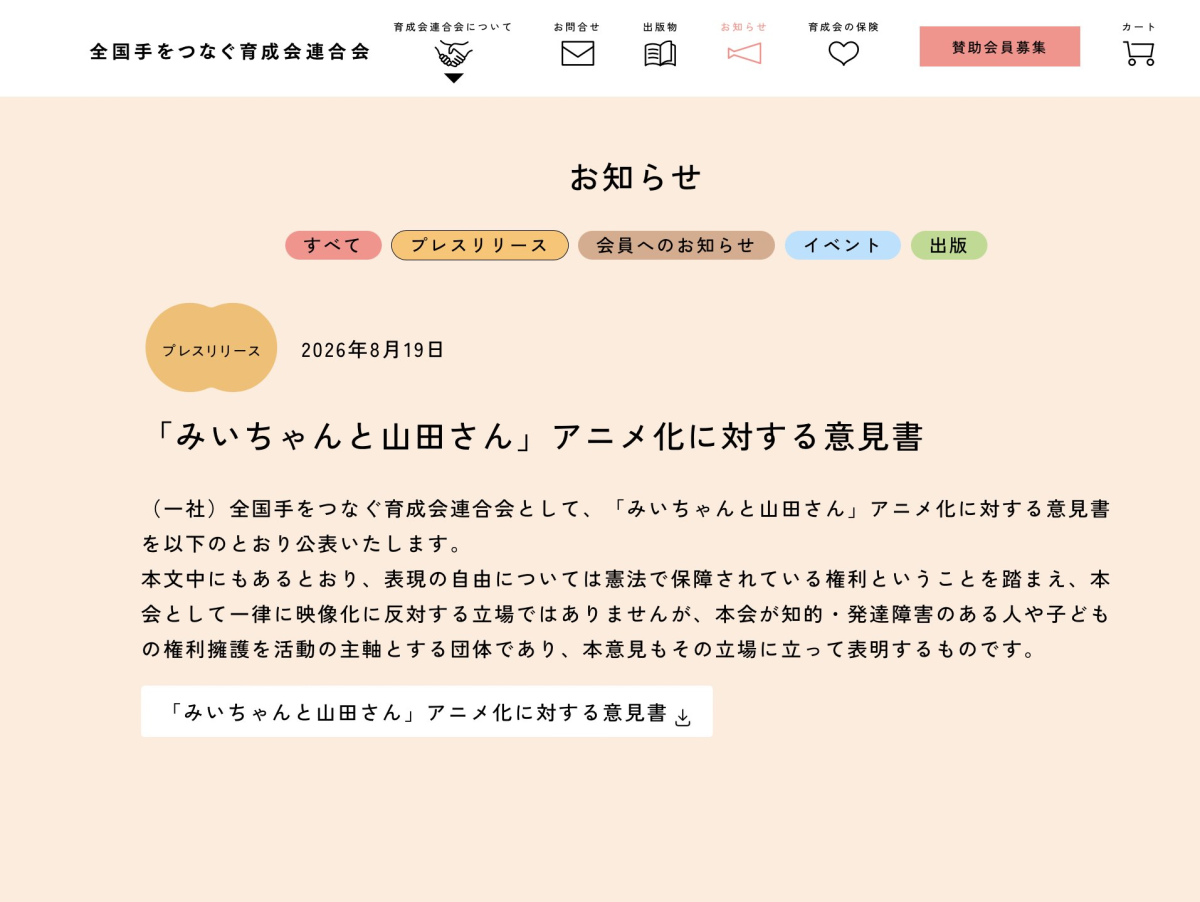
On August 19, the Japan Federation of Societies for Protecting the Rights of People with Intellectual Disabilities, a nationwide support organization, released a public statement. The Federation clarified that it is not entirely opposed to the anime adaptation but expressed deep concern over the work itself, the past conduct of the author and publisher, and the real-world use of the term "Mii-chan" to mock women with intellectual or developmental disabilities. The organization fears the anime could further entrench social prejudice and misunderstanding toward people with intellectual disabilities.
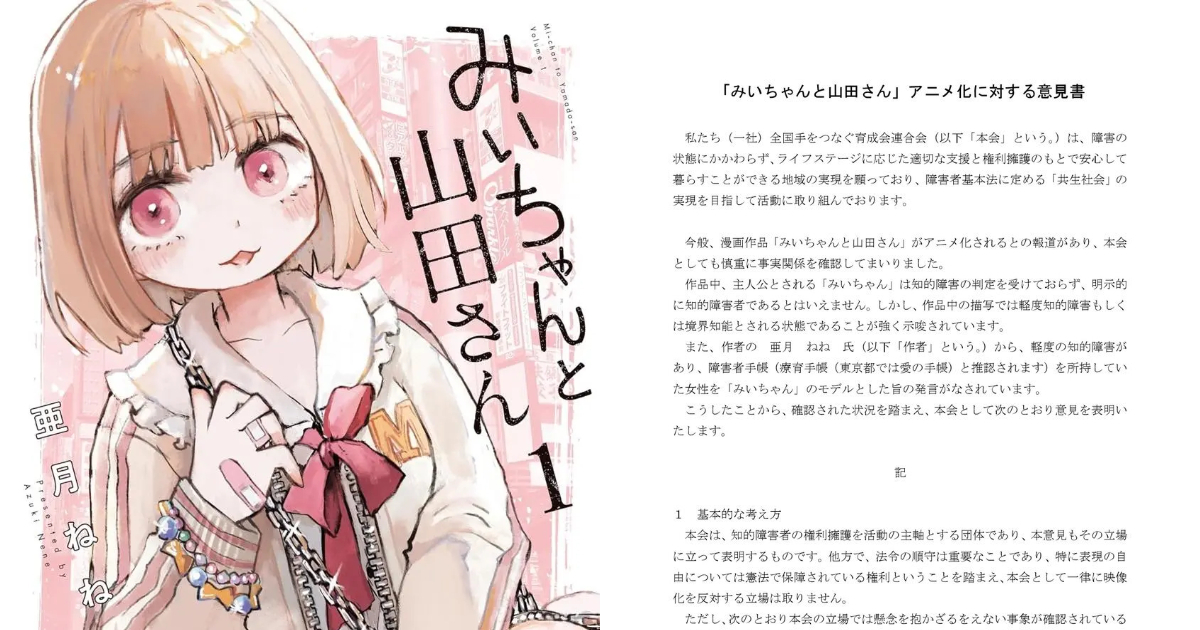
The Japan Federation of Societies for Protecting the Rights of People with Intellectual Disabilities is a national organization composed of individuals with intellectual disabilities, their families, and supporters. Its primary activities include promoting social understanding, safeguarding the rights of people with intellectual disabilities, providing policy recommendations to the government, and supporting their autonomous activities.
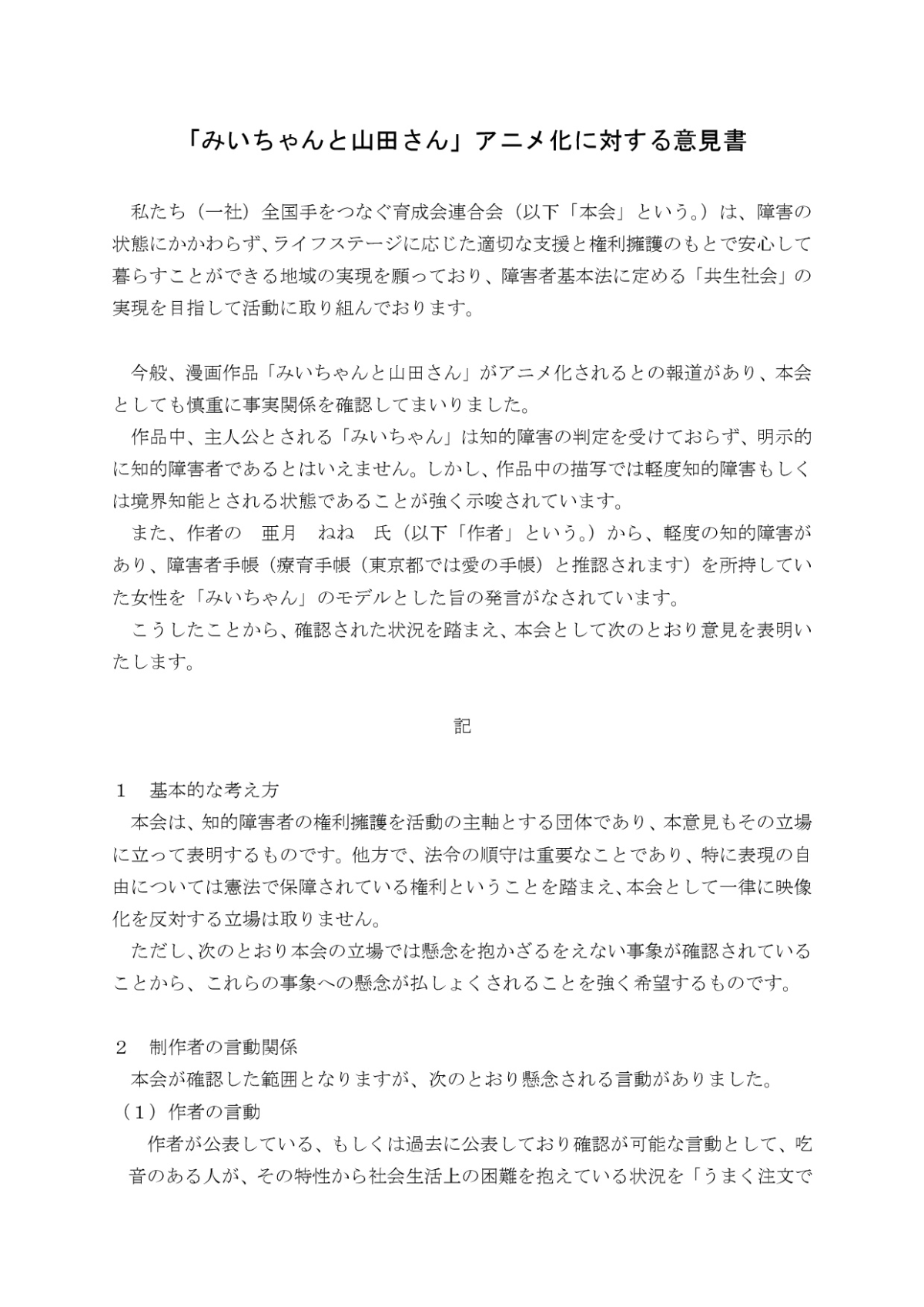
In its public "Statement of Opinion on the Anime Adaptation of Mii-chan and Miss Yamada," the organization noted that the protagonist, "Mii-chan," is not officially diagnosed with an intellectual disability in the manga, so it cannot be definitively stated that she has one. However, based on her portrayal, the Federation believes the character's condition "strongly suggests a mild intellectual disability or borderline intellectual functioning." Furthermore, author Nene Ayatsuki has previously stated that the character of "Mii-chan" was based on a woman presumed to have a mild intellectual disability who held a disability certificate.
The statement specifically mentioned that one reason for their concern is the past conduct of the author and editors at the publisher, Kodansha. The organization confirmed that the author has previously released works featuring themes such as a person who stutters facing social difficulties, depicted in scenes like "being laughed at by a store clerk for not being able to order smoothly."
The organization also pointed out that a Kodansha editor had previously stated in a public video, "Other people's misfortunes are super interesting," "I want to see someone go through something tragic," and "You can read about others' misfortunes easily and without guilt."
The Federation argues that these actions and statements make it difficult to believe there is respect for the character of "Mii-chan"—who is strongly associated with intellectual disability—or for the personality and individuality of people with disabilities. They worry that the work may be treating disability-related issues as "interesting" or "funny" for entertainment purposes, or even condoning such sensationalism.
Another significant point in the statement concerns the real-world usage of the term "Mii-chan." The Federation stated that its own research has found multiple cases where "Mii-chan" is used in society to mock and insult women with intellectual or developmental traits.
The organization emphasized that it has not confirmed any deliberate effort by the production team to spread this usage. However, from the standpoint of protecting the rights of people with disabilities, it remains a noteworthy problem that is also relevant to the anime's future rating classification.
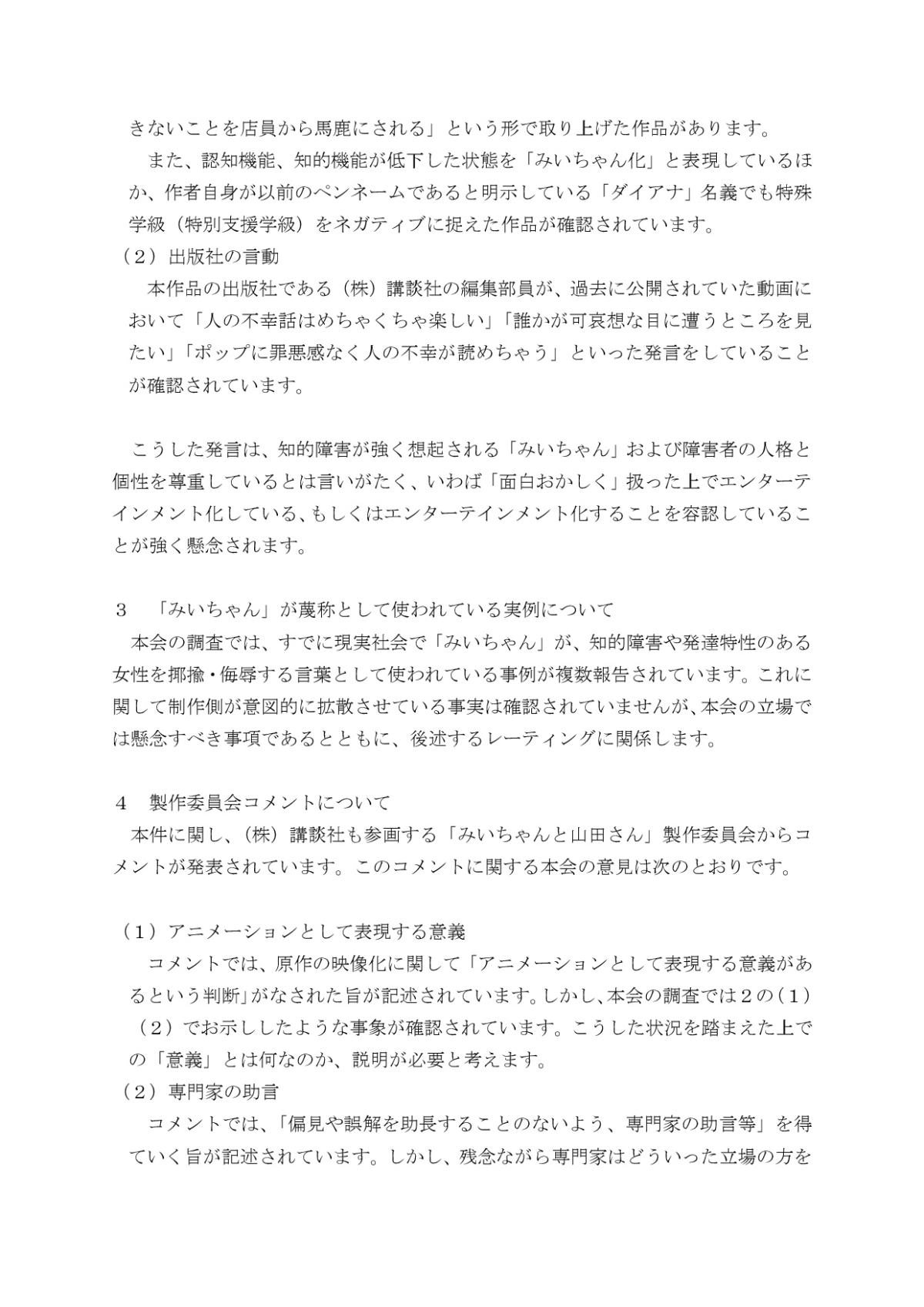
In a statement released on July 27, the Mii-chan and Miss Yamada Anime Production Committee mentioned it would seek expert advice during production to avoid promoting prejudice and misunderstanding, and would apply appropriate ratings and advisories.
In response, the Federation has made three requests.
First, while the production committee stated it "believes there is significance in presenting this work in an animated format," the organization argues that with the past conduct of the author and publisher already under scrutiny, the committee should further explain what exactly it believes the significance of animating this work is.
Second, the committee mentioned it would accept "expert advice" but did not specify the experts' standpoint or the concrete details of the advice. The organization stated that while it does not demand the experts' names be made public, the committee should at least clarify their professional positions and what recommendations were actually provided.
The third issue is the anime's rating. The committee's statement noted the work will carry "appropriate ratings and advisories." The Federation pointed out that ratings systems typically set recommended viewing ages, suggesting the work will likely not be broadcast on general television channels. However, the organization stated unequivocally: "This Federation does not want this work to be easily accessible to minors."
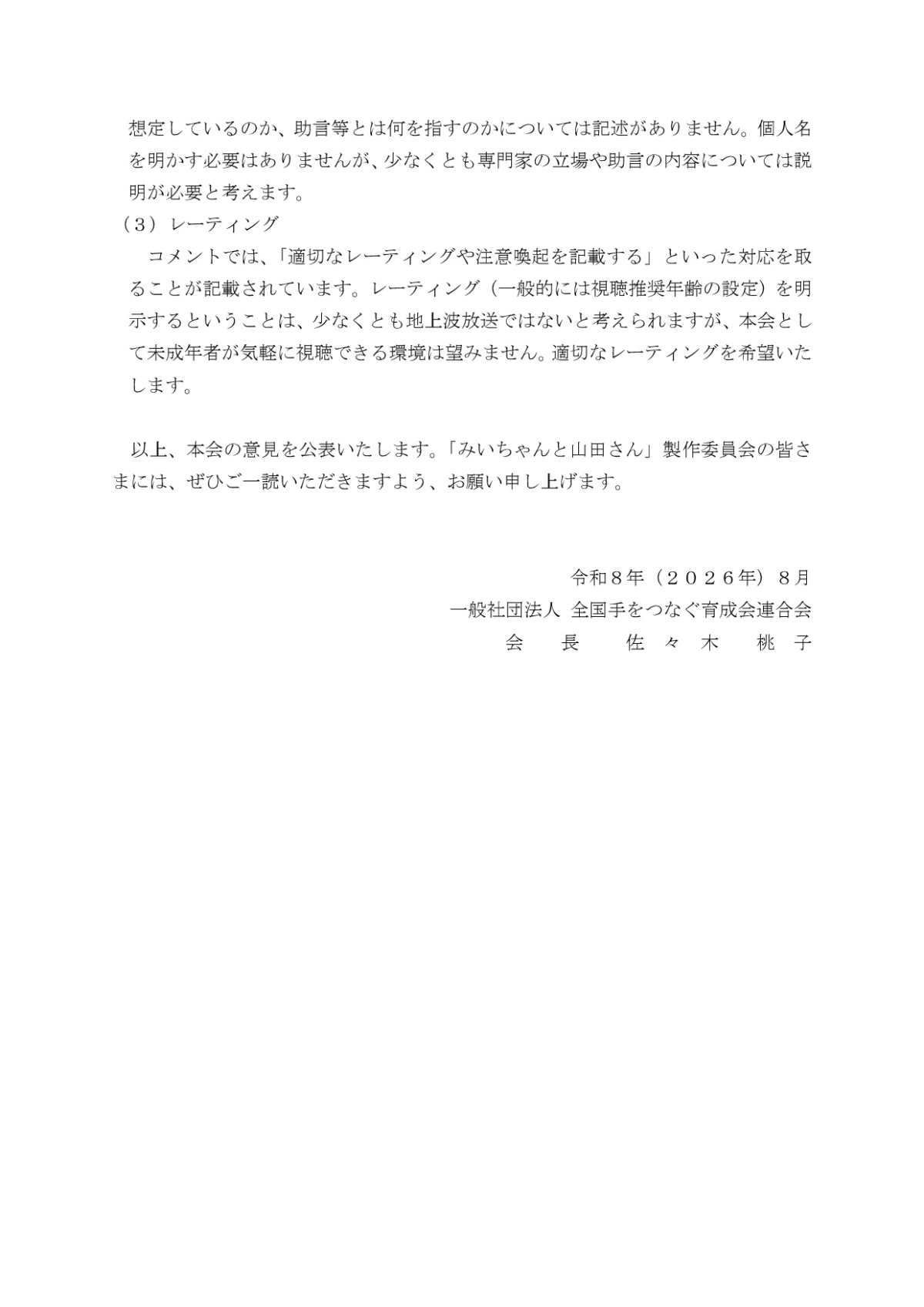
A crucial point in the statement is that the Federation is not demanding a complete halt to the anime's production. The organization noted that while its primary mission is to protect the rights of people with intellectual disabilities, it also understands that "freedom of expression" is a right guaranteed by the Japanese Constitution. Therefore, "This Federation does not take the position of uniformly opposing the anime adaptation." However, the organization believes that multiple concerning situations have been confirmed and hopes the production committee will address these issues and take sufficient measures to resolve them.
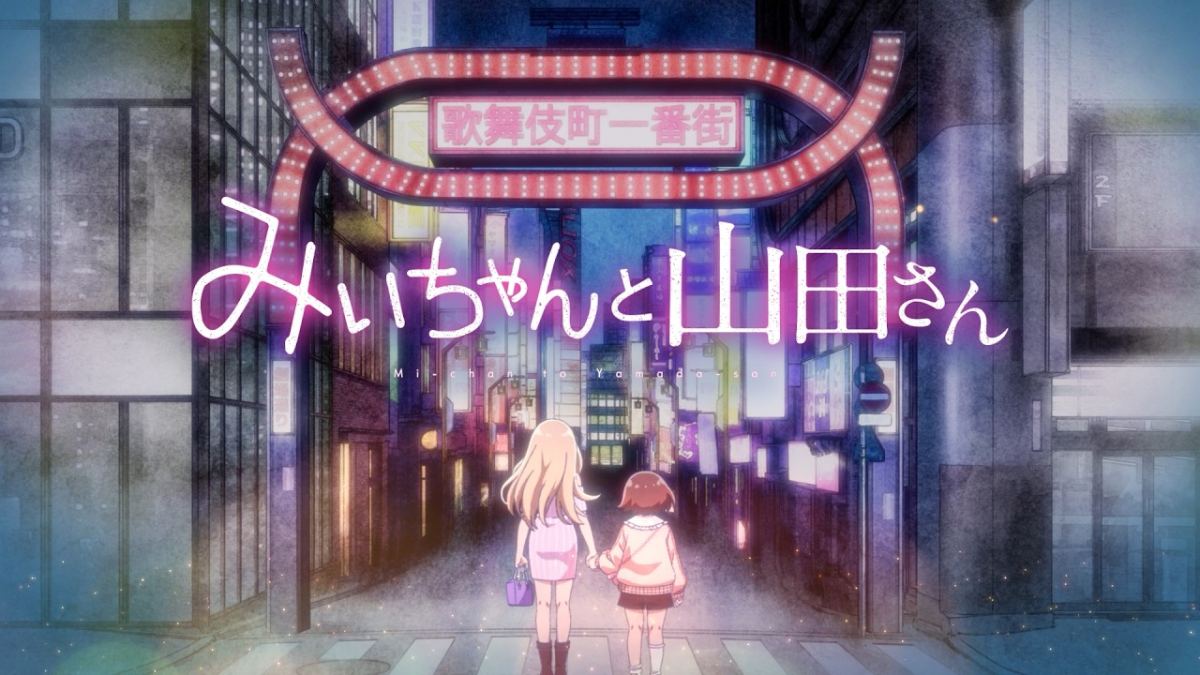
Mii-chan and Miss Yamada has been praised by supporters as a work that depicts women who have fallen through the cracks of society and the welfare system, surviving amid loneliness, poverty, and exploitation. On the other hand, its portrayal of the characters and related issues has consistently faced criticism for "potentially reinforcing social prejudice and discrimination against people with intellectual and developmental disabilities."
With the anime announcement, the discussion has expanded from the content of the work itself to deeper questions: How should fictional works portray people with disabilities? And how will the characters and settings within them be understood, used, and even consumed in the real world? These questions form the core of what the Federation's statement hopes the production team will seriously address.

via: 一般社団法人全国手をつなぐ育成会連合会