

Japan's popular conveyor belt sushi chain, Kura Sushi, is currently running a hot collaboration with Chiikawa. But the event's "Bikkura Pon!" prize game has been stirring up some serious customer complaints. Many are saying they've won multiple times but just can't seem to snag those coveted charm figures.
One netizen even vented, "I spent 18,000 yen and played 17 times, but didn't get a single figure!" Adding fuel to the fire, users on X recently spotted a flood of full sets of "Kura Sushi charm figures" popping up on auction site Mercari. This has led to widespread speculation that Kura Sushi employees might be secretly stashing prizes and selling them online. The buzz on social media caught the attention of Kura Sushi's corporate office, which issued a statement on the 2nd, promising a thorough investigation.

First, let's break down how Kura Sushi's signature "Bikkura Pon!" gacha game works: for every five empty sushi plates you drop into the recycling slot at your table, you get one shot at the prize machine.
This collaboration's prizes include:
Charm Figures: 5 types in total
Acrylic Magnets: 8 types in total
Badges: 8 types in total
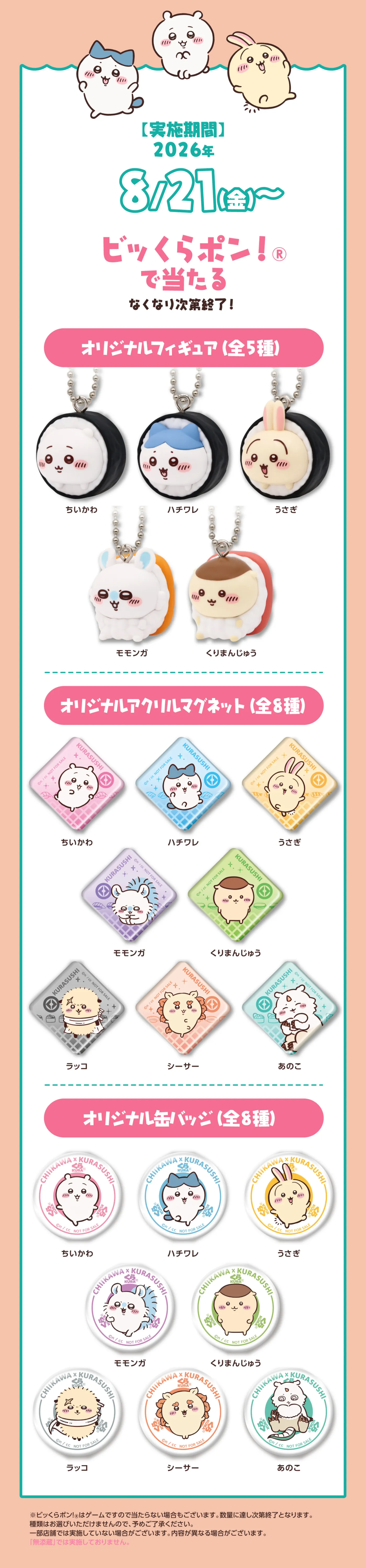
Collecting a full set of these prizes is tough, even if you eat a ton of sushi. Getting any of the three prize types is a challenge, as you need to consume a lot – it's one draw for every five plates. Snagging specific, desired prizes is far from easy.
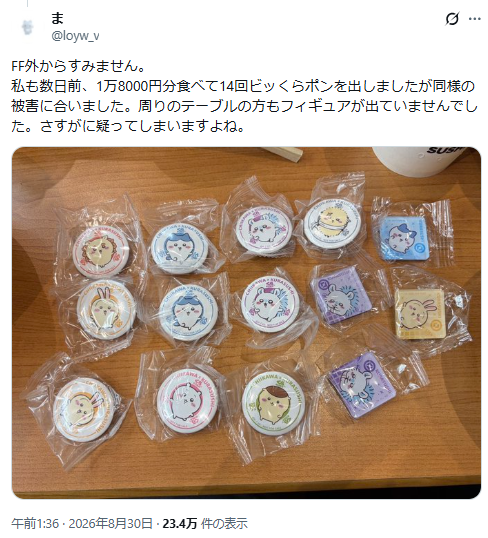
One netizen previously complained that they spent 18,000 yen and drew 14 times, yet didn't get a single charm figure. They also noted that people at nearby tables hadn't won any either, questioning if the prize distribution rate was ridiculously low.
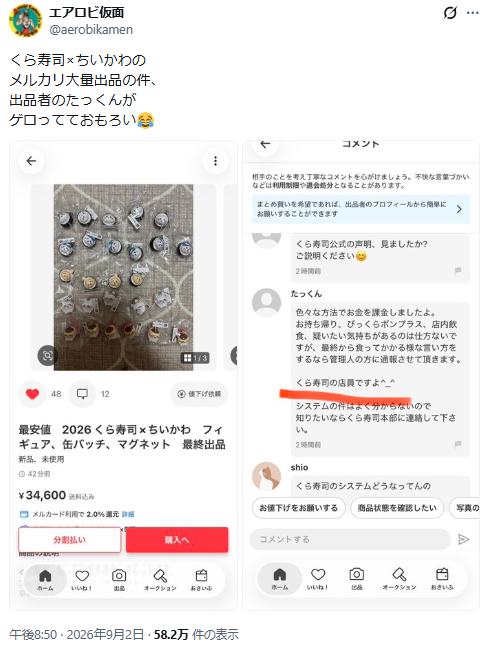
However, Japanese netizens have noticed that some sellers on Mercari are now offering full sets of these prizes, especially the highly sought-after charm figures. This has left many scratching their heads, wondering how anyone could eat enough sushi to collect complete sets to sell, leading to suspicions that employees might be secretly hoarding and selling the prizes.
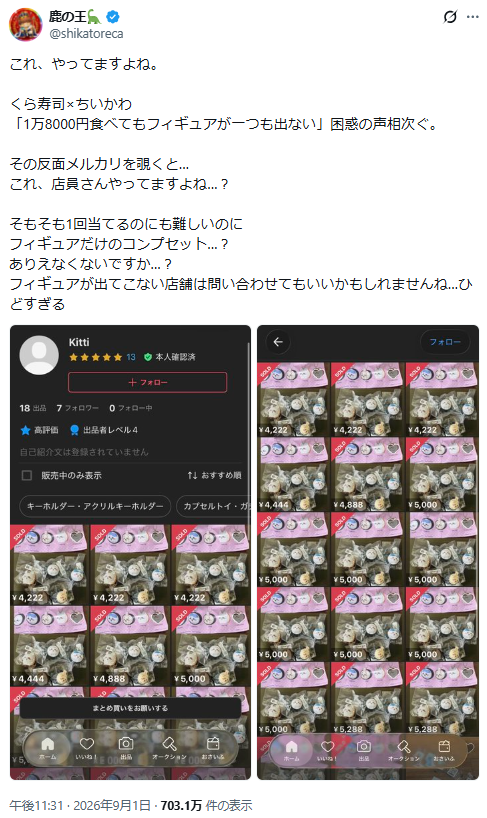
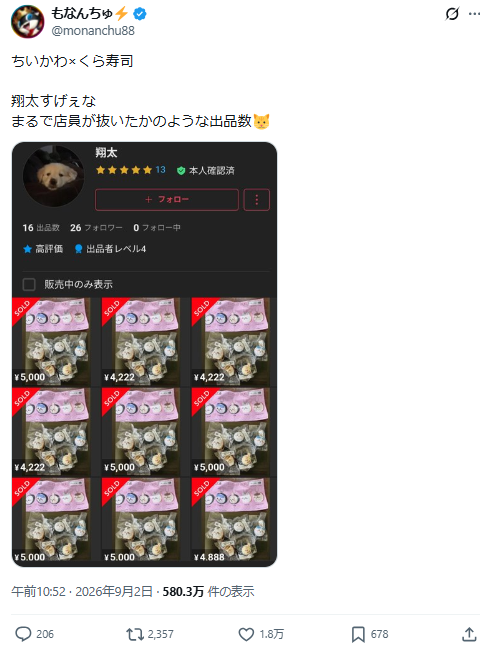
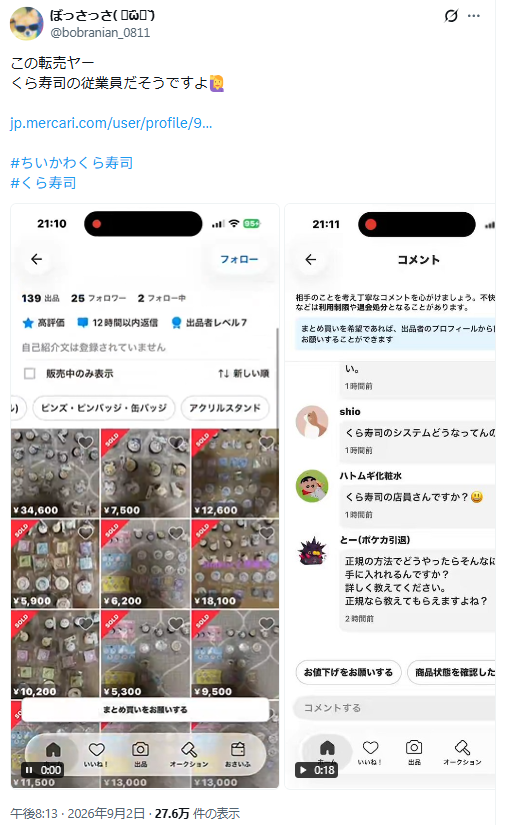
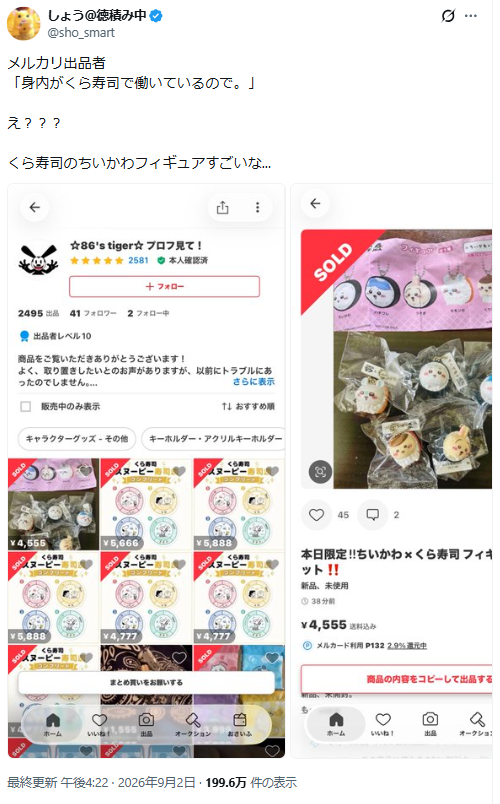
Some users even claimed that certain sellers directly responded, stating they were "Kura Sushi employees." While there's no definitive proof that staff are actually selling these prizes, the situation has already ignited considerable dissatisfaction among fans.
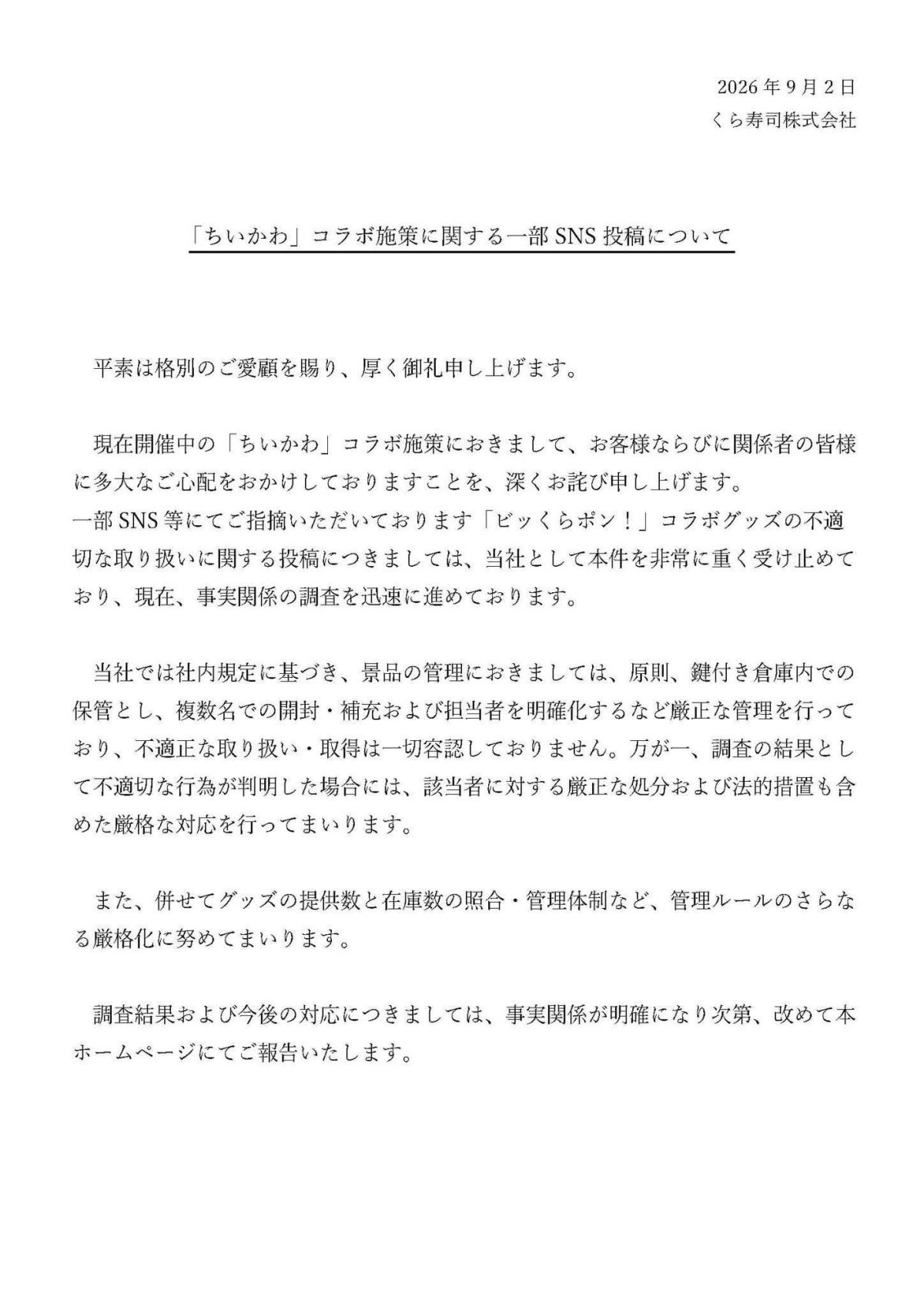
Following the heated discussions across Japanese social media, Kura Sushi's official website posted an announcement on the 2nd, titled "Regarding Posts on Social Media Platforms Related to the Chiikawa Collaboration Event," stating that the company is taking this issue very seriously.
Kura Sushi Co., Ltd. adheres to internal regulations for prize management. Prizes are, in principle, stored in locked warehouses, and strict management measures are implemented, including requiring multiple personnel for opening and restocking, and clearly designating responsible staff. Any improper handling or acquisition is strictly prohibited. Should an investigation confirm any misconduct, we will take severe disciplinary action against the individuals involved, including legal measures in accordance with the law.
Furthermore, we will strengthen our management rules, which include verifying and managing the supply and inventory quantities of collaboration items, and enhancing our overall management system to prevent similar incidents from recurring. We will report the results of this investigation and our future course of action on our official website once the facts have been clarified.
We sincerely apologize once again for the concern and unease this incident has caused our valued customers and all related parties, and we kindly ask for your understanding.
Currently, based on Kura Sushi's statement, the inability to win a specific prize doesn't directly prove employee tampering, as prize replenishment is random, and actual draw results can naturally show significant variations.
However, with numerous reports surfacing on social media of customers spending large sums and drawing dozens of times without getting any figures, coupled with the influx of full prize sets on second-hand auction sites—some even from sellers claiming to be employees—this Chiikawa collaboration prize event has unexpectedly found itself shrouded in controversy.