

General Mills’ flagship ice cream brand Häagen-Dazs is a global household name. Founded more than 60 years ago, it has won over ice cream lovers around the world.
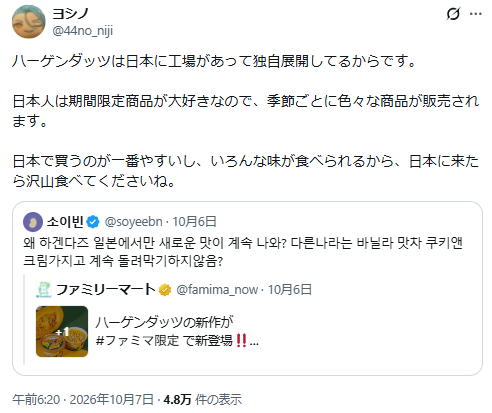
Japan regularly gets a tempting lineup of seasonal and regional Häagen-Dazs flavors, much to the envy of consumers elsewhere. A Korean user recently took to X to ask why Japan always seems to get such a dazzling variety of new flavors, while other countries appear to be stuck with staples like Vanilla and Cookies & Cream. The post quickly struck a chord online.
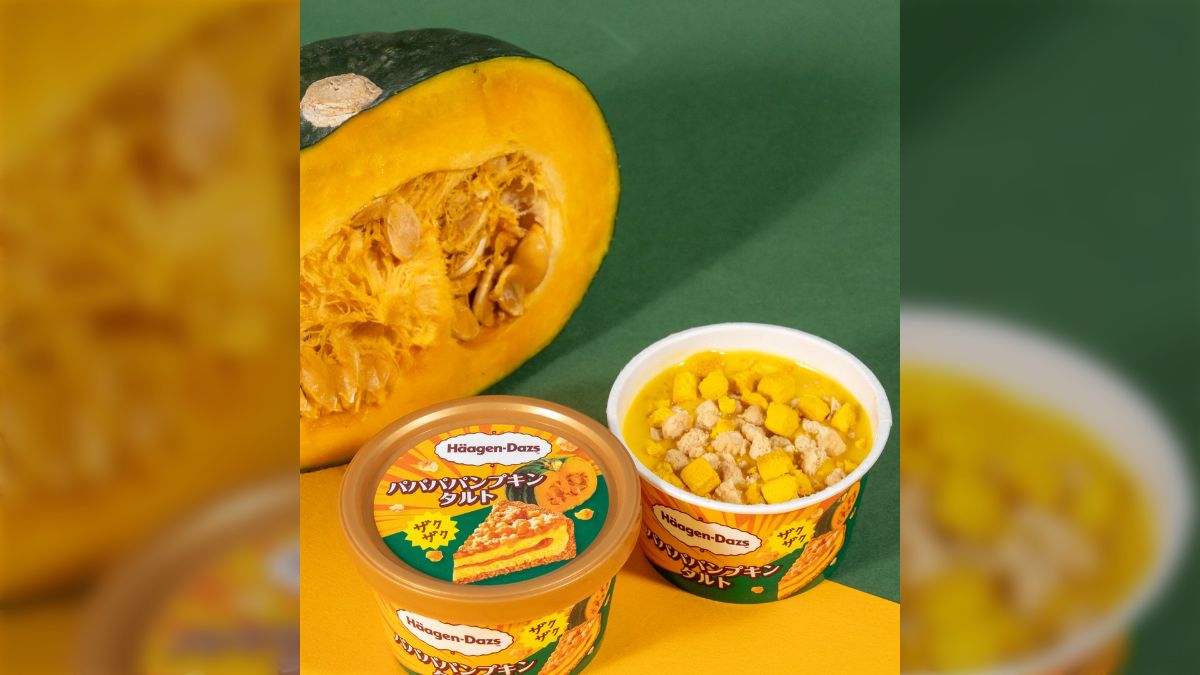
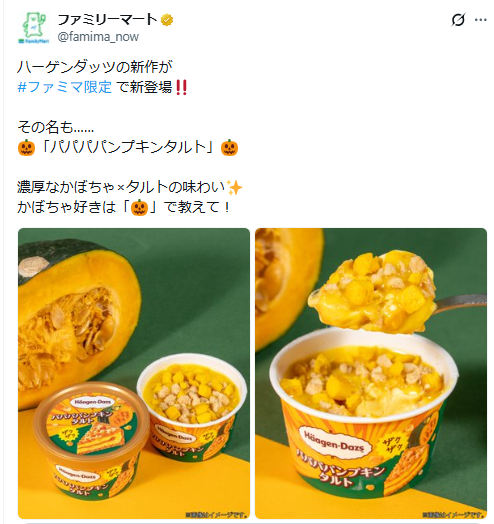
The conversation began when FamilyMart in Japan promoted a new pumpkin tart-flavored Häagen-Dazs ice cream. Alongside its familiar classics, Japan frequently receives limited-edition products inspired by the seasons, holidays, and local tastes—a range that has left plenty of overseas fans feeling jealous.
One Korean user wondered why Häagen-Dazs in Japan keeps rolling out new flavors while other countries seem forced to rotate through the same basics, such as Vanilla and Cookies & Cream.
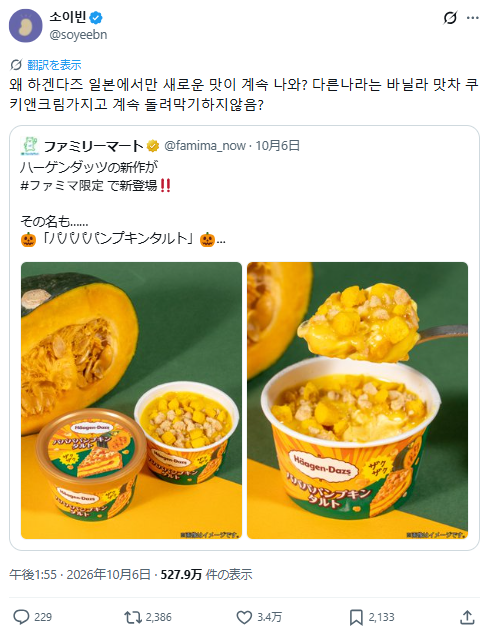
The post resonated with plenty of users. Some wished the flavors were available in Korea, while others were surprised by just how dramatically the product lineup can vary from country to country.


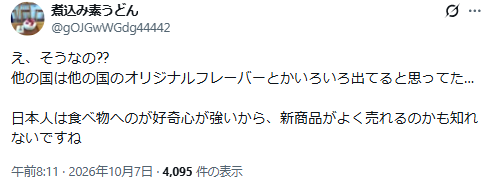
Japanese users were equally surprised to learn how limited the Häagen-Dazs selection can be elsewhere. Some suggested that Japanese consumers tend to be more adventurous about food, making the company more willing to test new flavors in the market.
During the discussion, users noted that Häagen-Dazs operates factories in only three countries: Japan, the United States, and France. They also pointed out that most products sold across Asia reportedly come from the brand’s largest factory in France rather than the geographically closer Japanese plant. Häagen-Dazs products sold in Japan are manufactured domestically by a joint venture involving Häagen-Dazs, Suntory, and Takanashi Milk Products Co., Ltd., giving the Japanese operation a different structure from those in the other two countries.
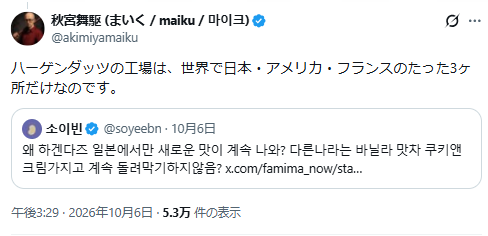
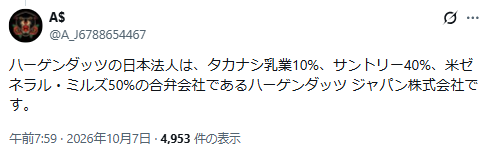
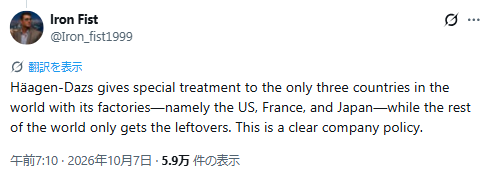
Other overseas users said the differences were indeed part of Häagen-Dazs’ broader corporate strategy, alongside production and product-development considerations. Consumers in the three countries with factories are generally more likely to see new limited-time flavors.
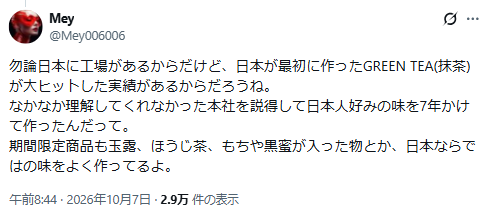
Another widely shared claim suggested that the matcha flavor sold in Japan took around seven years of persuasion before receiving approval from the company’s headquarters. The story highlighted how some of the Japanese market’s more distinctive flavors may have gone through a lengthy development process.
In Japan, limited-time availability is a common marketing tactic for food, beverages, and countless other products. These releases offer novelty while also creating a now-or-never sense of urgency, encouraging consumers to try flavors they might otherwise skip.
Still, each country’s Häagen-Dazs lineup is shaped by factors including local demand, product-development plans, and sales strategies. Consumer preferences alone do not determine which flavors reach store shelves.
The discussion also served as a reminder that even when the same brand is sold worldwide, the actual products and flavors available can differ enormously. Japanese consumers may take Häagen-Dazs’ steady stream of new releases for granted, but for fans elsewhere, regularly sampling fresh seasonal flavors looks like a luxury worth envying.
via: X@soyeebn