

With "Cyberpunk: Edgerunners 2" officially premiering on October 20, 2026, its first episode immediately introduced a compelling cultural phenomenon through Roman Carax, a young cinephile: In a future dominated by braindance technology, traditional cinema appears to be dying—or even dismissed as an obsolete form of entertainment that Night City has left behind.

The official character profile puts it even more bluntly, describing Night City as a place that has “abandoned film for braindance.” Against that backdrop, Roman’s determination to capture true stories with traditional camera equipment makes him an outsider in this hyper-digital metropolis. 
It is easy to see why. Traditional movies can offer only images and sound through a screen, while braindances record sight, hearing and touch—and even allow users to experience another person’s emotions and sensory memories firsthand. Once entertainment stops being something audiences merely watch and becomes something they can directly live through, cinema seems to lose its competitive edge.
But does the claim that “film is dead” actually fit the world the "Cyberpunk" franchise has spent decades building? Or does it simply reflect traditional cinema’s decline as a mainstream entertainment medium following the rise of braindance?
A closer look at the original board game sourcebooks—including "Cyberpunk 2020" and "Cyberpunk RED"—along with the lore of "Cyberpunk 2077" reveals that movies never truly disappeared. Traditional theaters and active production companies still exist, while the in-universe "Bushidō" franchise has spawned more than a dozen sequels. Another installment is even scheduled for release in 2080.
Those details are not enough to prove that the film industry is thriving, but they do show that Night City’s visual entertainment market is more complicated than braindance simply replacing cinema. Traditional filmmaking, emerging technology and corporate capital have continued to compete and converge, making the question of whether movies are truly dead far more complex than the anime initially suggests.
▌Has the “Death of Cinema” Been Taken Out of Context?
First, the claim in "Cyberpunk: Edgerunners 2" that film is finished does not mean traditional movies have completely vanished from the "Cyberpunk" universe. It more likely reflects a cultural shift in which cinema gradually lost its advantage in the mainstream entertainment market as braindance became widespread—not the total extinction of the film industry.
The problem is that treating “film is dead” as an objective fact blurs three very different scenarios: movies falling out of mass favor, traditional theaters entering decline, and cinema disappearing entirely as both an art form and an industry. These developments may be connected, but they are not interchangeable.
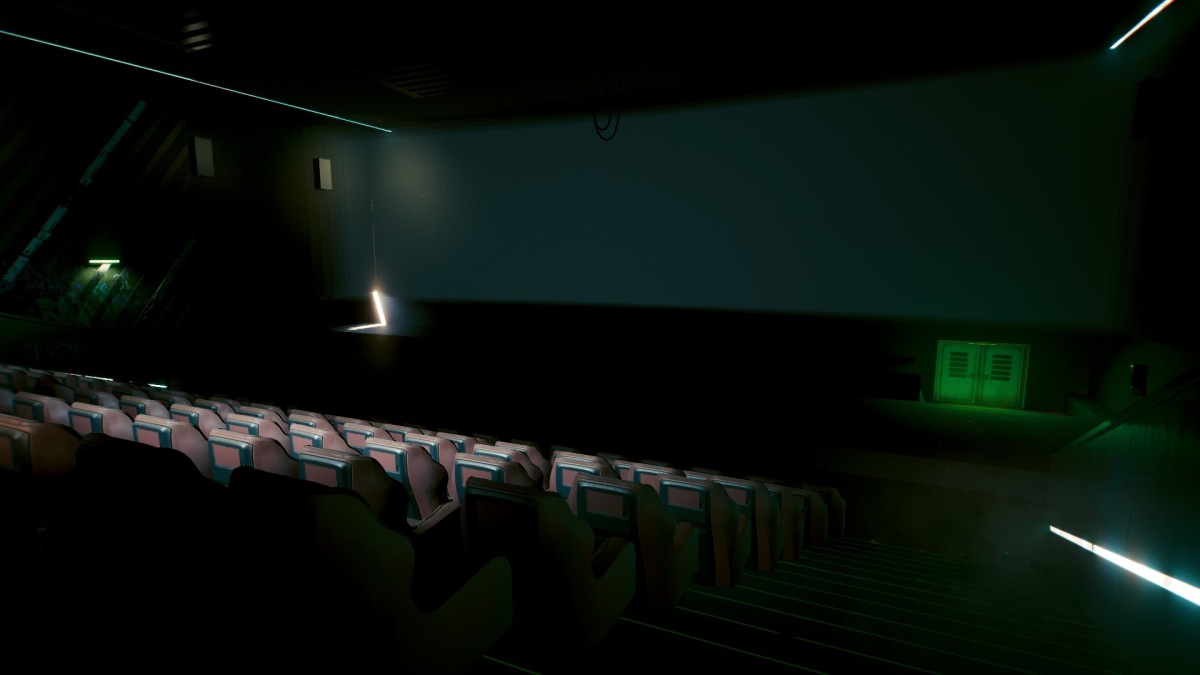
This interpretation also touches on a familiar technological myth: Whenever a new medium offers more advanced features, the old one must inevitably become obsolete. Film communicates stories through images and sound, while braindance records human sensations and emotions, allowing users to live through someone else’s experiences. But does technological superiority automatically erase the value of an established form of entertainment?
As early as the setting material for "Cyberpunk 2020," published in 1991, Night City was already home to several traditional movie theaters serving different audiences and operating under different business models. Some venues even offered both movies and braindance experiences. To understand what happened to cinema by 2077, we first need to revisit the entertainment history established by the original board game.
▌By 2020, Movies and Braindance Already Coexisted in Night City
▮The Birth of Braindance
Understanding that coexistence means returning to the birth of braindance technology. According to the "Rockerboy Sourcebook"—catalog number CP3401—released by R. Talsorian Games for "Cyberpunk 2013" in 1989, braindance was invented in 2007 by Yuriko Sujimoto, then a doctoral student at the University of California, Santa Cruz.

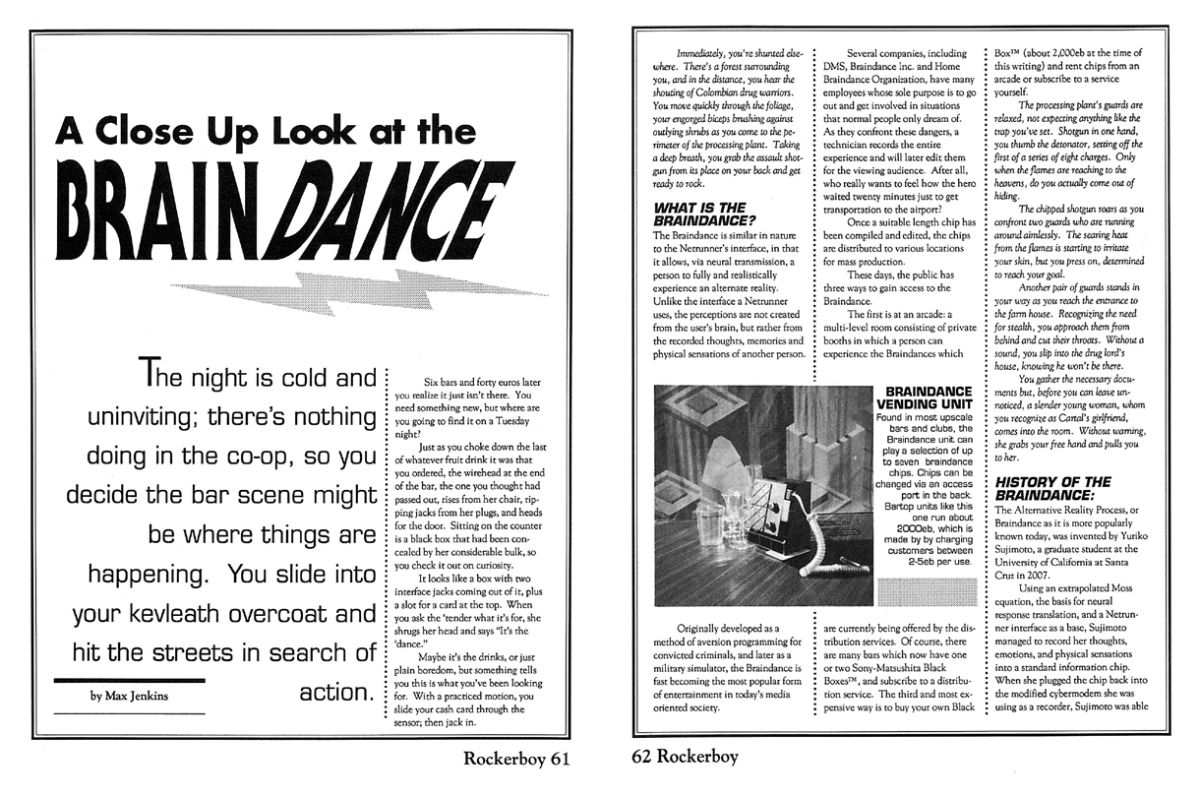
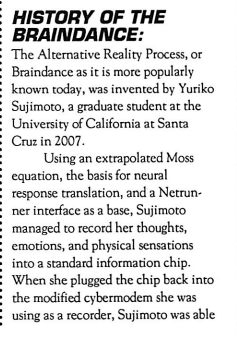
Using a neural interface and modified computer networking equipment, she successfully recorded human sensations, thoughts and emotions onto data chips, allowing other users to relive the recorder’s experiences. The technology was not originally designed for entertainment. Instead, it was applied to psychological research and criminal rehabilitation, with artificially reproduced sensory experiences used in attempts to alter subjects’ minds and behavior.
Braindance did not begin its move into the commercial market until 2009, when Sujimoto and penal psychologist Norman Lassimer founded Braindance Inc. In addition to working with military technology companies on training simulators, the company began exploring entertainment applications with media corporations. Braindance was no longer limited to research institutions and the justice system; it was becoming a consumer product.

Although its ability to reproduce another person’s sensations and emotions quickly attracted attention, braindance did not replace existing media overnight. Producing high-quality recordings was extremely expensive, while the technology also carried risks involving addiction and mental health, limiting its commercial growth.
In other words, by the era of "Cyberpunk 2020," braindance had existed for more than a decade and was developing an entertainment market of its own. Traditional movies, however, remained an option for Night City consumers.
▮A Theater Market Coexisting With Braindance
The "Night City Sourcebook," published for "Cyberpunk 2020" in 1991, describes several traditional movie theaters serving different audiences and following distinct business models. These were not nostalgic set dressing; they were functioning businesses competing within the city’s entertainment economy. 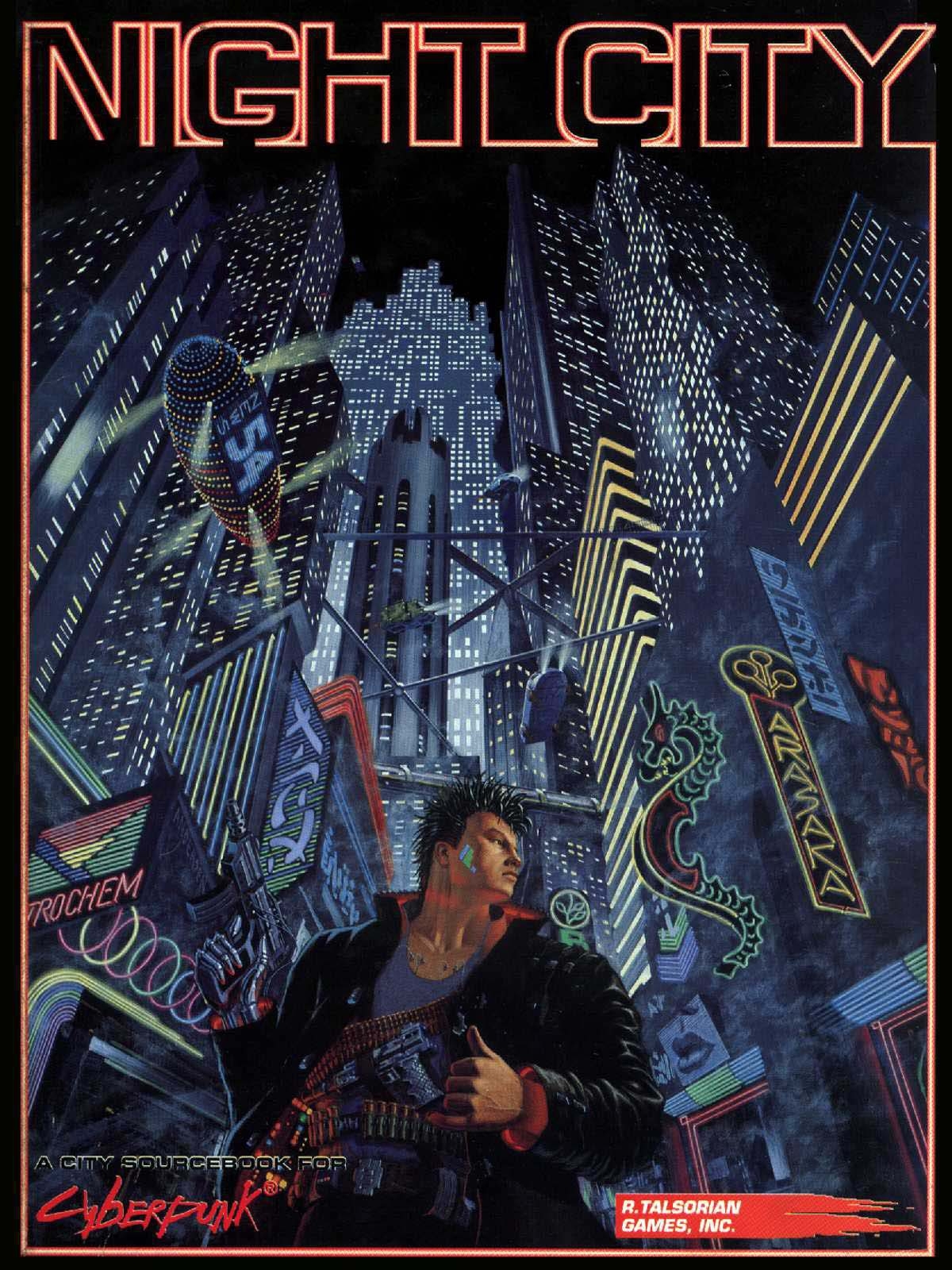
The Biograph Theater in the University District, for example, was a two-screen venue retaining its 1970s aesthetic. One auditorium showed art-house films, while the other screened adult movies, whose ticket sales subsidized the less profitable programming. Stars Theatre, meanwhile, operated primarily at night and specialized in classic films. Its glass roof and artificial projections created the illusion of watching movies beneath the stars, attracting wealthier patrons.

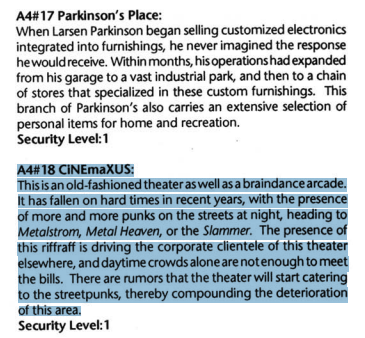
CiNEmaXUS offered both conventional movie screenings and braindance experiences, demonstrating that the two visual media could still share the same commercial space in Night City.
Notably, although CiNEmaXUS was struggling financially, the original sourcebook attributes its problems to worsening crime in the surrounding neighborhood, which drove away affluent corporate customers—not to braindance crowding out traditional film. The rise and fall of Night City entertainment therefore depended on more than competition between old and new media. Public safety, customer demographics and the broader business environment all played a role.
The birth and commercialization of braindance clearly did not eliminate traditional movies overnight. Even if the technology could deliver sensations that cinema could not, Night City residents still had multiple entertainment options. Theaters also developed specialized models centered on art-house programming, retro screenings and mixed-media experiences.
▌By 2045, an Old Night City Theater Was Still Fighting to Survive
The 2020 board game "Cyberpunk RED" advanced the timeline to 2045, and the 2026 sourcebook "Night City 2045" reveals that the Biograph Theater was still open. It continued using traditional film projectors maintained by engineering volunteers from Night City University, while its decades-old model of supporting art-house programming with revenue from adult movies remained intact.

This detail matters. If traditional cinema were merely an antique preserved by chance, the theater should have lost its audience long ago. Yet the Biograph not only survived—it retained a specific cultural community. Volunteers were willing to spend time repairing old equipment, audiences continued buying tickets to watch films on the big screen, and less commercially viable work still found an audience by relying on more profitable content.
That does not mean Night City had a flourishing art-film market in 2045. If anything, the opposite is true. The Biograph represents the fragility of cultural survival: a particular audience, volunteer labor, adult-film ticket sales and aging equipment were all holding together a venue that could slip into crisis at any moment. Traditional cinema survived not because corporations suddenly began valuing art, but because audiences and workers remained willing to keep it alive.
Placed within cyberpunk’s broader social criticism, this becomes more than simple nostalgia. Who has the resources to preserve old media? Who must supply unpaid labor? What kinds of commercial imagery are needed to subsidize work that lacks a market advantage? The Biograph’s two auditoriums capture Night City’s conflict between cultural production and economic survival in miniature.
▌From 2020 to 2077: How Film Studios Adapted and Survived
Of course, the state of the film business in 2020 cannot directly represent the market in 2077. Decades of technological development, Corporate Wars and urban reconstruction could dramatically reshape traditional cinema’s position, while braindance became an increasingly common form of entertainment.
That still does not mean the two media could exist only as mutually exclusive rivals. The history of Night City’s production companies shows that traditional film and braindance had long since become part of the same commercial system.
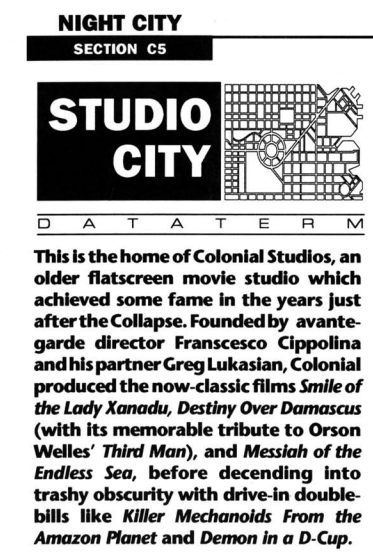
Colonial Pictures, introduced in the "Night City Sourcebook," is a prime example of a company spanning both industries. Founded by directors Francesco Cippolina and Greg Lukasian, the studio produced numerous movies and television programs in its early years before gradually falling into financial trouble amid growing competition. Francesco’s daughter, Magretta Cippolina, later took over and attempted to revive the company through holographic projection and braindance technology, investing heavily in the redevelopment of its Night City production facilities.

The Fourth Corporate War and the 2023 Arasaka Tower Disaster devastated Colonial Pictures’ production base, forcing the company to relocate to a smaller studio. Over the following decades, it shifted its focus toward serialized braindance productions. By 2045, Colonial had finally paid off its enormous debts and announced plans to remake its former classic "Smile of the Lady Xanadu" as "The Lady Xanadu," marking a return to traditional filmmaking.
The studio’s history reflects a familiar industrial reality. For entertainment companies, the arrival of new technology does not necessarily require abandoning established formats. Businesses can shift direction according to market demand, production costs and potential profits. Even after Colonial Pictures treated braindance as the key to its recovery, traditional movies remained worthy of renewed investment once the company regained its financial footing.
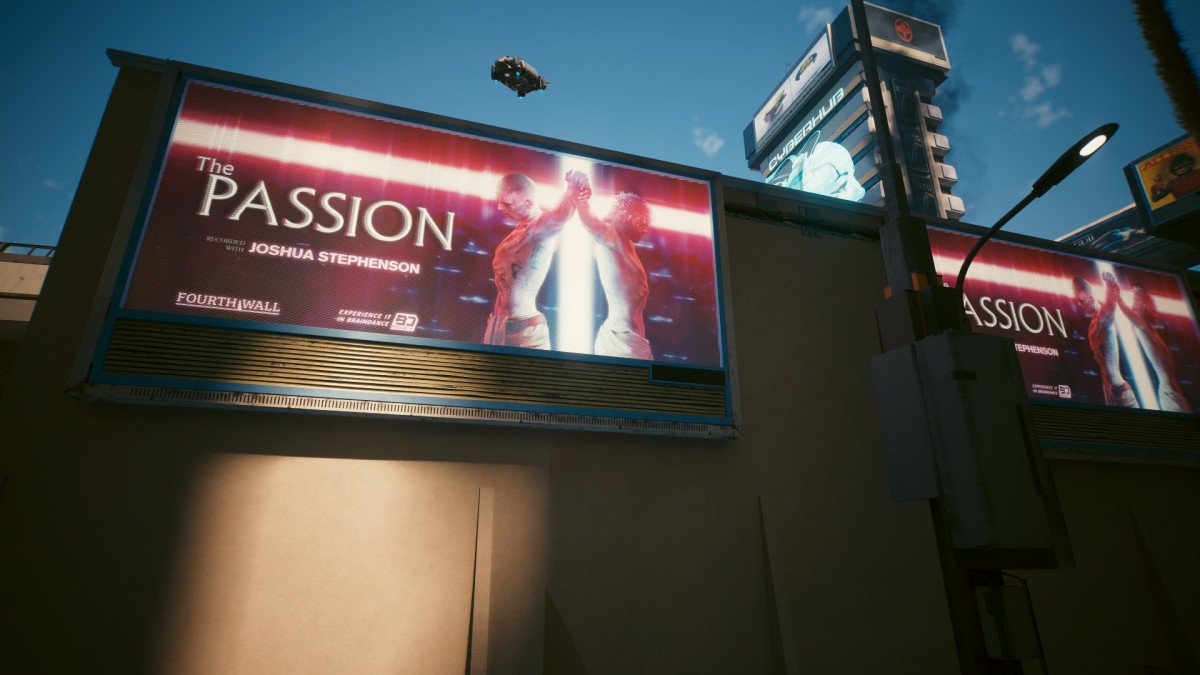
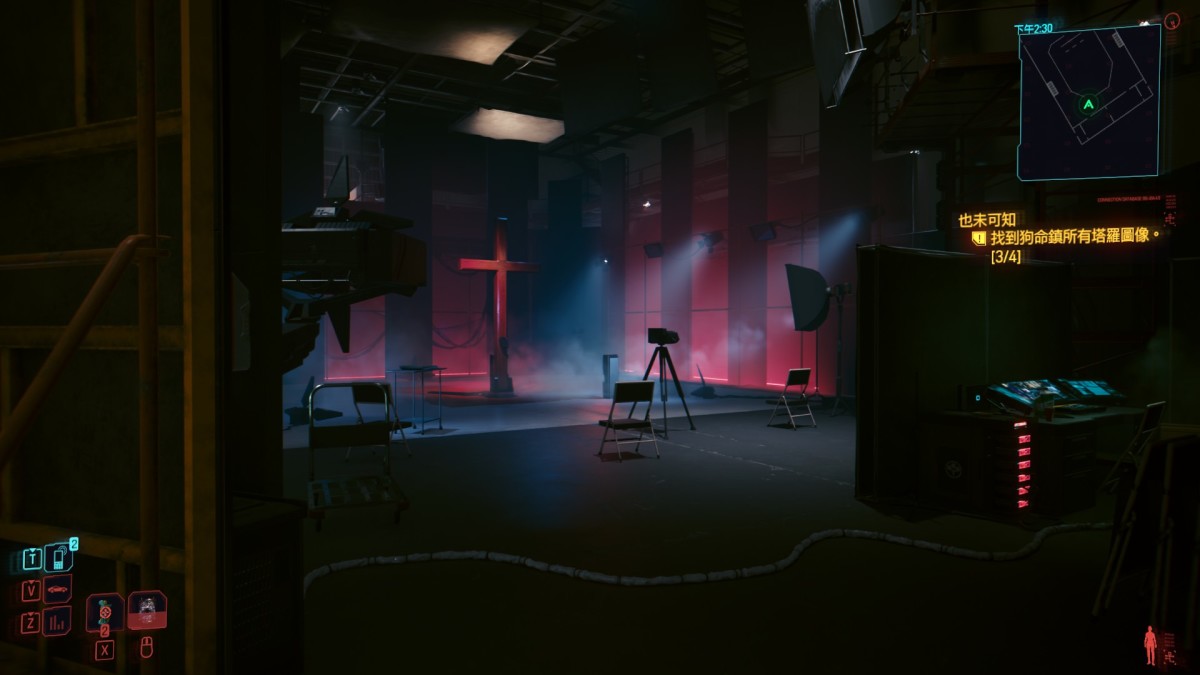
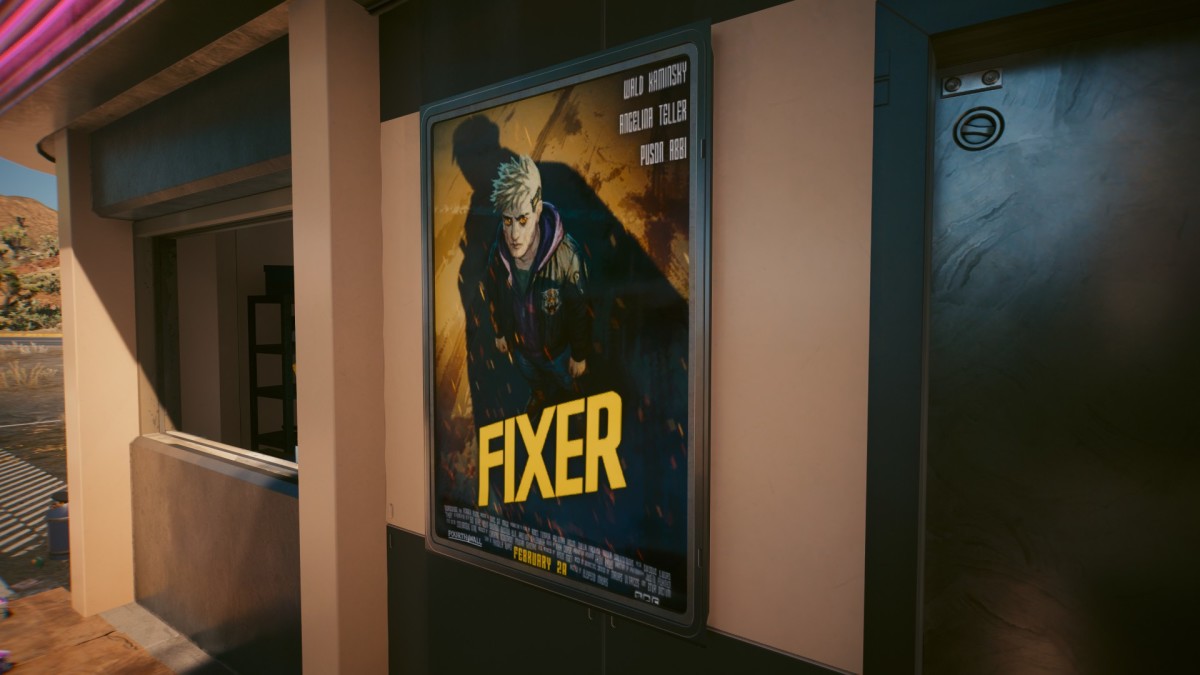
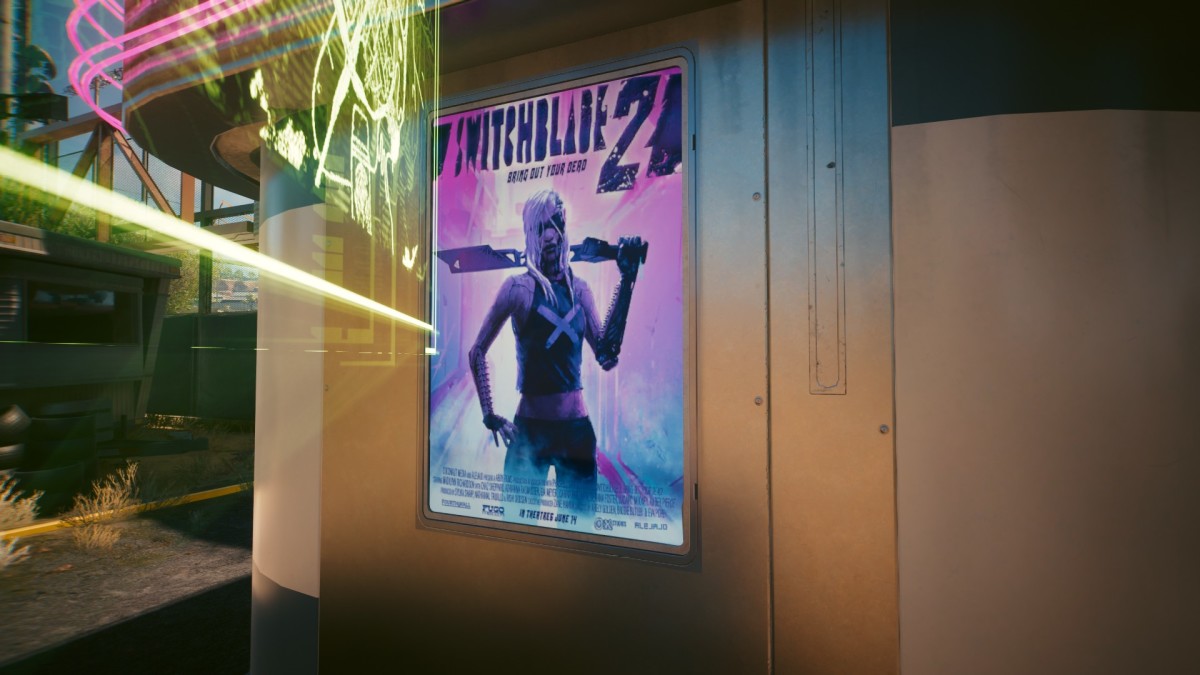
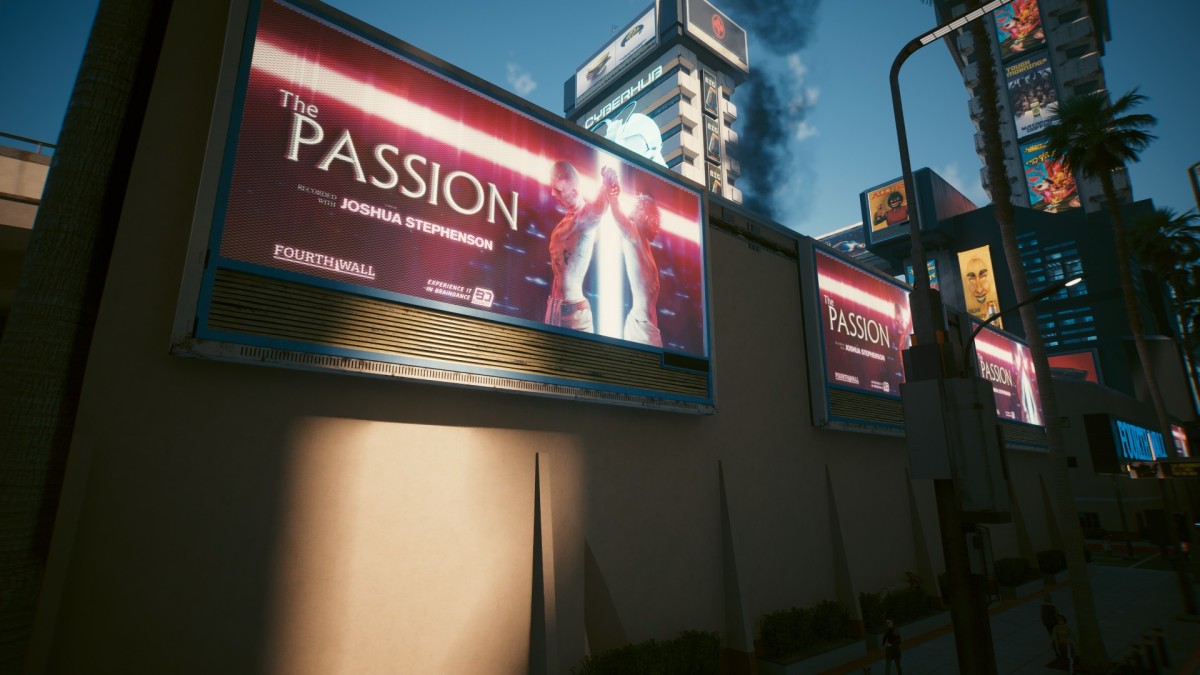
The same model continued into 2077. Fourth Wall operates across both the film and braindance industries, producing movies such as "Fixer" and "Switchblade 2" while using advanced braindance technology for "Foreign Body" and the controversial sensory entertainment project "The Passion." These productions show that even after braindance became a major commodity, traditional movies could remain part of a large studio’s business.

▌The "Bushidō" Franchise Is the Clearest Example
The most direct evidence in "Cyberpunk 2077" is the in-universe "Bushidō" film franchise. This fictional action property has more than posters and advertisements—it also has actors, directors, box-office records and a long history of sequels. From the third installment, "Bushidō 3: Live Fast, Die Never," to the tenth, "Bushidō X: Fade to Black," its titles and marketing deliberately mimic the endless sequel machinery of real-world action blockbusters.

"Bushidō X: Fade to Black" premiered on March 2, 2064, with Jacob Lamb directing. It was released simultaneously in theaters and as a braindance. Players can also find Judy Álvarez’s braindance collection of the first nine "Bushidō" movies at her apartment. These details show that traditional film did not have to compete with braindance exclusively; movies could be rereleased in other formats and continue generating commercial value. Much as real-world films circulate through VHS, DVD and streaming platforms, a change in viewing format does not mean cinema itself has ceased to exist.

The game even includes fictional film criticism such as “"Bushidō" and Neopostmodernism,” which searches for philosophical meaning in the franchise’s violence and character development. Beyond its commercial releases, "Bushidō" clearly inspires critical discussion and broader cultural consumption.

Still, "Bushidō X" was hardly an untouchable box-office legend. According to the game’s background material, the film lost one billion eurodollars, leading to the director’s dismissal and the end of his filmmaking career. That failure reveals another side of traditional cinema’s continued existence: Even in a technologically advanced society, making movies still requires massive investment and carries enormous commercial risk. A box-office disaster can destroy a creator’s career.
Curiously, the "Bushidō" franchise did not end there. Its 13th installment, "Bushidō 13: Solitude," is already scheduled for release on August 20, 2080. From the perspective of 2077, that date remains an unrealized future booking, but it still shows an entertainment industry actively planning the production and distribution of traditional movies.
The importance of "Bushidō," then, extends beyond proving that people still make movies in Night City. It illustrates how traditional cinema continues participating in the visual entertainment market through theatrical releases, braindance editions and franchise branding. When a world already has movie releases scheduled for 2080, it becomes difficult to argue that braindance wiped out cinema long ago.
▌Does a Shuttered Drive-In Prove That Cinema Is Dead?
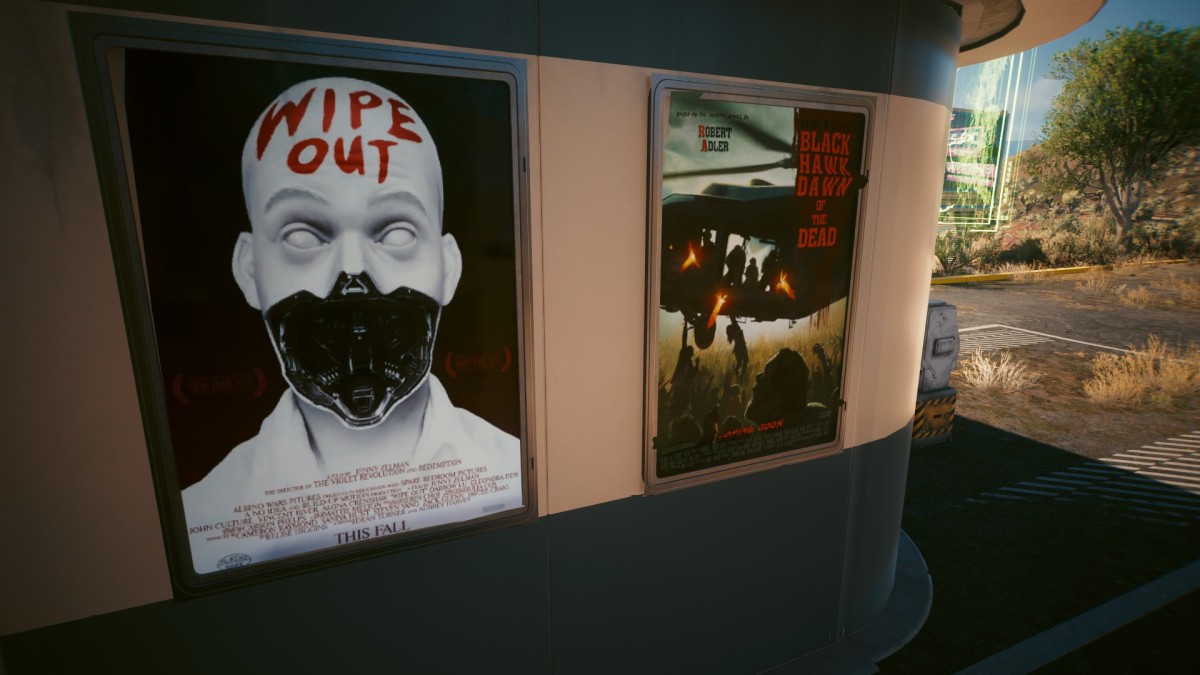
In the side job "Blistering Love," Johnny Silverhand and Rogue Amendiares return to the Silver Pixel Cloud drive-in. Located in North Oak, the abandoned outdoor theater still has working projection equipment, allowing the pair to watch "Bushidō X."
At first glance, the location certainly looks like a symbol of cinema’s death in the future. But records stored on the theater’s computers offer a different perspective. A January 20, 2069 screening schedule lists not only "Bushidō X," but also horror films, urban dramas and romantic comedies. The operator had even expanded the parking area in an effort to attract more customers. This was not an ancient theater that nobody ever visited. It had been a functioning commercial venue.

Its eventual closure was tied to financial problems at its parent company, Silver Pixel, and the shutdown of multiple locations. According to a management notice sent to employees, the Night City branch initially had a chance to remain open but was ultimately scheduled to close at the end of 2069.

Even more tellingly, the company argued that employees were not entitled to severance because they could transfer to other locations. Those theaters, however, were also scheduled to close within six months, while the replacement positions offered only short-term contracts without benefits.
Rather than definitive proof that braindance defeated cinema, the closure reveals how management shifts the cost of corporate decline onto workers.
Changing viewing habits may have contributed to the theater’s collapse, but a single closure cannot prove that every movie theater disappeared—much less that one specific technology was responsible. Night City offers countless reasons for a theater to fail, including land costs, crime, corporate finances, urban reconstruction and changing consumer markets. Reducing such a complex problem to “everyone started watching braindances” actually weakens the franchise’s pointed critique of capitalism.
▌Cinema Is Not Dead—the Entertainment Market’s Power Structure Has Changed
The distinction between film and braindance cannot be measured solely by the intensity of their sensory stimulation. Traditional movies construct narratives through composition, editing, sound and performance. Braindance records human sensations and emotions, allowing consumers to experience another person’s subjective perspective firsthand. They offer different experiences rather than occupying a simple hierarchy of technological advancement.
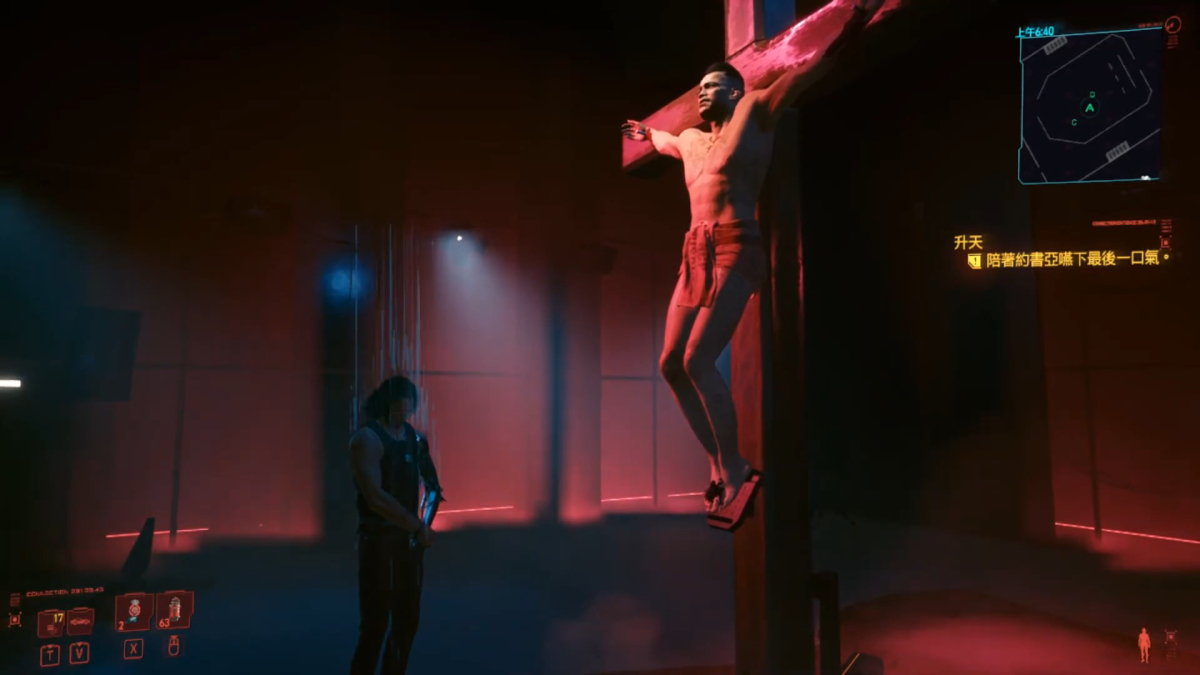
Moreover, braindance’s promise of “living the experience” does not mean users receive an unfiltered version of reality. Judy’s work in "Cyberpunk 2077" shows that sensations and emotions can also be edited and adjusted. The side jobs "Sinnerman" and "They Won’t Go When I Go" go even further, transforming a condemned prisoner’s actual execution into a religious braindance product and demonstrating how the technology can commodify human suffering, death and lived experience.
Acknowledging that movies still exist in Night City does not mean denying braindance’s impact on the entertainment market. At the same time, the "Cyberpunk" franchise offers no comprehensive statistics that would reveal the film industry’s overall size. A handful of abandoned theaters cannot prove that cinema has vanished, just as the continued release of "Bushidō" sequels cannot prove that traditional movies still dominate the market.
Based on the industry’s development across the original board game and the video game, the more reasonable conclusion is that film and braindance spent decades competing, converging and redistributing the entertainment market’s resources.
Major corporations can invest in both formats and profit from established brands across multiple platforms. Smaller traditional theaters, meanwhile, may survive only through dedicated audiences and volunteer labor. Even in 2077, when technology allows people to experience another person’s sensations and emotions, entertainment companies continue producing familiar action movies and franchise sequels—and then repackaging those same properties as braindance products. Technological progress does not necessarily produce creative innovation. Corporations are often more interested in extracting additional profit from the same content through different media.
Returning to "Cyberpunk: Edgerunners 2," the claim facing Roman Carax that film is finished may reflect traditional cinema’s growing marginalization within Night City’s mainstream culture. It does not mean the industry has disappeared. From conventional theaters in 2020 and an aging venue still operating in 2045 to production companies in 2077 and a "Bushidō" sequel scheduled for 2080, movies continue to survive in different forms.
The real question is not whether cinema can technologically compete with braindance. It is whether people retain the freedom to choose different cultural experiences once corporations control the entertainment market. After all, "Cyberpunk" has never depicted a world where new technology completely erases old culture. It portrays a society in which technologies and cultural forms from different eras remain entangled.