

 (Image courtesy of Warner Bros. Pictures)
(Warning: The following review contains minor spoilers.)
James Gunn’s new DC Universe has barely gotten off the ground, yet instead of introducing its new Batman, the franchise has already spun off a solo movie starring the second-tier villain Clayface. That would seem like a bizarre choice without some compelling reason behind it. As it turns out, there was one: “Clayface” began as a passion project pitched by modern Hollywood horror master Mike Flanagan. Flanagan is an exceptionally busy man, with seemingly endless Stephen King adaptations waiting to be made and a new installment of “The Exorcist” franchise demanding his attention. Yet he still carved out the time to write “Clayface” purely out of passion. How could that not catch the eye of Gunn, himself a screenwriter first?
Gunn believes the script comes first. If the material is strong enough, the movie can move forward without the filmmakers having to map every decision around the broader cinematic universe, as Marvel Studios often does. That philosophy is evident in the finished “Clayface,” which tells an impressively complete story and pushes nearly every element as far as it can go. From its opening character work, the film patiently lays a sturdy foundation. It establishes that its protagonist was once fundamentally decent before one moment of weakness sent him plunging into the abyss. From there, he sinks deeper into hatred and obsession until there is finally no path back. 
(Image courtesy of Warner Bros. Pictures)
“Clayface” inevitably recalls several movies with similar DNA. It carries the vengeful fury of “Joker,” the body-horror tragedy of a fading actor desperate for a comeback in “The Substance,” and even shades of “Morbius” in its doctor-patient romance and a supposed cure that becomes a cursed superpower. Naturally, it will also be compared with the films of David Cronenberg. “Clayface” is body horror, after all, and Cronenberg essentially invented—or at least popularized—the genre, even if he famously dislikes the term and rejects the label. Almost every body-horror movie made since bears some trace of his influence. At this point, the ones that do not may be the true rarities.
Yet “Clayface” is considerably more commercial and entertaining than “Joker.” Its revenge narrative is more emotionally charged, while the retaliation itself is twice as vicious. It is difficult not to get swept up in Clayface’s all-consuming need to humiliate his enemies in kind. As body horror, however, it is neither as nauseating nor as unnerving as “The Substance.” That has little to do with how graphic the visuals are. Clayface’s physical condition is relatively stable and highly controllable, with no permanent, irreversible threat to either his life or appearance: He cannot die, and he can continually reshape himself. Viewers therefore have less reason to fear for his safety. The most unsettling body horror usually comes from how physically vulnerable and unsafe a character feels. The gore is often just the garnish.  (Image courtesy of Warner Bros. Pictures)
Another reason hardcore body-horror fans may find the movie relatively mild is its heavy reliance on CG. Audiences can often tell which elements are digitally generated, and once the illusion of reality breaks, the impact diminishes with it. Many of the most unforgettable body-horror films depend primarily on practical effects, which more effectively fool the subconscious into accepting something as disturbingly real. As the protagonist becomes increasingly skilled at controlling his abilities, the effects also begin to look more “cool” than “disgusting.” That is not necessarily a criticism, merely an observation about the natural psychological response the imagery creates. “Clayface” is a genre hybrid, and judging it exclusively as body horror would be unfair. In any case, this limitation does not make the movie any less compelling.
Some aspects of “Clayface” may resemble “Morbius,” but its craftsmanship is several leagues beyond that film. This is the movie “Morbius” wanted to be but never came close to becoming. At the very least, “Clayface” proves to Sony Pictures that audiences can embrace a movie whose protagonist is genuinely evil. Make the transformation gripping enough, and viewers will follow. There is no need to detoxify every villain and turn them into an antihero, as “Venom,” “Morbius,” and “Kraven the Hunter” attempted to do. In truth, those characters barely qualify as antiheroes by the end. They are simply heroes. 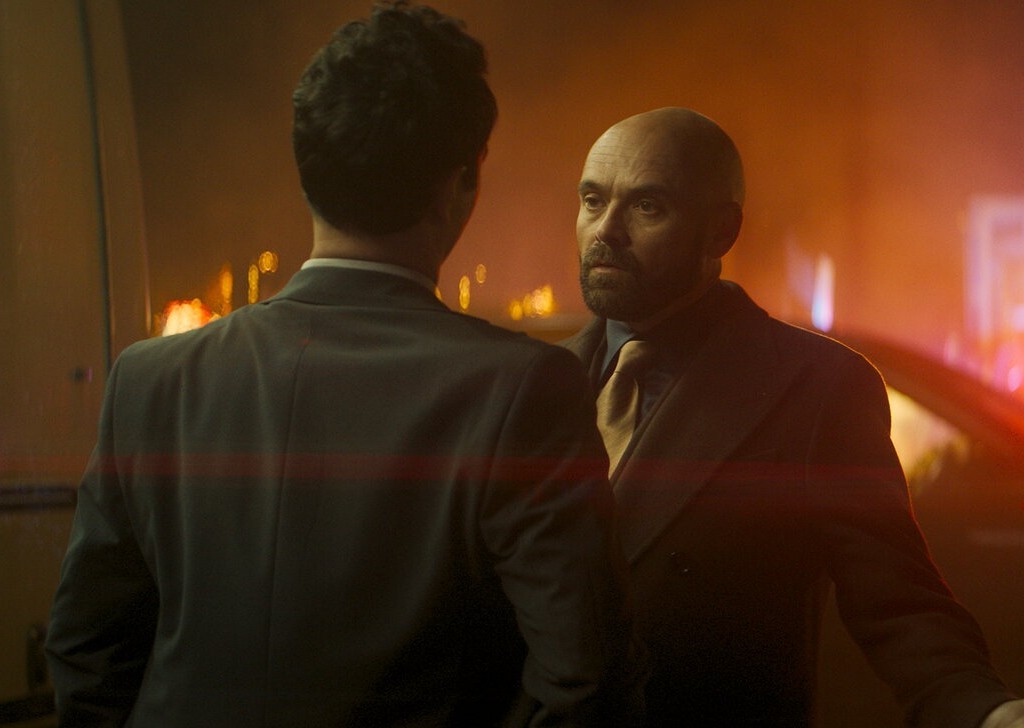 (Image courtesy of Warner Bros. Pictures)
“Clayface” remains completely faithful to the character’s villainous roots. He was once a good man, but every step takes him farther off course. Audiences may sympathize with the motives behind some of his actions, but there is no excusing the line he eventually crosses. His final choices are driven by pure selfishness, greed, and a determination to take what he wants by force. Those are the actions of a true villain. The entire film is devoted to charting his inevitable evolution into that monster and completing his descent into evil. He has no rival superhumans to fight and no other villain’s diabolical scheme to stop. His transformation is the sole focus. By adopting an almost purely character-driven, character-study approach, the movie brings greater dramatic tension and fascination to the making of a supervillain.
Tom Rhys Harries also deserves tremendous credit as an inspired piece of casting—initially unexpected, yet somehow perfect. He plays an actor celebrated for his beauty, although Harries himself is not a conventionally handsome leading man. There is an intriguing tension within his features, similar to the first impression made by Adam Driver or Benedict Cumberbatch. That tension makes him exactly what “Clayface” needs. The film requires a face innocent enough to inspire sympathy for his suffering, almost like that of a wounded young man. It also needs a face that could plausibly conceal a monster beneath the skin. Harries can embody both at once. He is the one-in-a-million face this Clayface demanded. 
(Image courtesy of Warner Bros. Pictures)
I thoroughly enjoyed “Clayface,” but if there is one area worth criticizing, it is the movie’s visual approach. I am fairly certain that the film would have looked more distinctive had Flanagan directed it himself. Unfortunately, his schedule forced him to prioritize his “Carrie” series. James Watkins is by no means a poor replacement. He is an accomplished thriller director whose credits include the well-regarded “Eden Lake” and “Speak No Evil.” Even so, his instincts for atmosphere and shot design are not as sensitive or meticulously refined as Flanagan’s.
There is no denying that “Clayface” looks polished. The problem is that it employs the standard lighting, color grading, and staging of a mainstream studio production. It feels assembled through a familiar pipeline rather than shaped by the personal touch of an individual filmmaker. That approach is perfectly acceptable for a superhero spectacle costing $200 million or $300 million. With material like “Clayface,” however, it feels like a missed opportunity. This story needs a bold aesthetic capable of expressing its strangeness, anxiety, and sickness, not another rigid blockbuster template. The conventional presentation blunts some of the narrative force and prevents the story’s impact from being fully unleashed.  (Image courtesy of Warner Bros. Pictures)
“Joker” is not truly a supervillain movie—its protagonist never entirely becomes a conventional criminal mastermind—but it offers a strong example of distinctive filmmaking. The director’s vision of Gotham City is unmistakable, and its urban landscape constantly reflects the protagonist’s emotions and story. It never feels anonymous, lifeless, or dependent on a postproduction team randomly pasting obviously fake CG towers and streets into the background. The staging in “Joker” also created numerous unforgettable moments: the solitary dance in the restroom, the frenzied staircase routine, the bloodied smile painted atop the police car, and the final chase through the hospital. Those sequences became iconic not merely because they were well written, but because the director used music, camera movement, and lighting to etch them permanently into the audience’s memory. The screenplay for “Clayface” deserved that same level of aesthetic ambition.
P.S. Earlier reports claimed that Aaron Paul had a cameo as Clayface’s father. The rumor was true, but the appearance is incredibly brief. The scene is also dark and chaotic, so one careless blink is all it takes to miss him. The moment is over in a flash.