

On November 19, a research team at The University of Tokyo announced that it had successfully developed a nanomesh epidermal sensor that can be fabricated directly on the skin. The sensor conforms closely without wrinkling, even on complex surfaces such as fingertips. Using sensors formed on the forearm, the team also identified seven different hand gestures with an average accuracy of 97.8%.
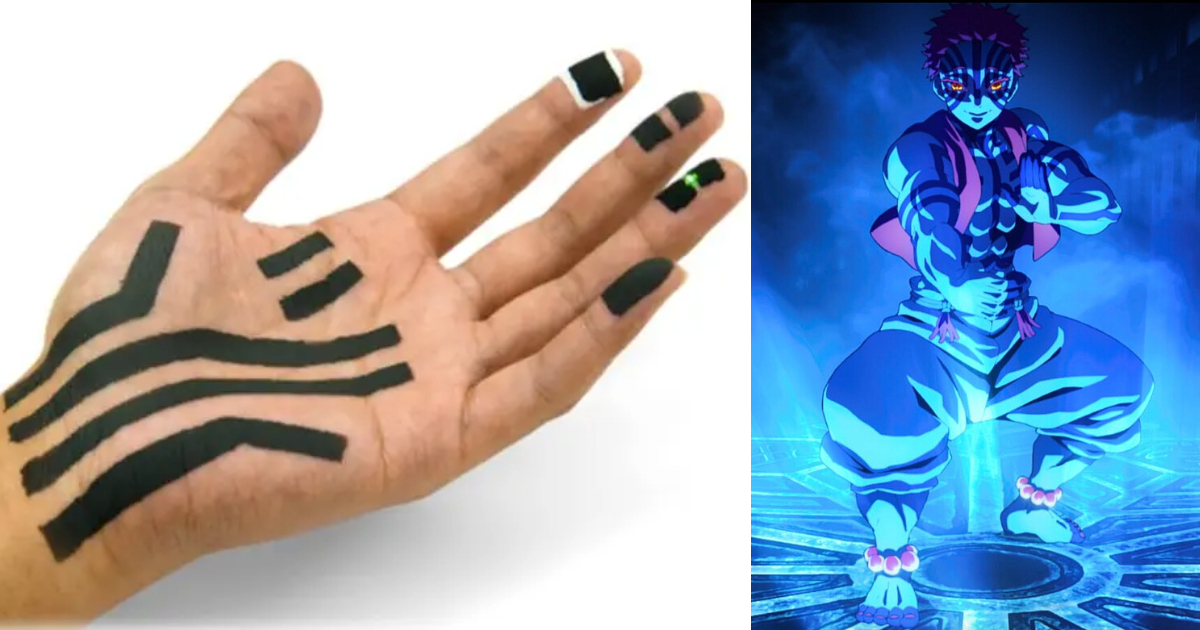
The University of Tokyo's official X post showcasing the research quickly drew attention, with users comparing the sensor's striking patterns to the demonic Demi-fiend from "Shin Megami Tensei III: Nocturne" and Akaza from "Demon Slayer: Kimetsu no Yaiba."
According to the researchers, most existing sensors designed to attach to the skin and measure physiological data are made from ultrathin films. But placing a flat film over curved, irregular areas such as a fingertip inevitably creates wrinkles or lifted sections, preventing the sensor from maintaining close contact with the skin. This has long posed a major technical challenge.
To solve the problem, the team ditched the conventional flat-film approach. Instead, it builds the sensor by layering ultrafine fibers measuring less than one micrometer in diameter directly onto the skin. The researchers also developed a special new ink that combines conductive carbon nanotubes with a body-conforming resin. The material is sprayed straight onto the skin as fine fibers, creating a nanofiber mesh. Because the fibers only need to bend to follow the shape beneath them, they can closely adhere to skin textures as fine as individual fingerprint ridges.
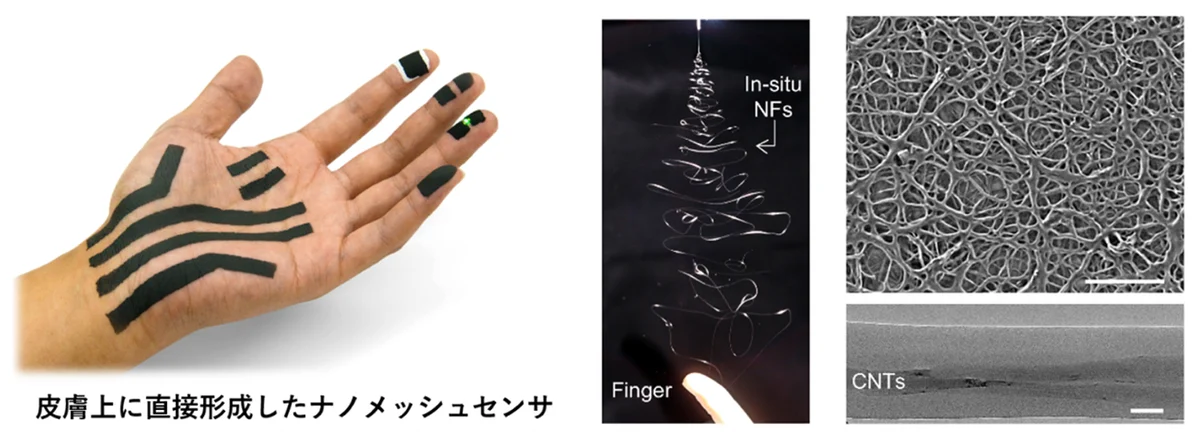
The finished sensor's mesh structure also provides excellent breathability, reducing the stuffy feeling caused by perspiration. It allows nearly 100% of body heat to pass through, making the sensor almost imperceptible while worn.
The team also demonstrated several practical measurement functions. After forming a sensor on the fingertip, researchers successfully tracked subtle changes in perspiration produced while reading or performing calculations, as well as the pressure placed on the fingertip when grasping objects. They also created sensors on the forearm to measure electrical signals generated by muscle activity, then analyzed the data using deep learning.
In testing, the system successfully identified seven different finger and hand gestures with an average accuracy of 97.8%. The results suggest that sensors formed directly on the skin could eventually track a user's hand movements with high precision and even convert subtle bodily changes into digital signals. The study was published in the UK-based scientific journal Nature Communications on November 16.
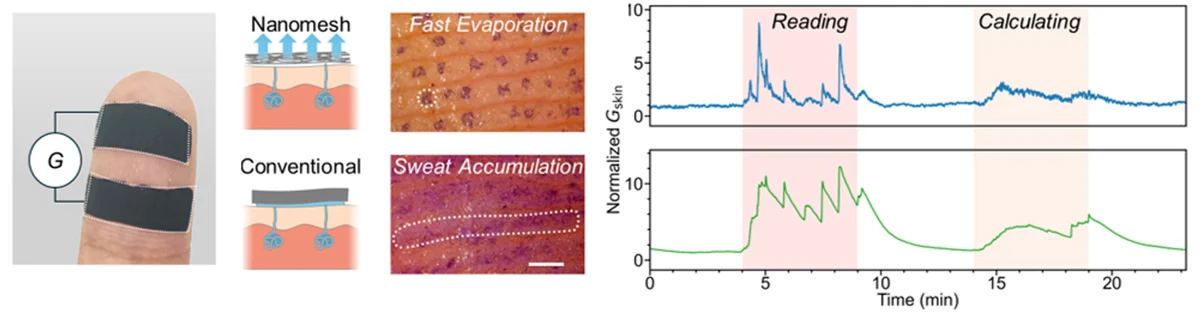
The researchers expect the technology to have applications across a wide range of fields, including everyday health management and continuous mental health monitoring.
For example, these sensors could eventually offer more intuitive ways to operate prosthetic limbs, VR devices, and AR systems. Instead of relying on conventional controllers, users could control them through hand gestures and signals from the body.

Naturally, the line patterns spreading across the body reminded Japanese users of the Demi-fiend's demonic form in "Shin Megami Tensei III: Nocturne" and Akaza from "Demon Slayer: Kimetsu no Yaiba," both of whom sport similarly distinctive markings.



Others thought the technology looked like cyberware straight out of "Cyberpunk 2077."
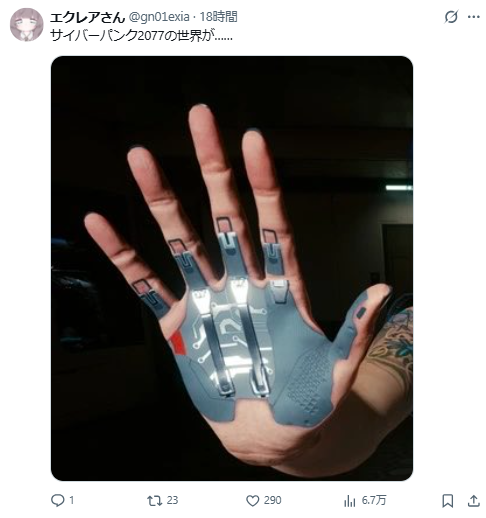
Visually, the technology certainly delivers a heavy dose of sci-fi flair, so it is easy to see why it has sparked comparisons to the body modifications found throughout cyberpunk fiction. The fusion of technology and the human body may no longer be just a sci-fi fantasy—it could be steadily moving closer to reality.
via: 東京大学大学院工学系研究科