


In American, European, Indian, and Egyptian comics, a shared universe is a common creative model. This approach is especially prevalent in Western comics, extending to adaptations in animation, novels, video games, and today's films. Today, we will delve into the culture and commercial value behind the shared universe concept. 
A shared universe is defined as a collection of different works by different authors whose stories can be placed on the same timeline without contradicting each other's plot continuity. For example, if Spider-Man's solo series featured him in a black suit, then when he guest-starred in another character's or team's series, he would also have to appear in the black suit. Otherwise, it would be a contradiction, unless the guest appearance was explicitly set at an earlier point in time. Even within the same brand, allowing different production teams to execute stories is a commercial strategy of the shared universe. 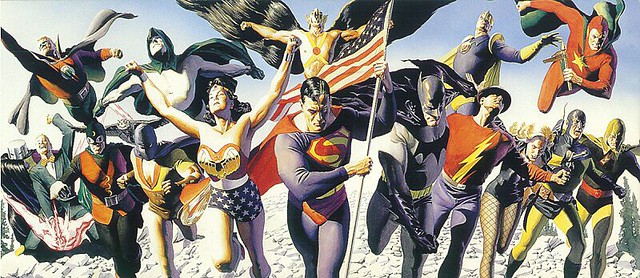
When World War II broke out, comics became the most mainstream entertainment. DC Comics (then its predecessor, National Allied Publications) conceived the idea of uniting its heroes to reflect the wartime social climate. Thus, the first superhero team in history, the Justice Society of America, emerged. Heroes then began guest-starring in each other's series, and the shared universe of comic book heroes took shape. 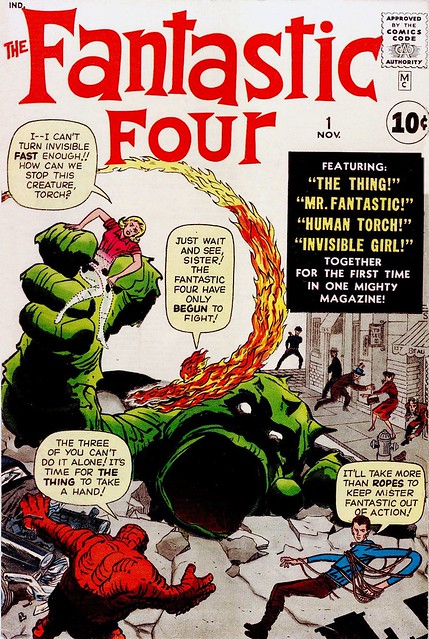
Marvel, on the other hand, also united heroes during WWII, but did not establish a detailed shared universe plan until the first issue of Fantastic Four in the 1960s. They used that comic as the starting point for their timeline, creating a shared universe timeline for all comics released before and after it. 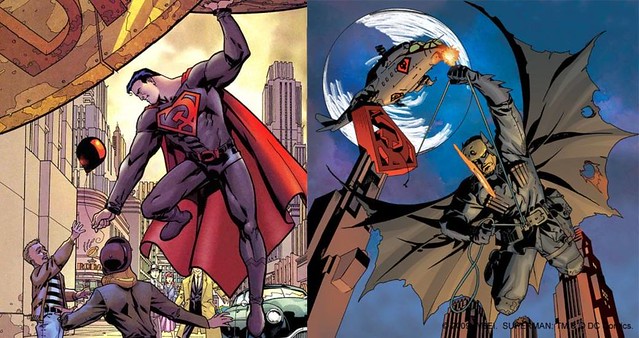
So where did parallel universe stories come from? It's actually a very simple idea: What if I wanted a certain character to have a different setting? What if I wanted to do this or that with a certain character? After all, the main continuity needs to consider the development of previous stories and cannot be written into a corner that prevents future development. Furthermore, since it's the main continuity, it needs to cater to the mass market, so sometimes creators cannot freely write stories with a strong personal style. Western entertainment, however, highly values personal style, but without altering the main continuity. Therefore, parallel universe stories were created. 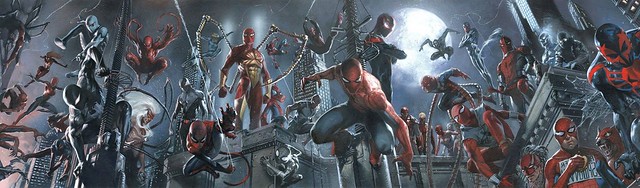
A famous example is Superman: Red Son, which reimagines Superman growing up in the Soviet Union during the Cold War, learning communism instead of democracy. Batman becomes a human rights activist wearing a Russian ushanka and overcoat, opposing Superman. Or what about a story where all Marvel heroes turn into zombies, devouring their loved ones and then the entire universe? Sometimes, however, parallel universes interact with the main continuity, primarily to highlight differences, but also to show that these creations still have some connection. For instance, the recent popular Spider-Man story "Spider-Verse" features the main continuity Spider-Man gathering all the parallel universe Spider-Men created by Marvel over the years to fight a common threat, and it has also spawned related video games and animated series.
▼ The best-selling comic series "MARVEL ZOMBIES," which turns all MARVEL superheroes into zombies. The first issue, originally released in 2005, has skyrocketed from its original price of US$2.99 (NT$90) to US$900 (NT$27,000). 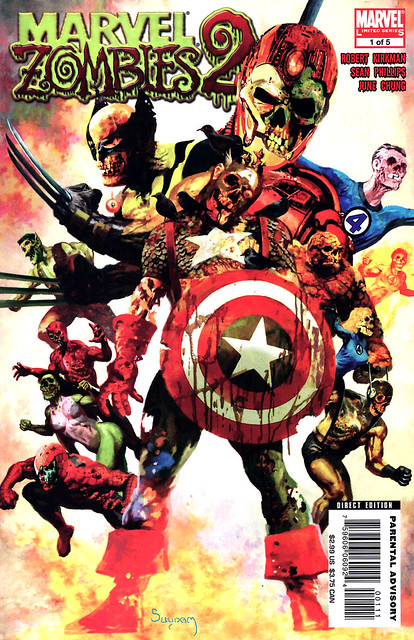
Once a universe is created, the accumulation of settings and the continuation of plots are inevitable. Therefore, different teams working on different series must communicate effectively to avoid continuity errors. This is where the concept of Canon comes into play. Canon is responsible for defining whether a story belongs to the main continuity of that universe. For example, if Captain America: The Winter Soldier has a prequel comic, that comic adheres to the Canon guidelines of the Marvel Cinematic Universe, but not to the Canon guidelines of the comic book main continuity. 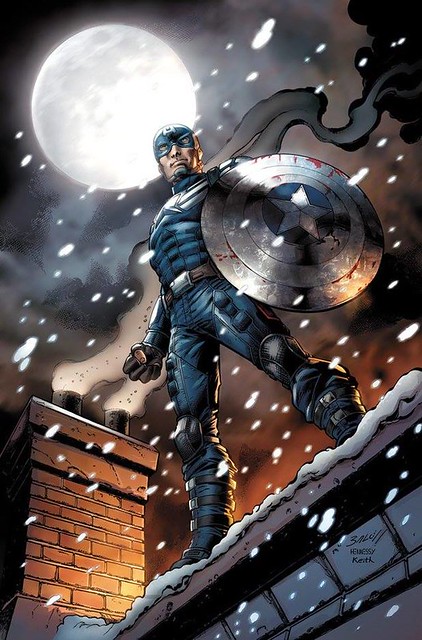
Furthermore, different media often have different shared universes. This is partly because creative philosophies and development ideas vary, and partly due to differences in budget and story pacing. Comics are released monthly, and with different characters, a month of universe development is equivalent to the progress of over a dozen films. Films, on the other hand, take one or two years to produce. So, if films had to align with comics, could you predict the comic's development two years in advance? Coupled with different target audiences, unification is actually very difficult. But didn't you say films could be supplemented by comics? 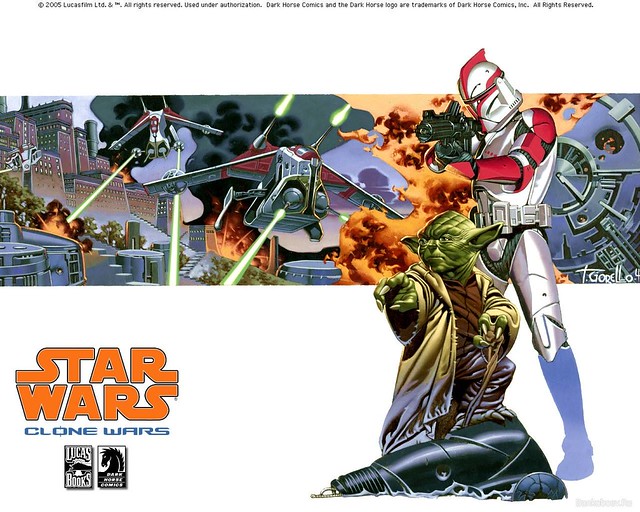
OK, that's a good question. You need to understand that a shared universe originating from comics will not use other media to supplement its story, for the reasons mentioned in the previous paragraph. Conversely, a shared universe originating from other media, such as Star Wars, which started with films, might release a film only every few years. In the interim, comics, video games, and novels can be released to fill in gaps or cover subsequent time points, because films are infrequent and development isn't too rapid. In contrast, for a shared universe originating from comics, a comic is released monthly or bi-weekly. A single character's progress in a year is enough for two to four films, so the strategies are different.
Someone might ask, if characters are in the same universe, do guest appearances still count as Crossovers? No, they certainly do not. In fact, many Taiwanese people mistakenly believe that any interaction between different characters is a Crossover, which is a completely wrong concept. You'll find that many products are considered Crossovers just because two brands collaborate. The true definition of a Crossover is when two brands exchange characteristics.
Therefore, in comics, a Crossover refers to different series telling the same story, because different series usually focus on different themes. For example, there are three comic books starring Batman, titled Detective Comics (focusing on Gotham City's criminal culture), The Dark Knight (exploring Batman's symbolic meaning), and Batman (detailing Batman's personal development). Although the protagonist is the same, the three series discuss different concepts and usually tell separate stories. However, if there's a major storyline that requires all three series to tell it together, that story would be called a Crossover story. 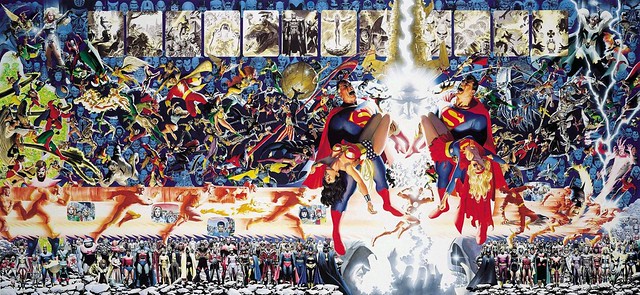
As for the culture of "big events," beyond the commercial hype, culturally they correspond to real-world historical events that shake the entire world, such as Columbus discovering the New World. Similarly, comic book big events also impact the overall progression of the comic universe.
Typically, big events are told in separate series, such as Secret Invasion having its own eponymous series, rather than borrowing existing series for development. Individual character and team series will be branded with the Secret Invasion title to correspond, like Secret Invasion: X-Men, which tells a side story about what the X-Men were doing during Secret Invasion. The conclusion of Secret Invasion led the Marvel universe into the Dark Reign under Green Goblin, ushering the universe into a new era. Therefore, reboot stories are often also big events, because a reboot brings the universe into its next phase, entering a new social climate. 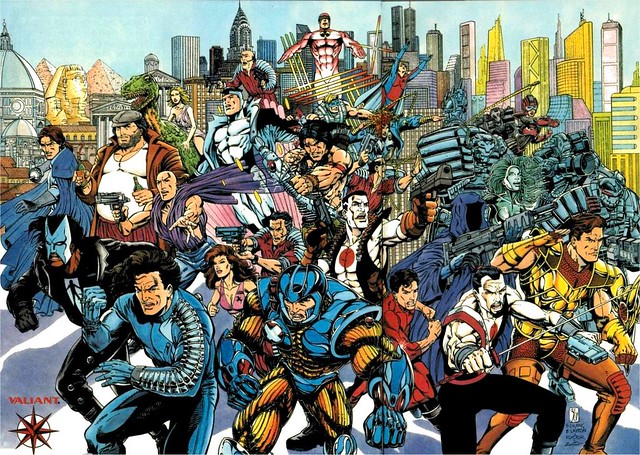
Finally, to summarize, why is the shared universe more commonly used in Western cultures? It's because their societies often have immigrants from different ethnic backgrounds, leading to frequent discussions around issues of diverse cultures. These different ethnic groups live in the same country, meaning many issues coexist in the same world. Thus, the shared universe can also be seen as a reflection of Western culture's embrace or conflict with multiculturalism. For example, Superman and Batman can contrast the bright and dark sides of society, while Spider-Man, who explores youth issues, combined with the X-Men, who tackle racial issues, can merge into a discussion of how young people view racial issues – it's that simple.
So, Taiwanese people often find it strange when some works are forced into the same universe. However, due to national issues, Westerners often discuss topics that many Asians believe should not be mixed. They integrate and explore these discussions, much like the Warrens in The Conjuring, who try to explore supernatural phenomena scientifically. For instance, a sudden drop in temperature when a ghost passes by can indicate an unnatural phenomenon. In contrast, most Asians believe that science and the supernatural cannot be mixed.
Further Reading:Screen Fandom
>>> Click here for more exciting 'Marvel' toy collections and related news!!!