


Following yesterday's incredibly exciting "Captain America: Civil War Full Easter Egg Analysis Report (Part 1)," today, Western entertainment expert POPO will continue to provide the most detailed introduction and analysis of the easter eggs appearing in "Captain America: Civil War" for all toy enthusiasts. After seeing this fantastic content, watching the movie again will definitely be even more exciting and fun! 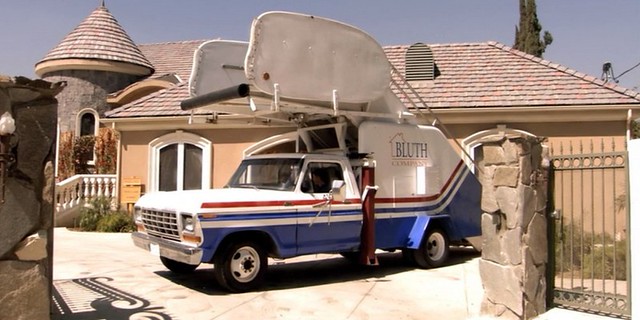
Comedy - "Arrested Development" Easter Egg
A car was quite noticeable during the airport battle, and that car frequently appears in "Arrested Development," another comedy led by the Russo Brothers. "Arrested Development" holds a special place for the Russo Brothers because the show's success led them to win an Emmy Award, creating a new direction for family comedies and bringing their talent to public recognition. 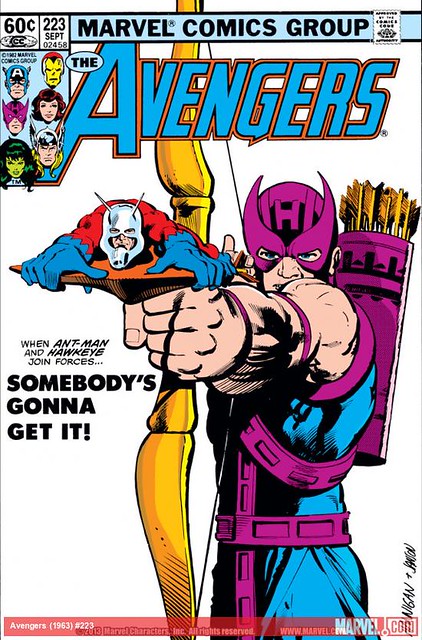 Hawkeye and Ant-Man's Combo Move
The combo move between Hawkeye and the second Ant-Man in the movie references the cover of Avengers comic issue #223. Additionally, Ant-Man uses his giant-sized ability in this installment, though he doesn't call himself Giant-Man. 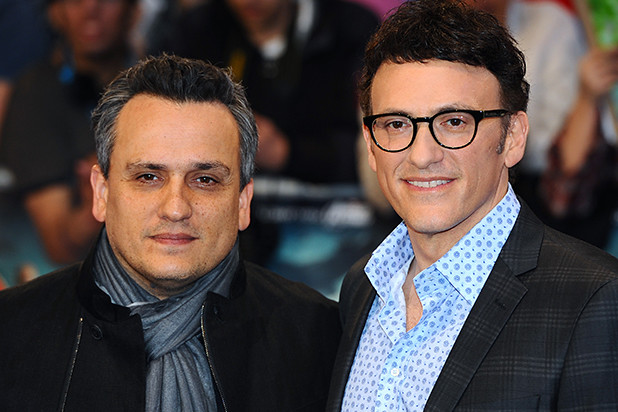 Director's Cameo
Joe Russo (left), one of the Russo Brothers who directed "Civil War," makes a cameo appearance as the psychiatrist killed by Zemo, allowing Zemo to impersonate him and trigger the Winter Soldier's rampage. 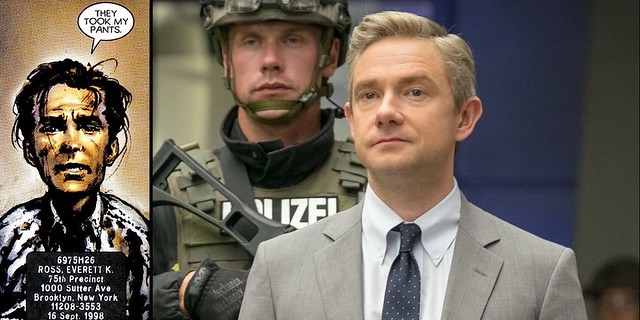
Sharon Carter's Superior - Everett Ross
Martin Freeman, known as the British Watson / young Bilbo, plays Everett Ross in the film. In the comic's main continuity, he is a State Department official who liaises with Wakanda and frequently assists Black Panther in international politics. However, in the movie, he is currently just the CIA leader of the Joint Counter Terrorist Centre and Sharon Carter's superior. 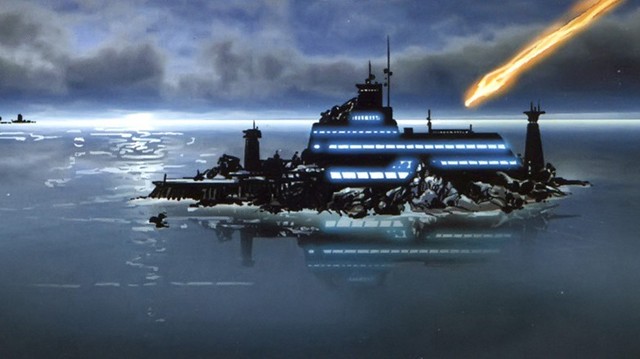 The Raft, a Prison for Superheroes
The Raft is a prison in the Marvel main continuity universe where supervillains are incarcerated, built on Ryker's Island in New York (which is also a high-security prison in the real world). The movie version of the Raft incorporates the Project 42 setting from the original Civil War, where Project 42 was a prison built in the Negative Zone to hold unregistered superhumans. However, the "Negative Zone" setting belongs to the Fantastic Four, and its rights are currently with Fox Films. Therefore, the prison in the movie version of "Civil War" was changed to an offshore base facility, also serving as a prison for anti-registration characters. 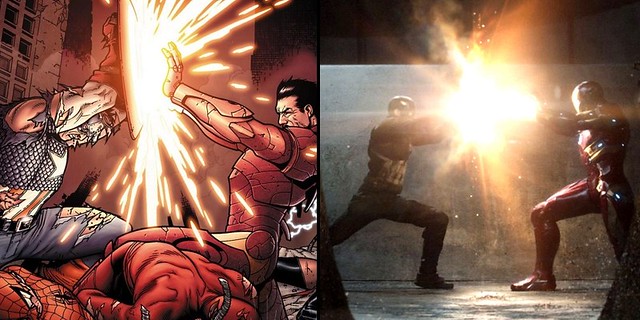 Classic Civil War Scene Recreated
The scene of Iron Man confronting Captain America references the cover of the "Civil War" comic story. The only difference is the costumes in the comic and the movie, and there are no other Marvel characters below. 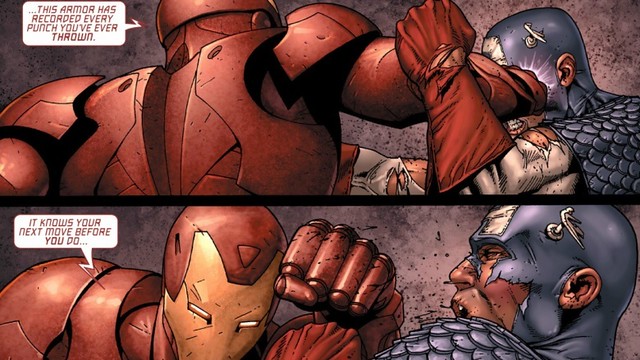
Iron Man Suit Analyzing Combat Techniques
The armor analyzing Captain America's combat style is also referenced from the comics. However, since everyone has known each other for quite some time in the comics, Iron Man's armor also contains combat data analysis for many other heroes. 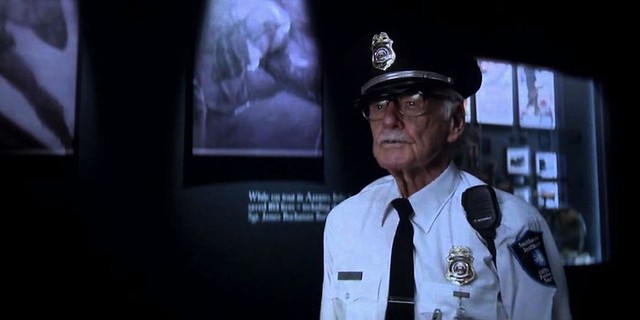 Stan Lee's Cameo in This Episode
Of course, Stan Lee makes another cameo! This time, he plays a FedEx delivery man, handing Captain America's private mail to Iron Man and mistakenly calling Tony by the wrong name (the image shown is from his cameo in Captain America: The Winter Soldier, used for illustration purposes as the official image from Civil War has not yet been released). 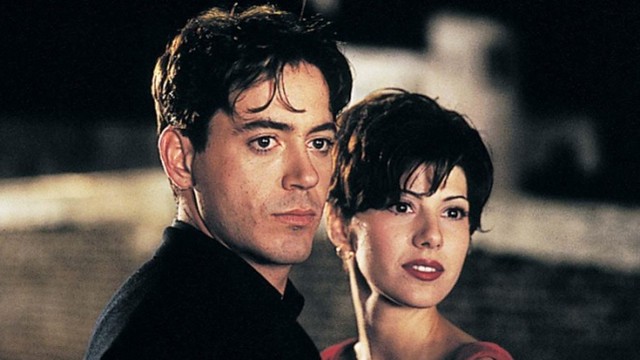 Tony and Aunt May
When Tony visits Peter Parker's home, his interaction with Aunt May feels like they are friends, even playfully teasing each other. This is actually because Robert Downey Jr., who plays Tony, and Marisa Tomei, who plays Aunt May, previously worked together in the films "Chaplin" and "Only You," and they also dated. In the comics, Tony also acts as a father figure to Peter, so there are connections both on and off-screen. 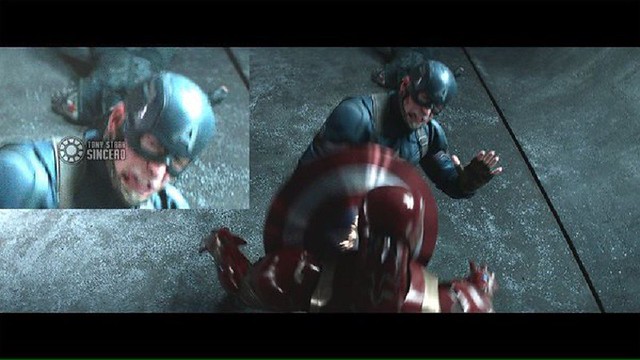
"Star Wars" Hand-Losing Trope
Yes, ever since Star Wars and Marvel became part of the Disney family, Marvel has started using the hand-losing trope. This time, when the Winter Soldier fights Iron Man, his mechanical arm is shot off by Iron Man's chest repulsor blast. Around the same time in this scene, Captain America, in defense of the Winter Soldier, also utters his iconic line from his first solo movie: "I Could Do This All Day." 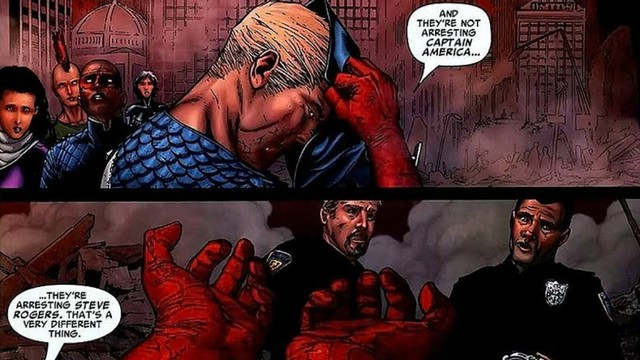 The Difference Between Steve Rogers and Captain America's Identity
Tony argues that the shield doesn't belong to Captain America because his father designed it. In the end, Steve doesn't rescue his imprisoned teammates as Captain America, but rather as an ordinary individual. This references many aspects of the original comics, such as Steve's political reasons for not wanting to continue as Captain America due to government corruption, and the final events of Civil War where he discards his shield and mask, surrendering as an individual. These all highlight that Steve sometimes approaches the entire situation from a personal standpoint, rather than as a patriotic hero. 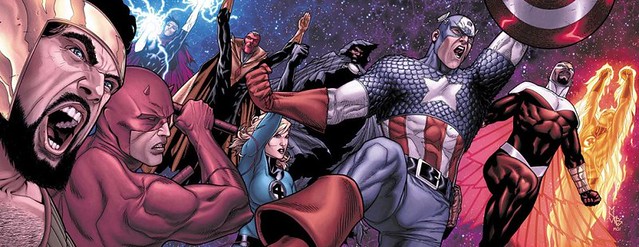 Two Avengers Teams
The Secret Avengers: When the Registration Act began, Marvel characters who sided with Captain America became criminals for not registering, so they went underground to fight crime, thus being called the Secret Avengers. In the movie version, Captain America and others are now also wanted fugitives, so they can be said to have become the Secret Avengers. This also led to the movie having two factions of Avengers teams, a relationship that also pays homage to the New Avengers and Mighty Avengers after Civil War. 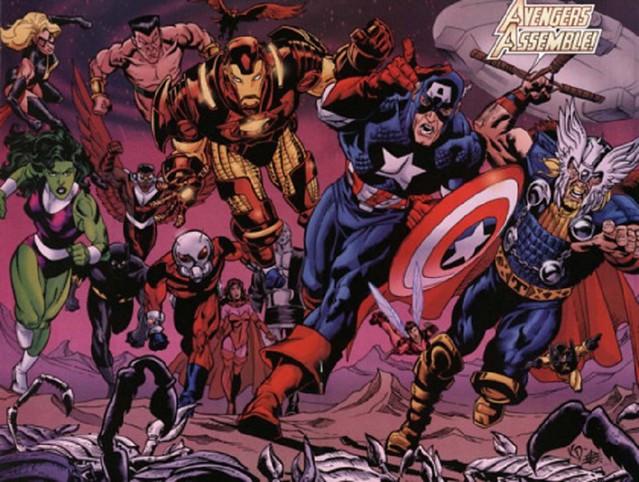
Homage to the 90s
When discussing whether to register, Steve mentions that each country has its own considerations, and even with good intentions, it can negatively impact the team. This is a homage to the development of the Avengers in the 90s. At that time, the Avengers became a UN peacekeeping force, but for international political correctness, the retention or dismissal of members was based on political considerations rather than ability and character, which greatly affected the team itself. 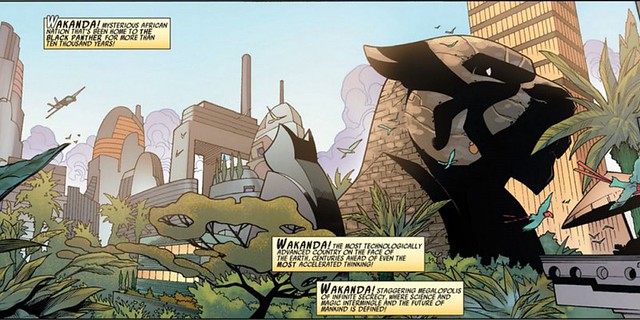 The Kingdom of Wakanda
The first post-credits scene showcases the advanced technology of Black Panther's nation, Wakanda, such as the cryo-sleep chamber for the Winter Soldier. However, it then also conveys that despite its high technology, Wakanda does not forget its traditions, as the scene shifts to a giant Black Panther statue, giving the audience a general understanding of Wakanda. 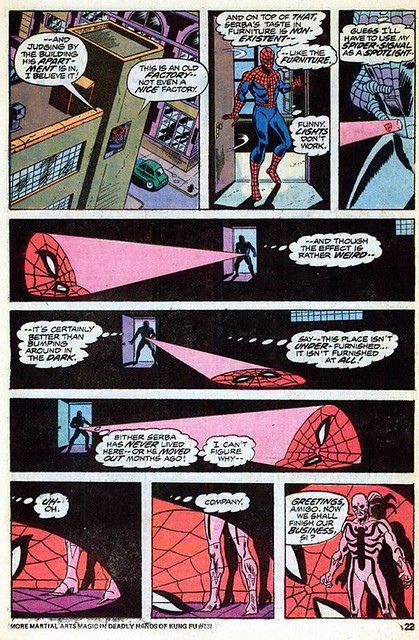 Spider-Signal
The second post-credits scene shows Peter briefly using the Spider-Man suit equipment Tony made for him, resulting in a signal light appearing. This actually references early Spider-Man equipment from the main continuity comics, occasionally used for detection, or to momentarily blind enemies, or to scare petty street criminals. 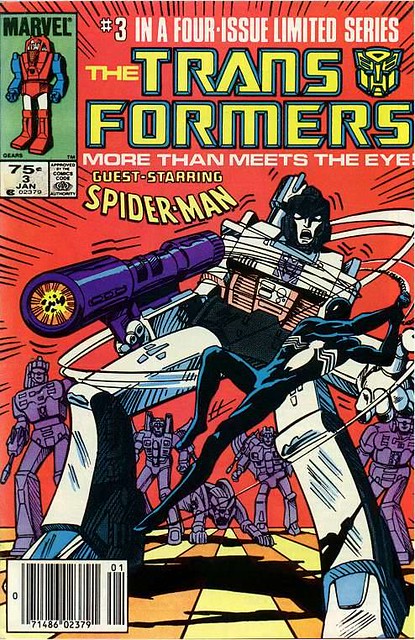
Homage to the Dream "Spider-Man vs. Transformers"
Although Spider-Man fights Giant-Man because he recalls "The Empire Strikes Back," the actual method of binding references Marvel's Transformers comic issue #3. At that time, Hasbro asked Marvel to design character personalities and storylines, so Marvel intended to integrate Transformers into its main continuity universe, thus introducing Spider-Man and S.H.I.E.L.D. in issue #3. However, Hasbro wanted Transformers to have its own universe, so the storyline of this issue is considered an unrecognized "black history."
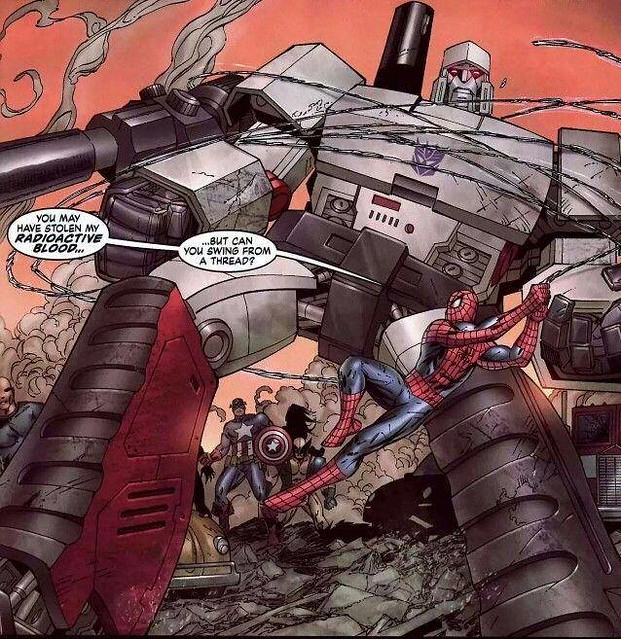
However, in the later collaborative comic "New Avengers/Transformers," Spider-Man once again used his webs to bind Megatron, recreating that classic cover.
Further Reading:
Screen Fandom
>>> Click here for more exciting 'Marvel Superheroes' themed toys and related reports!!!