


Recently, in the final scene of the first issue of Captain America's new series, "Captain America - Steve Rogers," he whispered the secret phrase of Hydra, the evil organization he had fought his entire life – "Hail Hydra." This caused a huge uproar and sparked heated discussions among comic fans worldwide. But I must say, it was only the last panel of the first issue of a new series; the story's setup hadn't even officially begun to take shape, and there wasn't even a plot explanation... What's worse, Taiwanese media selectively quoted many Marvel actors' support for the new series' writer, misinterpreting it as them being angry about it, once again misleading the perception of American entertainment culture in this operation.
So today, the editor, in collaboration with Toy People, is here to introduce to all you toy enthusiasts the most famous hero-turned-villain storylines in both the mainstream superhero universe and independent stories. This is to let everyone know that such an evolution is merely a plot twist, a temporary period, a brief event, rather than an irreversible change that overturns previous settings. Moreover, American comics often reflect the realities of society. So even if Captain America becomes a member of Hydra, it merely expresses that superheroes are also human, and they too can go astray, or there are more reasons involving moral values in a gray area.
Of course, I don't deny that everyone will be surprised; in fact, even I was astonished when I saw that scene. I even actively participated in various discussions, but I wouldn't misinterpret it by taking things out of context. Instead, like many rational fans, I'm waiting to see how the story develops to learn the truth of the entire plot. After all, it's only "a single panel in the first issue," and the cause and effect haven't even been explained. Please don't rush to conclusions yet! The stories I'm about to introduce to you toy enthusiasts below are about the journey from superhero to supervillain, allowing you to understand that, in terms of plot, there will be at least six issues to explain the evolution.
Furthermore, these setups were all pre-arranged plot points by the writers at the time. The story simply adopted a gradual approach, allowing the audience to only discover in the end that the character was a villain, controlled, an undercover agent, or for other reasons, rather than being "thought up on the fly." Therefore, please pay attention to the concept of "story setup" when viewing these stories. 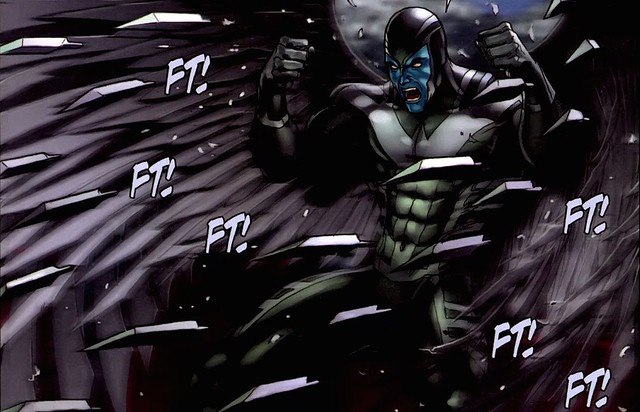
Archangel
Archangel, the most loyal subordinate of Apocalypse's Four Horsemen, was even revealed to be Apocalypse's successor. The most astonishing part was that Angel, in the original comic's setting, was one of the X-Men's original five members, yet he was twisted into "Death" by Apocalypse. After Apocalypse was taken away by the Celestials, Archangel became the new Apocalypse and even fathered the Apocalypse Twins, becoming the main enemy of the Avengers Unity Squad, composed of superhumans and mutants led by the Executioner. This setup spanned from 1988, when Apocalypse began choosing his Four Horsemen, to 2012. 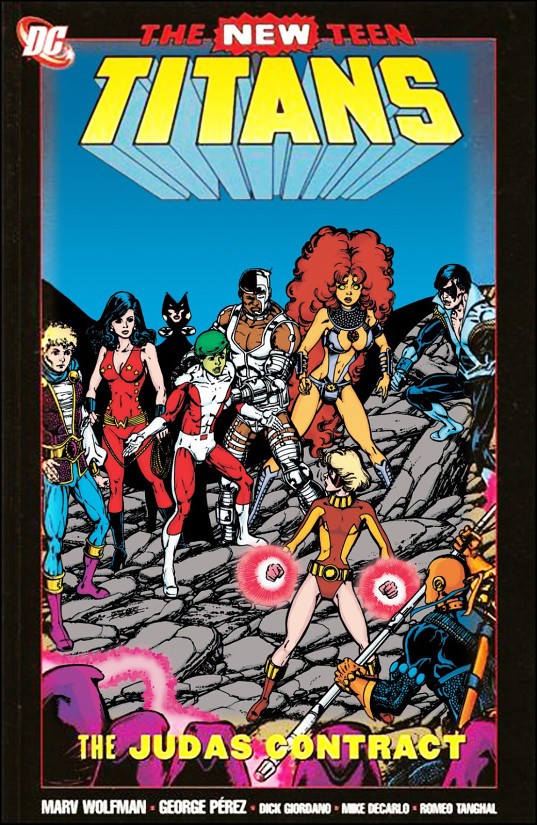 Terra
Terra, a teenage superheroine who could control the earth, was actually a spy for Deathstroke. Throughout the story, readers never discovered she was a villain, and she even had a fake romantic relationship with Beast Boy. Through a series of events, Terra felt betrayed by everyone and attempted to destroy them all with her powers, only to end up burying herself alive. To keep her true nature a secret, the Titans even erected a statue for Terra, just like other fallen Teen Titans members, but this also caused much controversy and deeply hurt Beast Boy. Even in recent stories, Terra's betrayal continues to affect the Teen Titans' emotional state. 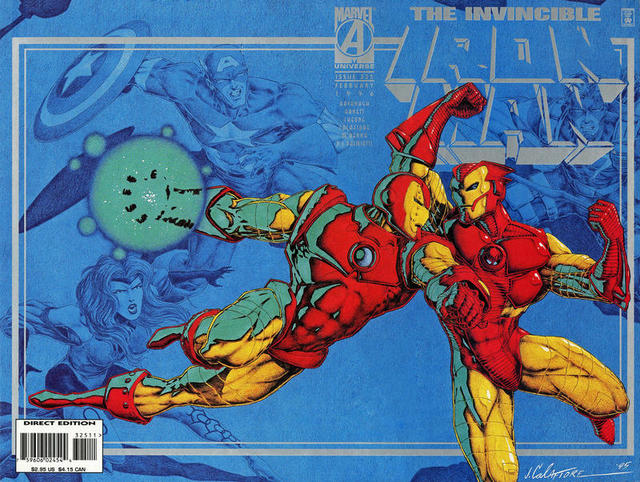 Iron Man
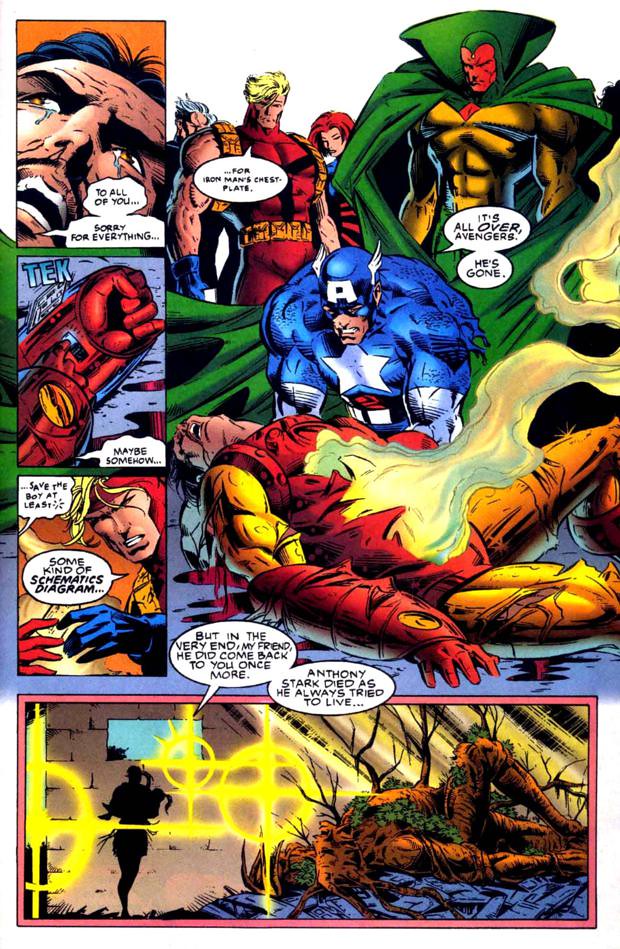
To prevent a certain future from happening, the temporal villain Immortus controlled Tony, making him form an additional hero team, Force Works (at the time, the series showed no signs of brainwashing, but the author had already planned to explain it in later stories). It was eventually revealed that he was a spy, almost leading to the destruction of all heroes. The Avengers had to bring in a younger Tony for help, which resulted in the death of the mainstream Tony. Finally, through the powers of Mister Fantastic's son, Franklin, the mainstream Tony was resurrected and merged with the younger Tony, allowing the mainstream Tony to continue his activities in the mainstream universe.
▼ The scene of Iron Man - Tony Stark's death.
 Green Lantern
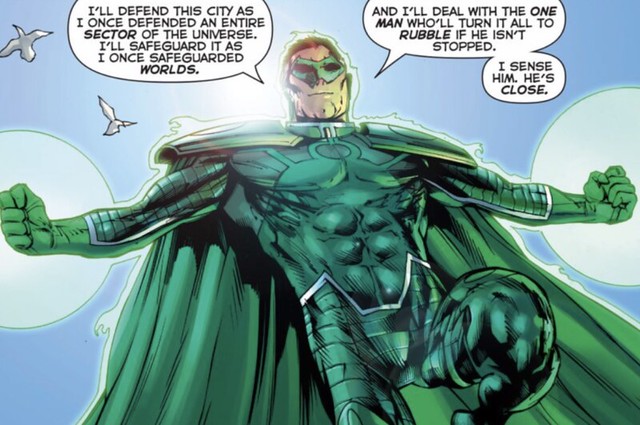
When Superman was resurrected, Cyborg Superman and Mongul destroyed Green Lantern Hal Jordan's hometown, Coast City. This led to Parallax taking advantage of his vulnerability, possessing him and massacring the entire Green Lantern Corps to gain more ring power and rebuild and resurrect Coast City. Hal eventually sacrificed himself to save Earth, but also became the Spectre, God's avenging spirit, to atone for his sins, before being reborn as Green Lantern again. This series of changes for Hal spanned 12 years, from 1994 to 2006. So, in comparison, for Captain America to merely shout "Hydra" in "a single panel in the first issue," and for some media to mislead and sensationalize, it's truly making a mountain out of a molehill! 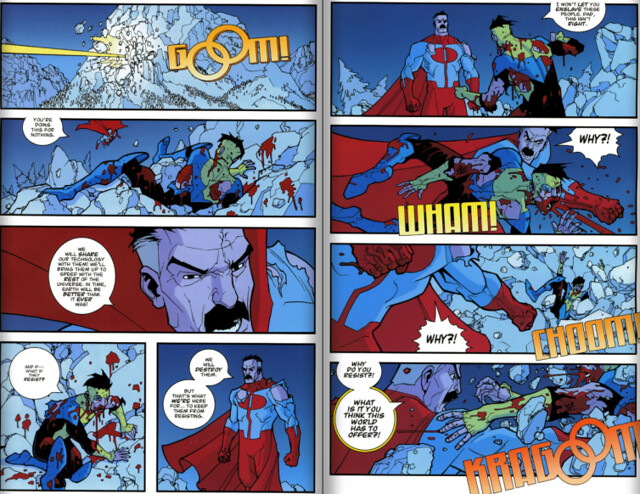 Omni-Man
 is the father of the Image Universe's teenage hero Invincible. He is a member of the alien Viltrumite race who came to Earth as a protector and married an Earth woman. At the beginning of the series, he was portrayed as a Superman-like hero, constantly teaching his son how to be a superhero and discussing their feelings, essentially a good father. However, subsequent plot twists revealed that his protector image was a facade; he killed many Image Universe heroes and brutally beat his own son. Yet, the father-son bond with Invincible was written so well in the story, making readers feel deeply conflicted.
*Note: Invincible was created by Robert Kirkman, the author of "The Walking Dead" comic. Therefore, I highly recommend the Invincible series. Not only has it been selected as one of the best modern young hero works, but Robert Kirkman also used Invincible #60 to bring all Image superheroes together again.
Superboy-Prime
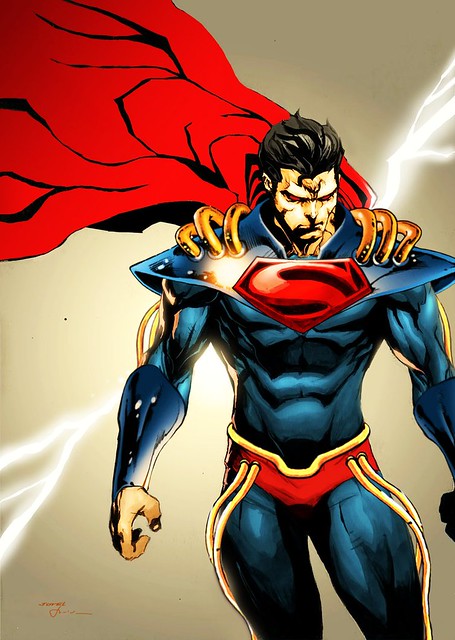
Superboy-Prime's world was similar to the real world, where superheroes only existed in fictional media, and he was the only one with superpowers. Because his father was a comic fan, he was named Clark Kent. One day, he truly gained Superman-like abilities and then met Superman, together dealing with the Crisis on Infinite Earths, but his own world was also sacrificed.
Yet, he remained a great Superman, willing to fight to the last moment even with his world sacrificed, helping the heroes defeat the Anti-Monitor. After the DC mainstream universe was formed, he resided in a paradise dimension, observing its operation. However, he was unexpectedly instigated by his friend, Alexander Luthor Jr. from Earth-3, who believed the mainstream universe was corrupt and that his own universe's sacrifice was in vain. He then fought many heroes, accidentally killing a few, and thus spiraled further, becoming a very powerful supervillain.
For DC readers, Superboy-Prime's first impression was that of a great hero who saved the entire multiverse. So when he appeared as a villain in "Infinite Crisis," the story commemorating the 20th anniversary of Crisis on Infinite Earths in 2005, it instantly surprised many readers. In the reorganized DC Universe, he has not yet reappeared. 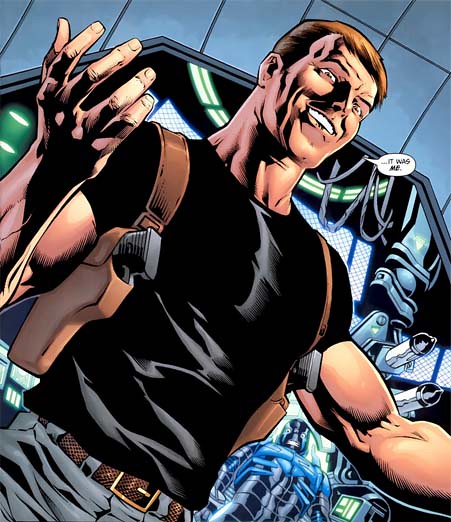 Maxwell Lord
A member who joined the Justice League during the Justice League International era. The Justice League stories of that period were very entertaining but also maintained the importance of their themes, so the members were very well-liked by DC readers. Lord, in particular, was a fun character with a businessman's personality, often helping his fellow League members. This image was maintained for nearly twenty years until he later killed the second Blue Beetle and attempted to control Superman with his psychic abilities to kill Batman, ultimately being killed by Wonder Woman who snapped his neck. He was later resurrected by the White Lantern during Blackest Night, and in the New 52 era, he was still the leader of the government agency Checkmate.
His turn to villainy caused a significant backlash from many DC fans, but this reaction only occurred after the "story was fully told," not just from a single panel in the first issue. For me, the editor, this character's turn to evil was also very heartbreaking because I really liked him when he was a good guy. 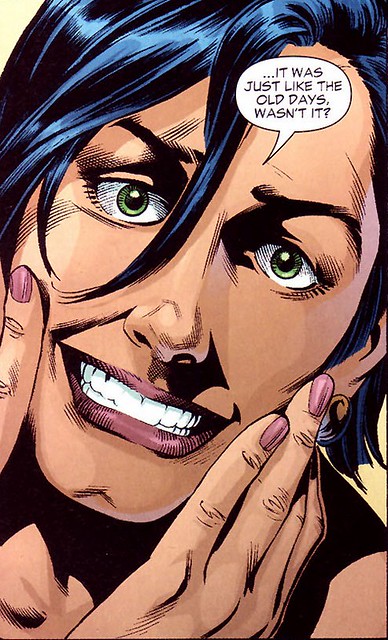 Jean Loring
Ray Palmer's ex-wife, the Atom, and very familiar with the Justice League members. However, to get Ray back, she orchestrated attacks on superheroes' relatives, leading to the death of Elongated Man's wife and the father of the third Robin. Jean and Ray were the epitome of a perfect couple in the Silver Age of American comics. When I first got into American comics, they were already divorced, but still had feelings for each other. Because of this, Jean's murders created a contradictory internal thought for readers: her turn to evil was understandable, but because her partnership with Ray was so classic, this setting felt a bit regrettable.
Elongated Man and his wife Sue were also members of the Justice League International, and their fun interactions were very popular with everyone. Therefore, when Jean killed Sue, it was one of the most heartbreaking moments for readers. At that time, Maxwell Lord, mentioned above, desperately searched for the killer without knowing who it was. So, when he subsequently turned evil, it made many readers who enjoyed the fun personalities of the characters during the Justice League International era feel even more strongly about the importance of the shift in the standards of good and evil in DC's approach to characters. 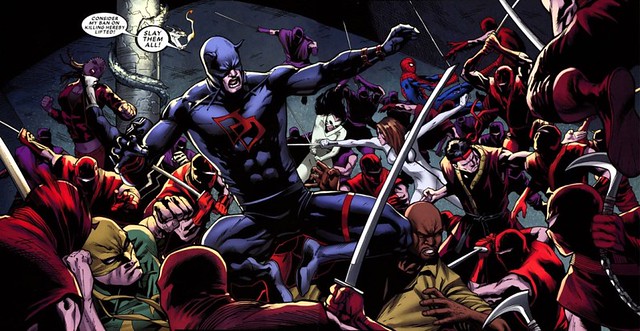
Daredevil
During the Dark Reign era in the Marvel Universe, to combat Norman Osborn's tyranny and his H.A.M.M.E.R. forces, Daredevil ultimately agreed to become the leader of the Hand, so he would have the resources to protect Hell's Kitchen. However, he was eventually possessed by the demon "the Beast" worshipped by the Hand, killed Bullseye, and engaged in a deathmatch with all of Marvel's street-level heroes, before finally breaking free from the demon's control. Afterward, he briefly asked Black Panther to protect Hell's Kitchen for him. Some superheroes becoming members, or even leaders, of their archenemy organizations have their reasons. So, making a definitive judgment based on a single panel in the first issue once again proves that surprise is normal, but overreaction is unnecessary. 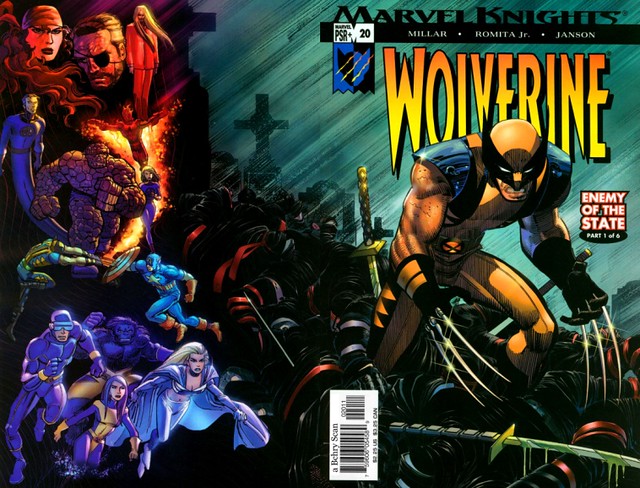 Wolverine
, in fact, mostly became a villain due to brainwashing, such as becoming Death of the Four Horsemen of Apocalypse, or being brainwashed by the Hand and Hydra, as well as in the alternate reality story "Old Man Logan," where he was misled by Mysterio into killing all the X-Men. Although all were brainwashed, these stories of Wolverine turning evil unleashed his bestial nature, which is also the theme Wolverine's character has explored to this day – the conflict and suppression of humanity and bestiality. After all, sometimes the greatest enemy is oneself, and that statement holds a lot of truth.
 THE PLUTONIAN
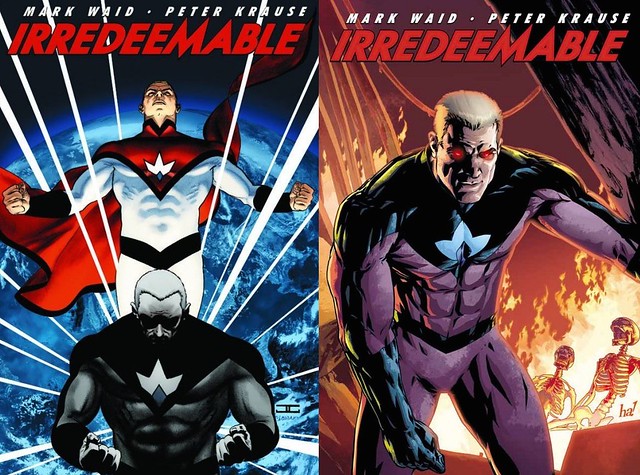
 is also a superhero who pays homage to Superman, but his story more clearly expresses the dangers and changes the world would face if a hero as powerful as Superman suddenly abandoned all moral restraints. He killed all his friends and many superheroes, all symbolizing the importance of why the true Superman does not kill. Therefore, even though this is just a character paying homage to Superman, many readers consider this to be what Superman would look like if he turned evil; DC's parallel universe Injustice Superman is nothing compared to this.
Further Reading:
Screen Fandom
>>> Click here for more exciting 'MARVEL SUPERHERO' themed toys and related reports!!!