


"Batman: The Killing Joke" is the most classic Joker story in the Batman series, and is considered by many European and American comic fans to be the most compelling "Joker" origin story, hailed as a must-read comic for Batman enthusiasts. This work has been adapted into an animated film, which will soon be released for a limited time in Taiwan! So, today's article is a preview to let everyone know why this story is so astonishing and has received such high praise. Since the editor has already seen the preview screening, I'll start with my review. Essentially, the film itself is a direct adaptation of the entire comic book, so any parts that aren't spoilers are original plotlines; please keep this in mind. 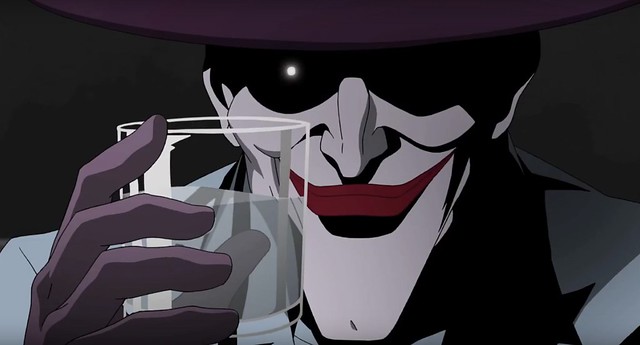
The writer of this comic is Alan Moore. He often says that his comics are not suitable for film adaptation because his storytelling methods are determined by the medium, and he has a certain understanding with his artists. Therefore, Brian Bolland, the artist for The Killing Joke, and Richard Starkings, the letterer, created an absolutely superb artistic style for the entire story. If the entire story were made into a live-action film, it would definitely fail to capture the narrative style of The Killing Joke.
Note: Alan Moore is a renowned comic book writer, novelist, and screenwriter. His famous works include "Watchmen," "V for Vendetta," and "From Hell." He won the Hugo Award for his graphic novel "Watchmen."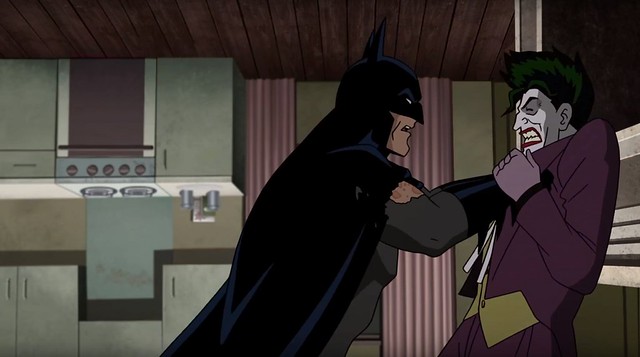 For this reason, adapting it into an animated film, I believe, is a smarter approach, as both animation and comics are two-dimensional, allowing for a closer stylistic resemblance. However, they are still different mediums. Thus, the animated film utilizes animation techniques for lighting and shadows to recreate the eerie style of The Killing Joke. Unfortunately, the special typography was not replicated. Another area where animation compensates for shortcomings is the voice acting. Both the Joker and Batman are voiced by Kevin Conroy and Mark Hamill, who are widely recognized, even considered the definitive voices for the two characters. Especially the competitive dialogue, and even the final scene where both characters laugh together, becomes even more chilling due to the voice actors' skill.
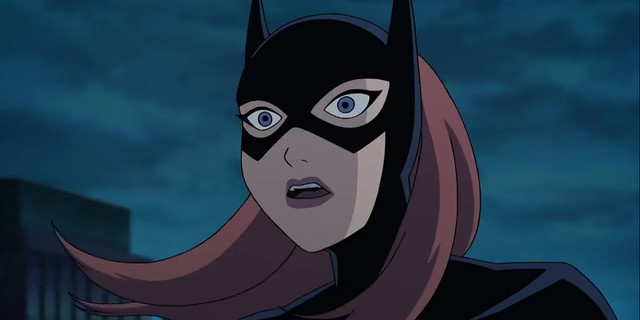 The original part is the prologue story, introducing the character of Batgirl to the audience. But why create this original segment? Because The Killing Joke is a canonical story with a certain amount of accumulated history, comic readers are already very familiar with Batgirl. However, the purpose of the adaptation is to allow those unfamiliar with her to understand the story, and Batgirl is also one of the core characters in this narrative. This original plot can provide a preliminary understanding for those who don't know Batgirl, though her relationship with Batman is quite significantly altered compared to the comic.
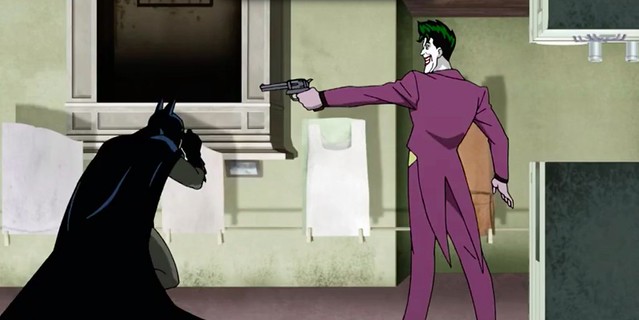
The previous paragraph addressed concerns about artistic integrity, but overall, this animated film is a success. As I mentioned, while it couldn't replicate the comic's unique typographic art, it compensated with voice acting, which the comic lacks. Another point for everyone to note is that this story is not an entertainment-driven action flick; it's a philosophical exploration of the fundamental nature of Batman and the Joker, so don't expect it to be a "feel-good" movie.  The story of The Killing Joke itself was inspired by Detective Comics #168, published in February 1951. This comic was the earliest story to explore the Joker's origin. I'll say it again (in case anyone forgets), this was the earliest story to explore the Joker's origin. It tells of Batman and Robin being invited to a state university as guest lecturers. Batman then presents an unsolved case—the Red Hood incident—for the students to work on, only to discover in the end that the Red Hood was the Joker. The Joker recounts how he once committed crimes as the Red Hood, and to escape Batman, he jumped into a pool of chemical waste, which turned his hair green and skin white, leading to his intense obsession with Batman. *The writer of this story was Bill Finger, one of Batman's creators.
Note: POPO previously wrote a special feature for us on "13 Possible Joker Origins"; toy enthusiasts who are interested can also read it.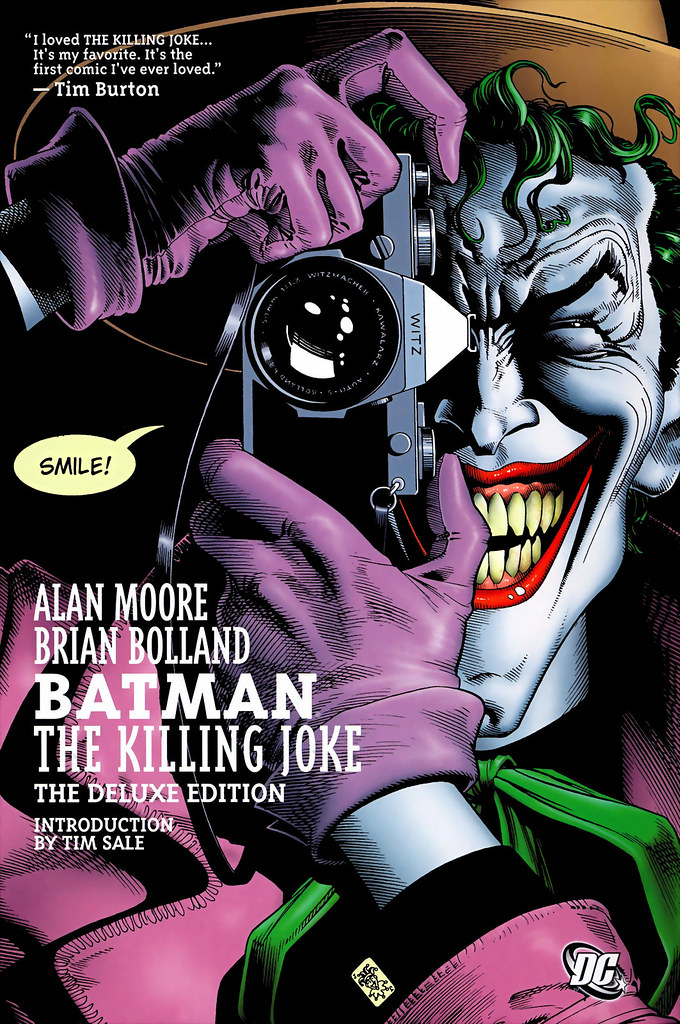 However, The Killing Joke is not merely an adaptation of the previous story into a modern version. Alan Moore simply adopted the connection between the Red Hood and the Joker to write his own Joker story. The biggest difference is that the earlier story definitively established that Joker's origin, meaning the Joker of that era (Golden Age version), truly was the Red Hood in the past. But Moore deliberately added dialogue in The Killing Joke to make the audience understand that the Joker's memories are actually fragmented, only occasionally recalling past events. Furthermore, given his insane personality, it could be argued that the Red Hood origin might just be one of the Joker's "fantasized" pasts.
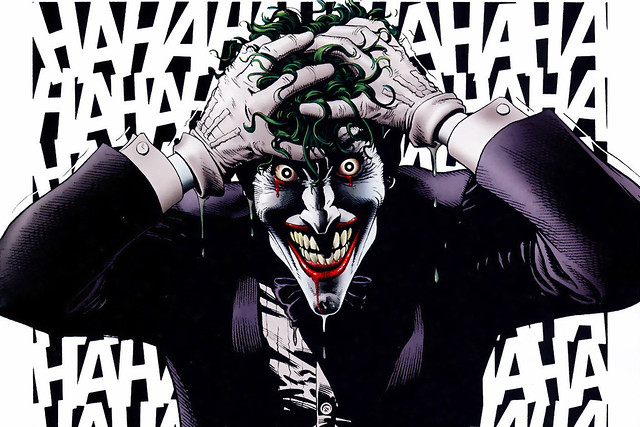
Alan Moore's writing undoubtedly enhanced the Joker's level of madness and also provided other writers with room to develop the character. For instance, even within the same canonical universe, because the origin isn't definitively stated, writers can still explore from different angles why the Joker's past led him to become who he is now. Moore, for example, explained it as encountering too many terrible things that caused him to break down and go insane. Some writers depict childhood trauma, while others set it up that the Joker inherently glorified bloodshed in his past. This also allows adapted media or parallel universe comics, for the convenience of plot and setting, to write stories in their own style, free from the constraints of the "classic" original work. 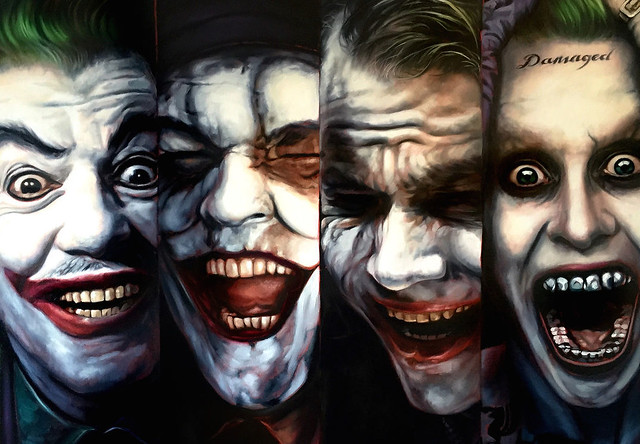 There's no need to worry about conflicting origin stories; for the Joker's situation, contradictions are actually fitting. Because he's insane, who knows what's true and what's false in what he says? Each origin might be partly true and partly false. This is also what makes the Joker terrifying, because you simply don't know what his past was like, so you can't investigate or understand him, which adds to his horrifying mystique.
 In
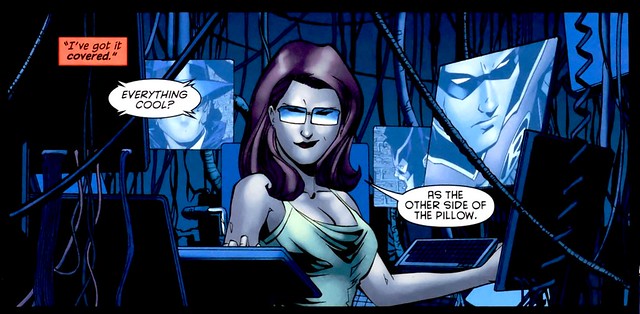
Under feminist interpretations, The Killing Joke story was initially heavily criticized, primarily due to Barbara's fate in the narrative. However, subsequent feminist writers allowed Barbara, even though paralyzed from the waist down, to use her computer skills to become Oracle, the strongest information support expert for the Batman family and even the entire DC Universe's hero community. This also inspired many disabled individuals in real life to persevere (of course, those in Taiwan who believe comics are only for children cannot understand the social impact comics can have), making Barbara one of the most representative DC characters for feminism after Wonder Woman. 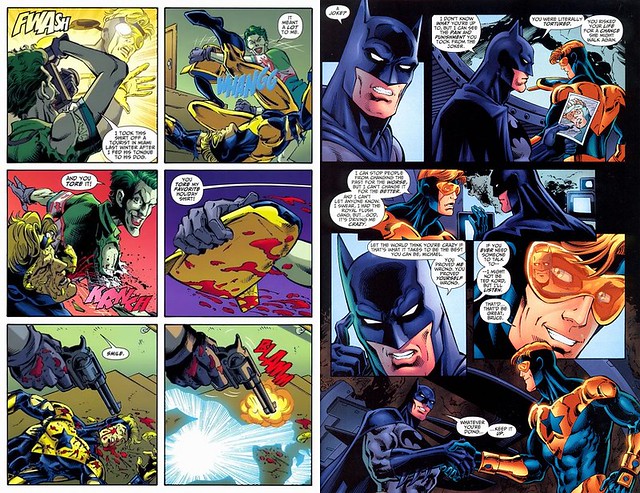
In addition to Barbara becoming Oracle, there are also two relatively famous canonical stories that extend from The Killing Joke as their theme. First is Booster Gold's story, "No Jokes." Booster Gold was originally a hero from 25th-century Gotham City who came to the present era, merely seeking fame, and was therefore often treated as a joke.
Later, Rip Hunter invited him to help protect the timeline. Booster Gold matured significantly, but to conceal his role in protecting time, he still had to act comically on the surface. His deceased best friend, the second Blue Beetle, had greatly admired Barbara during his lifetime. So, Booster Gold once attempted to return to the time before the Joker harmed Barbara, but it was too late when he arrived; the Joker was already preparing to take Barbara's picture. Booster Gold rushed in but was still severely beaten and was teleported away just as he was about to be killed.
Booster Gold tried several more times, all failing, and Hunter stated that Barbara was destined to be paralyzed. Back in the present, Booster Gold was still mocked, but Batman found old photos showing traces of him, deducing that Booster Gold had attempted to alter the past. Thus, Batman understood that Booster Gold had matured and respected his actions of continuing to be a ridiculed buffoon to protect the timeline. 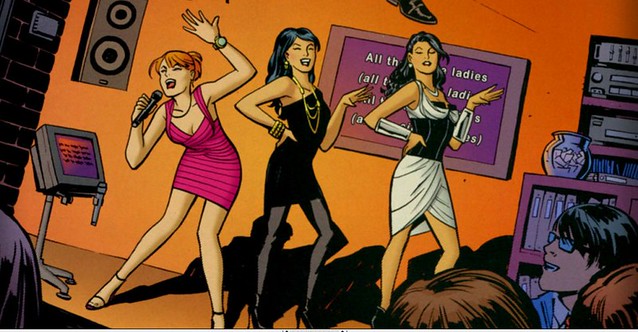 The second canonical story is "Ladies' Night" from The Brave and the Bold. The plot takes place the night before The Killing Joke. The sorceress Zatanna foresaw that Barbara would be harmed and knew that this fate could not be changed. So, she invited Wonder Woman, and the three of them had a wild night. In the end, Zatanna and Wonder Woman tearfully saw her off. After Barbara became paralyzed, Wonder Woman mentioned the Oracle from Greek mythology, which inspired Barbara to use that name to become an intelligence expert.
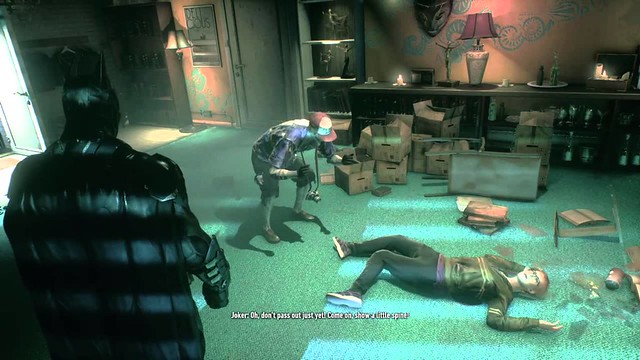 The Killing Joke story is extremely classic, and many adapted media have referenced it. Tim Burton stated that although he wasn't a comic fan, his first Batman film referenced The Killing Joke in addition to The Dark Knight Returns. Nolan also mentioned that many aspects of his Joker were inspired by The Killing Joke, such as constantly fabricating stories about the origin of his scars and his treatment of the female lead, Rachel. Furthermore, many TV series, video games, and cartoons directly incorporate elements from The Killing Joke into their narratives. The Arkham series of video games is a clear example; the game's plot, including the Joker's origin, Barbara being shot and paralyzed, and then becoming Oracle, all directly adopt plot points from The Killing Joke to develop original game storylines.
"Batman: The Killing Joke" Unveils the Joker's Dark Origin
Warner Bros. will exclusively screen the animated film "Batman: The Killing Joke" for one week, from July 23rd to 29th, at six Vieshow Cinemas across Taiwan. The film will be shown at Taipei Xinyi Vieshow, Qsquare Vieshow, Hsinchu Far Eastern Vieshow, Taichung Showtime Vieshow, Tainan Far Eastern Vieshow, and Kaohsiung Far Eastern Vieshow.
▼ "Batman: The Killing Joke" Chinese Trailer
Further Reading:
Screen Fandom
>>> Click here for more 'Batman' themed toys and related reports!!!