


Presumably, you've all seen Suicide Squad, right? Many people love Harley and Joker's romance in the film, considering it a major highlight. So, in this article, we'll discuss how their relationship has evolved through different eras and media since Harley's debut. This article will cover animated series, comics, and live-action adaptations, so please pay close attention to the explanations provided. 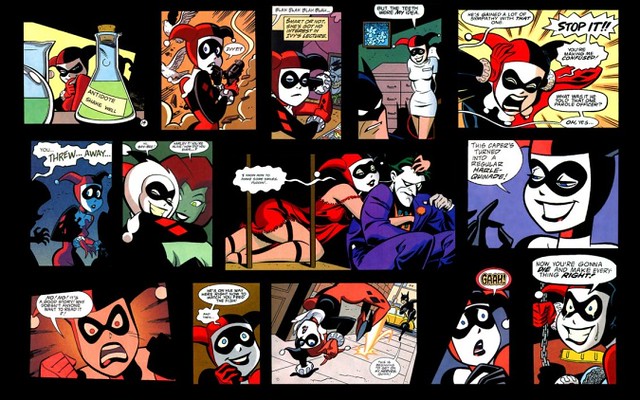
It's important to know that Harley first appeared in an animated series, and "Mad Love" is the comic book origin story of the animated Harley. From this story, we learn that Harley's initial love for the Joker was like a woman seeing a talented man misunderstood by the world, feeling compelled to defend him. This man then brainwashed her with words like "only you understand me," making Harley feel she was the Joker's sole support. This triggered her maternal instincts, turning her into a madwoman willing to sacrifice everything for the Joker, even disregarding morality (a madwoman driven by love, also hinting at how many people do irrational things for love). 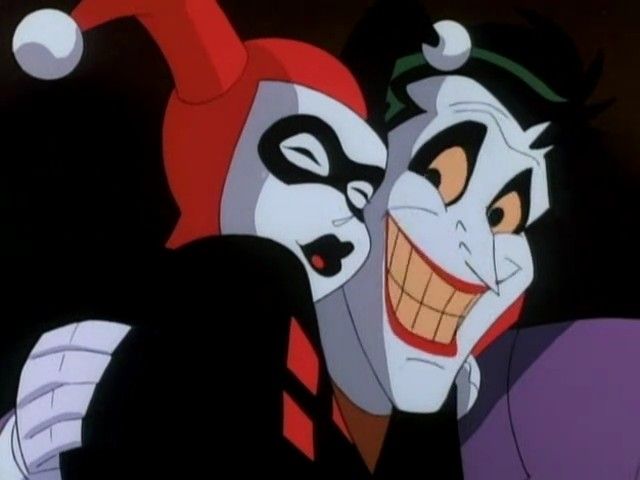
Afterward, in the animated series, whenever the Joker appeared, Harley was almost always by his side, and whatever the Joker commanded, Harley would obey. This relationship is more akin to the Joker exploiting Harley's love, treating her as a slave he could command. Sometimes, to escape, the Joker would even abandon Harley, a "cut off your tail to save your life" tactic, and he would even find Harley's occasional displays of affection annoying.
However, sometimes Harley was arguably the one who understood him best, so the Joker would feel bored without her around. Some might interpret this as love, but officially and by most popular consensus, the Joker doesn't love Harley; rather, he treats her as an overly dependent toy—something he can't let others play with, and feels completely off when she's not by his side. 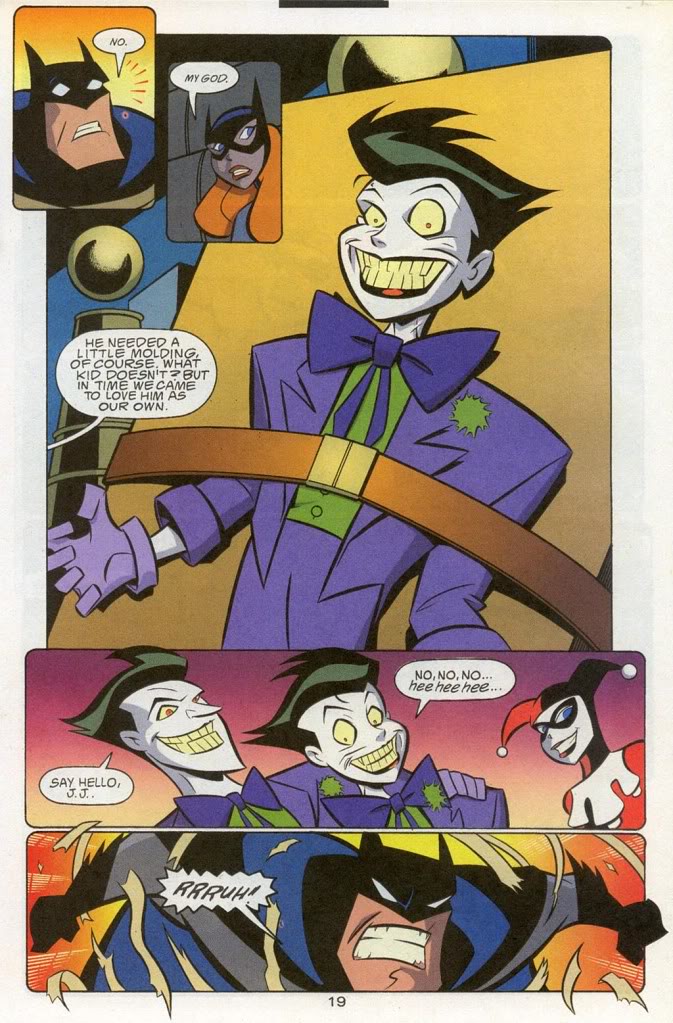
Later, in the animated film "Batman Beyond: Return of the Joker," we learn from flashback sequences that Harley and the Joker kidnapped Robin to groom their successor. From this, we can see Harley's intense desire to form a family with the Joker. By the end of the film, Harley is an old grandmother, scolding her two twin granddaughters who assist and idolize the Joker, proving that she no longer has any infatuation with him. It is precisely this lack of infatuation that allows her to clearly recognize the Joker's evil. 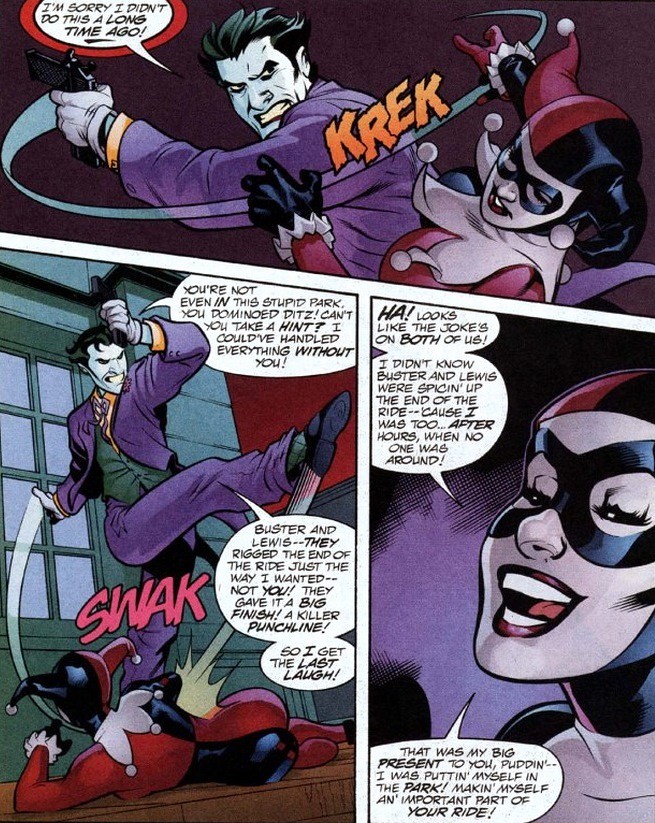
In the comic book canon, the Joker and Harley's relationship is even darker and more violent. Harley still contributes to the Joker without complaint or regret, but sometimes when the Joker gets impatient, he will physically abuse Harley, even attempting to kill her.
Some female scholars, writing about the comic book version of their relationship, consider it an extension of the animated version. In addition to Harley's admiration being deepened by pity for the Joker, who is misunderstood by the world, there's also a depiction of Stockholm Syndrome. Furthermore, to empower Harley's feminist themes, the comics gradually intensify Harley's opposition to the Joker. For instance, when the Joker believes he's dying, he treats Harley as a tool for procreating his offspring, satirizing the patriarchal stereotype that often views women solely for their childbearing utility. 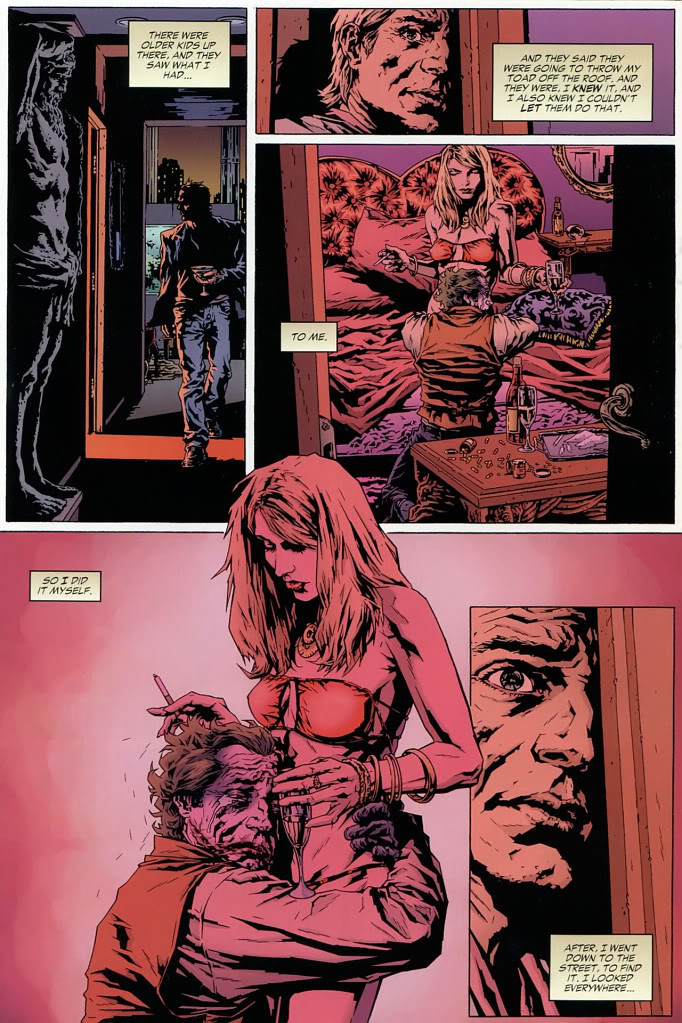
However, the Joker's personality in the comic book canon is considerably more complex compared to his animated counterpart, so it's actually impossible to say that the canonical Joker never loved Harley. Many stories in the main continuity have hinted that the Joker genuinely does have feelings for Harley, but this conflicts with his belief in humanity's inherent evil and his inability to feel love. Because of this, he has attempted to kill Harley several times to prove that he is not swayed by love, yet sometimes his sad emotions are only displayed in front of Harley. For this reason, the relationship between the Joker and Harley has consistently been hailed as the most academically valuable fictional couple for study. 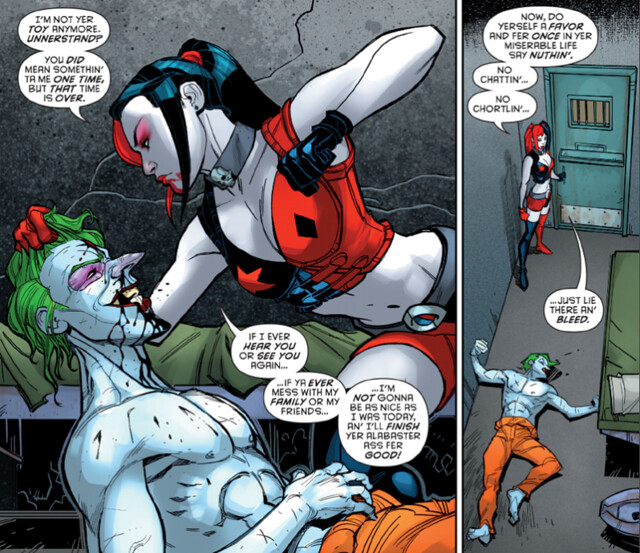
When the main continuity entered the New 52 era, although Harley still harbored feelings for the Joker, she ultimately abandoned their relationship, even resisting him with all her might, and eventually broke up with him. At this time, Harley's stories were primarily divided into two ongoing series: one was Suicide Squad, and the other was her self-titled solo series. Both narratives portrayed Harley excellently, allowing her to break free from her subservient role to the Joker and forge her own compelling stories. This also conveyed the message that Harley was no longer a woman living for love, no longer unconditionally devoted to a man, but instead living out her own feminine spirit. 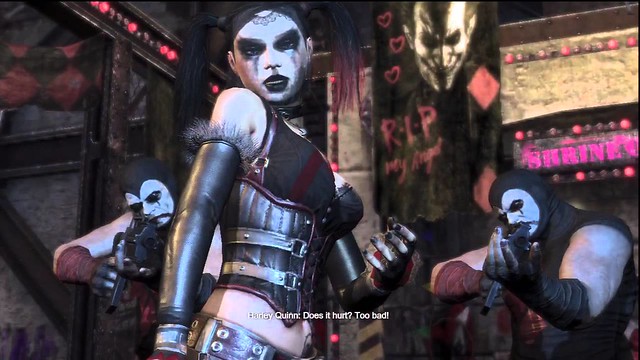
In the Arkham video game series, Harley also continuously participates in the Joker's various schemes, and even in the prequel games, it's depicted how deeply Harley has been subtly influenced by the Joker.
At the end of the Arkham City story, the Joker dies, which further explores an aspect of Harley not seen in the comics or animated series: how Harley copes with the death of her beloved. She inherits his spirit, fights Batman on his behalf, and executes the Joker's pre-planned scheme for how to continue terrorizing the city if he were to die. She even eventually teams up with all of Batman's villains, all to defeat Batman together. Thus, in the Arkham series, through Harley, we can understand the reactions and attitudes of a supervillain enraged by the loss of love. 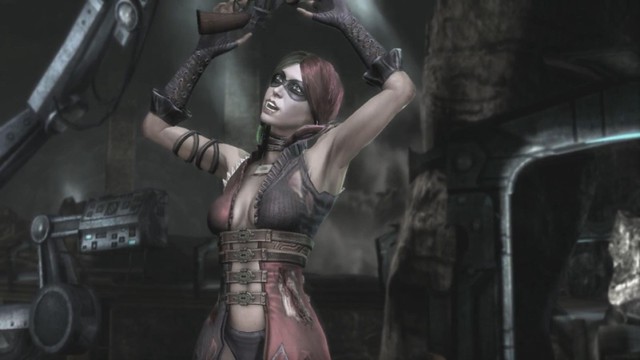
In the Injustice universe, Harley is also deeply saddened by the Joker's death, but her mindset slowly changes as she helps Batman and other rebels fight against Superman's dictatorial regime.
When the Joker from the main video game universe arrives in the Injustice universe, Harley becomes overly protective of him, even ordering him not to appear in public. However, when the rebels gain assistance from the main video game universe's Justice League and decide to confront Superman's dictatorial army, the Joker orders Harley to steal Lex's armor, but she fails. He then brutally beats Harley, but finally, Harley can't take it anymore and tries to kill the Joker with a knife, only to be persuaded by Lex to drop it. This proves that Harley has become a better person than the Joker, even a hero. Ultimately, she even captures the Joker from the main video game universe and sends him back to the main video game universe's Justice League, allowing them to take him back with them. 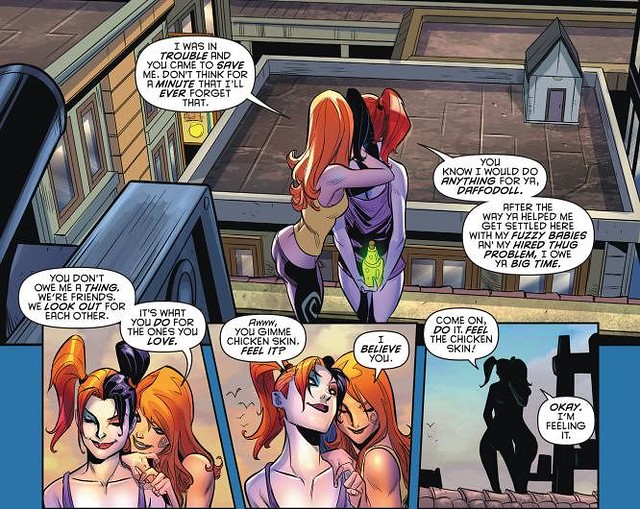
Additional Note: The sisterly bond between Harley and Poison Ivy, regardless of whether it's in comics, animated series, or video games, generally begins after Harley, fed up with the Joker, starts to become independent. Poison Ivy is extremely displeased with the Joker's exploitation of Harley, constantly reminding her best friend not to be used by love, and even plans to kill the Joker for Harley's sake. This often leaves Harley torn between love and friendship. However, this also makes Harley realize deep down that the one who truly supports her is not the Joker, but Poison Ivy. Therefore, when Harley completely breaks free from the Joker's control in the New 52, or when she is truly hurt by the Joker, Harley seeks out Poison Ivy to have heart-to-heart conversations with her best friend. Although Harley usually chooses the Joker's love and betrays Poison Ivy's friendship, Poison Ivy often forgives Harley in the end, suggesting that Harley and Poison Ivy might actually be the most suitable partners for each other.