

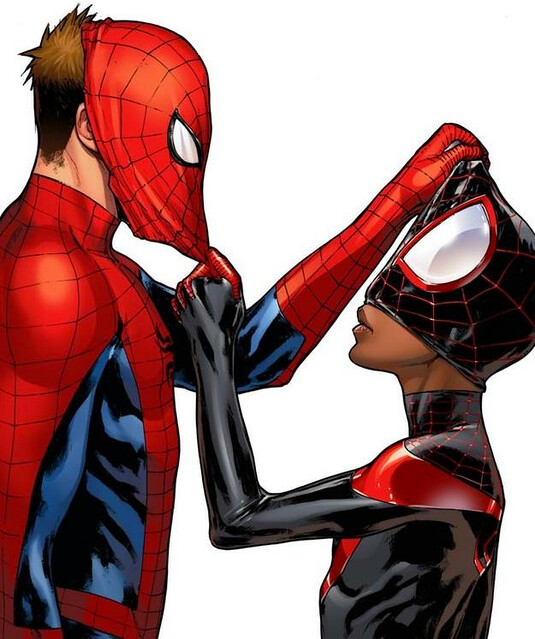
One thing everyone should know is that Marvel and DC each have their own distinct characteristics, so arguing about which is better is actually meaningless; they simply approach similar issues in different ways. Today, we'll discuss the different approaches DC and Marvel take in hero succession, allowing young heroes to inherit the legend of a new generation. I'll start by outlining some historical periods in comics, then compare a few key characters. 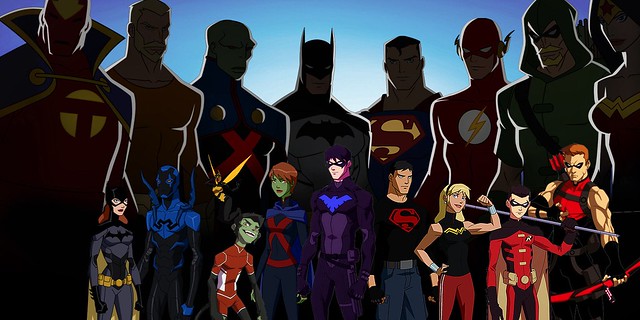
In the Golden Age of American comics (starting in the late 1930s), to expand the children's market and foster patriotism among young people in response to World War II, heroes began to have young sidekicks. DC's most famous example is Robin in Batman, while Marvel had Bucky with Captain America (though in the movies, they became friends of similar age). In terms of plot, these young sidekicks also gave heroes more adult responsibilities and showed how young assistants learned and grew under the heroes' guidance.
*Stan Lee wasn't a big fan of the teen sidekick concept; we can discuss that another time if we get the chance.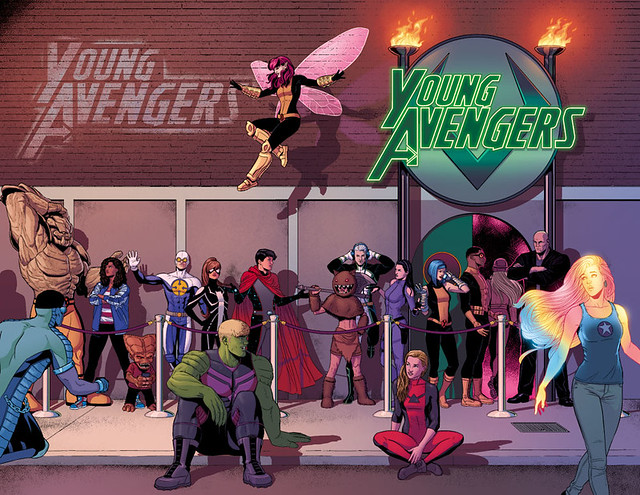 The end of the American Golden Age led to many superhero comics ceasing publication. DC's approach was to re-envision existing characters; for example, both the Golden Age and Silver Age featured a character named Flash, but the settings were revised, making them different people who nonetheless became heroes with the same powers. Marvel, on the other hand, created entirely new characters, such as Spider-Man, who was not a revised version of a Marvel Golden Age character, and thus had different powers and settings.
Finally, I want to reiterate that this article is merely a "comparison," meaning that if there's a certain concept A, DC tends to adopt it more, but that doesn't mean Marvel never uses concept A at all. 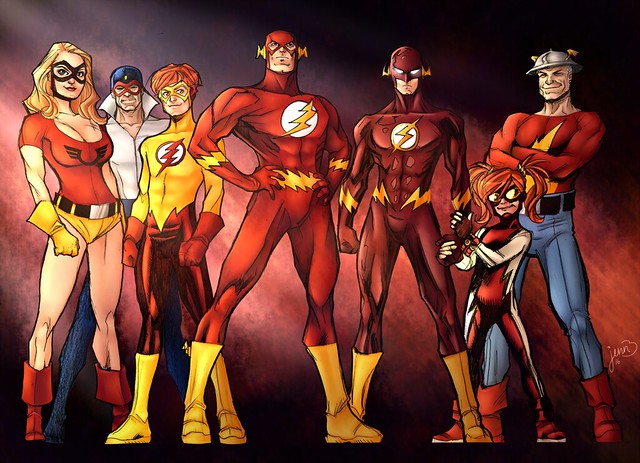 Therefore, in terms of hero legacy, DC usually expresses it through sidekicks or the next generation. For instance, the second Flash will talk about how the first Flash inspired him, and because they share the same superpowers, their attitudes towards life, their use of abilities, and their mindsets are often similar characters interacting, exploring through shared experience and a common group, forming a small community, like the "Flash Family" shown in the image.
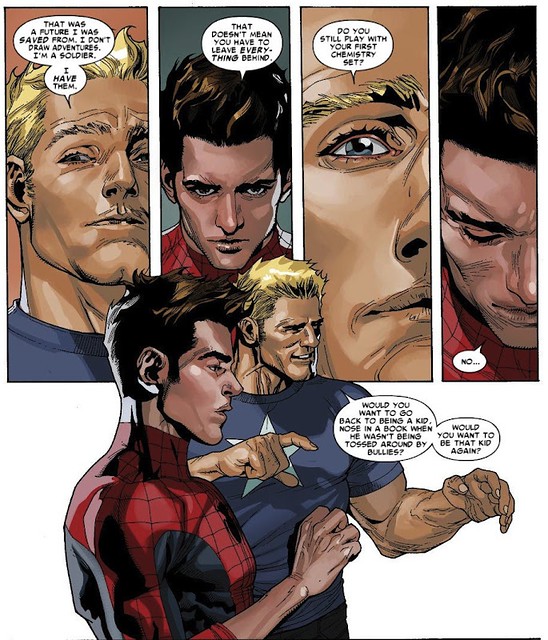
In contrast, Marvel tends not to have similar characters with the same powers gathering together. So, if there's a legacy exchange, it's usually an elder hero offering their life experiences and principles to a younger hero. For example, Spider-Man learned different values from Iron Man and Captain America respectively. For this reason, sidekicks like Bucky, who are similar in theme to frontline heroes, are actually rare examples in Marvel, whereas DC uses this concept more frequently. However, even with hero sidekicks, Marvel and DC still maintain the distinction of "whether they learned by their side." 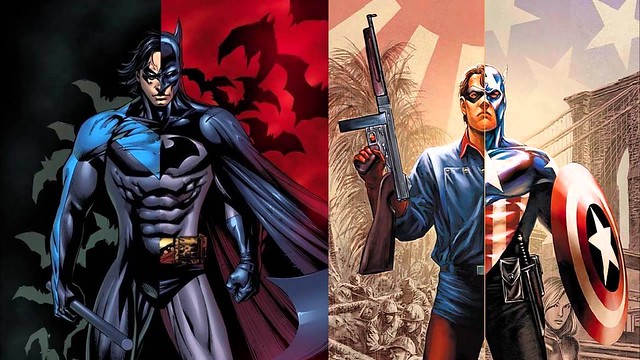 Let's take Dick (the first Robin) and Bucky as examples. Dick consistently learned by Batman's side, fighting all of Gotham City's villains together. Batman's skills, ideals, and values are all present in Dick. He later became independent as Nightwing, even temporarily taking on the mantle of Batman, and eventually became the official Batman.
In contrast, Bucky went missing after World War II, became a Cold War assassin, and only after returning to society and hearing of Steve's death did he inherit the symbol of Captain America. The difference between the two is that one learned systematically under a mentor (though he did leave for a period), while the other did not. 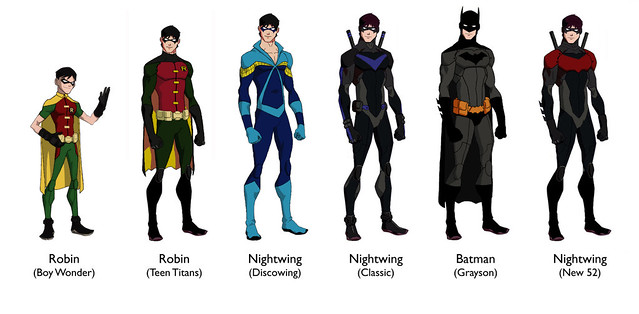 However, neither of them is a mere copy of their mentor; in addition to having extra design elements in their costumes, their methods also differ. For example, Dick is the most suitable of all Robins to inherit Bruce's mantle, possessing the same level of sensitivity and intuition towards people and things, and he is a strategist no less capable than Bruce. But the difference lies in Dick's greater trust in others and his much more human touch, so his interactions with others are not as volatile as Bruce's sometimes can be. For this reason, Dick sometimes acts as a mediator between Bruce and other superheroes.
Although Dick is very cheerful, he is also the one who best understands the burden that comes with Batman's symbol as the Dark Knight. This contrasting dynamic makes Dick arguably the most successful hero sidekick and the best example of inheriting a legend. For this reason, while Bucky had his own style as Captain America, he didn't resonate as much with readers by comparison, given that Dick was essentially always present. 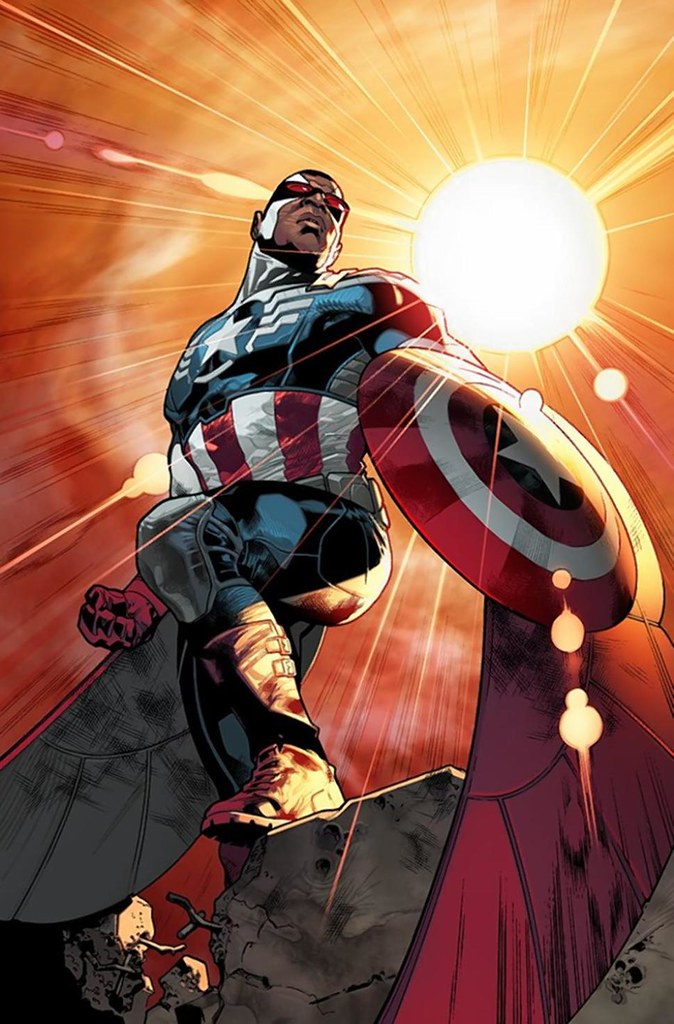
Falcon also served as Captain America's partner for a long time, so his becoming the new Captain America, using the symbolism of Captain America to address Black issues, is an excellent approach. However, since Falcon is of the same generation as Steve, it's not quite the "previous generation to next generation" legacy that I'm discussing in this article. Therefore, Captain Falcon's story doesn't evoke the same sense of legacy; rather, the emotional impact comes from how Falcon, after becoming Captain America, addresses more racial and power issues within the United States. 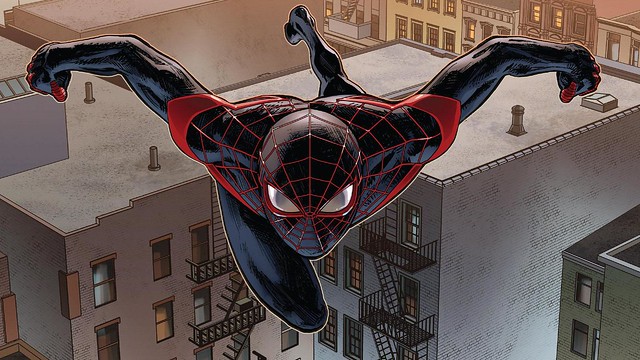
Actually, in recent years, Marvel's most impactful legacy story belongs to Miles Morales' Spider-Man. First, Miles' parents are Puerto Rican and African American, meaning he is of Latin American and African descent, a mixed heritage from two groups often subjected to racial discrimination in America. 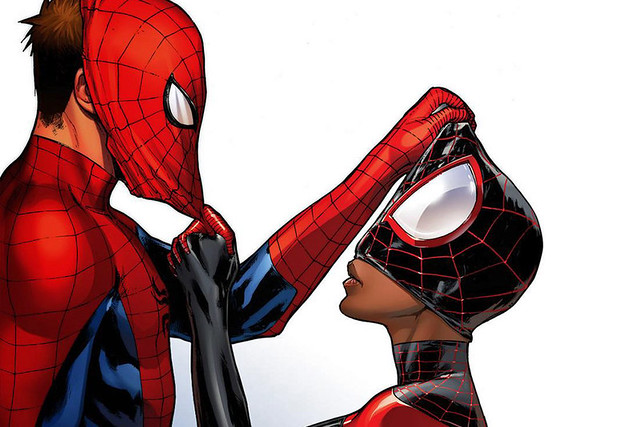 Of course, Marvel initially dared not use such a bold setting in the main continuity, so Miles was a character from the Ultimate Universe. At that time, he had already gained superpowers while Peter Parker was still active, but due to the Ultimatum event caused by Magneto, his parents were very displeased with superpowered individuals, so Miles kept his powers a secret. Later, Miles witnessed Peter's heroic sacrifice and coincidentally met Gwen at the funeral, learning of Peter's great ideals, and thus became the new Spider-Man to fight crime.
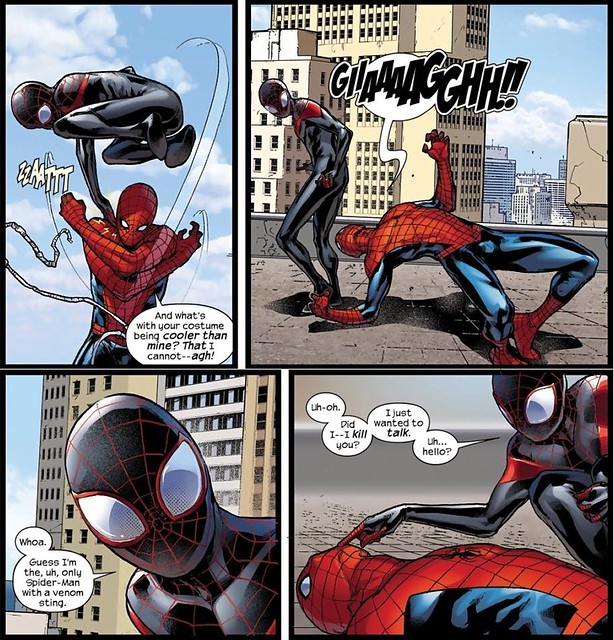
Also dealing with the theme of a teenager becoming a hero, Miles developed an independent storyline different from Peter's. For example, he has loving parents, but these loving parents dislike superpowered individuals, and he himself cannot tarnish the Spider-Man brand. Furthermore, he has to face Spider-Man's enemies who are eager to eliminate the symbol of Spider-Man's successor. This is also why Miles' character is so successful.
However, Miles became Spider-Man after Peter died, so he had to constantly figure things out on his own until the Spider-Man from the main continuity came to the Ultimate Universe and recognized Miles as the best successor, which gave him more confidence. This kind of cross-world mentor-student relationship is truly endearing.
Miles' success is understandable, so he began appearing in cartoons, video games, and other media. The only regret was that, not being a character from the main continuity, his interactions with Peter were few. Therefore, after Secret Wars, Miles became part of the main continuity, joined the Avengers, and had many mentor-student emotional scenes with Spider-Man, fulfilling readers' wishes. 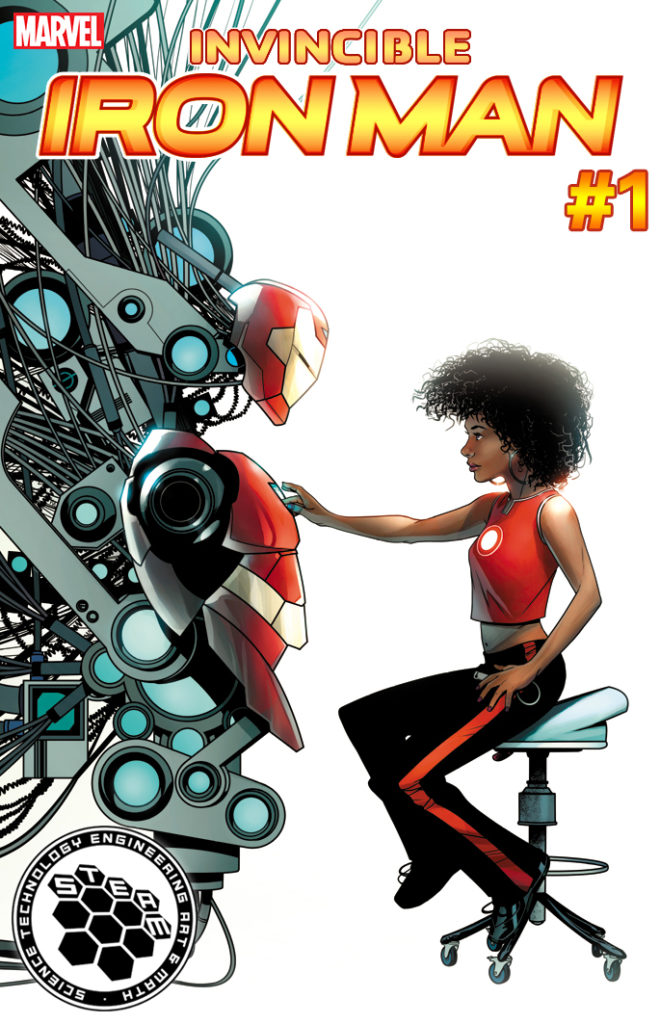
Nowadays, both DC and Marvel are continuously developing new young heroes to convey the concept of legacy. For example, I see nothing wrong with Iron Man now being a young girl, because a hero is a role model, and everyone can be inspired by a hero to help society become better, thereby addressing different social issues. For instance, Captain America himself is a symbol of America as a whole, and having Falcon as Captain America means applying the spirit of Captain America to Black issues. So, don't limit yourself by thinking who a hero should be; instead, consider whether this new character can inherit the original character's spirit and continue their deeds.
And what I find most speechless is the comment about how an afro fits into a helmet. Is hair made of rebar and concrete that it has no flexibility? If so, wouldn't society have been in chaos during the era when afros were popular?