

After months of anticipation since its Japanese theatrical release, the long-awaited Evangelion: 3.0+1.0 Thrice Upon a Time (シン・エヴァンゲリオン劇場版) finally became globally available on the [[OBJ_3994]] Video platform on August 13th. Many long-time EVA fans eagerly tuned in on Friday evening after work to witness how this 25-year saga of "Evangelion" would draw its perfect conclusion.
In fact, it wasn't just the fans; even director Hideaki Anno, who helmed the series, never imagined he would be entangled with Neon Genesis Evangelion for over two decades. Especially with the subsequent impact of the COVID-19 pandemic, the journey for the long-delayed final film, Evangelion: 3.0+1.0 Thrice Upon a Time, was far from smooth.
Recently, Director Anno also granted an exclusive interview with the foreign media outlet Collider, discussing his emotional journey over 25 years of producing Neon Genesis Evangelion, and the different sentiments he brought to the creative process when working on the old TV series versus the new theatrical films.
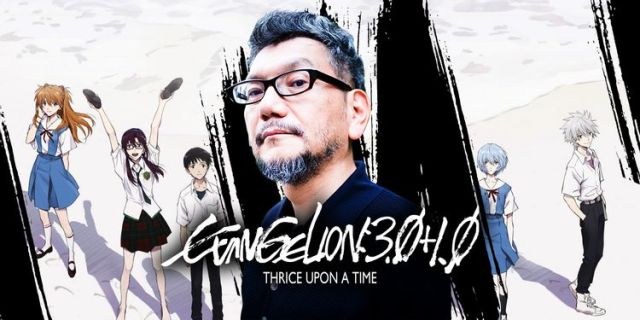
Q: What was your reason for deciding to adapt Neon Genesis Evangelion into a film series again?
Anno: When I decided to embark on my next production project, Evangelion became my only choice at the time. In fact, I had tried various new and different works, but the conclusion I reached was that I could present a different side of Neon Genesis Evangelion. Especially since the environment after that was already different from when the TV series was produced, and my own mindset was completely different, I had no intention of remaking the same thing as before.
Q: What contributions do you think the development of current streaming digital platforms has brought to anime?
Anno: Animation itself is a fictional world, meaning we can incorporate more imaginative elements into streaming platforms and share them with people in many different countries. Especially in the past, many people thought "cartoons" were for children, but now we should use this opportunity to develop more animation suitable for adults, allowing adults to also enjoy them.
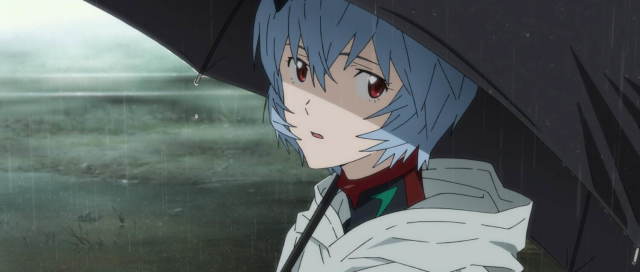
Q: What message did you want to convey in this film series?
Anno: In the past TV anime, the story always revolved around Shinji's own narrative, and he could only save himself. But in the films, he has grown, not only saving his own fragile heart but also being able to extend a helping hand to others with his own strength.
Q: Have you ever considered how audiences who haven't experienced depression or melancholy might interpret the meaning conveyed by Neon Genesis Evangelion? Might there be some misunderstandings?
Anno: I believe that misunderstandings or interpretations are very common in creative works. Although we always try to narrow the scope of the story this work intends to convey, ultimately, the viewing experience still depends on each audience member's feelings. Therefore, for me, perhaps someone whose situation is similar to the protagonist's can resonate with this anime. However, from the perspective of the production company, this type of audience is not our sole target. We are sharing this drama with different people, so as creators, we must try to ensure that more viewers can gain something from this animated film.
Q: When producing this animated film, you clearly incorporated elements of live-action motion capture. How did this help Neon Genesis Evangelion?
Anno: In the past, when producing the Neon Genesis Evangelion TV anime, we faced some technical limitations that were difficult to overcome at the time. Back then, I had also tried to experiment with live-action motion capture technology. Now, 30 years later, what we call motion capture, and even 3D CGI, fully satisfy what I was pursuing, and these were applied to the film Evangelion: 3.0+1.0 Thrice Upon a Time.
Q: Now that Neon Genesis Evangelion is finally complete, how do you feel?
Anno: Very peaceful. For me, when the EVA story ends, it ends. I have no intention of continuing it, so I've achieved a very relaxed state of mind.
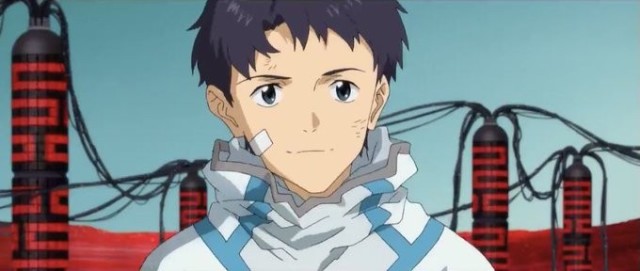
Q: In Evangelion: 3.0+1.0 Thrice Upon a Time, we saw more depiction of Shinji's father, Gendo Ikari, than before. Was this significant to you?
Anno: In the past TV anime, we didn't have many opportunities to fully explain the character of Gendo Ikari. Therefore, when we decided to remake it into a film series, deeply exploring the father-son relationship between Shinji Ikari and Gendo Ikari was one of our primary goals.
Q: If you had a more substantial budget, would it allow you to construct better ideas in the film?
Anno: Indeed, for reconstructing the Evangelion series, a larger budget would allow me to do what I wanted to do. Especially stories that were difficult to present in the TV anime previously, these higher budgets made it possible to turn the impossible into reality and complete them.
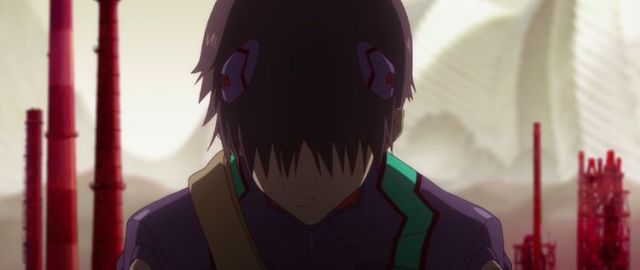
Q: Will you have the opportunity to undertake large-scale anime creations like Neon Genesis Evangelion again, or perhaps direct live-action films?
Anno: Actually, almost all the creative ideas I wanted to express have already been presented in the Rebuild of Evangelion series. So, for a period, I was constantly contemplating live-action films. Unless I have more ideas I want to realize in animation in the future, I won't return to anime production.
Q: Why did it take 10 years to produce the film Evangelion: 3.0+1.0 Thrice Upon a Time?
Anno: In fact, when I was working on Evangelion: 3.0 You Can (Not) Redo, although I worked very hard to complete it, it also left me physically and mentally exhausted, even on the verge of collapse. This led me to decide to temporarily put aside any work related to the Rebuild of Evangelion series and change my mood by producing Shin Godzilla. Without that experience, perhaps I would still not have had the chance to return and conclude Evangelion: 3.0+1.0 Thrice Upon a Time.
Q: Do you have any plans to return to Neon Genesis Evangelion in the future?
Anno: When I remade Neon Genesis Evangelion, I already incorporated all my original ideas into this animated film series, creating many interesting things for the audience and fans. Therefore, for me, there is no longer a need to continue producing this anime. However, the 14-year gap in the story might be explained in some way in the future, but at least for now, I have no intention of continuing with a new story.
via: Collider