

Taiwan's unique linguistic landscape, blending Chinese, Taiwanese Hokkien, and even Japanese and English, has spawned a massive array of internet slang that can be baffling even to locals, let alone outsiders. You've probably encountered this wild linguistic trend yourself.
Recently on Threads, a Japanese netizen expressed confusion over a popular Taiwanese slang trend: taking Taiwanese Hokkien phrases and rendering them with Japanese kana pronunciations combined with Chinese characters. The result? A "mysterious, code-level internet slang" that only those fluent in Chinese, Taiwanese Hokkien, AND Japanese can decipher. This revelation has left Japanese netizens utterly astonished and impressed.
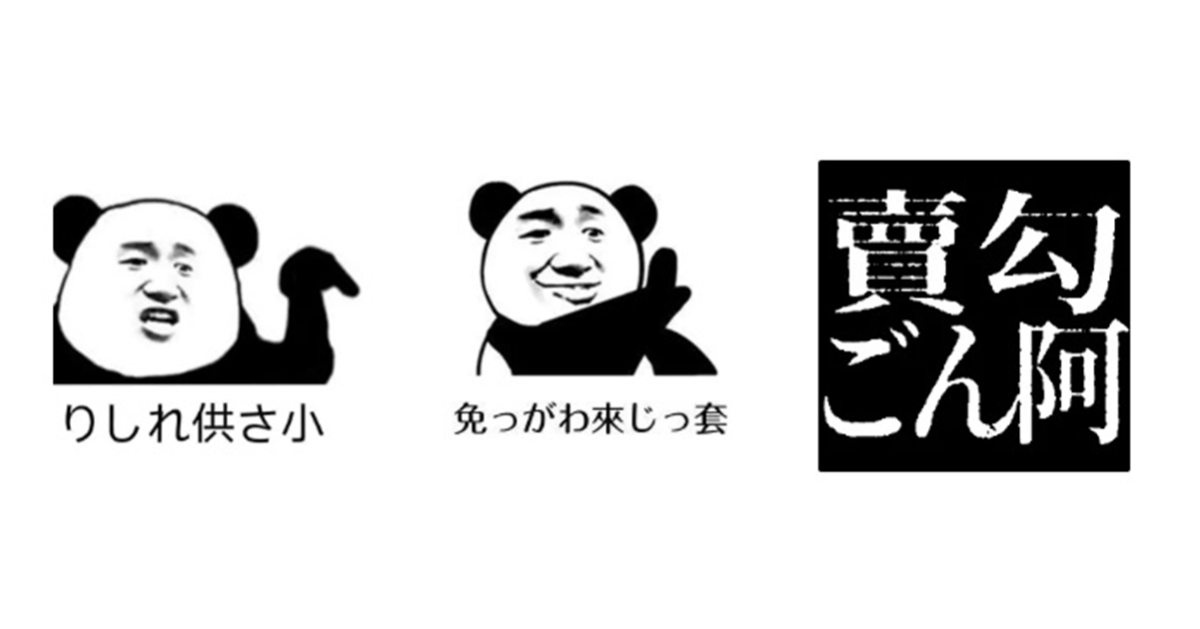
Japanese netizen Osera Ryo posted on Threads: "I heard there's this wild new meme trending on the Taiwanese internet where they mix Japanese pronunciation, Chinese characters, and Taiwanese Hokkien phonetics. Only people who know all three languages can understand it?! That's seriously brilliant... I can't understand it AT ALL!!!"
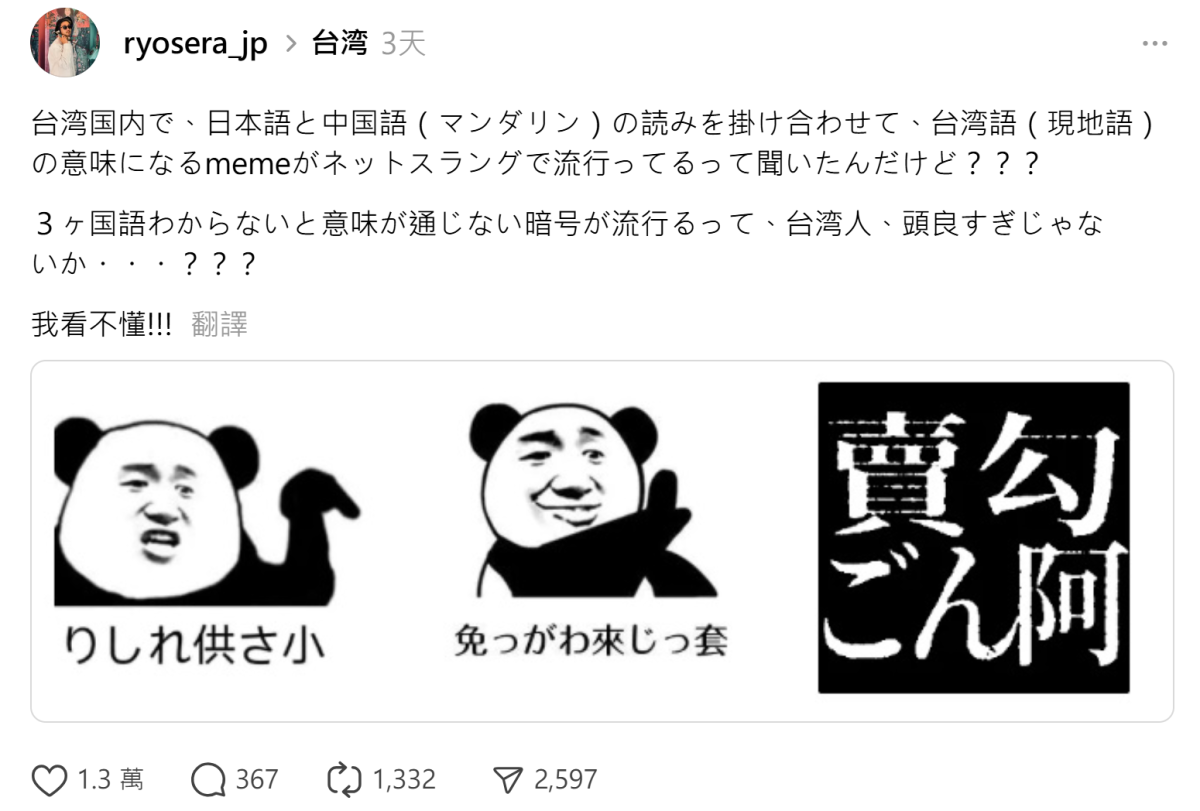
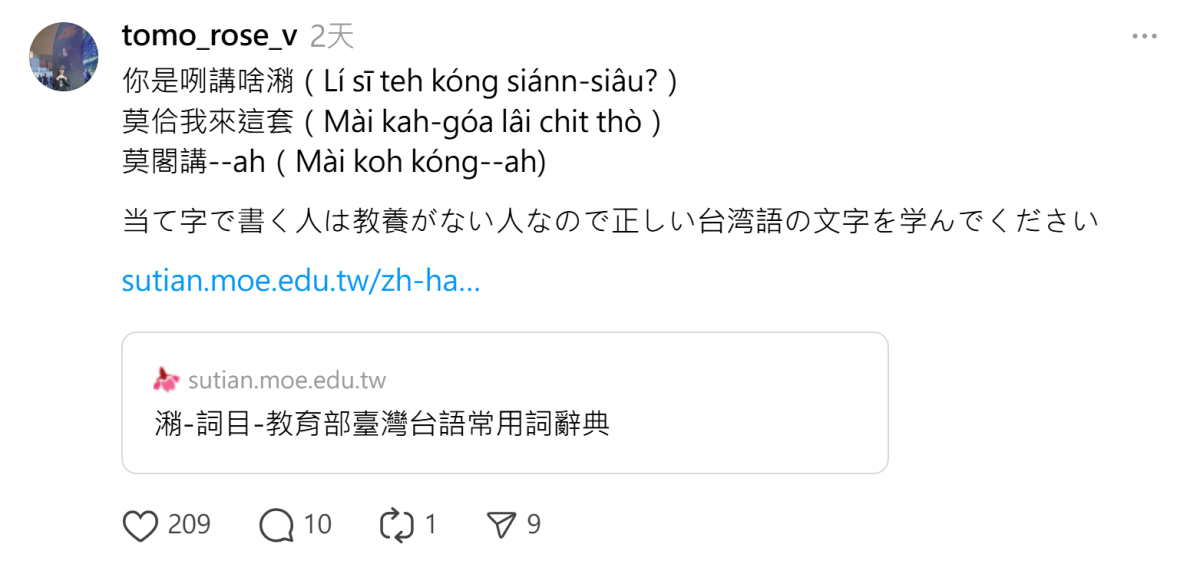
These memes typically combine common Taiwanese Hokkien phrases with Japanese kana and Chinese characters. One netizen helped break it down:
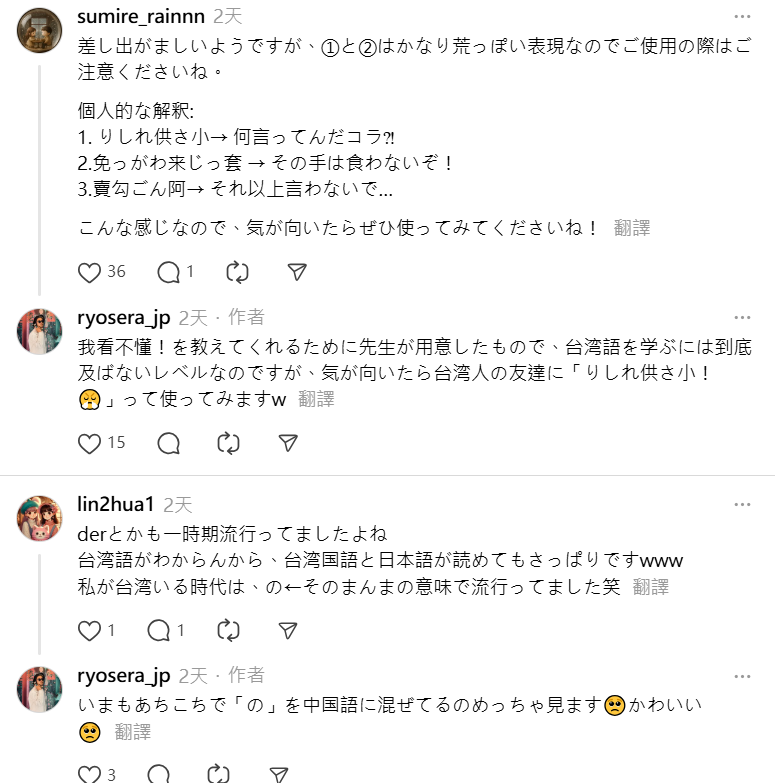
"你是咧講三小" (Lí sī teh kóng siánn-siâu?) → Transliterated as "りしれ供さ小"
"莫佮我來這套" (Mài kah-góa lâi chit thò) → Transliterated as "免っがわ来じっ套"
"莫閣講--ah" (Mài koh kóng--ah) → "賣勾ごん阿"
These phrases roughly translate to "What the heck are you talking about?", "Don't pull that stunt on me," and "Stop talking already." However, without familiarity with both Taiwanese Hokkien pronunciation and Japanese hiragana/katakana, it's incredibly difficult to grasp their meaning from the text alone.
These examples quickly grabbed attention. After all, this bizarre internet slang truly requires knowledge of Japanese, Chinese, and Taiwanese Hokkien. For Japanese speakers who only know kanji and Japanese, it's naturally a headache to decipher, lol.
▼ Seriously, even ChatGPT can't figure this stuff out...
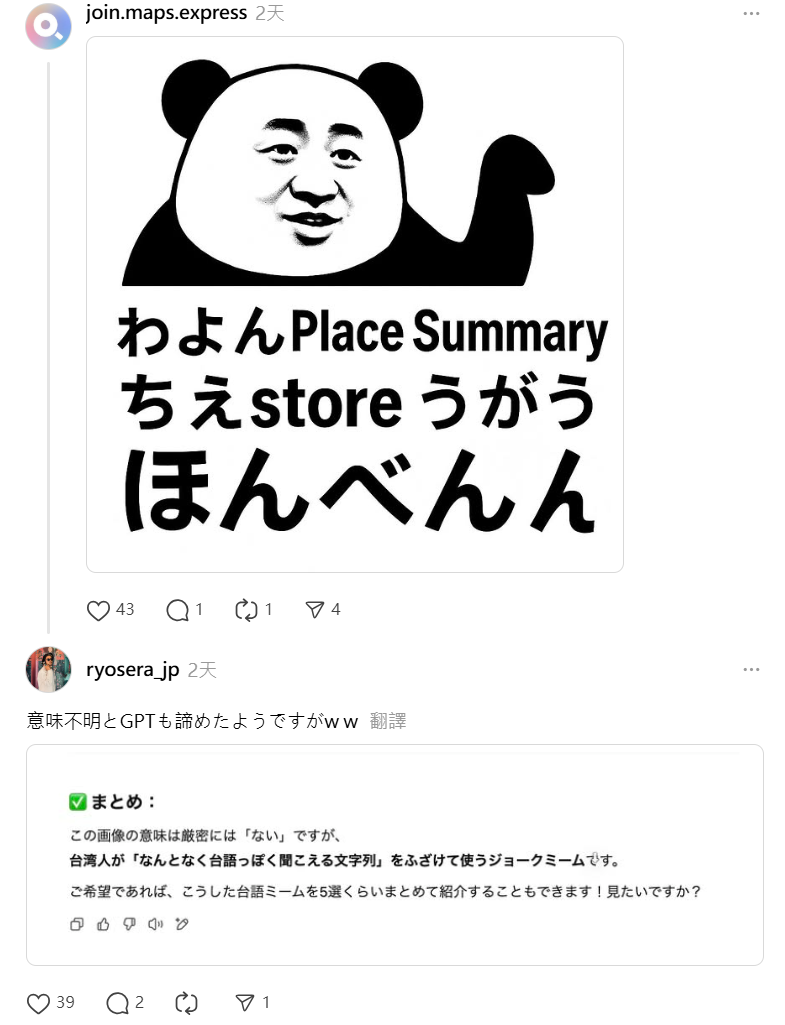
Many Taiwanese netizens pointed out that these "three-language mashup memes" have a long history on the Taiwanese internet, stemming from the island's multilingual upbringing and cultural habit of switching between languages. Others noted that these memes often carry a "chuunibyou" (eighth-grade syndrome), "Hong Kong-Japan-China mashup," or "overly familiar" vibe, naturally attracting anime fans and subculture enthusiasts.
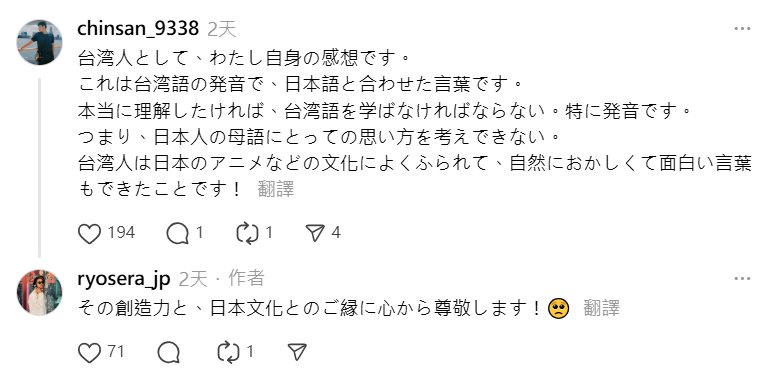
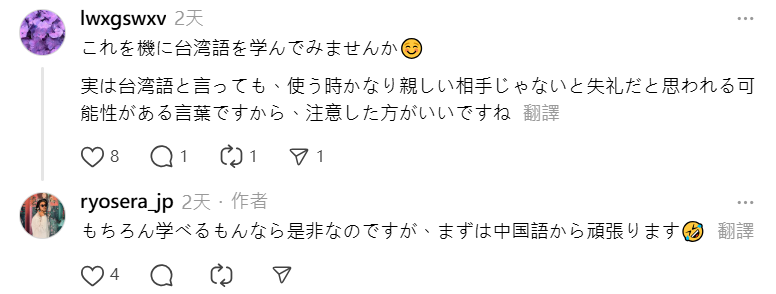
Some Taiwanese netizens cautioned their Japanese friends: "Some of these Taiwanese Hokkien phrases can sound quite aggressive in daily life, so be mindful of the context when using them, lest you accidentally offend someone!" Another comment read: "Taiwanese people are great at Japanese, and Japanese people are great at Chinese – both sides are just too smart!"
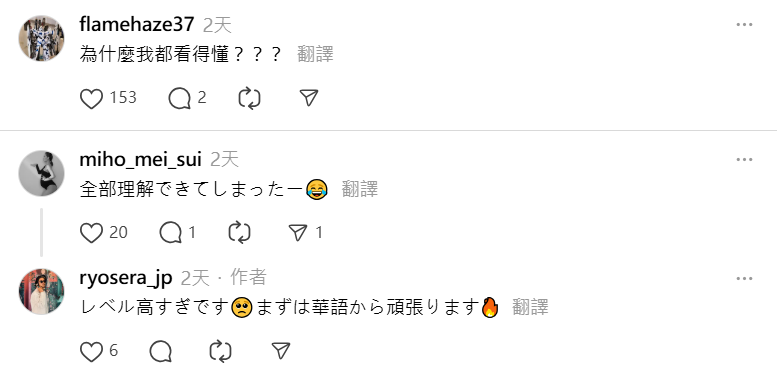
The comment section was also filled with proud Taiwanese netizens exclaiming, "Why do I understand all of this?" and "This is the power of growing up immersed in it!" It really does take some deep Chinese linguistic roots to get it, lol.
This three-way linguistic creativity is a unique phenomenon born from a multilingual society. Especially in Taiwan, where people commonly use Chinese, Taiwanese Hokkien, and even Japanese or English, cross-linguistic expression is an everyday occurrence. These memes are truly a testament to the local linguistic prowess and sense of humor.
But for Japanese people wanting to learn and understand this, it's not just about knowing regular Chinese – you'd need to master Taiwanese Hokkien too. That might not be an easy feat, lol.
via: Threads