

Fujiko F. Fujio's timeless classic, "Doraemon," is undoubtedly a cherished childhood memory for countless fans. Beyond its early manga success, the series continues to thrive with an ongoing TV anime and annual theatrical releases that consistently rake in impressive box office numbers, proving its enduring charm.
Recently, a debate sparked on Japan's X (formerly Twitter): Is "Doraemon" actually popular in Western countries? Many felt it didn't garner as much attention compared to Asia. This question quickly drew in knowledgeable netizens who set the record straight, asserting that you can't just broadly declare it "unpopular in the West" because its reception varies significantly by country. The discussion quickly went viral.
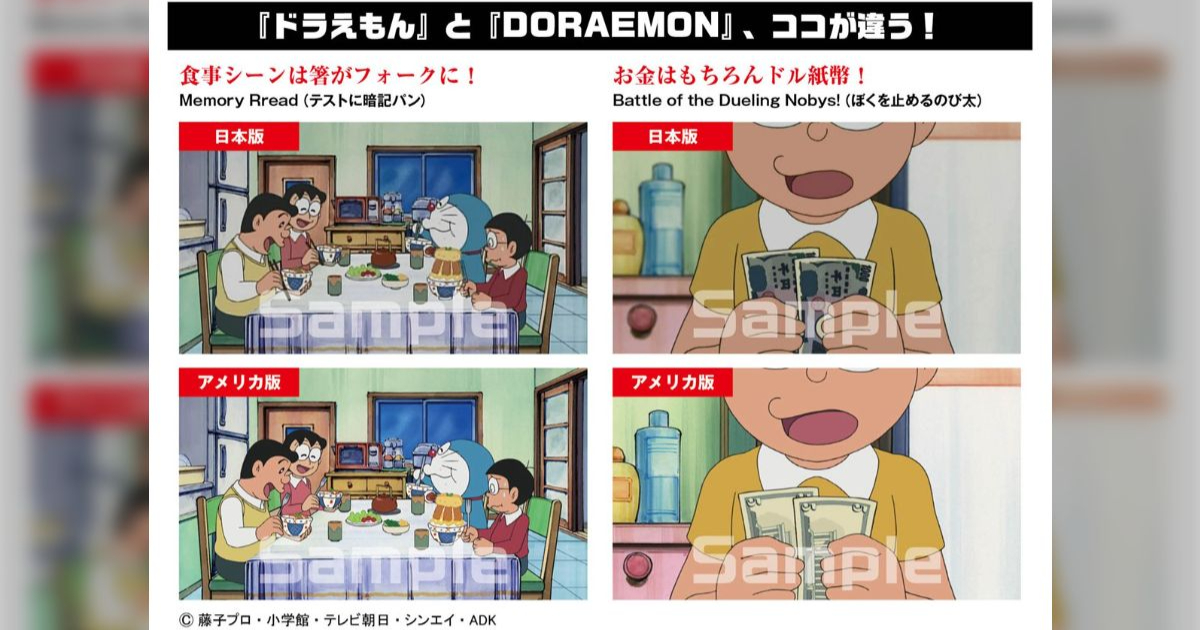
The conversation ignited after a user quoted a tweet challenging the "unpopular in the West" notion. The original poster explained that "Doraemon" is incredibly popular in European countries like Italy, Portugal, and Spain. The real divide, they noted, lies within the Germanic cultural sphere, where the series genuinely struggles to find an audience.
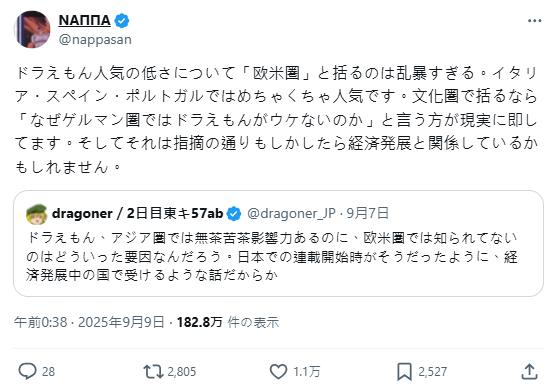
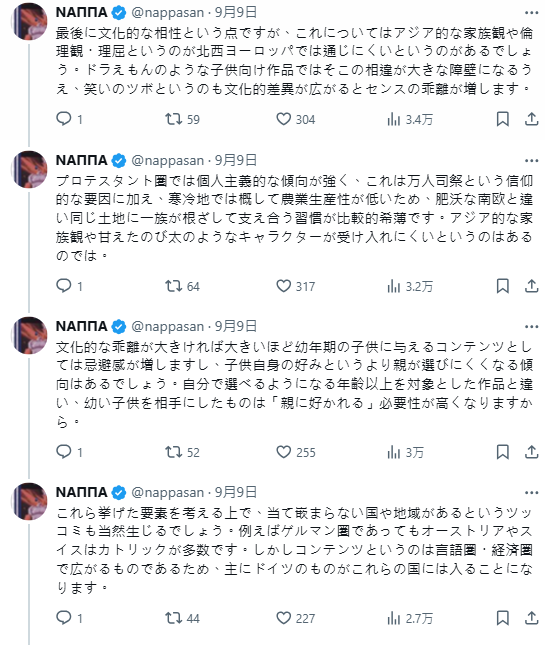
Delving deeper, the user offered a political, economic, and cultural analysis. They suggested that Southern European nations, with their relatively slower economic development at the time, were more inclined to purchase "cheap yet high-quality" Japanese anime in bulk for their children. Countries like Spain and Portugal, having experienced prolonged authoritarian rule, saw slower progress in TV privatization, making them more reliant on imported animation. In stark contrast, English-speaking and German-speaking regions, with their robust domestic production capabilities, had less need to import children's shows like "Doraemon."
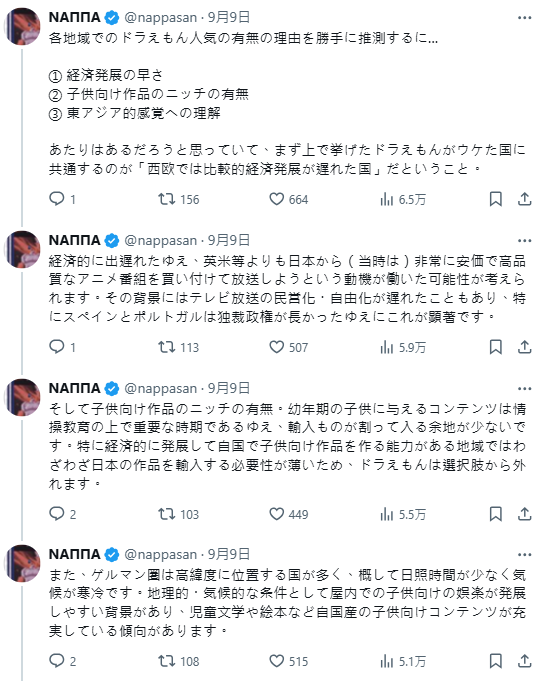
Another factor contributing to "Doraemon's" lack of traction in Germanic regions might be its religious background. Predominantly Protestant countries, these nations benefited from the early spread of printing and the Bible, leading to a rich tradition of children's literature and fairy tales (like Grimm's Fairy Tales) from an early age.
This self-sufficiency in children's content meant they had little need for foreign cartoons. Moreover, parents in these regions place a strong emphasis on "educational value." A character like Nobita, who "excels at avoiding problems and relying on others for help," is often seen as "an unsuitable role model for children." Consequently, parents might actively discourage their children from watching it, eliminating any incentive for its introduction.
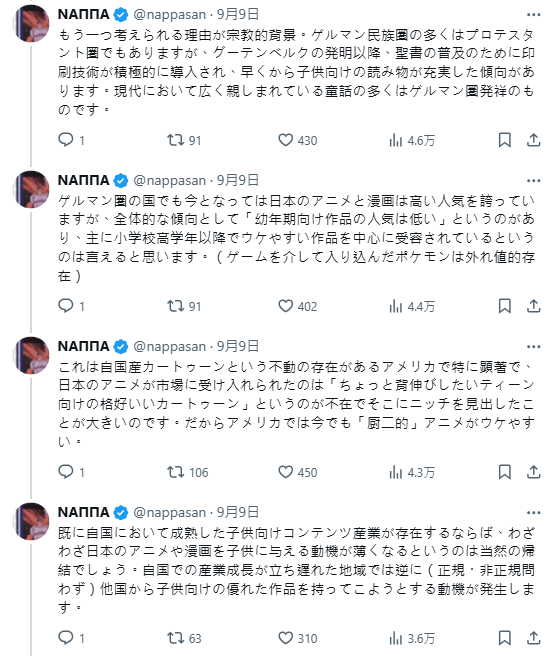
Ultimately, the biggest hurdle is the clash of cultural values. Germanic cultures champion independence, diligence, and hard work, while Nobita often embodies "reliance on Doraemon and evasion of effort." While this might be perceived as "funny, endearing flaws" in Asian or Latin cultures, in countries like Germany and the UK, it's more likely to be interpreted as "cowardice and laziness." When it comes to content for young children, unlike works for those old enough to make their own choices, "parental approval" is paramount.
Furthermore, as cultural differences widen, so do variations in humor. The style prevalent in Asia might not resonate with audiences accustomed to local children's books and fairy tales, thus creating this significant disparity.
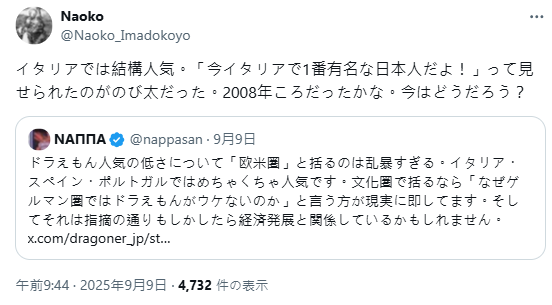
However, in Italy, netizens were quick to point out that "Doraemon" is absolutely massive. One user shared that in the 2000s, the "most famous Japanese person" in Italy was widely considered to be Nobita!
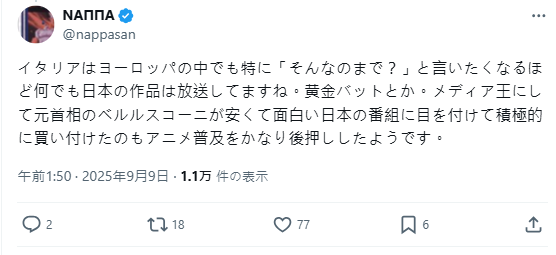
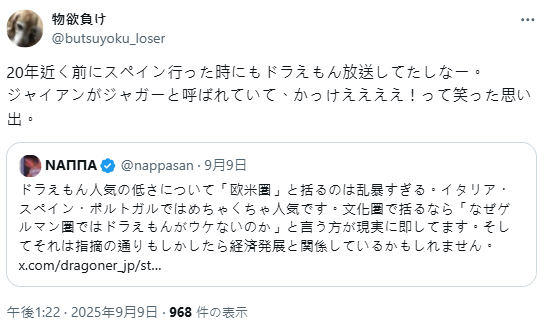
Former Italian Prime Minister Silvio Berlusconi famously imported a huge volume of Japanese anime and TV shows (because they were affordable), significantly boosting the local anime culture. Spanish audiences even playfully renamed Gian (Takeshi Gouda) to "Jaguar," finding it a much cooler moniker.
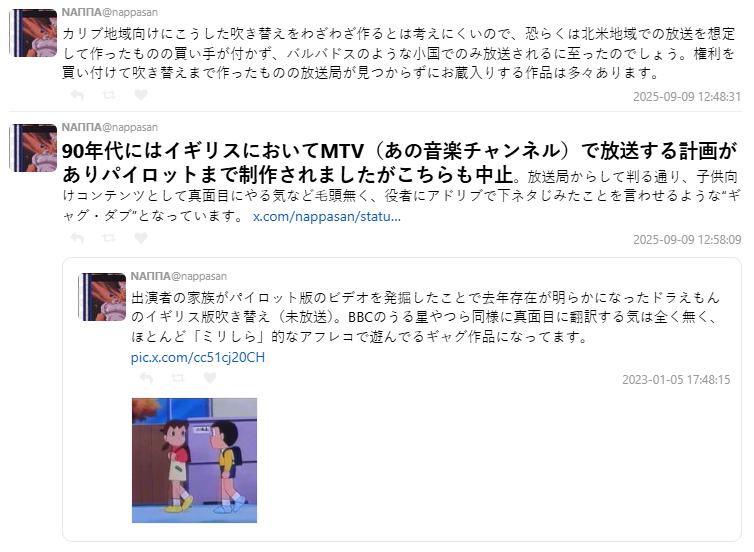
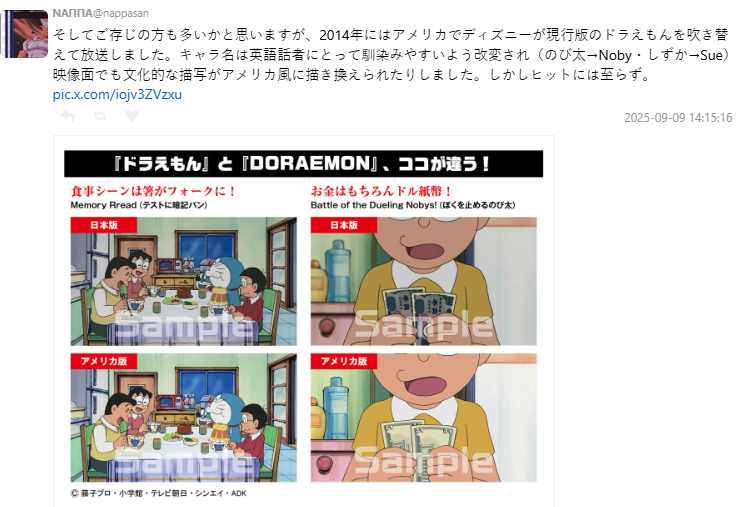
It's worth noting that "Doraemon" has made several attempts to break into English-speaking markets. A planned US broadcast in the 1980s ultimately fell through. In the 1990s, MTV UK even aired a "parody dub," but it was quickly canceled. While Disney XD did broadcast an Americanized version of "Doraemon" in 2014, with localized character names and settings, it ultimately failed to gain significant traction.
In conclusion, "Doraemon's" widespread appeal in Southern Europe can be attributed not only to economic development and media import strategies but also to a cultural tolerance for "underdog" characters. Conversely, in Germanic-speaking countries, the strong emphasis on diligence and independence clashes with Nobita's "lovable loser" persona, leading to parental disapproval and limited viewership. So, next time, remember: you can't just say "Doraemon is unpopular in the West" – there are plenty of European fans who absolutely adore it!
via: togetter