

When you think of curry rice, it's a dish that's practically a daily staple. Pour rich curry over noodles or rice, and you've got a satisfying meal. It's a must-have on the menu at many affordable restaurants in Japan.
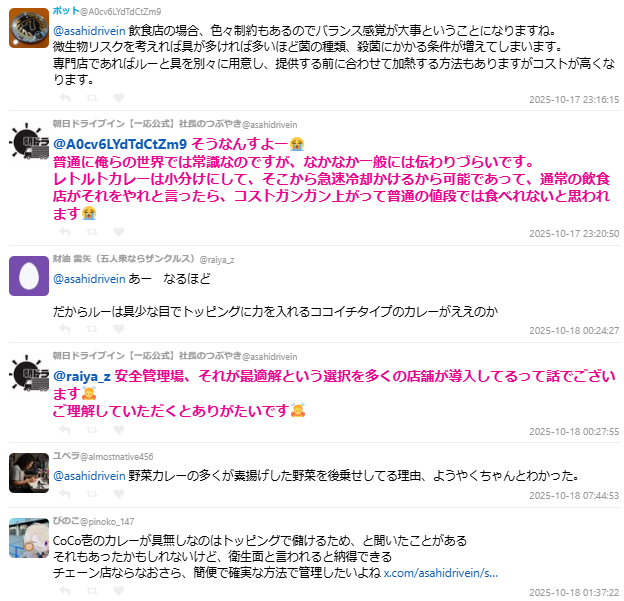
Recently, a discussion on X (formerly Twitter) about "why restaurant curries have no ingredients" unexpectedly went viral in Japan, sparking a huge debate among netizens. It all started when a customer complained, "There were absolutely no ingredients in the curry; it tasted just like canned curry, so disappointing." Surprisingly, a restaurant owner stepped forward to explain the truth behind "why restaurant curries have no ingredients."
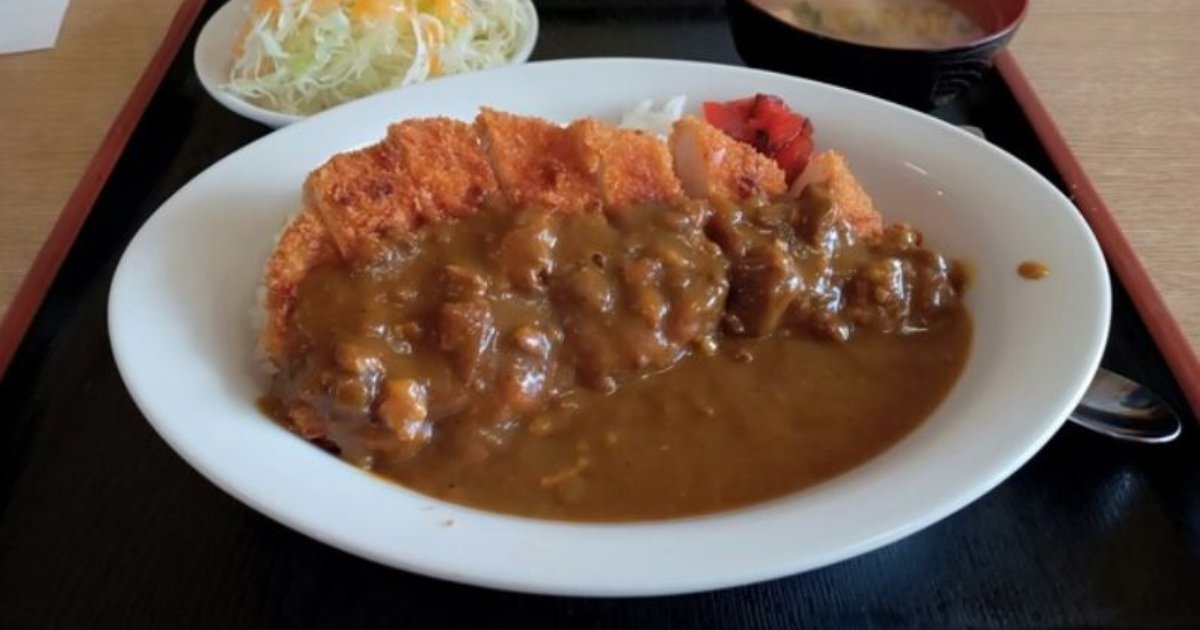
The post came from the president of "Asahi Drive-in," a long-established restaurant in Yabuki Town, Fukushima Prefecture. He shared the customer's complaint on X, stating: "Do you know why many restaurant curries don't have many ingredients? There's actually a very important reason behind it!"
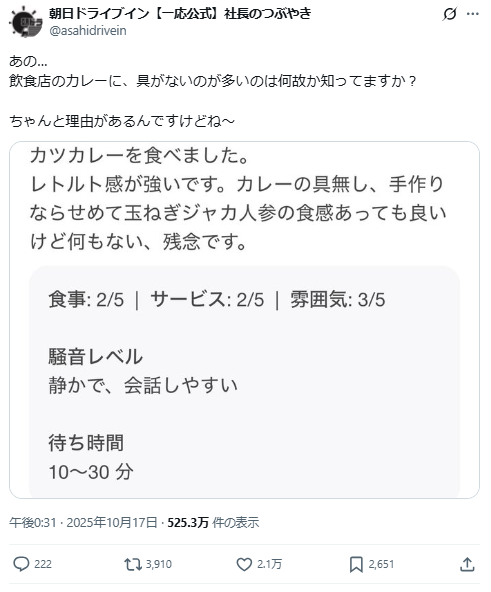
He pointed out that restaurant curries are often kept warm or continuously heated for extended periods. If too many "solid ingredients" are left in the curry, it can easily become a breeding ground for bacteria.
"Restaurants typically do this to prevent bacteria like Clostridium perfringens and Clostridium botulinum, which thrive in warm environments. In the food service industry, safety is always the top priority. Food safety risks must be eliminated before we can even talk about deliciousness."
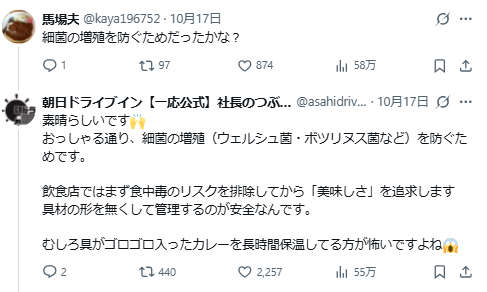
The president emphasized that cooking curry ingredients until they "melt and lose their shape" is actually a method to ensure hygiene and safety. He joked, "If a curry has a ton of ingredients and is left warming all day, that's when I'd start to worry."
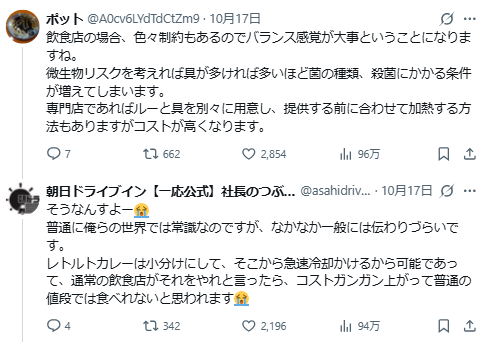
Other food service professionals and food hygiene experts also chimed in with their agreement. One netizen noted, "Sterilization conditions in the food service industry are very strict. The more ingredients there are, the more types of bacteria, and the risk multiplies exponentially."
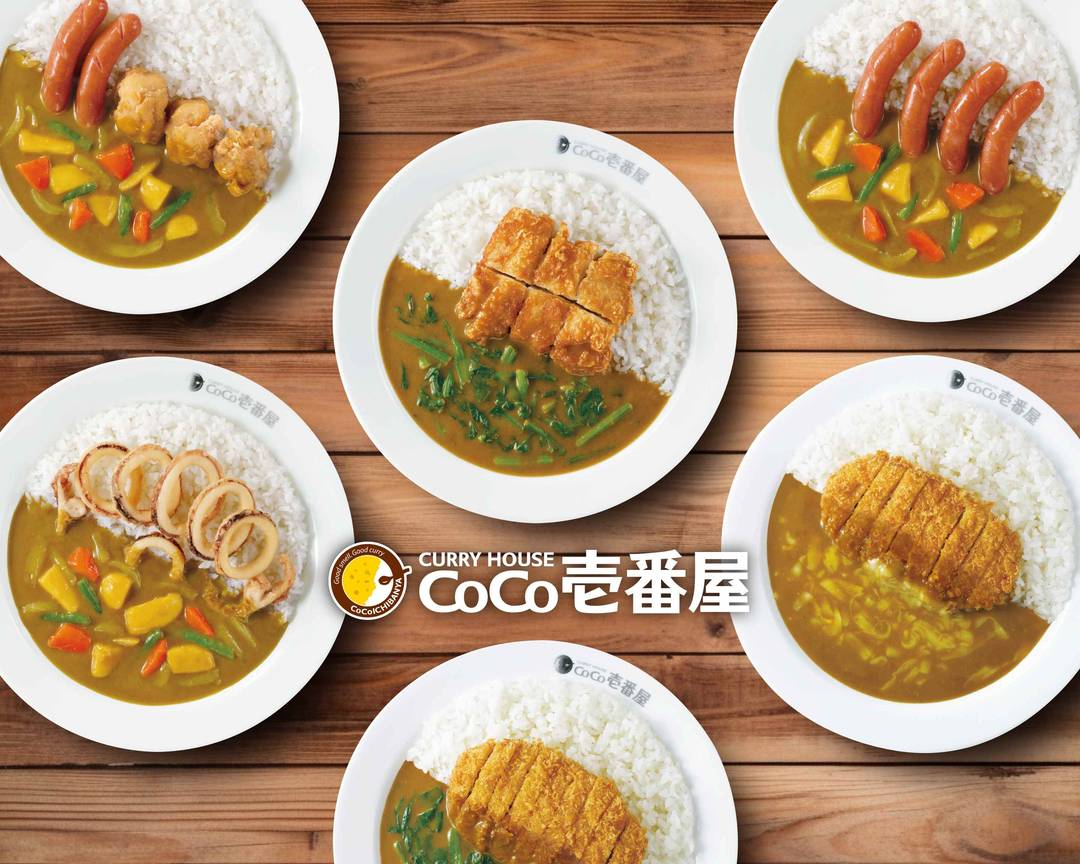
Another explained, "Canned or vacuum-packed curries can have ingredients because they are portioned and 'rapidly cooled.' Restaurants can't do this, or their costs would skyrocket, and prices would have to increase." This is why famous Japanese chains like CoCo Ichibanya, with their "curry sauce first, choose your own toppings" approach, are considered the safest and most efficient solution.
▼ That's why most restaurant curry toppings and side dishes are usually added separately, not cooked together with the curry.
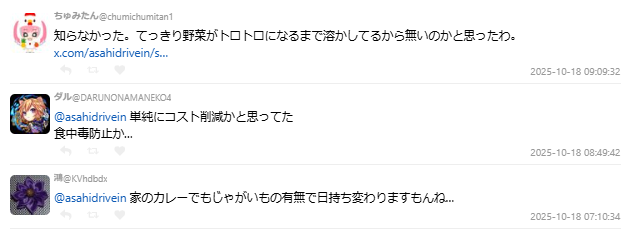
Many netizens were astonished after reading the explanation: "I thought they were just being lazy and not putting in ingredients, but it's for food safety!" "No wonder vegetable curries are always fried and then added on top; now I get it!" "I often reheat homemade curry for days... looks like I need to be careful."
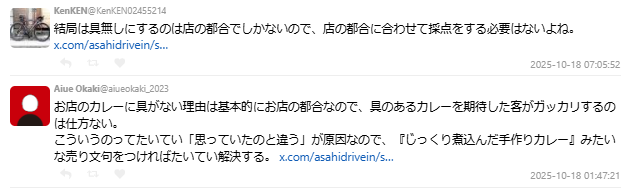
However, some opinions suggested that while the reason is understandable, customer perception shouldn't be ignored. It's normal for customers to feel disappointed if there are no ingredients. If the menu clearly states "long-simmered handmade curry," it might be more easily understood.
The restaurant owner also stated, "It's not that 'no ingredients' is the only correct answer; it's just the most reliable way for general restaurants to balance safety and efficiency." So, perhaps the next time you dine at a curry restaurant in Japan or Taiwan, if you see a "no-ingredient curry," it's not a sign of skimping, but a choice made to ensure food safety.
via: togetter