

Yusuke Ohmura, the Pokemon design team lead on Pokemon Sun and Moon and the character designer behind Marnie and the box Legendaries Zacian and Zamazenta in Pokemon Sword and Shield, recently took to X with a surprising admission. When Marnie's design was first revealed, he felt it received relatively little attention, with her popularity only beginning to grow after the game launched.
Ohmura admitted that this bothered him and said he wanted to be able to make people love a character through the character artwork alone. His comments quickly sparked debate online. Some praised his high standards, while others argued that character designers should not approach their work this way, pushing the post into the spotlight.
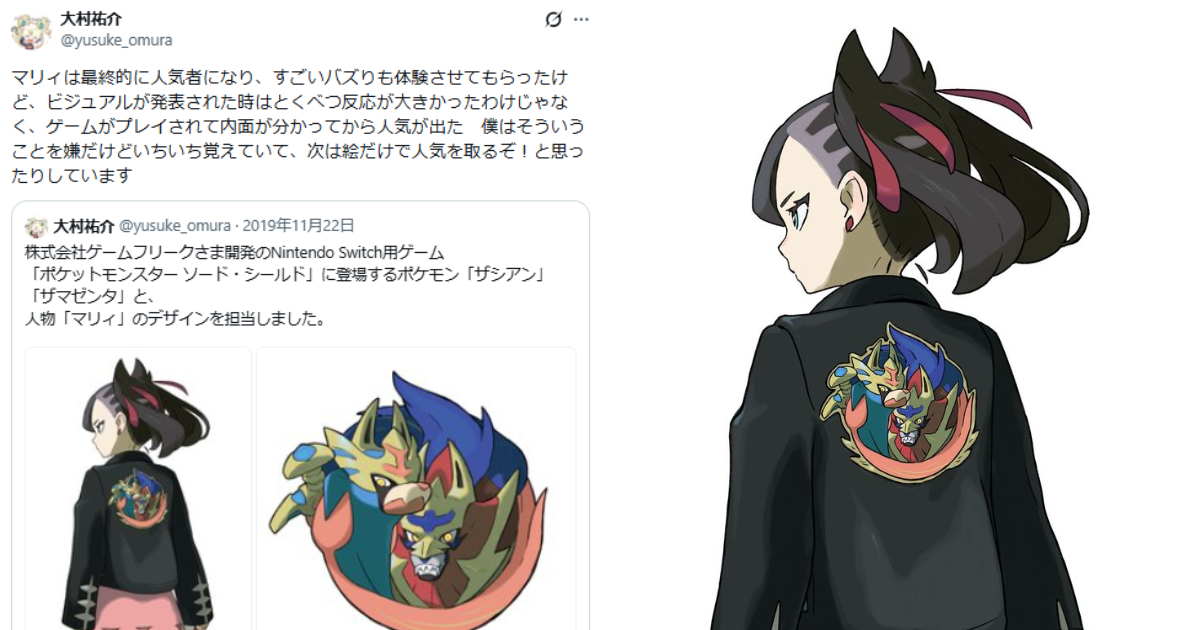
Ohmura wrote:
Marnie, whom I designed, ultimately became a popular character, so I did get to experience what it felt like to go viral online. However, when her character visual was first unveiled, it did not generate a particularly strong response. Her popularity only began to rise after the game was released and players gradually got to know her personality.
I may not like dwelling on things like this, but I remember every one of them. They make me think, “Next time, I want to make people love the character through the character artwork alone!”
While the comment could be read as Ohmura setting a higher standard for himself, it also drew criticism. Some users noted that because Marnie was created for a game, players would naturally develop a deeper attachment only after playing it and learning more about her personality. Why expect people to decide whether they like her based on a single image? Wouldn't that dismiss the fans who fell for her because of her personality?

Others pointed out that no matter how cute a character looks, they will never become popular if they behave horribly in the game and make players hate them. Gaming history has no shortage of examples.
From that perspective, Ohmura should instead appreciate the game's writers and designers for giving Marnie a compelling characterization that made players like her even more after getting to know her.


Some users went further, arguing that an illustrator should not make such comments. While an artist is responsible for a character's appearance, much of the audience's final impression comes from the game's writing and broader character development. To those critics, Ohmura's remarks sounded overly self-important, as though he wanted sole credit for Marnie's popularity.

Other commenters said it was understandable for an illustrator to want their work to be recognized, but questioned whether posting the thought this way was appropriate. To them, it made Ohmura sound concerned only with whether his own contribution received enough recognition.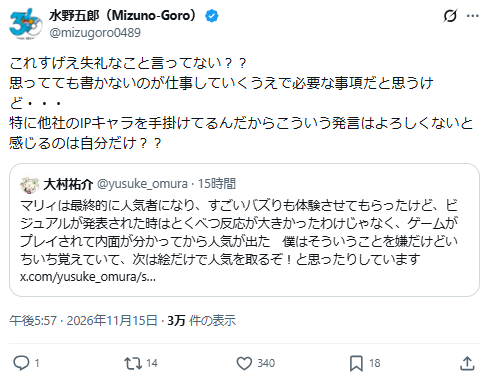
Some also stressed that Marnie was not an original character created by Ohmura alone, particularly since the design was commissioned as part of a GAME FREAK project. They argued that approaching collaborative work with this mindset could make the process more difficult.

Others felt that posting such thoughts on social media would only invite criticism and give people more reasons to take issue with him.


Judging by the reactions from Japanese users, Ohmura appeared to suggest that he would rather see one of his illustrations become an immediate breakout hit than watch a character like Marnie gradually win fans over through the game's story. That framing did not sit well with critics, who felt it sounded as though he wanted to claim the credit for himself and downplay the contributions of the rest of the development team.