

 (Image: Walt Disney Studios)
(This review contains spoilers.)
Animated films starring anthropomorphic animals are countless—it's a staple of the medium. Yet, "Zootopia" managed to carve a new path, making it stand out in a sea of thousands of animal cartoons. We've seen animals given human personalities countless times, living in worlds that mirror our own civilization, doing human things and living human lives. It's often just people in animal skins playing out familiar plots. While these films occasionally incorporate elements of a species' natural ecosystem, it's usually done sparingly and rarely explored in depth.
"Zootopia" still features animals doing human things, but what makes it unique is that it truly operates from the foundation of their animal instincts. These animals have their "humanity," but it's not just about anthropomorphizing their bodies and expressions. The film fundamentally asks: if animals also became civilized, what similarities and differences would they have with us? These elements aren't just background details; they are deeply woven into the main plot, becoming the central mystery the film invites the audience to explore.
(Image: Walt Disney Studios)
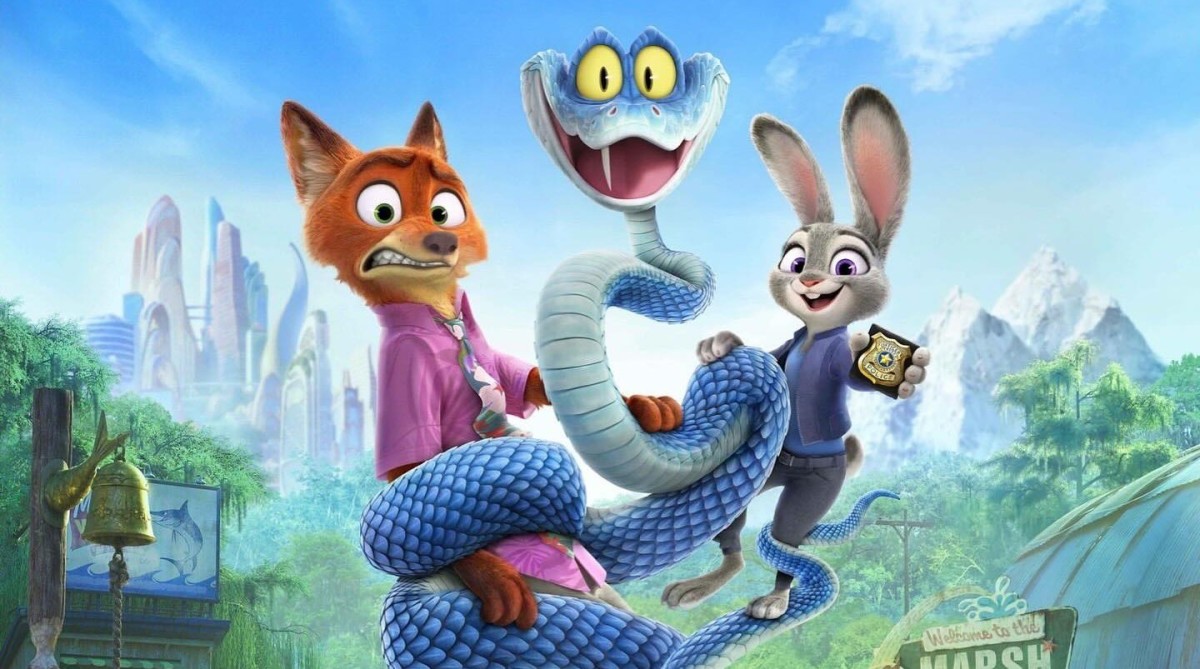
This was the most valuable feature of the first film, and "Zootopia 2" hasn't forgotten it. Where the original explored the division between predators and prey, this installment shifts focus to the cultural perception of reptiles, weaving a story about a historical stigma spanning generations. In both Eastern and Western cultures, snakes and lizards often have negative connotations in mythology and pop culture (including alien conspiracy theories), frequently linked to words like cruel, cunning, evil, and greedy. "Zootopia 2" uses this as a jumping-off point for a "National Treasure"-style quest to clear a family's tarnished name.
"Zootopia 2" is a sequel that clearly understands its predecessor's strengths and continues to refine and expand upon them. Audiences loved the scene-stealing Flash? Bring him back for a cameo. They enjoyed the noir detective plot uncovering a hidden conspiracy? Keep that formula as the base. They liked the animal-themed puns and wordplay? Pack the sequel with even more. They appreciated the world-building details based on animal traits? Double down on them. For instance, chairs for reptiles aren't really chairs but branches; a snake child's height chart at home is horizontal, not vertical. These details often serve as punchlines, but their function is more than just comedic—they quietly enhance the credibility of this fictional world. (Image: Walt Disney Studios)
Almost everything in "Zootopia 2" is perfect, but I still prefer the first film, largely because I wasn't a fan of how Nick and Judy's storyline was extended. It's not that the writing is bad; it feels more like an inherent curse of the buddy-cop comedy genre. The best part of these stories is the conflict and eventual bonding between two partners with clashing personalities. Once they've reconciled, the dramatic tension weakens and things can feel flat. Nick and Judy mostly resolved their issues in the last movie, having already passed their most contentious phase. For me, they were ironically the least interesting part of the sequel.
Of course, the filmmakers introduce a new hurdle for Nick and Judy to overcome, but its impact just doesn't have the same intensity as the conflict in the first film; it's destined to feel weaker. As a result, their falling out in the sequel comes across as a formulaic, by-the-numbers beat in a buddy-cop movie, feeling more like an assignment being checked off. If, by the end, Disney had the guts to officially make them a romantic couple, I might have felt it was a fresh and bold move (and one that fans have been clamoring for). But just as "Inside Out 2" didn't dare to introduce a "Horny" emotion, Disney still lacks the courage to commit to an interspecies romance (sigh, was "Shrek" just too ahead of its time?). The "confession" scene at the end was simmering at a boiling point, the words seemingly on the tip of their tongues, but it ultimately pulls back at the critical moment. I could almost hear a collective facepalm from the entire audience. (Image: Walt Disney Studios)
When it comes to top-tier Hollywood buddy-cop sequels in recent years, "22 Jump Street" is definitely on the list. The evolution of Channing Tatum and Jonah Hill's relationship in that film felt natural and sufficiently dramatic, completely overcoming the common problem of a sequel's tension falling short of the original. Tatum and Hill's characters realize during a mission that they might have different ambitions and career paths, leading to a rift in their friendship and an actual separation for a while. After some reflection, they discover they truly are the best partners for each other and reconcile.
The rift was deep enough that the reunion felt earned. The arc for Tatum and Hill had significant ups and downs, making their reconciliation deeply satisfying. In comparison, the crisis between Nick and Judy feels minor. While their climactic rescue of each other is thrilling and emotional, the preceding conflict wasn't substantial enough for me to feel a real emotional payoff. This is why I feel that everything in "Zootopia 2" is excellent—except for its protagonists. The overall production quality is undeniable, and I believe die-hard fans will still have a great time. But for me, the pillar that should have been the strongest felt the most unstable, and that instability makes it hard for me to fully embrace this sequel.