

 (Image Source: Pixar)
Hollywood's use of film to advocate for environmental protection is nothing new, and "The Wild Robot" understands this well. From the outset, it clearly positions itself as a classic "Dances with Wolves"-style narrative—a civilized outsider infiltrates a wilderness tribe, becomes assimilated, then leads them in resistance against external forces. It even self-deprecatingly acknowledges its "Avatar"-like method of integration through early dialogue. With Hollywood having explored this trope so many times, how could Pixar find a fresh approach? They indeed found a unique path, and "The Wild Robot" feels like a "re-assembled" version of this familiar formula.
The "savior" in this story is Mabel, a college student passionate about defending natural lands. Like every cinematic savior, even she, initially sworn to protect the land, must re-learn the laws of the wild after going undercover, laws that completely overturn her preconceived notions. But Pixar doesn't let Mabel's "chosen one" aura last long. Audiences quickly realize Mabel is more of a disruptor. More precisely, she must first cause disruption for order to be re-established.

(Image Source: Pixar)
"The Wild Robot" then covers the narrative progression that "Avatar" and "Dances with Wolves" take three hours to tell (and even goes further) in less than two hours. Revolutions require allies, and Mabel, like Jake Sully, must unite other "tribes." It's at this point that the film suddenly hits the gas, shifting into a satirical allegory reminiscent of "Animal Farm." This isn't to say the latter half's plot mirrors "Animal Farm" precisely, but rather that their spirits are profoundly aligned.
"The Wild Robot" takes an unexpectedly sharp turn, inheriting a lineage from "Animal Farm." It similarly depicts an animal uprising and revolution against humans. Yet, as the animals awaken, they transition from savagery to humanity, becoming civilized but also corrupt, gradually blurring the distinction between humans and animals. The oppressed swiftly become the oppressors. Pixar doesn't dwell on this transformation, leveraging animation's capacity for extreme, illogical compression and exaggerated execution. Thus, within a highly condensed runtime, they pack in a dramatic shift: an emperor's unexpected demise and the arrogant ascension of a long-ambitious prince. 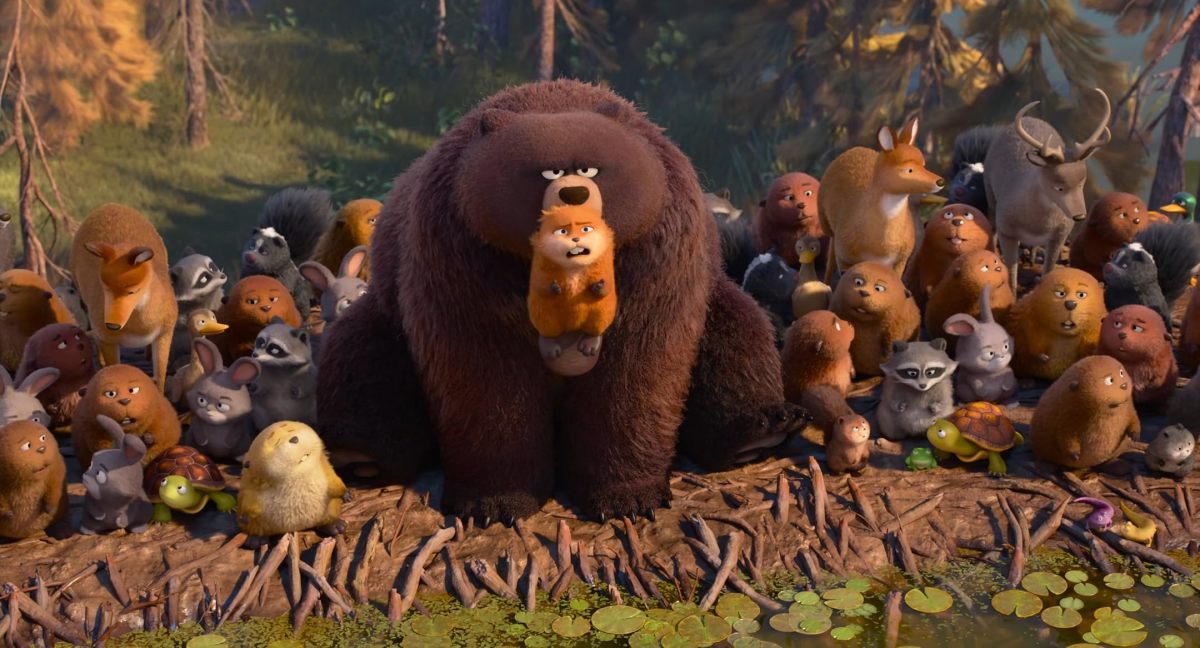 (Image Source: Pixar)
This twist completely upends the film's tone and humanity's previously dominant position. The story instantly becomes exceptionally grim and chillingly unsettling. The animals' brutal political maneuvers and extraordinarily efficient strategies are infused with a sinister, almost hellish black humor—so dark you're unsure whether to laugh or be terrified. This is Pixar's darkest film to date. We've seen animals torment humans before in films like "Open Season," "Over the Hedge," and "Barnyard," but those were "Home Alone"-style booby trap extravaganzas, mere child's play. "The Wild Robot" delivers true "an eye for an eye" justice, teaching humanity a lesson in its own brutal language.
The animal rebellion operates on a different scale, naturally leading to a conclusion of greater depth. The typical animated film logic dictates that simply driving humans away, tails between their legs, is enough. But "The Wild Robot" rejects this. If the antagonists don't undergo a transformation, the entire lesson is meaningless. And this is where "The Wild Robot" is truly moving: heroes and villains ultimately build trust, respect, and mutual aid. They are willing to solve problems together, recognizing their own malice and immaturity. Compared to the usual emotional beats centered on the greatness of family or friendship, this revolutionary camaraderie between a social activist and a greedy politician, who become allies, is far more profound and thought-provoking.
It has been quite some time since a Pixar film made my eyes light up, feeling as though I was witnessing the creation of another original classic. The last time I experienced such an impact was six years ago with "Soul." I am delighted that "The Wild Robot" has once again allowed me to feel such abundant creative vitality from them.