

If you've ever visited Japan, you've undoubtedly seen the iconic "Torii gates" at shrines – they're a quintessential symbol of Japanese culture and a must-see for countless tourists.
Recently, a discussion about these very gates blew up on X (formerly Twitter). An overseas netizen, admiring the beautiful torii landscapes, questioned the writing on them, inadvertently sparking a wave of "mistaken for commercial advertising" comments. Japanese netizens quickly stepped in to explain the cultural significance behind it all.
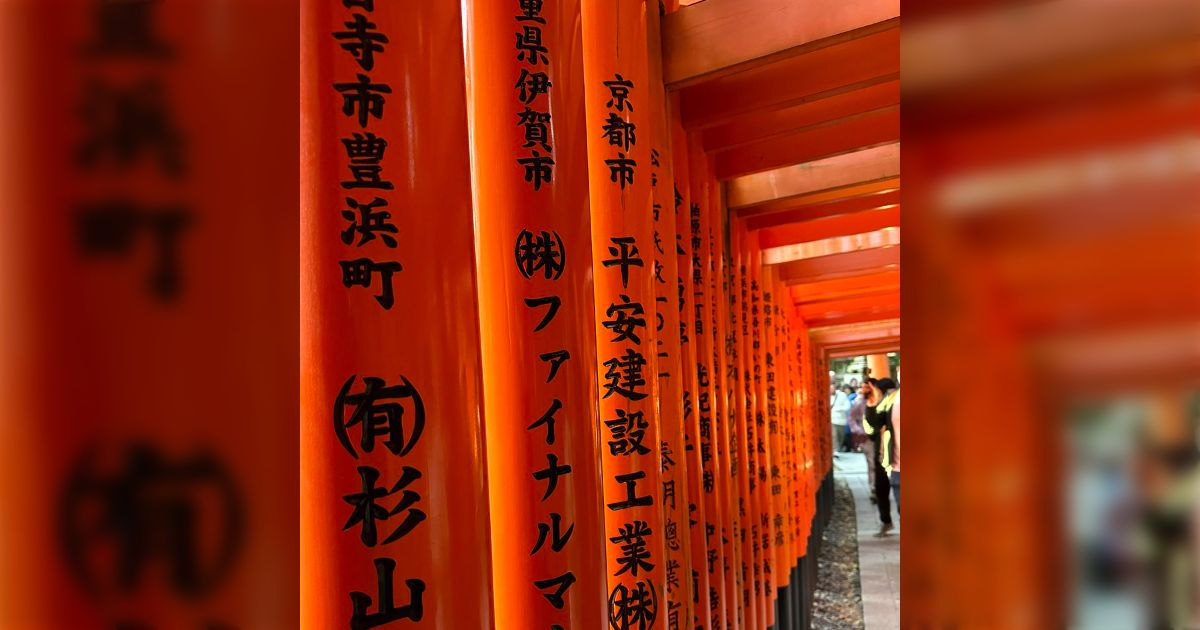
The whole thing kicked off when a foreign user posted photos of rows of torii gates, asking, "These torii gates are truly beautiful, can someone tell me what's written on them?"
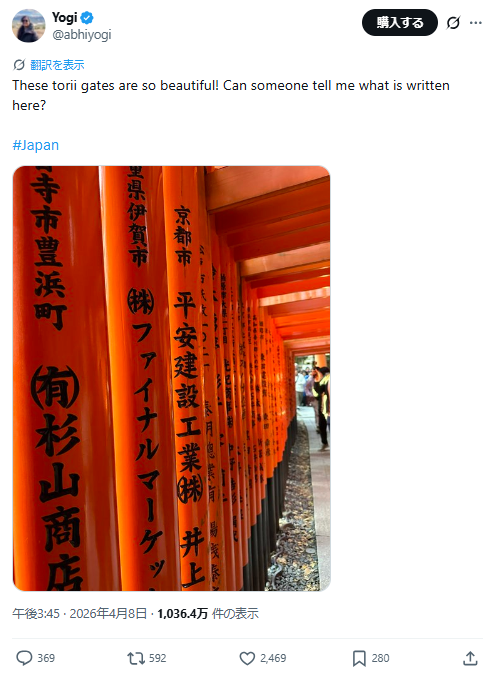
A Japanese netizen playfully replied, "Some things are better left unknown..."
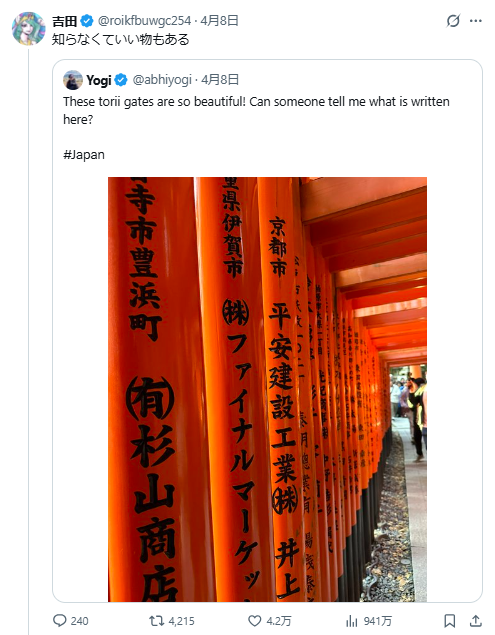
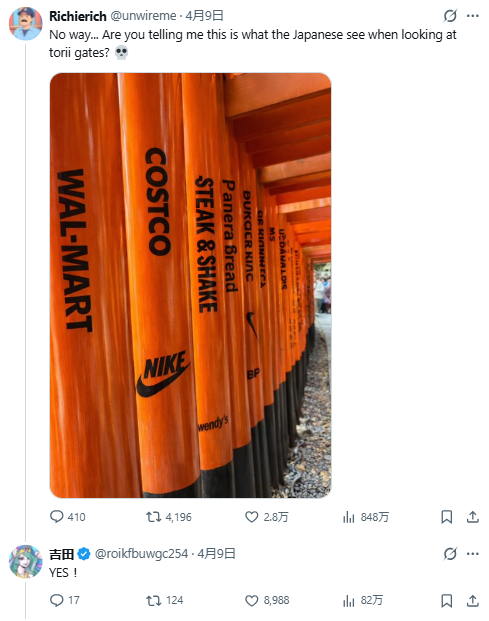
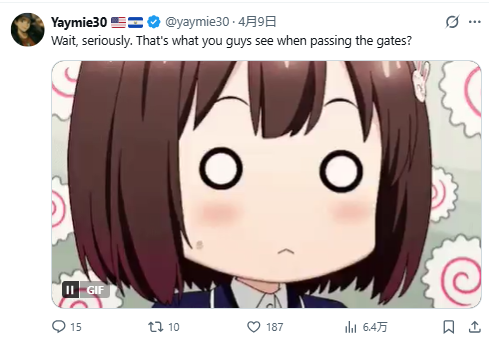
However, once it became clear that some of the gates bore company or personal names, a misunderstanding spread among some international users. Reactions ranged from disbelief to disappointment: "Wait, those are company names? Seriously?" "So torii gates have been commercialized? Kinda sad." "Do Japanese people see these names when they look at torii gates?"
To clear things up, Japanese netizens chimed in to explain that the names on the torii gates aren't commercial ads at all. Instead, they're part of a traditional practice called "Kishin" (寄進).
"Kishin" refers to individuals or companies making donations or offerings to shrines. This is often done to pray for wishes to come true (like business prosperity or family safety) or as a form of thanksgiving once a wish has been granted. In return, the shrine expresses gratitude by engraving the donor's name or company name onto a torii gate.
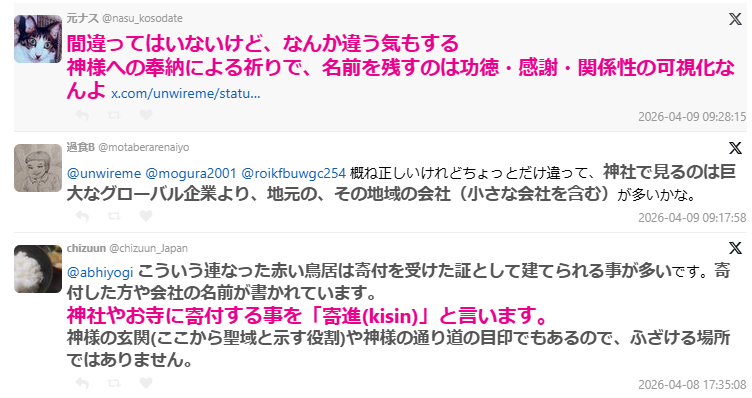
Torii gates hold deep religious significance in Japanese culture, symbolizing the gateway to the divine realm and a symbolic path for the gods. They aren't merely decorative or promotional structures; they are sacred architecture imbued with spiritual meaning and faith. Having one's name on a torii gate is considered an honor and a mark of merit.
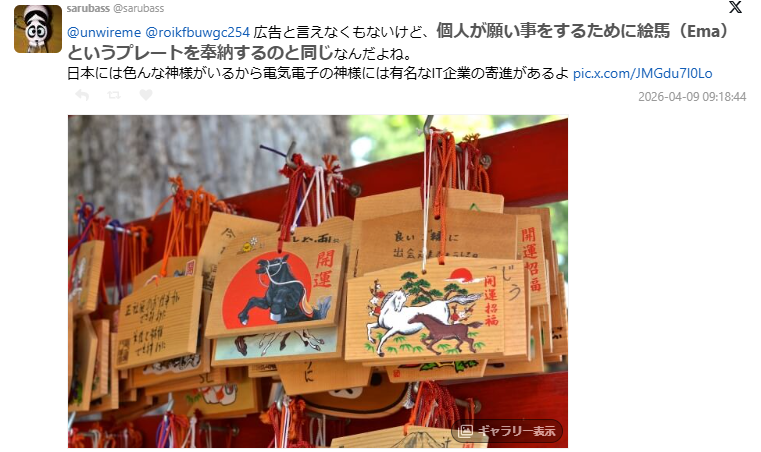
Some users pointed out that the root cause of this misunderstanding lies in cultural differences. In many overseas cultures, "company name exposure" is often directly associated with commercial advertising. However, in Japanese tradition, it's more akin to a symbol of faith, gratitude, and community connection. There are similar cultural practices, such as Japan's "Ema" (votive tablets), where personal wishes and names are offered to the gods.
After learning about the "Kishin" cultural background, the original foreign netizen expressed understanding and appreciation, responding, "This explanation is beautiful. When I walked among the torii gates, I truly felt a peaceful and sacred atmosphere. Even though there were many people, everyone was quiet and respectful of the place."
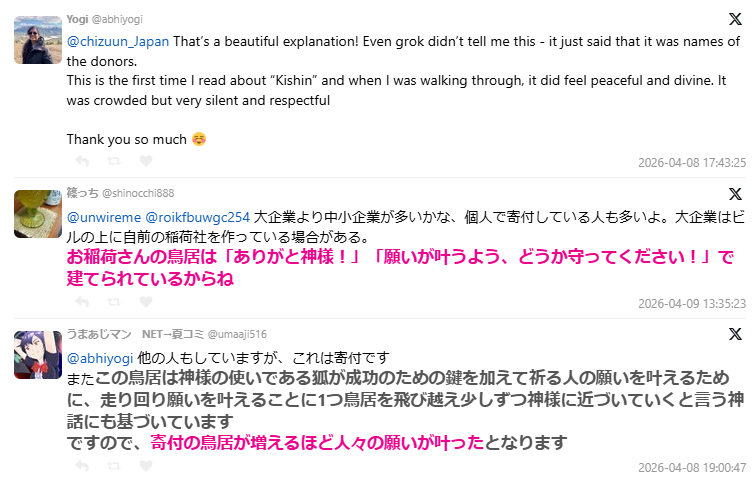
This incident served as a reminder to many netizens that cultural phenomena can easily be misunderstood without proper background knowledge. The names on torii gates aren't about business; they're traces left by people's prayers and gratitude to the divine.
So, the next time you spot a company name on a torii gate in Japan, you won't need to be surprised or worry about commercialization!
via: togetter