

Japanese animation has been absolutely booming in recent years, expanding its reach both domestically and internationally and showcasing its immense soft power. With a boost during the pandemic, the global market for anime has become increasingly significant.
However, the compensation for animators has always been a hot topic. Despite the industry's growth, salaries often seem to lag far behind. Recently, a Japanese animator on X shared their first-year income, which was so low it barely topped part-time wages, sparking widespread debate and even shocking international fans with its grim reality.
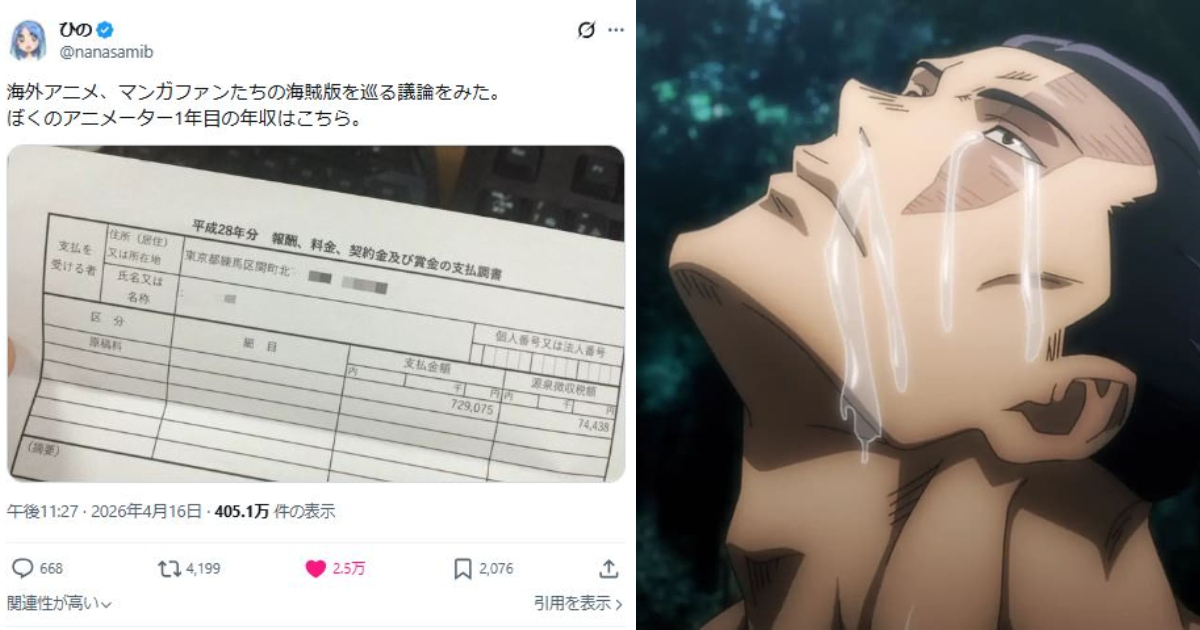
The animator explained that they decided to share their first-year earnings after seeing a heated debate among overseas anime and manga fans about piracy.
While this figure dates back to Heisei 28 (2016), the animator noted that entry-level salaries for animators haven't significantly improved since then. Working on original drawings, their annual income was a meager ¥720,000, which is incredibly low.
This level of compensation left many netizens stunned. An annual income of just ¥720,000 makes even renting a place incredibly difficult for many in Japan, let alone covering basic living expenses. The animator also shared that they now run a manga publishing studio, and while their own presidential salary hasn't changed much, they hope to be able to pay their employees better wages...

Many users lamented the situation, pointing out that animation is a crucial content industry for Japan, yet first-year workers are stuck with wages potentially worse than those in basic service jobs. They expressed disbelief at the exploitative labor conditions in animation, where industry prosperity hasn't translated into better pay for its workers.

The post quickly spread to overseas anime-related accounts, with many international fans struggling to believe that animators could earn so little in their first year. Such an income would be virtually unlivable abroad, and it's undoubtedly a tough grind even in Japan.
While the animator didn't reveal their specific workplace, they have since left the animation industry. This kind of compensation truly makes it a "labor of love." Despite Japan's continuous emphasis on investing in the animation sector, these funds seemingly aren't trickling down to the grassroots workers, which explains why animators are often dubbed "sweatshop" laborers.