

The classic Go manga, Hikaru no Go, (known as "棋靈王" in some older translations) sparked a massive Go-learning craze during its serialization and anime run. It remains one of the few wildly popular works centered around the ancient board game, with its iconic plot and unforgettable characters still fresh in many fans' minds.
Recently, a hot debate ignited on Japanese X (formerly Twitter): Why, despite having a hit manga, has Go's development in Japan seemingly stalled compared to Shogi? Shogi, on the other hand, boasts a thriving professional scene and a steadily growing player base. This question has sparked widespread discussion about where Go went wrong.
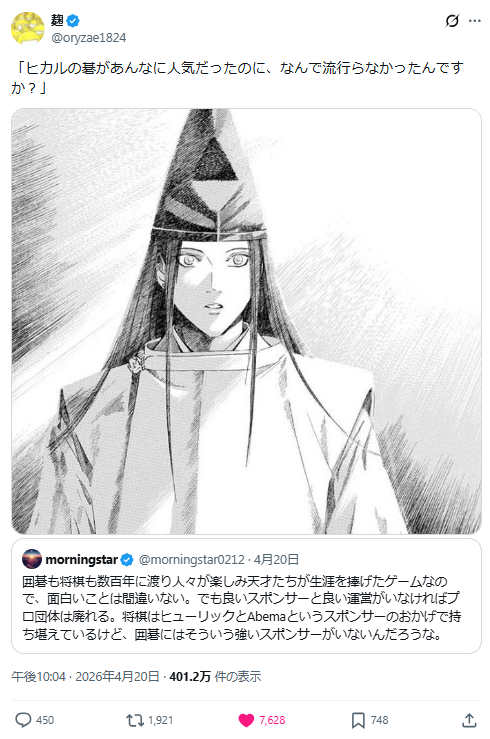
The discussion kicked off with a user pointing out that both Go and Shogi have been played for centuries, captivating generations of geniuses who dedicated their lives to these games. So, their inherent fun factor is absolutely undeniable.
However, the harsh reality is that without powerful sponsors and strong management, professional circuits can easily fade into obscurity. Shogi, for instance, is largely sustained by major corporations like Hulic and Abema. Go, it seems, just doesn't have that level of heavy-hitting support behind it.

But other netizens quickly chimed in, arguing that Go *did* have its moment in the sun. The problem? Explaining its rules to an audience takes an exorbitant amount of time because they're simply too complex. Shogi, by contrast, has straightforward rules, making it far easier for sponsors to jump in. Go's rules alone are a massive barrier to entry, making it incredibly difficult for newcomers to dive into its world.

Of course, you can't talk about Go without mentioning "Hikaru no Go." Many users questioned why, despite its immense popularity, the series couldn't sustain a lasting Go boom. In stark contrast, Shogi has seen a surge in attention thanks to popular titles like "March Comes in Like a Lion," "The Ryuo's Work is Never Done!", and "When Will Ayumu Make His Move?" These series have successfully brought the game into the mainstream spotlight.
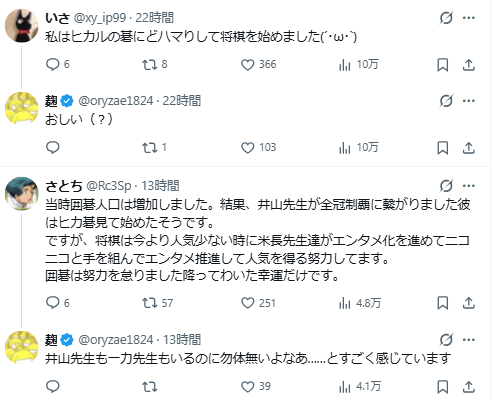
Netizens further noted that while many were drawn to Go because of "Hikaru no Go," the initial hype didn't last. Shogi, which initially had fewer players than Go, managed to become more accessible and entertaining thanks to numerous promoters. This concerted effort is what created the current disparity between the two games.
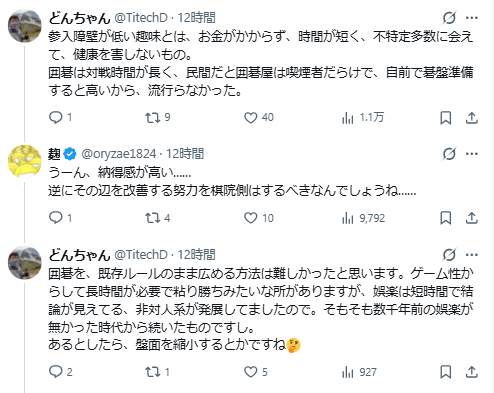
Users also highlighted Go's high barrier to entry, especially with its notoriously long match times. It's incredibly difficult for casual observers to truly appreciate or even understand what's happening. Maintaining such complex rules, they argued, makes it impossible for the average person to grasp the game's inherent fun.
Another user astutely observed that while "Hikaru no Go" is an outstanding work that maximizes "manga entertainment" and is genuinely captivating, many readers finish it still feeling like: "What exactly is Go? How do you even win? I still don't really get it." Fans, they concluded, loved the characters and the plot, not necessarily Go itself.
And here's the kicker: the more thoroughly you explain Go's rules and gameplay, the more boring the manga itself would become. It's a genuine Catch-22.
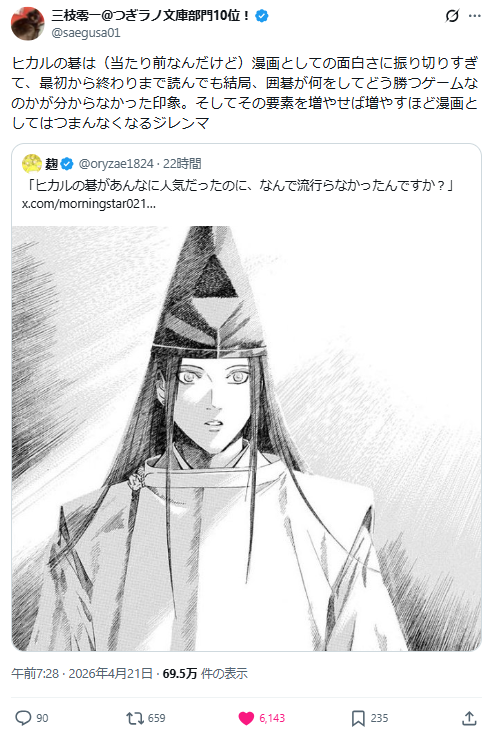
This sentiment resonated with other netizens, who shared their own experiences of trying Go after reading the manga. They learned the rules but struggled to improve their skills, eventually giving up in frustration. Some even pointed out that "Hikaru no Go" did its absolute best to convey the tension of a Go match to those unfamiliar with the game, but it ultimately didn't help with rule comprehension. People simply enjoyed the story's emotional rollercoaster without converting that into a lasting passion for Go.
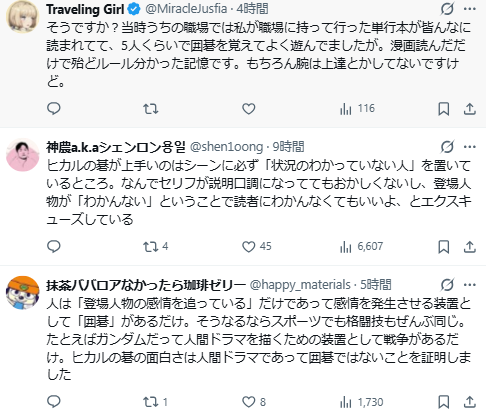
This whole "Why couldn't 'Hikaru no Go' make Go popular?" debate clearly shows that most people pinpoint the difficulty of Go's rules and the excessively long match times as the main culprits. Unlike Shogi or Japanese Mahjong, which are also competitive board games, Go just couldn't break through. Perhaps it's an inherent lack of mass appeal, where even an outstanding and beloved work like "Hikaru no Go" couldn't truly ignite widespread affection for the game.